‹ BackNewsJeremy Allaire

Jeremy Allaire

Circle
2026-07-03 21:01:21

Circle CEO Defends USDC Against OUSD, Arguing Stablecoins Are a Winner-Take-Most Market

Circle founder and CEO Jeremy Allaire has responded directly to market concerns after Open Standard, backed by 140 global companies, announced plans to launch the dollar stablecoin Open USD later this year. His central argument is that stablecoins should be understood as platform networks, not just financial products, and that such markets typically evolve toward winner-take-most outcomes driven by application integrations, liquidity depth, and regulatory positioning. Allaire argues that USDC’s moat comes from nearly a decade of ecosystem building across developers, exchanges, DeFi venues, payment firms, banking rails, and compliance frameworks. He also highlights infrastructure such as CCTP and Gateway as critical tools that extend interoperability and global reach. Citing Artemis, he says USDC processed nearly $30 trillion in on-chain volume in Q1 2026, representing 80% of all blockchain-based dollar stablecoin transaction volume, while USDT handled the other 20% and all remaining dollar stablecoins combined accounted for less than 0.5%. Addressing OUSD’s proposed features, including free minting and redemption, yield sharing, and an alliance-style governance model, Allaire contends those ideas may sound attractive but are difficult to sustain in practice. He says unlimited free redemption can create structural pressures, while large consortium-led products often suffer from weak incentives, slow execution, and poor product agility. He also reiterated that Circle’s relationship with Coinbase remains strong and that Circle will continue expanding its broader stablecoin infrastructure stack.

1900
Circle CEO Defends USDC Against OUSD, Arguing Stablecoins Are a Winner-Take-Most Market
Circle
2026-07-03 19:01:06

Circle CEO Defends USDC Against OUSD, Arguing Stablecoins Are a Winner-Take-Most Market

Circle founder and CEO Jeremy Allaire has publicly responded to the launch of Open Standard and its planned dollar stablecoin, Open USD (OUSD), a project backed by 140 global companies and positioned as a direct challenger to USDC. In his remarks, Allaire argued that stablecoins are not simple fintech products but platform businesses with compounding network effects, where scale in integrations, liquidity, and regulatory access tends to produce a winner-take-most market structure. He said USDC’s position comes from nearly a decade of investment in software infrastructure, global liquidity rails, and compliance coverage rather than short-term incentives. Allaire specifically pointed to Circle’s technology stack, including CCTP and Gateway, and cited Artemis data claiming that in Q1 2026 USDC processed nearly $30 trillion in on-chain volume, accounting for 80% of blockchain dollar stablecoin transactions, while USDT handled the remaining 20% and all other dollar stablecoins combined remained below 0.5%. He also challenged several arguments made in favor of OUSD, including free minting and redemption, revenue-sharing approaches, and alliance-style governance, saying such models often struggle with incentives, capital allocation, and operational speed. At the same time, he stressed that Circle’s partnership with Coinbase remains strong and that Circle is expanding beyond USDC into a broader infrastructure stack including Arc, CCTP, CPN, StableFX, and Agent Stack.

1990
Circle CEO Defends USDC Against OUSD, Arguing Stablecoins Are a Winner-Take-Most Market
Circle
2026-07-03 15:31:08

Circle CEO Responds to OUSD: Why Stablecoins Tend Toward a Winner-Takes-Most Market

After Open Standard, backed by 140 global companies, announced plans to launch the dollar stablecoin Open USD (OUSD) later this year, investor concerns quickly hit Circle’s stock and raised new questions about whether USDC’s position could be challenged. In response, Circle founder and CEO Jeremy Allaire laid out a detailed defense of USDC’s moat and argued that stablecoins are fundamentally platform businesses with strong network effects, deep liquidity requirements, and heavy regulatory integration. In his view, that structure naturally pushes the market toward a winner-takes-most outcome rather than a fragmented alliance model. Allaire’s argument rests on three pillars. First, stablecoin utility scales with integrations: the more apps, developers, service providers, and institutions connect to a network, the more valuable it becomes for everyone else. Second, liquidity compounds. A global stablecoin needs both primary-market banking access and secondary-market depth across exchanges, DeFi, payment firms, and regional venues. Third, regulation and licensing matter as much as technology. Circle claims USDC has spent nearly a decade building these layers and remains uniquely positioned across key jurisdictions such as Europe and Japan. He also pushed back on OUSD’s proposed features, including free minting and redemption, revenue-sharing ideas, and broad consortium governance. According to Allaire, such models may sound attractive but can weaken economic incentives, slow execution, and underfund infrastructure over time. He reaffirmed Circle’s partnership with Coinbase, highlighted products such as CCTP, Gateway, Arc, CPN, StableFX, and Agent Stack, and said Circle would continue working even with firms that may also support competing stablecoin initiatives.

1950
Circle CEO Responds to OUSD: Why Stablecoins Tend Toward a Winner-Takes-Most Market
Circle
2026-07-03 14:01:16

Circle CEO Defends USDC Against OUSD, Arguing Stablecoins Are a Winner-Take-Most Market

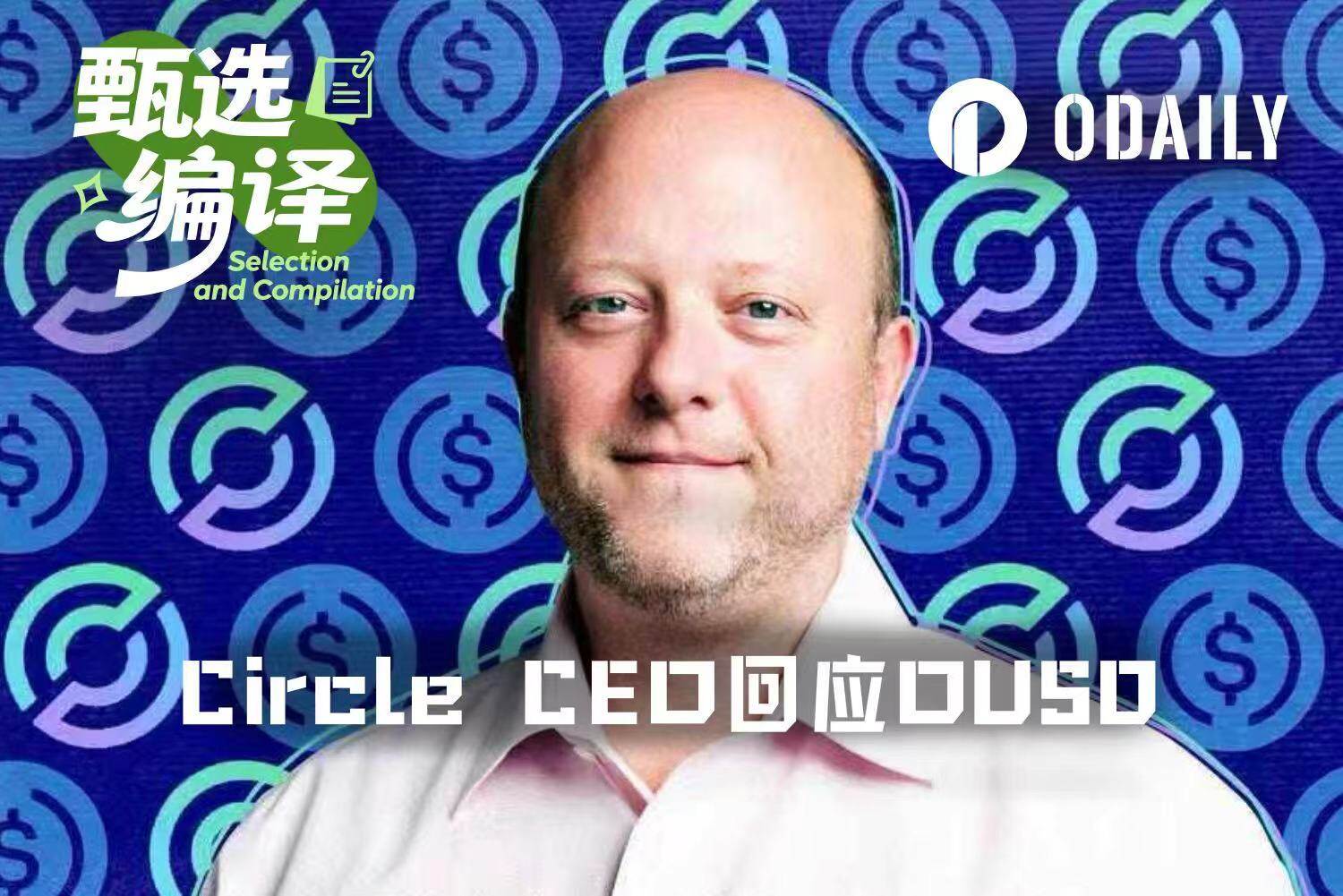
On June 30, Open Standard, a stablecoin initiative backed by 140 global companies, officially announced plans to launch Open USD (OUSD) later this year, triggering fresh debate over whether Circle’s USDC could face a meaningful competitive challenge. The announcement briefly sent Circle’s stock (NYSE: CRCL) down more than 17%, prompting Circle founder and CEO Jeremy Allaire to respond publicly with a detailed defense of the company’s long-term position in the stablecoin market. Allaire’s argument is that stablecoins function less like simple digital payment products and more like platform utilities shaped by network effects. In his view, scale in this sector is driven by years of integration with applications, developers, exchanges, payment companies, and financial institutions. He highlighted Circle’s near decade-long investment in infrastructure, liquidity distribution, regulatory licensing, and software layers such as CCTP and Gateway, all of which reinforce USDC’s utility and make it difficult for new entrants to catch up quickly. He also pointed to third-party data from Artemis, claiming that in Q1 2026 USDC processed nearly $30 trillion in on-chain volume, representing 80% of all blockchain-based dollar stablecoin transaction activity, while USDT handled the remaining 20% and all other dollar stablecoins combined remained below 0.5%. Beyond defending USDC’s market lead, Allaire directly criticized some of OUSD’s implied differentiators, including free minting and redemption, revenue-sharing narratives, and alliance-based governance, arguing that such approaches often fail when tested against real liquidity demands, coordination costs, and operational discipline. At the same time, Allaire stressed that Circle’s partnership with Coinbase remains strong and that the company is expanding beyond USDC into a broader infrastructure stack including Arc, CCTP, CPN, StableFX, and Agent Stack. His message to investors was clear: Circle sees the future of stablecoins as much larger than today’s market, but believes enduring advantage will belong to networks that combine deep liquidity, broad regulatory acceptance, and global interoperability.

1900
Circle CEO Defends USDC Against OUSD, Arguing Stablecoins Are a Winner-Take-Most Market
Circle CEO Fires Back at OUSD: Stablecoin Market Is 'Winner-Takes-All', Alliance Model Doomed to Fail
Circle CEO Jeremy Allaire Responds to OUSD: Stablecoin Markets Are Winner-Take-All, Consortium Models Are Doomed to Fail
Circle CEO Jeremy Allaire Responds to OUSD Challenge: Stablecoins Are a Winner-Takes-All Market, Consortium Models Are Doomed to Fail
Circle CEO Responds to OUSD Challenge: Stablecoin Market Is Winner-Take-All, Alliance Model Doomed to Fail