BackLPDDR5

LPDDR5

YMTC
2026-09-22 00:23:10

YMTC and CXMT May Face Off as Early as 2028 in China’s Memory Market

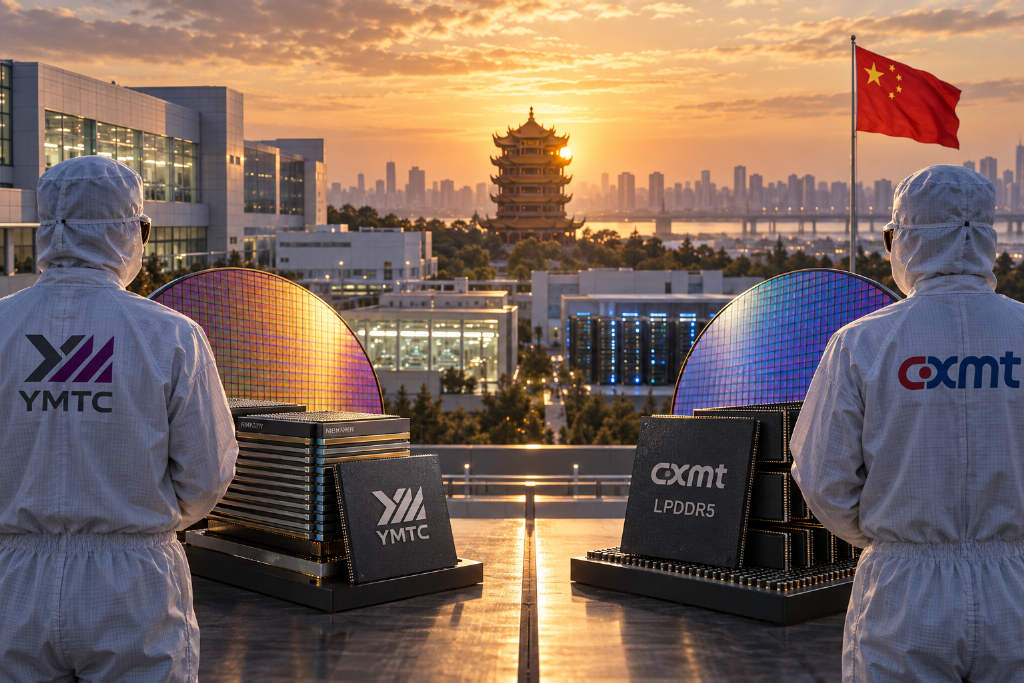
Global memory supply remains tight, with AI and cloud applications driving up demand and prices for DRAM and NAND Flash, according to ChainCatcher. The report says China’s two major memory makers, Yangtze Memory Technologies Co. (YMTC) and ChangXin Memory Technologies (CXMT), are moving beyond their traditional split focus. YMTC is preparing to enter LPDDR5 DRAM and aims to begin trial production by the end of 2026, while CXMT is reportedly pushing from DRAM into NAND Flash. Industry estimates cited in the report suggest the two companies could meet in direct competition as early as 2028. ChainCatcher also said YMTC has completed development of 294-layer 3D NAND using its Xtacking technology, and that Samsung reached a patent licensing deal with the company in 2025, with relevant patents to be used starting from the 10th-generation V-NAND. YMTC’s Phase III project is scheduled to begin production by the end of 2026 with initial DRAM capacity of about 25,000 wafers, ramping up in 2027 and targeting LPDDR5, HBM and 3D DRAM. CXMT is also said to be setting up a NAND R&D and production line in Beijing, with mass production estimated as early as 2028 to 2029.
30
YMTC and CXMT May Face Off as Early as 2028 in China’s Memory Market
CXMT
2026-09-21 07:40:08

CXMT Seen Reaching Near-Micron DRAM Output by End of 2026

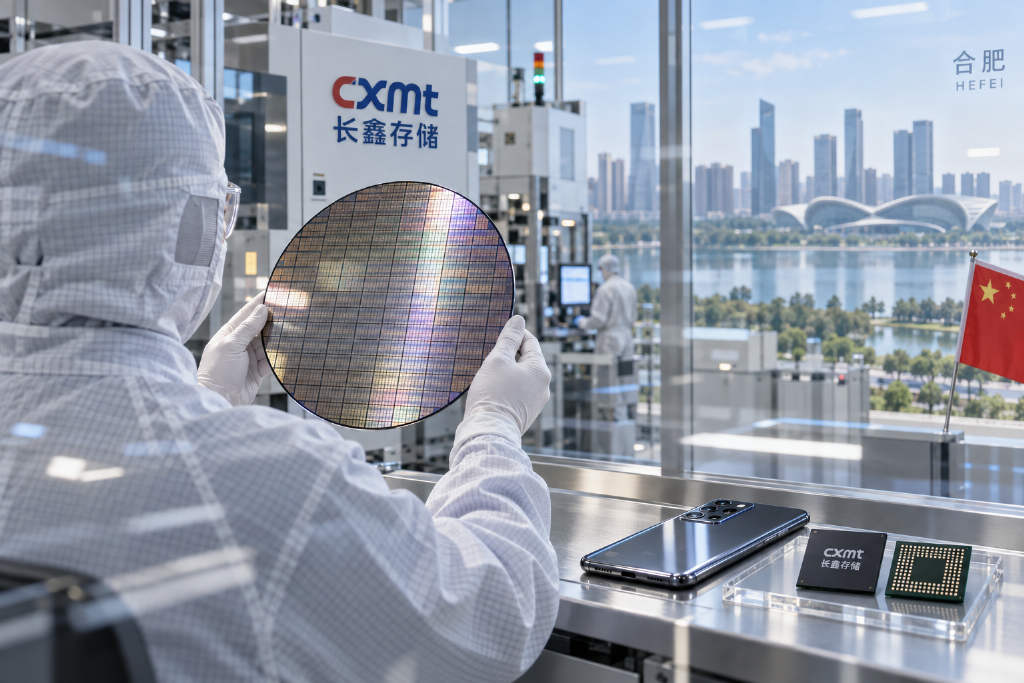
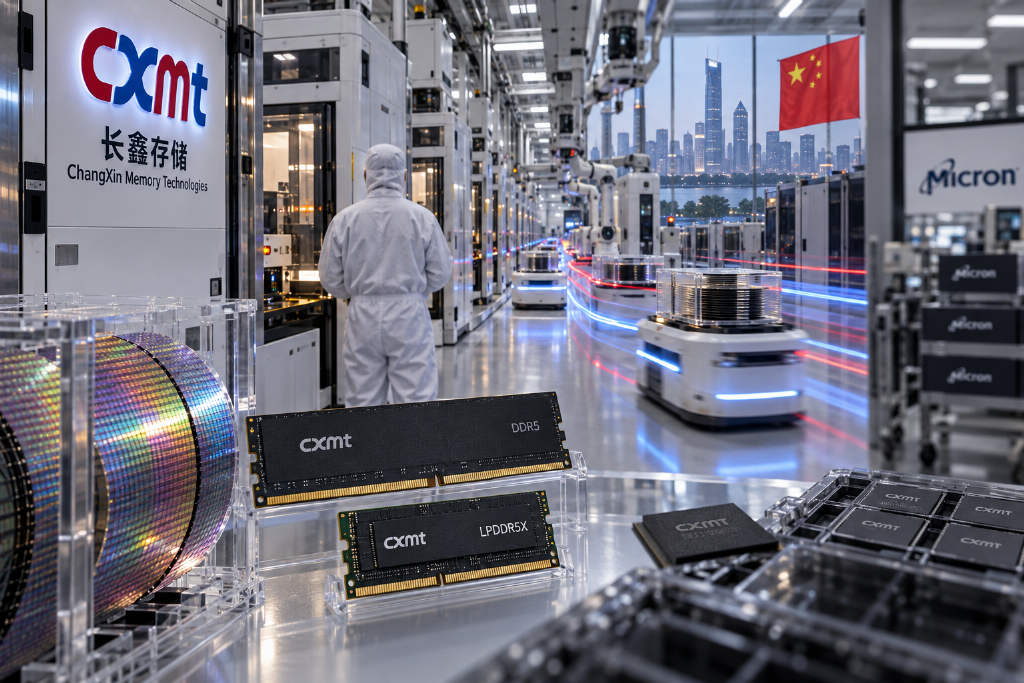
Chinese DRAM maker ChangXin Memory Technologies, or CXMT, is expected to reach monthly DRAM wafer capacity of about 350,000 units by the end of 2026, according to a report cited by TechPowerUp. The same report put Micron’s projected capacity for that period at roughly 375,000 wafers per month, placing CXMT close to one of the largest global memory suppliers in output terms. TechPowerUp said CXMT has been building cleanrooms in about 12 months, compared with an industry norm of 21 to 24 months. Because U.S. sanctions have blocked the company from obtaining EUV tools, it has relied on older DUV lithography and multi-patterning techniques instead. On products, CXMT has started shipping 16 Gb DDR5 chips rated at 8000 MT/s. The chips are reported to have a die size of 67 mm² and a density of 0.239 Gb/mm², while the G4 cell is 20% smaller than G3. The report also said 24 Gb modules are in mass production at about 6000 MT/s, and LPDDR5X-10667 modules in 12 Gb and 16 Gb versions have also entered mass production. It added that the Chinese government is encouraging CXMT to transfer DRAM IP to domestic manufacturers including JHICC, Swaysure, and XMC, a subsidiary of YMTC.

10
CXMT Seen Reaching Near-Micron DRAM Output by End of 2026
Acer
2026-09-21 04:35:09

Acer chairman says consumer DRAM is not in short supply, sees PC prices peaking in H2 2027

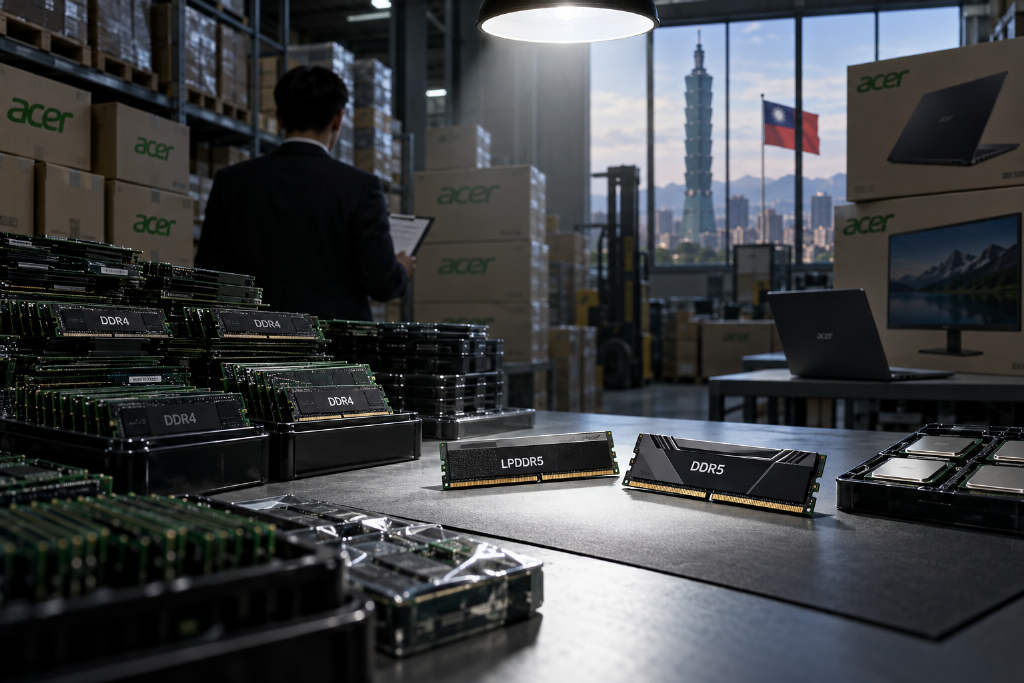
Acer Chairman Jason Chen said the recent wave of bullish memory pricing guidance from Samsung, SK Hynix, and Micron should not be read as proof of a broad supply shortage. Speaking at the "Principled Management and AI International Forum" hosted by Global Views and Commonwealth Publishing Group, Chen argued that public comments from the three major memory makers function more like market signaling under antitrust constraints than a reflection of actual conditions across the sector. Chen said Chinese memory producers, including ChangXin Memory Technologies (CXMT), hold substantial consumer DRAM capacity and continue to ship at aggressive prices, leaving no real shortage in mainstream products. In his view, supply is ample in segments such as DDR4, while contract pricing has become highly fragmented. He also drew a clear distinction between consumer DRAM and high-bandwidth memory, or HBM, saying China is still unlikely to threaten the HBM market in the near term. On end products, Chen said Acer is building inventory in lower-cost components where possible, but still expects price pressure on finished devices to continue. He estimated fourth-quarter price increases across product lines at 5% to 20%, and said PC retail prices may not stop rising until the second half of 2027. Even then, he said, an outright decline in prices remains uncertain.

10
Acer chairman says consumer DRAM is not in short supply, sees PC prices peaking in H2 2027
Anthropic
2026-09-20 11:54:37

Anthropic IPO timing shifts as CXMT starts G5 DRAM production and smaller AI data center deals draw interest

WhiteLine Daily from WuBlockchain highlighted four developments tied to the AI supply chain, capital formation, and compute buildout. Chinese memory chipmaker ChangXin Memory Technologies, or CXMT, said on Sept. 20 at the World Manufacturing Convention that its fifth-generation DRAM technology platform, G5, has entered mass production. Using an 8Gb chip benchmark, the company said die output per wafer is at least 50% higher than the fourth-generation platform, while newly displayed LPDDR5X chips carry 24Gb capacity, also 50% above the prior generation of the same class. The publication also cited a Wall Street Journal report saying Anthropic plans to move its initial public offering from an expected October window to November, with some advisers viewing the delay as a way to include third-quarter financial data for investors. Separately, CNBC reported that Anthropic and OpenAI are exploring smaller 20 MW to 30 MW data center deployments in addition to previously signed deals measured in hundreds of megawatts and even gigawatts. In another financing-related development, Nikkei said Nippon Life aims to double its infrastructure loan balance to 2 trillion yen, or about $12.75 billion, by fiscal 2035, with U.S. data center construction among the priorities.

160
Anthropic IPO timing shifts as CXMT starts G5 DRAM production and smaller AI data center deals draw interest
CXMT
2026-09-20 11:21:11

CXMT says G5 DRAM platform has entered mass production, with economics still under scrutiny

Changxin Memory Technologies, or CXMT, said at the 2026 World Manufacturing Convention on Sept. 20 that its fifth-generation DRAM technology platform, G5, has entered mass production, alongside two 24Gb LPDDR5X products built on the node. The company highlighted four figures: an 11.95 nm active-area half-pitch, a capacitor aspect ratio of 45:1, a 6,762 nm core functional area height, and at least a 50% increase in dies per wafer versus the prior generation. The announcement matters less because of the “fifth-generation” label than because of how CXMT got there. The article argues that, without access to EUV lithography tools in mainland China, the company has pushed its process to roughly the industry’s 1c-class range using DUV multi-patterning and a broader stack of process modules, including HKMG and other structural changes. That said, node alignment does not mean cost alignment. The reported 50% gain refers to dies per wafer on an 8Gb-equivalent basis before yield screening, not to sellable output. CXMT did not disclose G5 yield or monthly production. The piece says the real questions now are how quickly yield improves, how fast cost per bit converges with the three global leaders, and whether HBM can move from reported trial production to an officially confirmed product line.

170
CXMT says G5 DRAM platform has entered mass production, with economics still under scrutiny
CXMT
2026-09-20 04:00:25

CXMT starts mass production on fifth-generation platform, with 24GB LPDDR5X already shipping in flagship phones

Chinese memory chipmaker ChangXin Memory Technologies, or CXMT, said at the 2026 World Manufacturing Convention that its fifth-generation technology platform has entered mass production. The company disclosed several process metrics for the platform, including an 11.95 nm half-pitch in the active area of the memory array, a 45:1 aspect ratio for memory capacitors, and a core power region height reduced to 6,762 nm. According to the company, the new process platform delivers a major increase in storage density, and wafer output under the same conditions is more than 50% higher than on the previous-generation platform. CXMT also said a 24GB LPDDR5X product built on the fifth-generation platform has moved into formal mass production and has already entered mainstream domestic flagship smartphones. The announcement was reported by ChainCatcher.

130
CXMT starts mass production on fifth-generation platform, with 24GB LPDDR5X already shipping in flagship phones
CXMT
2026-09-20 03:54:21

CXMT starts mass production on fifth-generation platform, 24GB LPDDR5X moves into volume output

Changxin Memory Technologies, or CXMT, said on Sept. 20 at the 2026 World Manufacturing Convention that its fifth-generation technology platform has officially entered mass production. The company said the platform brings the half-pitch of the active area in the memory array to 11.95 nanometers, raises the memory capacitor aspect ratio to 45:1, and lowers the height of the core dynamic area to 6,762 nanometers. CXMT also said storage density on the new process platform has increased sharply. Under the same conditions, output per wafer is more than 50% higher than on the previous-generation platform. Based on the new platform, the company’s 24GB LPDDR5X product has also entered formal mass production and is now being used across mainstream domestic flagship smartphones. The update was carried by BlockBeats, citing The Paper.

110
CXMT starts mass production on fifth-generation platform, 24GB LPDDR5X moves into volume output
Acer
2026-09-20 01:40:04

Acer chair says memory shortage has eased, but PC prices still face Q4 increases

Acer Chairman Jason Chen said on the 19th that memory is no longer in short supply, with mainland Chinese suppliers continuing to release volume and disrupting pricing. Contract prices are now fluctuating at elevated levels, with mixed moves across products. Some components, including LPDDR5 and DDR5 9600 paired with N1 or N1X, remain tight, while DDR4 is already oversupplied. CPUs are generally available, except for Small Core specifications used in Microsoft low-license-fee project models. Chen said price increases in key components this year have been unprecedented, pushing customers from complaints to stockpiling. Acer has raised inventory of lower-cost components to cope with the situation, while facing pressure to lift PC prices every quarter. In the fourth quarter, different product lines are still expected to see selling price increases of 5% to 20%. He added that although the three major memory suppliers have signaled optimism that the uptrend could last through 2027, continued output from mainland China means prices are unlikely to keep rising indefinitely. Acer expects its SSD and memory holding costs in 2027 to come in below this year’s level, with a chance for prices to stop rising and stabilize in the second half of next year.

100
Acer chair says memory shortage has eased, but PC prices still face Q4 increases