NFC

Policy and Re
2026-09-08 10:42:18

Global Payments Weekly W36: 21 Institutions Back Stablecoin Venture as OCC Issues Two Preliminary Bank Approvals

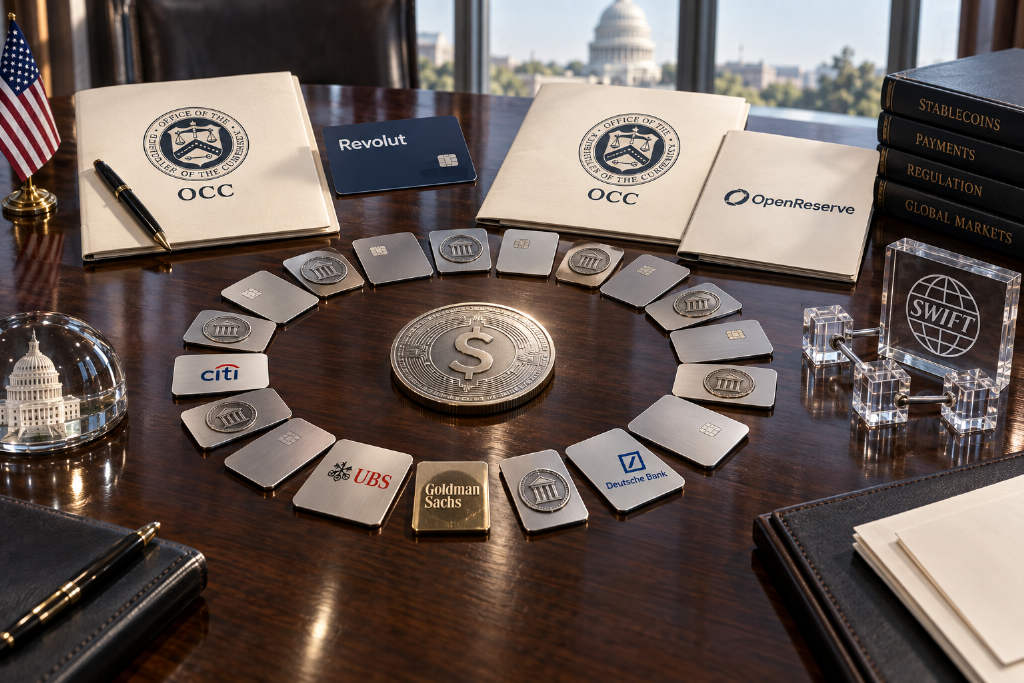
The global payments sector saw several major shifts during the week of Aug. 31 to Sept. 6, with stablecoins, bank charters, cross-border settlement rails and dealmaking all moving at once. A group of 21 financial institutions, including 17 global systemically important banks, said they would form a joint stablecoin company in the second half of 2026 and issue a U.S. dollar stablecoin in the first half of 2027, with a euro version to follow. In the U.S., the Office of the Comptroller of the Currency granted conditional preliminary approval on the same day to Revolut and Andreessen Horowitz-backed OpenReserve, and both outlined plans tied to issuing or distributing stablecoins. Bloomberg also reported that total stablecoin supply has fallen by roughly $15 billion from its mid-May peak, even as capital keeps flowing into payment and banking infrastructure. Elsewhere, Citi, FAB, OCBC and DBS completed live transactions on Swift’s blockchain-based shared ledger, including a weekend tokenized deposit payment from Singapore to New York that settled in minutes. The week’s developments pointed to a market where public-chain stablecoins, bank-led stablecoins and tokenized deposits are all competing for a larger role in payments and settlement.
260
Global Payments Weekly W36: 21 Institutions Back Stablecoin Venture as OCC Issues Two Preliminary Bank Approvals
Hugging Face
2026-09-02 12:33:37

Hugging Face’s $399 Microduck turns reinforcement learning into a desktop robot product

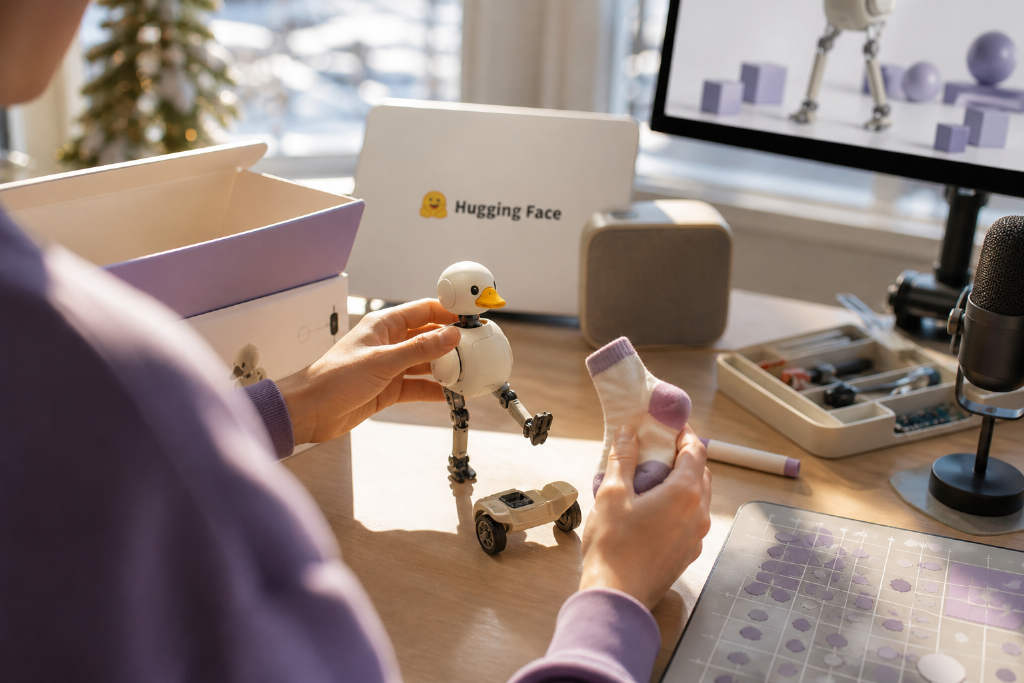
Hugging Face-owned Pollen Robotics has opened preorders for Microduck, a 25-centimeter biped robot duck priced at $399 and scheduled to ship before Christmas. The device weighs under 800 grams, comes in four colors, and ships with seven preloaded behavior policies trained with reinforcement learning. It can walk, squat, stand back up after falling, grab small objects with its hinged beak, and enter a skating mode with detachable roller bases. The product traces its roots to Open Duck Mini, an open-source project started by Pollen Robotics engineer Antoine Pirrone. That earlier effort gained more than 2,600 stars on GitHub and drew attention after a June Google I/O demo showed two units running Google’s Gemma 4 model locally on Raspberry Pi 5 and Jetson Orin Nano hardware. Microduck shifts the focus away from on-device talking and toward physical control, with policies trained in MuJoCo and deployed on the robot at 50 Hz. Pollen says the software stack is fully open source under Apache 2.0, including the SDK, simulation environment, and training pipeline, while the hardware design and schematics remain closed. The launch also lands against a larger backdrop: on the same day preorders opened, multiple media outlets reported that Nvidia was close to a roughly $12.9 billion acquisition of Hugging Face. In that context, Microduck sits at the intersection of low-cost robotics hardware, developer community building, and embodied AI strategy.

220
Hugging Face’s $399 Microduck turns reinforcement learning into a desktop robot product
MAGNE.AI
2026-08-26 08:00:22

MAGNE.AI pushes beyond a Web3 phone into edge AI and agent infrastructure

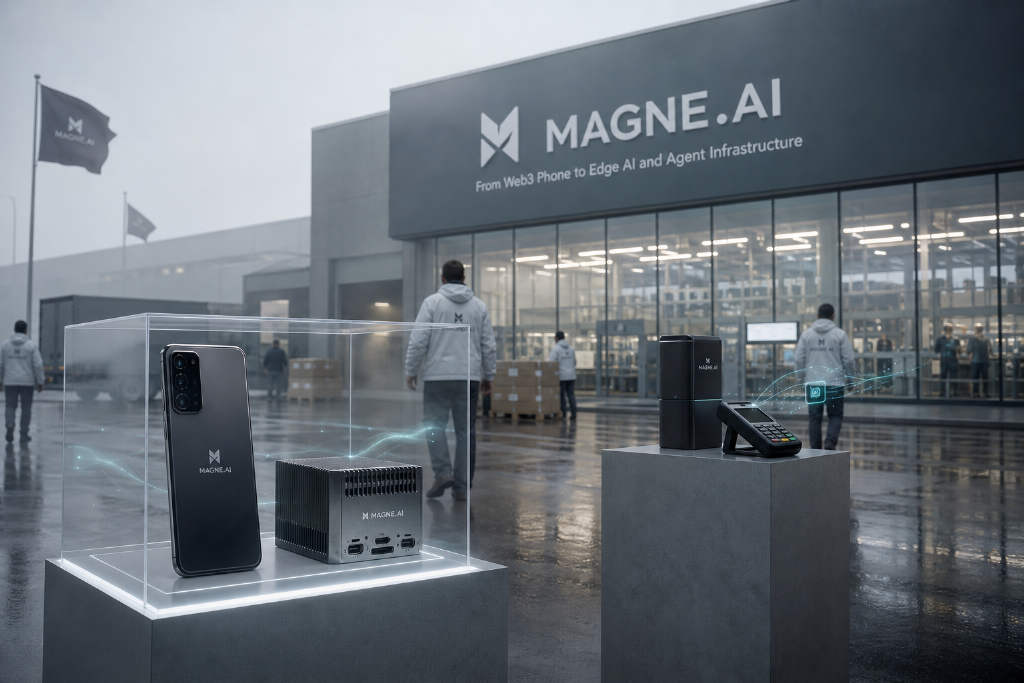
MAGNE.AI is no longer being framed only as a Web3 smartphone project. Public materials reviewed from RootData, regulatory filings and the company’s own disclosures show a broader buildout across devices, edge AI, identity rails and machine payments. On the hardware side, MAGNE Phone Gen1 is listed at the PVT P2 stage after Pre-EVT and EVT P1, with first-batch manufacturing targeted for the third quarter of 2026. The company has also published FCC-linked materials, a 3D phone structure viewer and staged production updates. On the enterprise side, MAGNE AI BOX is being positioned for private AI and edge-compute deployments, with a Release Gate framework, one local run validation for a Qwen3.6-35B-A3B Q4_K_M artifact, and a Gate 1 plan to build three prototypes for performance, thermal, offline and recovery testing. Agent Pay, meanwhile, has shown a local contract demo and testnet evidence, but end-to-end HTTP 402 flows are still under development and production payments are not open. MAGNE.AI disclosed a $2.64 million strategic follow-on round on Aug. 5, 2026, bringing cumulative public financing to $12.64 million by its own account. Even so, the article argues the key questions now are delivery, prototype validation, public testnet payment proof and whether community participation can convert into actual device users.

390
MAGNE.AI pushes beyond a Web3 phone into edge AI and agent infrastructure
Human Rights
2026-08-25 16:00:00

Human Rights Foundation Backs 16 Bitcoin and Freedom Tech Projects With More Than 600 Million Satoshis

The Human Rights Foundation said it is awarding more than 600 million satoshis, valued at $472,807 at current prices, to 16 projects across Africa, Asia, and Latin America through its Bitcoin Development Fund. The organization said the grants are aimed at strengthening Bitcoin infrastructure, widening real-world access to Bitcoin, and building secure communications and community tools for dissidents, journalists, nonprofit groups, and activists. This marks HRF’s second funding round of 2026, after it announced support for 26 projects in April. The selected projects span payments, wallet infrastructure, Nostr-based communications, open-source mining, education, and a nine-month civic infrastructure pilot in Venezuela. According to HRF, the goal is to reinforce Bitcoin’s use as a tool for financial freedom and to help vulnerable communities communicate, organize, and receive support more safely under repressive conditions.

420
Human Rights Foundation Backs 16 Bitcoin and Freedom Tech Projects With More Than 600 Million Satoshis
Human Rights
2026-08-25 16:07:06

HRF awards over 60 million sats to 16 Bitcoin-related projects worldwide

The Human Rights Foundation said it has distributed more than 60 million satoshis, worth about $472,800, to 16 projects through its Bitcoin Development Fund in a new round of grants. The funded teams are based across Africa, Asia, and Latin America, and the grants are aimed at strengthening the Bitcoin protocol, expanding real-world Bitcoin use, and supporting secure communications and community infrastructure for dissidents. This marks HRF’s second grant round of 2026. The organization had previously announced support for 26 projects in April. The latest recipients span several areas, including Bitcoin payments, core and wallet development, and censorship-resistant communications in the Nostr ecosystem. Among them, BitSpenda plans to expand a mobile money-to-Bitcoin bridge for lower-cost cross-border transfers in Africa, while Project Island Resilience and Bitzed are working on offline payments and direct Bitcoin purchases through mobile money.

210
HRF awards over 60 million sats to 16 Bitcoin-related projects worldwide
Mysten Labs
2026-08-12 01:38:00

Mysten Labs co-founder says he has leased a factory to build quantum-resistant Sui wallet cards

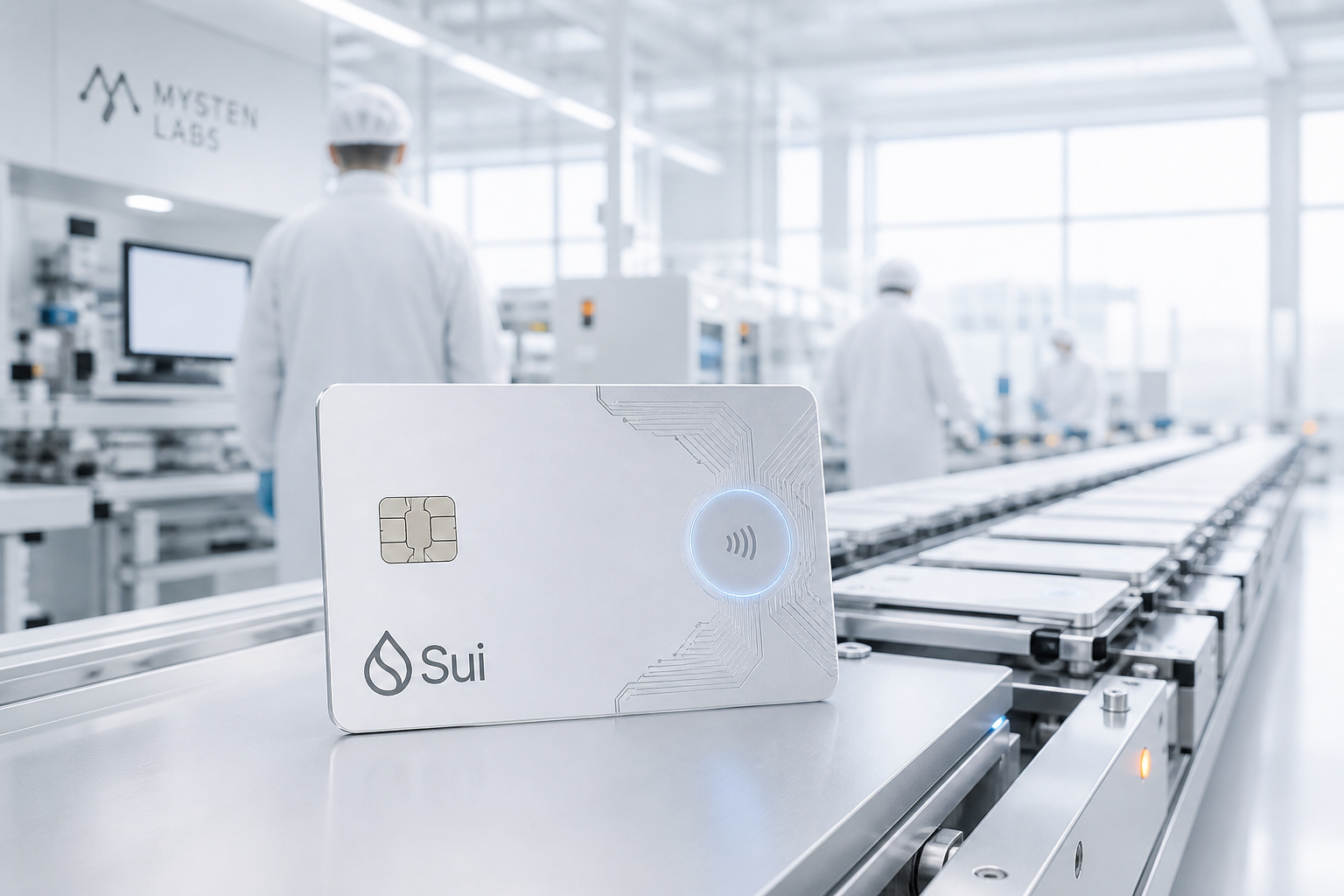
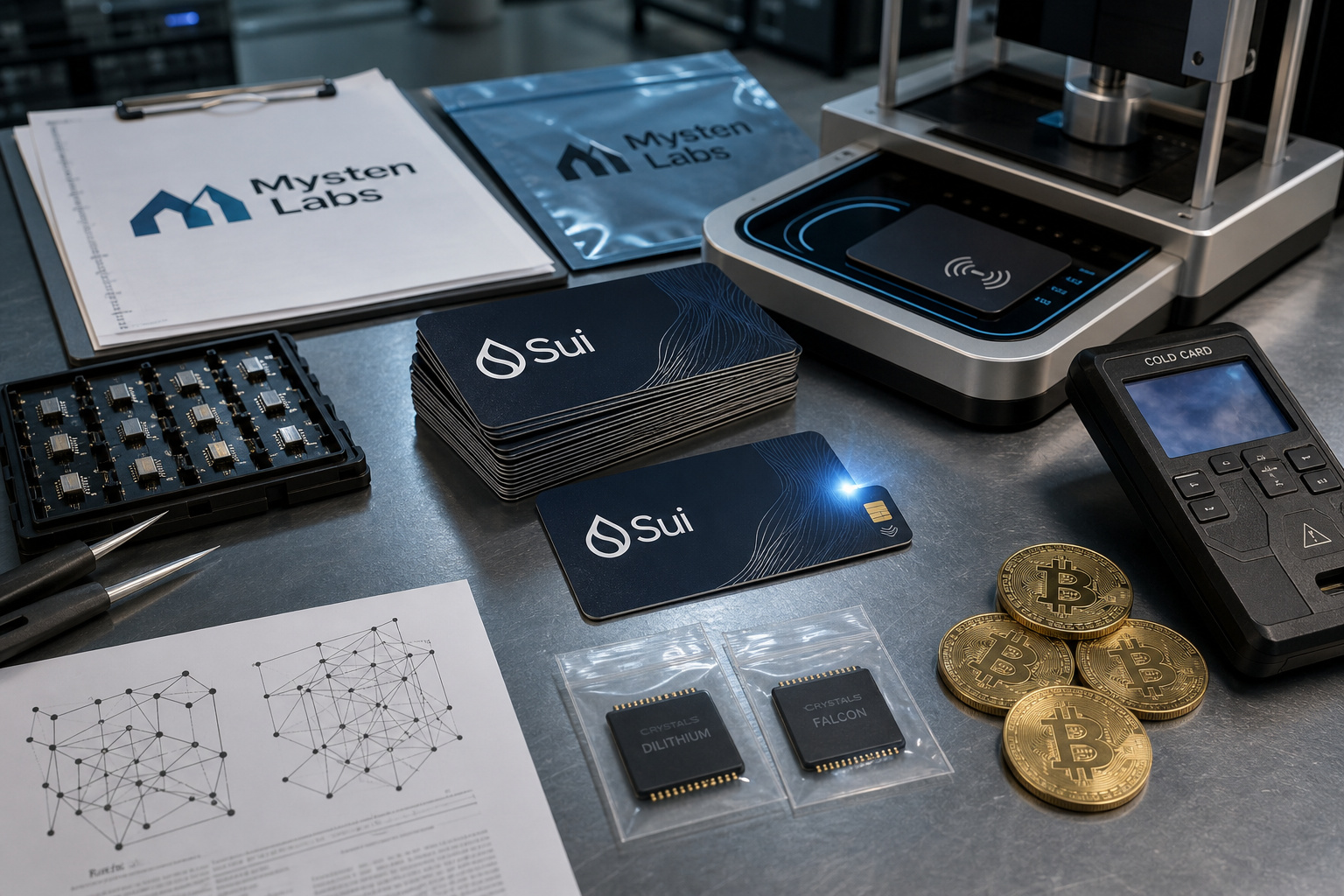
Mysten Labs co-founder and chief cryptographer Kostas Chalkias said he has leased a factory to mass-produce a quantum-resistant hardware wallet card for Sui called the Quantum 2FA Sui card. He said the target price is below $10 per card, while NFC-based quantum signatures are expected to take 1 to 2 seconds. Chalkias added that he has been pushing the project forward in his spare time and may even subsidize cards for users who cannot afford them. The wallet effort builds on work already underway at the Sui protocol layer. Sui had previously planned to add two NIST-approved post-quantum signature schemes, one for everyday accounts and another for high-value Move-based vaults. Existing Sui accounts would be able to rotate to quantum-resistant keys using current recovery phrases, without moving funds to a new wallet.

1130
Mysten Labs co-founder says he has leased a factory to build quantum-resistant Sui wallet cards
Quantum-safe
2026-08-11 22:32:57

Sui Co-Founder Leases Secret Factory to Build Quantum-Safe Wallet Cards

Kostas Chalkias, co-founder and chief cryptographer of Sui developer Mysten Labs, has leased a specialized factory in a secret location to mass-produce quantum-safe hardware wallet cards for the Sui network. The goal is a per-card key cost of less than $10, with NFC quantum signing taking one to two seconds. Chalkias said he is pursuing the project in his personal time and may subsidize cards for users who cannot afford them. The move comes partly in response to the Coldcard hardware wallet event, where Coinkite disclosed a firmware flaw dating back to a 2021 update that bypassed the hardware RNG and generated keys via a predictable process tied to device serial numbers. Attackers have drained roughly 2,055 BTC, or about $130 million, from more than 7,700 addresses since July 30. Separately, Sui plans to adopt two NIST-approved quantum-resistant signature schemes - one for everyday accounts and one for high-value Move vaults - allowing existing users to rotate to quantum-safe keys from their original recovery phrase without migrating to a new wallet. The story was first reported by Bitcoin.com News.

1070
Sui Co-Founder Leases Secret Factory to Build Quantum-Safe Wallet Cards
Samsung Elect
2026-08-05 11:18:08

Samsung pulls back further in China as phone store cuts deepen and chip profits take center stage

Samsung Electronics is retreating again in China, this time through its smartphone channel network. A recent report cited by Sina Tech said stores generating less than RMB 300,000 in monthly sales will be phased out, with closures already seen in Shenzhen, Fuzhou, Zhengzhou and Xi’an. The move comes just three months after Samsung said it would exit China’s home appliance market, while keeping semiconductors, mobile devices and medical equipment operating in the country. The contrast inside Samsung’s business is stark. IDC data cited in the article shows Samsung’s share of China’s smartphone market fell to 0.1% in the second quarter of 2026, with shipments down 60.8% year over year. Yet Omdia data shows Samsung still led the global smartphone market in the same quarter, shipping 60.5 million units and holding a 22% share. The piece argues Samsung’s China setback reflects a mix of pricing pressure from local brands, weaker localization in software and payments, and shifting brand appeal. At the same time, Samsung’s latest quarterly earnings showed semiconductors accounting for 99.7% of operating profit, while the mobile and appliance division slipped into loss. That gap is pushing the group toward a narrower, premium-focused strategy in China, even as concentration around chips raises a different set of risks.

1490
Samsung pulls back further in China as phone store cuts deepen and chip profits take center stage