PDD

JPMorgan
2026-08-09 09:26:13

JPMorgan Says SK Hynix Share Decline Fears Overdone, Sees Midterm Sentiment Improving

JPMorgan said market concerns over SK Hynix's share decline are overdone, as the chipmaker pulls forward its shareholder return program and maintains HBM competitiveness, which should help improve mid-term sentiment. The key catalysts include the formal announcement of the shareholder return plan by end-September 2026 and an update on HBM contract pricing around the same time. The bank projects cumulative free cash flow of over 800 trillion Korean won over three years, giving SK Hynix ample capacity for shareholder returns; with gains from the sale of its Kioxia stake and other items, its return scale could exceed that of other global memory firms. SK Hynix plans to invest about 54 trillion won in infrastructure, including 35.2 trillion won for a DRAM fab in Yongin and 19.1 trillion won for a NAND fab in Cheongju. On HBM4 pricing reports claiming a 50% discount vs. rivals, JPMorgan said the claims are inaccurate. It expects HBM prices to rise less than 40% year-over-year in 2026, partly due to the company's priority on higher-margin long-term contracts for DDR5, LPDDR5 and NAND, and its multi-year procurement approach with top customer Nvidia. Given annual repricing of HBM, short-term pricing becomes less important after securing 3-5 year contracts.


730
JPMorgan Says SK Hynix Share Decline Fears Overdone, Sees Midterm Sentiment Improving
Nvidia
2026-08-08 06:43:09

Nvidia’s Rubin Ultra memory cut hits HBM outlook as global memory stocks slide, while CXMT avoids the same shock

Nvidia’s reported decision to reduce the mainstream HBM configuration on its next-generation Rubin Ultra GPU has shaken expectations across the memory sector. According to the source text, the design under evaluation moved from a planned 12-Hi, roughly 384GB HBM setup to an 8-Hi, 192GB version, nearly halving memory capacity per card. The GPU package was also reduced from 4-die to 2-die, with power dropping from 2300W to 1800W. SK hynix ADR fell 4.97% on the day of the news, and its South Korean shares dropped more than 10% the next day. The report places that development alongside a wider pattern in memory equities: record earnings, weaker share prices. Sandisk posted fiscal 2026 fourth-quarter revenue of $8.97 billion, up 372% year over year, yet its shares still fell after guidance for the next quarter came in below market expectations. SK hynix and Samsung Electronics saw similar market reactions despite posting historic profit figures. The article argues that investors are repricing the sector around slowing growth rather than peak profit levels. It also turns to China’s domestic substitution story. CXMT was described as the world’s fourth-largest DRAM supplier by market share, with progress in DDR5 and LPDDR5 and fast capacity expansion, but still lacking large-scale HBM production. That has left it in a different position from Korean HBM leaders, even as it gains ground in mainstream DRAM.

520
Nvidia’s Rubin Ultra memory cut hits HBM outlook as global memory stocks slide, while CXMT avoids the same shock
Winbond
2026-08-07 07:02:35

Winbond targets top global SLC NAND supplier spot by 2027 as DRAM shortages stretch on

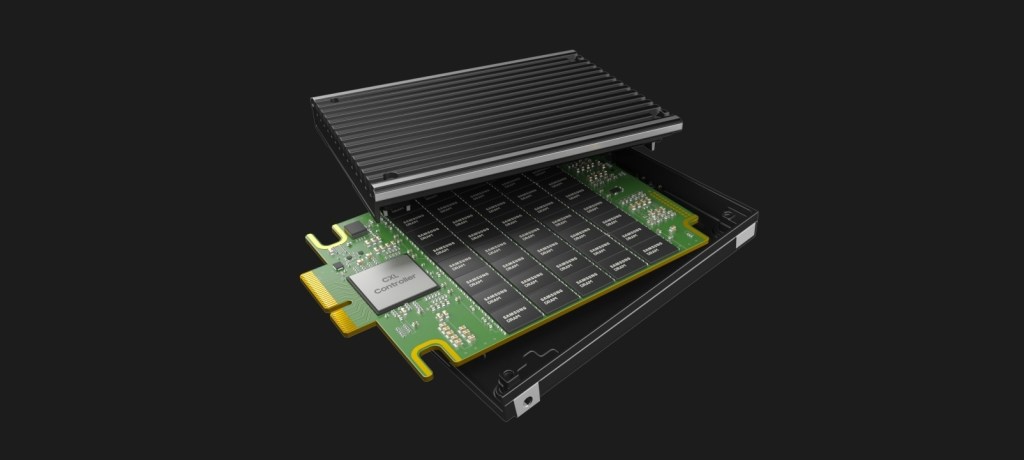
Winbond said DRAM supply will remain tight through 2027 and could get even tighter next year, while some customers are already discussing long-term supply agreements for 2029 and 2030. The company also outlined a plan to become the world’s largest SLC NAND supplier by 2027, backed by capacity expansion in Kaohsiung and a shift to 16nm. Analysts say the market is underestimating SLC demand tied to CMX and CXL-based AI server expansion.

380
Winbond targets top global SLC NAND supplier spot by 2027 as DRAM shortages stretch on
Apple
2026-08-06 04:10:44

Apple’s blowout quarter couldn’t stop a sell-off as AI supply strains cloud the outlook

Apple reported a standout quarter on July 30 for fiscal 2026 third quarter, posting $109.42 billion in revenue, up 16% year over year, diluted EPS of $2.02, up 29%, and gross margin of 50.1%. Nearly every major metric topped Wall Street expectations. Yet the stock fell about 5.5% in after-hours trading and slid nearly 10% at one point in the following session, wiping out close to $500 billion in market value. Investors focused less on what Apple had just delivered and more on what management said comes next: September-quarter revenue growth is expected at 9% to 11%, below the roughly 12% consensus, while gross margin is guided to 47% to 48%. The report argues that the market reaction reflects a broader shift in the AI trade. Apple is now being pulled into the global fight for semiconductor resources as AI infrastructure absorbs more high-quality memory capacity and advanced manufacturing supply. That pressure shows up in two places at once: rising DRAM and LPDDR costs, and tight advanced-node capacity for Apple Silicon. Apple has tried to smooth the hit by building inventory, with total inventory reaching $11.09 billion at the end of June 2026 and components rising to about $7.65 billion. But inventory cannot create new capacity. The debate around Apple now centers on whether it can protect volume, pricing and margins at the same time, and whether Apple Intelligence and Siri AI can turn into device upgrades, subscriptions and higher lifetime user value quickly enough to justify its valuation.

760
Apple’s blowout quarter couldn’t stop a sell-off as AI supply strains cloud the outlook
Extended
2026-08-05 13:06:56

Extended Launches RWA Prime Market Backed by 36 US Equities and SOFR-Based Funding Rates

BlockBeats reports that on August 5, Extended, a blockchain-based perpetual futures platform, launched RWA Prime, a market supporting roughly 36 US-listed stocks including semiconductor, foundry, Chinese ADR, cloud software, and Bitcoin miner names. Trading runs 24/5, pausing on weekends and exchange holidays while positions remain open. Funding rates use SOFR as the benchmark, determined by open interest skew instead of order book spread pressure.

570
Extended Launches RWA Prime Market Backed by 36 US Equities and SOFR-Based Funding Rates
Goldman Sachs
2026-08-05 04:02:11

Goldman Sachs Sticks With Buy Calls on Samsung and SK Hynix, Betting on HBM Repricing and Long-Term Supply Deals

Goldman Sachs has reaffirmed its buy ratings on Samsung Electronics and SK Hynix even after the two stocks fell 23% and 35% over the past month. The bank’s case rests on three points: HBM pricing could reset higher in 2027, multi-year long-term agreements are locking in capacity and improving revenue visibility, and low inventory levels across suppliers are reducing the odds of a near-term downcycle. Goldman expects both companies’ blended HBM average selling prices to approach $2.9/Gb in 2027, with roughly 60% of the increase coming from repricing of comparable products and the rest from a richer mix of newer, higher-layer HBM. It also sees HBM taking a larger share of DRAM revenue for both companies through 2028. At the same time, the report says risks remain clear: AI server demand could disappoint, the final terms of long-term agreements may end up weaker than expected, capacity additions could still pressure legacy memory pricing, and China-based CXMT remains a supply-side variable over the longer run even if it is unlikely to change the tight global balance in the near to medium term.

940
Goldman Sachs Sticks With Buy Calls on Samsung and SK Hynix, Betting on HBM Repricing and Long-Term Supply Deals
DRAM
2026-08-05 06:20:37

Apple's CXMT Price-Cut Demand Rejected; Samsung, SK Hynix Gain DRAM Leverage

Apple's demand for lower prices on LPDDR5X and other mobile DRAM from Chinese chipmaker CXMT has been rejected, South Korea's Digital Daily reports. The move was part of Apple's effort to cut component costs for its next-generation iPhone and smart devices. CXMT is keeping quotes at or above the levels offered by Samsung Electronics and SK Hynix, backed by long-term high-priced supply agreements with Huawei, Xiaomi and other Chinese manufacturers. The broader DRAM market is tightening: major vendors are shifting capacity to HBM, trimming output of commodity DDR5 and LPDDR5X and pushing prices higher, which erodes the long-standing strategy of using cheap Chinese components to cut procurement costs. CXMT's absorption of China's commodity DRAM demand also relieves Samsung and SK Hynix of pressure to clear low-margin inventory. Both Korean firms are now focusing on AI memory products including HBM4, LPCAMM2 and enterprise SSDs, strengthening their hand in long-term pricing talks with global tech companies in the second half.

790
Apple's CXMT Price-Cut Demand Rejected; Samsung, SK Hynix Gain DRAM Leverage
DRAM
2026-08-05 02:59:43

DRAM pricing surge lifts July revenue at Nanya and ESMT to record highs

Taiwan memory makers Nanya Technology and ESMT both posted record monthly revenue in July as the DRAM upcycle continued, with higher prices doing most of the work. Nanya reported consolidated revenue of NT$43.868 billion for the month, up 49.27% from June and 719.61% from a year earlier, marking its ninth straight monthly high. ESMT posted NT$6.785 billion, up 40.02% month over month and 491.06% year over year, also a record. The report said the latest rally is being driven by pricing rather than shipment growth. In Nanya’s case, second-quarter DRAM average selling prices rose more than 60% from the previous quarter while bit shipments were nearly flat, meaning the jump in revenue and profit came largely from stronger pricing. Supply remains tight as AI infrastructure demand keeps pulling wafer capacity and R&D resources toward HBM, LPDDR5 and DDR5 at Samsung, SK hynix and Micron, squeezing legacy DRAM lines such as DDR4, LPDDR4, DDR3 and DDR2. Spot prices have moved in the same direction. CFM Memory data showed DDR4 8Gb 3200 rose 12.82% in a single week, while DDR5 24Gb and DDR5 16Gb both climbed 14.29%.

770
DRAM pricing surge lifts July revenue at Nanya and ESMT to record highs