STA

Bitcoin ETF
2026-09-22 09:31:01

Bitcoin spot ETFs pull in $999 million as X adds live market quotes for stocks and crypto

A PANews daily roundup put several crypto and tech developments in focus, led by strong U.S. spot ETF flows and a new market data feature on X. According to SoSoValue, U.S. spot Bitcoin exchange-traded funds recorded $999 million in net inflows on Sept. 21 Eastern Time, extending the streak to three straight days. BlackRock’s IBIT led with $381 million, while ARKB from Ark Invest and 21Shares added $289 million. Spot Ether ETFs also posted $270 million in net inflows the same day, with BlackRock’s ETHA and Fidelity’s FETH leading the list. On the product side, X rolled out live quote displays for stocks and cryptocurrencies. The feature includes a trading button that routes users to Coinbase, Gemini, Kraken, Moomoo and Interactive Brokers. The roundup also covered a Bloomberg report that the U.S. Department of Justice is investigating whether Binance may have violated Iran sanctions, a governance incentive proposal vote launched by World Liberty Financial, xAI’s release of Grok 4.7, and fresh revenue figures from the Bittensor ecosystem. In market data and on-chain activity, PANews highlighted a 14-year-dormant wallet moving 600 BTC, a brief USDe depeg on Binance, and new ETH accumulation by BitMine and several whale addresses.

210
Bitcoin spot ETFs pull in $999 million as X adds live market quotes for stocks and crypto
ESWIN Computi
2026-09-22 07:56:14

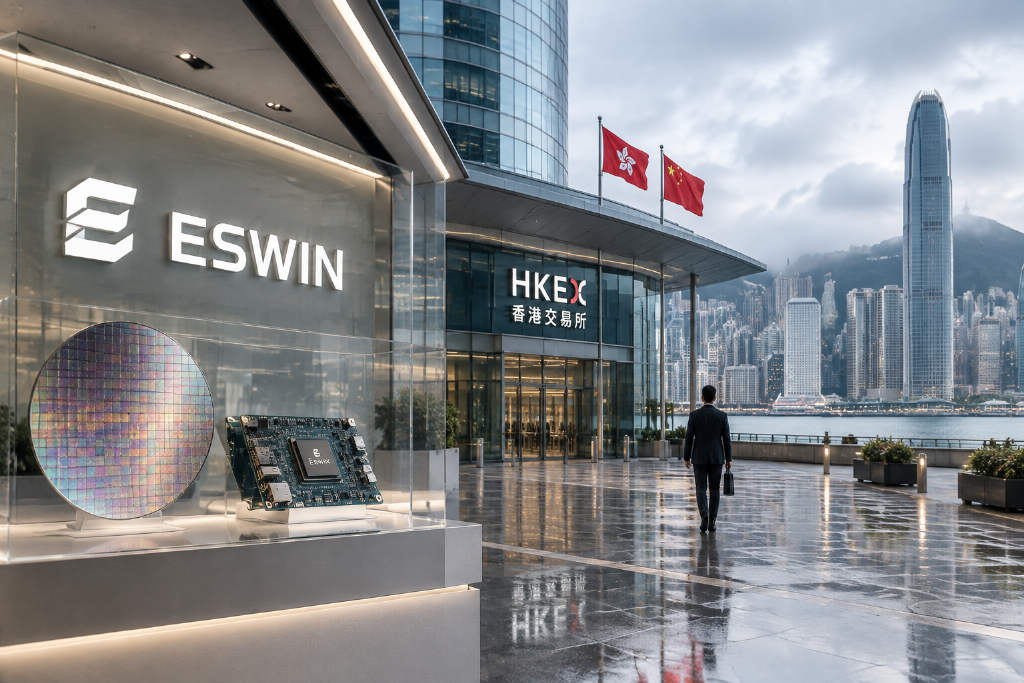
ESWIN Computing Clears HKEX Hearing as BOE Founder Wang Dongsheng Takes a Second Bet on RISC-V

ESWIN Computing has passed its Hong Kong listing hearing after three filing attempts, moving a step closer to becoming what its prospectus positions as the first RISC-V-focused listing in Hong Kong. The company is tied to Wang Dongsheng, founder of BOE Technology, whose first major industry wager helped build China’s LCD panel champion and whose second venture is now centered on chips and computing infrastructure. The listing documents show a business with rising revenue but persistent losses. ESWIN Computing posted revenue of RMB 1.752 billion, RMB 2.025 billion, and RMB 2.431 billion from 2023 to 2025, while net losses over the same period came to RMB 1.837 billion, RMB 1.547 billion, and RMB 1.516 billion, totaling RMB 4.9 billion over three years. Its human-machine interaction chips, still closely tied to display-related demand, remained the main revenue source in 2025, while interconnect and computing chips grew faster but from a smaller base. The prospectus also highlights two issues investors will likely focus on after the hearing: customer concentration and commercialization of the RISC-V ecosystem. ESWIN disclosed that its largest customer contributed 82.1%, 76.8%, and 64.6% of revenue from 2023 to 2025. At the same time, the company is trying to build a broader software and hardware ecosystem around RISC-V through its RISAA platform and the broader RDI concept.

100
ESWIN Computing Clears HKEX Hearing as BOE Founder Wang Dongsheng Takes a Second Bet on RISC-V
Gate
2026-09-22 07:39:32

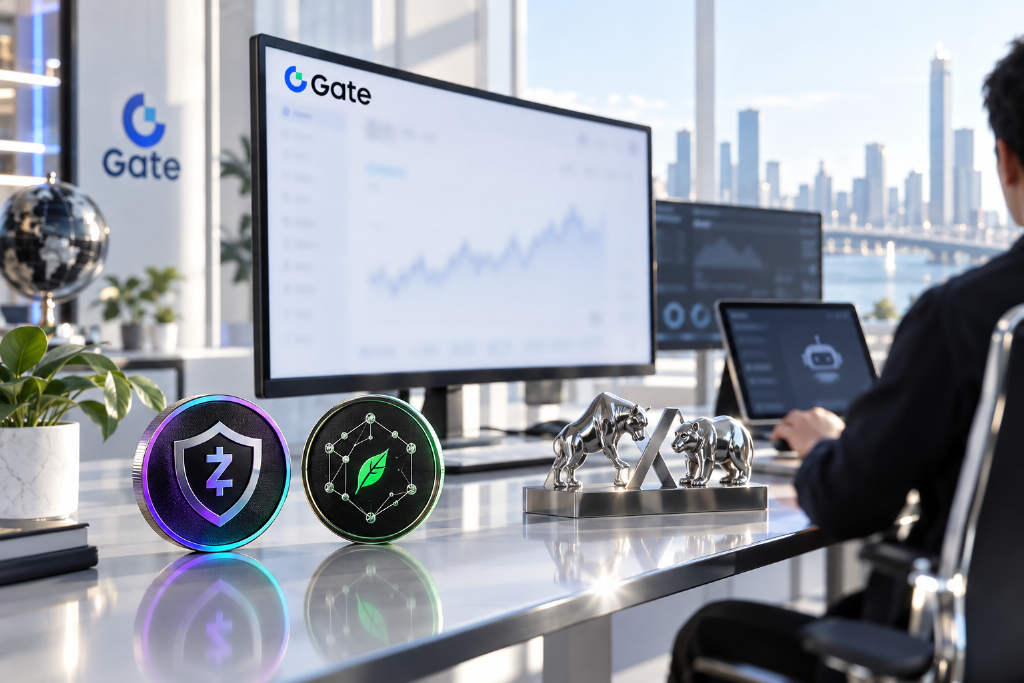
Gate lists STAMP and ORBIO perpetual contracts with copy trading support

Gate has launched live trading for STAMP and ORBIO perpetual contracts, according to an official announcement. The exchange said the two contracts support both long and short positions with leverage ranging from 1x to 10x. Gate also opened access to trading bots and copy trading for the newly listed products. The announcement included brief descriptions of both projects. STAMP, short for Zcash Shielded Assets, is described as a Solana community project formed around Shielded Assets (ZSA), which is under development for Zcash. ORBIO, also referred to as Orbio.so, is described as an on-chain Credit Marketplace built around AI inference on Robinhood Chain. No additional launch details were provided in the brief notice. The update was published by ChainCatcher, citing Gate’s official announcement.

90
Gate lists STAMP and ORBIO perpetual contracts with copy trading support
Ethereum
2026-09-22 07:14:09

Vitalik outlines EIP-8288, shifting signature and proof aggregation into Ethereum’s mempool

Vitalik Buterin used his ETHShanghai 2026 talk to lay out EIP-8288, a proposal he said could ease one of Ethereum’s hardest tradeoffs: scaling without giving up privacy or stronger cryptography. The design keeps large signatures and STARK proofs off-chain, then has mempool nodes aggregate them before block inclusion, so the chain only needs to verify a single proof for a batch of transactions. In Buterin’s framing, the proposal builds on EIP-8141, the native account abstraction upgrade expected in the next hard fork. Transactions would declare dependencies for signatures or proofs through compact frame structures, while the heavy cryptographic objects are absorbed and compressed in the mempool. He argued this could sharply reduce the cost of quantum-safe transactions, privacy-preserving applications, and proof publication for Layer 2 systems. Buterin also described the architecture as a form of specialized sharding for verification work, separating transaction business logic from expensive dependency checks. He said the approach could become one of Ethereum’s first practical paths for using RISC-V or a similar instruction set in proof expression, while early simulation tools, testnets, competitions, and prototype code are already under development around the proposal.

90
Vitalik outlines EIP-8288, shifting signature and proof aggregation into Ethereum’s mempool
DeepSeek
2026-09-22 03:44:56

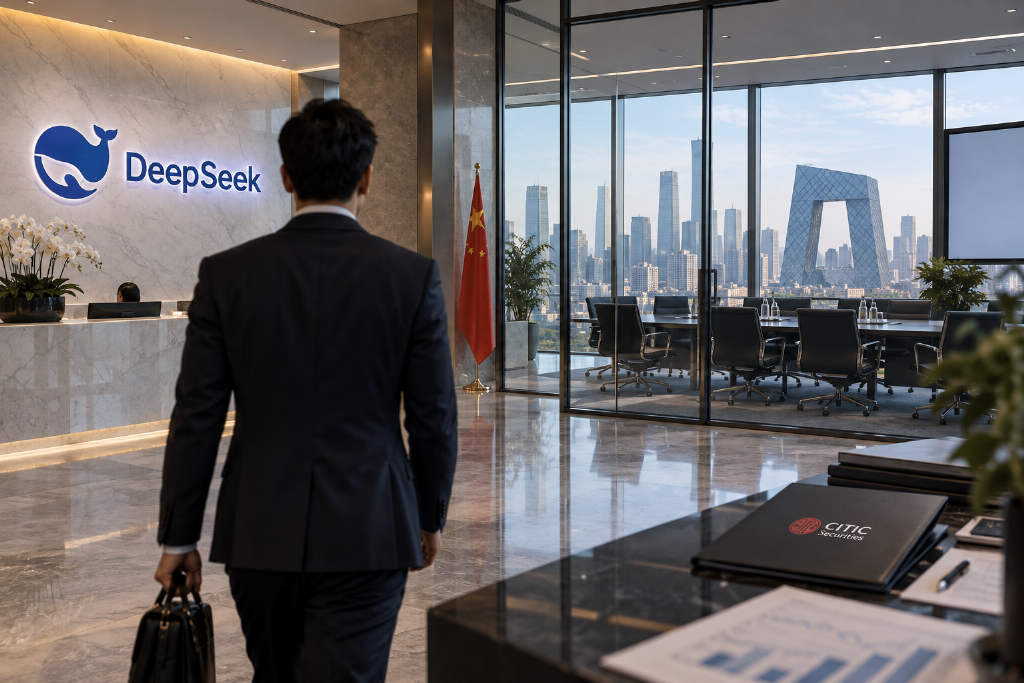
Yan Wentao joins DeepSeek as its first CFO

According to an exclusive report by PEdaily, Yan Wentao officially joined DeepSeek on Monday and has reported to the company as its first chief financial officer. Yan, born in 1991, graduated from Fudan University and joined Hillhouse Ventures in 2020. The report said he had previously worked on projects involving MiniMax, Zhipu AI, and ByteDance. PEdaily also said DeepSeek is finalizing its second funding round, with a plan to raise RMB 50 billion at a pre-money valuation of RMB 500 billion. The company has also hired CITIC Securities to prepare for a potential STAR Market IPO. The update was cited by ChainCatcher in a 7x24 newsflash.

80
Yan Wentao joins DeepSeek as its first CFO
Calterah
2026-09-21 10:28:11

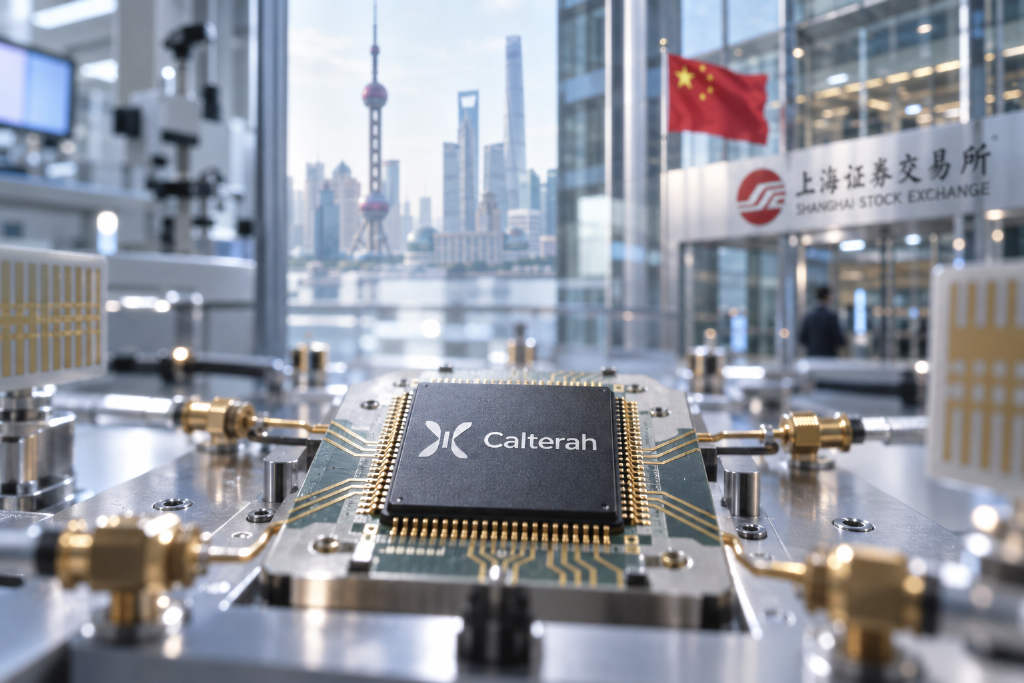
Calterah’s STAR Market IPO filing advances as radar chip share tops 30% in China while losses reach about 910 million yuan

Calterah Microelectronics, a Shanghai-based automotive wireless sensing and connectivity chip designer, has had its STAR Market IPO application accepted by the Shanghai Stock Exchange and is now in the inquiry stage. The company entered the process with strong headline metrics: a 31.1% share of China’s automotive millimeter-wave radar chip market in 2025, second only to Texas Instruments in the domestic ranking, more than 30 million cumulative radar chip shipments, and revenue that climbed from 206 million yuan in 2023 to 632 million yuan in 2025. Its core business gross margin also stayed above 47% in most reporting periods and reached 48.97% in the first quarter of 2026. The filing also lays out the pressure points. Calterah has not yet turned profitable, posting net losses of 323 million yuan, 334 million yuan, 193 million yuan, and 60.2866 million yuan from 2023 through the first quarter of 2026, for cumulative losses of about 910 million yuan. Revenue growth slowed sharply to 8.1% year over year in the first quarter of 2026, down from more than 100% in 2025. Customer concentration remains high, with the top five customers contributing 99.97% of revenue in the latest quarter and the largest end customer accounting for more than half of 2025 sales. Calterah plans to raise 3.489 billion yuan, including 2.093 billion yuan for high-performance millimeter-wave radar chips and 695 million yuan for UWB chip development and industrialization.

80
Calterah’s STAR Market IPO filing advances as radar chip share tops 30% in China while losses reach about 910 million yuan
AI Hardware
2026-09-21 09:45:09

AI hardware startups are moving from ski slopes to tennis courts to rebuild sports training

A new crop of founders from ByteDance, DJI, Tencent, Amazon Lab126, Smartisan and other major tech companies is pushing AI hardware into narrow sports-training niches, from skiing and golf to tennis and basketball. The report centers on startups such as Heygo, BirdieSense, PomBot, LUMISTAR, MossCode, BleeqUp and XbotGo, and tracks their products, funding rounds and go-to-market strategies over the past two years. The common thread is not general fitness tracking. These companies are trying to answer a harder question: whether a movement is correct, where it breaks down, and how to turn that judgment into usable feedback. In skiing, Heygo uses two IMU sensors clipped to ski boots and a model trained on million-level skiing data to infer ski posture. In golf, BirdieSense uses a monocular camera and on-device 3D pose analysis. In tennis and table tennis, robot trainers are replacing repetitive ball-feeding sessions, a use case that is easier for users to pay for immediately. The article also points to a second branch of the market focused on recording sports activity rather than judging technique, including AI watches, sports glasses and auto-tracking cameras. Across both branches, falling edge-compute costs, large-model-based natural-language feedback and crowdfunding-led overseas distribution are helping the category gain momentum, even though no single blockbuster financing has yet defined the sector.

90
AI hardware startups are moving from ski slopes to tennis courts to rebuild sports training
Embodied AI
2026-09-21 09:16:08

Unitree’s post-IPO pullback cools embodied AI valuations and listing hopes

A month after Unitree went public, investors in China’s embodied AI sector are reassessing valuations, financing pace, and IPO expectations. The company debuted on Shanghai’s STAR Market on Aug. 19 at RMB 150.80 per share, surged more than 500% at the open, and briefly pushed its market capitalization above RMB 440 billion. The rally did not last. Its shares then retreated sharply and lost half their value within four trading days, giving the market its first major local pricing reference for humanoid robotics. That reset is now being felt across both private funding and public listing plans. Investors cited in the report said deal approvals for embodied AI projects have slowed, even if firms have not formally declared a halt. The pressure is also building in Hong Kong, where a long line of robotics companies is waiting to list. At the same time, regulators are signaling tighter scrutiny. The Information reported that authorities had issued informal guidance to raise IPO thresholds for humanoid robot companies, while Hong Kong Chief Executive John Lee said the Hong Kong Stock Exchange will consult in the first half of next year on revisions to the Chapter 18C regime, including market-cap requirements. Even so, investors have not abandoned the sector. Several said capital is likely to shift toward upstream components and foundational technologies such as joints, dexterous hands, controllers, and world models, while companies are being pushed to prove real revenue generation and preserve cash.

90
Unitree’s post-IPO pullback cools embodied AI valuations and listing hopes