STAR

Enflame
2026-09-02 10:09:10

Enflame starts STAR Market subscription with Tencent in the strategic allotment list

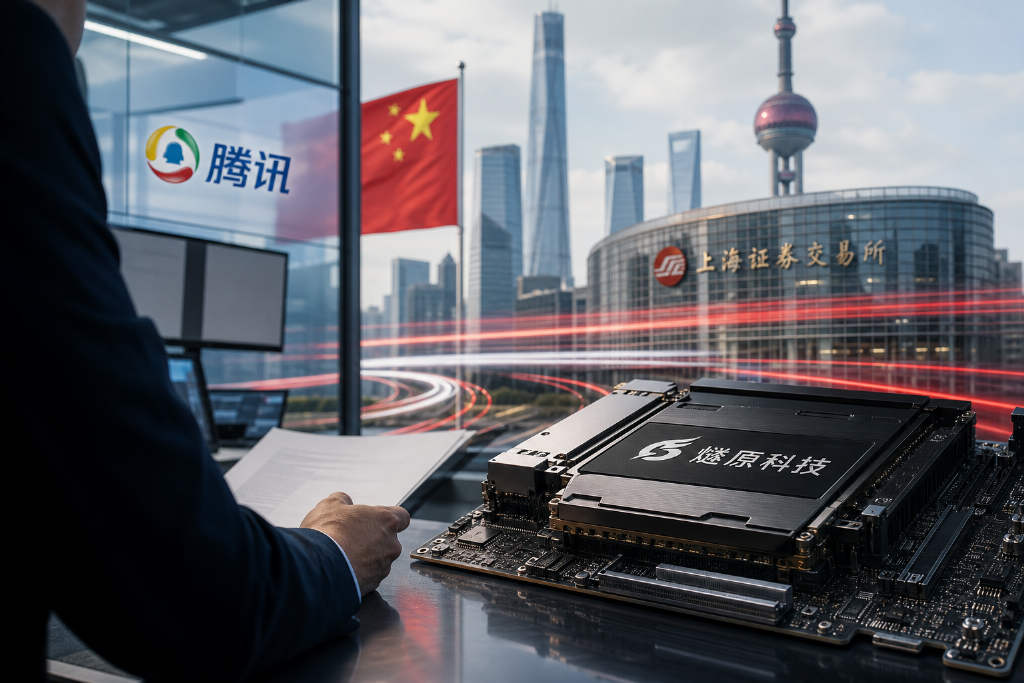
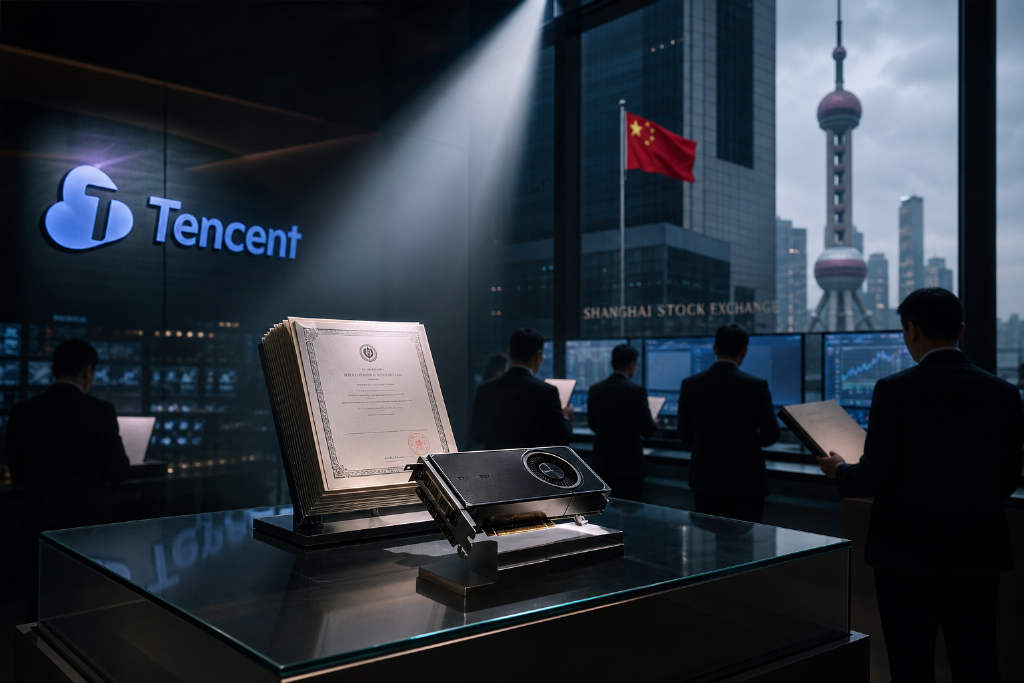
Enflame Technology has set its STAR Market IPO price at RMB 142.18 per share, with planned fundraising of about RMB 6.119 billion and an implied valuation above RMB 60 billion. The company opened online and offline subscription on Sept. 2, drawing attention from retail investors betting on a strong debut. Under a rough calculation cited in the source, a first-day gain of more than 400% would leave one winning lot of 500 shares with paper profit above RMB 280,000. Tencent appeared again in the final strategic placement roster through Shanghai Qishan Investment Co., Ltd., its wholly owned equity investment platform. The vehicle was allotted about 1.7471 million shares worth roughly RMB 248 million, subject to a 36-month lock-up. According to the prospectus details cited in the report, Tencent has backed Enflame in multiple private rounds since 2018, holds more than 20% cumulatively, and is the company’s largest external shareholder. Tencent is also Enflame’s largest customer, contributing more than 80% of sales revenue in 2025. The report also places Enflame’s listing in the context of a broader harvest cycle for Tencent’s hard-tech bets, alongside ChangXin Technology, Zhipu, MiniMax, Sinovent-like biotech applicant Xinnuowei, and DPU company Yunbao Intelligence.
880
Enflame starts STAR Market subscription with Tencent in the strategic allotment list
WuBlockchain
2026-09-02 09:05:48

WuBlockchain August tech report: BIP-110 stalls, Glamsterdam goes public, Solana moves toward 350ms

WuBlockchain’s August technology report tracked a broad set of blockchain infrastructure updates across Bitcoin, Ethereum, Solana, major Layer 2 networks, and several other ecosystems. The report said Bitcoin’s long-debated BIP-110 entered real activation in August but failed to gain support, with miner signaling at only about 2.5% during the mandatory signaling phase. Nodes enforcing the rule began rejecting non-signaling blocks from height 961,632, effectively creating a minority chain that produced only around two blocks before largely stalling, while the main Bitcoin network continued as normal. On Ethereum, the Glamsterdam upgrade moved from internal DevNet testing into a public test phase, with DevNet 8/Platåberget launched on Aug. 13 and the Gloas fork activated on Aug. 20. Testing has shifted from basic functionality to edge cases and client compatibility, while tentative testnet activation targets of Sept. 28 for Sepolia and Oct. 26 for Hoodi have been proposed. Hegotá also advanced from open proposal intake into a narrower candidate-selection stage. The report also highlighted rising performance competition across scaling networks. OP Mainnet upgraded from 250ms Flashblocks to 200ms Subblocks, Base outlined a 200ms Native Blocks plan, and Solana is preparing to reduce mainnet slot time to 350ms starting from epoch 1020. In parallel, Arbitrum said real mainnet blocks can now be proven with SP1-generated ZK proofs, extending its path toward a multi-proving architecture.

1030
WuBlockchain August tech report: BIP-110 stalls, Glamsterdam goes public, Solana moves toward 350ms
Suiyuan Techn
2026-09-02 07:54:12

Suiyuan Technology Opens Subscription for $6.1 Billion-Value GPU IPO

Chinese GPU developer Suiyuan Technology opened subscription for its STAR Market offering on Sept. 2 at 142.18 yuan per share, implying a market capitalization of about 61.2 billion yuan. With 500 shares in a standard lot, a successful retail applicant would need to pay roughly 71,100 yuan. The offering drew 337 institutional investors and 11,805 placement accounts during preliminary price inquiries. After invalid bids and the highest quotes were removed, the proposed off-exchange subscription volume reached 72.959 billion shares, or 2,648.93 times the initial allocation size. Xiaomi, GigaDevice, Fullhan Microelectronics, ZTE and the National Social Security Fund appeared on the strategic placement list. Tencent is central to the offering. Tencent Technology directly held about 19.95% of Suiyuan before the offering, while Tencent-related entities held 20.26% and formed the largest institutional shareholder group. Tencent accounted for 83.79% of Suiyuan’s revenue in 2025. Revenue rose from 301 million yuan in 2023 to 990 million yuan in 2025, and first-half 2026 revenue reached 1.12 billion yuan. Suiyuan expects basic break-even in 2026 and profitability no later than 2027, while acknowledging its continued dependence on Tencent and the limited scale of its L600 mass production.

1010
Suiyuan Technology Opens Subscription for $6.1 Billion-Value GPU IPO
Robinhood
2026-09-01 08:03:35

Robinhood’s On-Chain Ecosystem Draws Capital Into Meme Tokens and Stock-Paired Markets

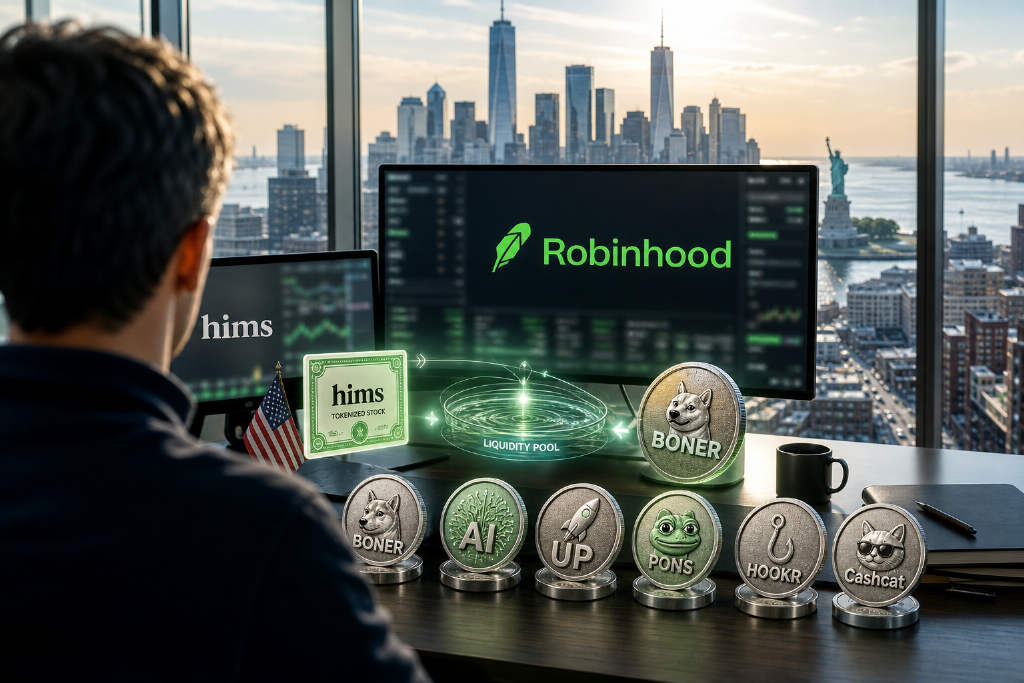
Robinhood’s on-chain ecosystem has produced a wide range of meme tokens, launchpad projects, NFTs, DeFi protocols and stock-paired markets in less than two weeks, according to an analysis published by TechFlow. As of Sept. 1, the ecosystem had at least 30 meme tokens with market capitalizations above $1 million and 28 application tokens. BONER, paired with a tokenized version of HIMS stock, rose from an $8 million valuation to $80 million in a single day. During the New York Stock Exchange’s weekend closure, the on-chain HIMS token reportedly traded as high as $132, compared with HIMS’ $28.8 Friday close. Artificial Inu, or AI, which is paired with tokenized Nvidia stock, reached a market capitalization of $190 million. Other stock-linked pools included Micron, SpaceX, Taiwan Semiconductor Manufacturing, QUBT, SPY and ZEC-related projects. Infrastructure tokens also gained attention. UP generated about $180,000 in fees from Aug. 31 to Sept. 1, while PONS, HOOKR, INDEX, DENAR and PICKLES represented launchpad, liquidity, stock-distribution, lending and AI-trading themes. The analysis also covered MARKETPLIER, launched after Markiplier became GoPro’s largest single shareholder, and several smaller sentiment-driven tokens.

1160
Robinhood’s On-Chain Ecosystem Draws Capital Into Meme Tokens and Stock-Paired Markets
STAR Market
2026-09-01 04:18:08

STAR Market first-half net profit tops last year’s full-year level, with CXMT surging 3427.76%

China’s STAR Market posted sharply higher earnings in the first half of 2026, according to data cited by the Shanghai Stock Exchange. Companies on the board generated a combined 1.01 trillion yuan in revenue, up 38.6% year over year, while net profit reached 144.887 billion yuan, up 437.6% and already above the full-year level recorded last year. Wind data showed that 409 of the 616 listed companies were profitable in the period, while 334 posted year-over-year net profit growth and 133 more than doubled profit. Semiconductors were the standout sector. Newly listed ChangXin Memory Technologies recorded 77.605 billion yuan in net profit attributable to shareholders, up 3427.76%, making it the board’s top profit earner. The company said stronger global demand for computing power, capacity allocation by major manufacturers, tight DRAM supply, and higher prices drove margin gains. Biwin Storage also reported strong numbers, while Semiconductor Manufacturing International Corp. and Huahong Group posted profit growth. Innovative drugmakers were another bright spot, supported by outbound licensing activity. Still, the results were uneven across sectors. Wind data showed 207 companies remained loss-making, and JinkoSolar posted the largest loss at 3.076 billion yuan as photovoltaics stayed under pressure.

810
STAR Market first-half net profit tops last year’s full-year level, with CXMT surging 3427.76%
Bitcoin ETF
2026-09-01 01:58:45

Bitcoin ETF inflows snap after nine days as Ether funds keep gaining; Bailey warns AI could trigger a financial shock

Crypto markets spent the past 24 hours balancing ETF flow data, shifting rate expectations and a fresh batch of regulatory and infrastructure developments. U.S. spot Bitcoin ETFs posted $201.9 million in net outflows on Aug. 28, ending a nine-session inflow streak that began in mid-August. Spot Ether ETFs moved the other way, taking in $102.1 million that day and stretching their run of positive flows to 10 straight sessions. According to SoSoValue, weekly flows still remained strong for both products, with Bitcoin funds adding $924 million over the Aug. 24-28 trading week and Ether funds bringing in $824 million. Macro pressure also remained in focus. Bitcoin held near $78,000 while the dollar strengthened and the yen slipped through 160 against the U.S. dollar. Ahead of Friday’s U.S. nonfarm payrolls report, CME FedWatch data showed traders assigning better-than-even odds to two Fed rate hikes this year. In parallel, Bank of England Governor Andrew Bailey warned G20 finance officials that frontier AI models could magnify cyber risks and expose already stretched financial markets to more severe disruptions. Elsewhere, Ireland moved to exclude crypto from a planned tax-advantaged investment account, Japan’s Financial Services Agency proposed easing reporting rules for trust-based stablecoins from fiscal 2027, and several market structure stories landed at once, from DTCC’s tokenization timeline and CME’s new crypto indexes to exchange inflows, venture financing, and fresh security incidents on Fogo and Cronos.

1070
Bitcoin ETF inflows snap after nine days as Ether funds keep gaining; Bailey warns AI could trigger a financial shock
equity financ
2026-08-31 12:52:16

Local governments chase Hefei’s equity-finance playbook, but funding, risk control and exits remain major hurdles

Unitree Technology’s listing has pushed “equity finance” back into focus in China, as local state capital appears on the shareholder roster of yet another hard-tech company. The model, often associated with Hefei’s high-profile investments in BOE, NIO and CXMT, has gained traction as land-sale revenue weakens and local governments search for new sources of fiscal support. Yet the article argues that the approach is far harder to replicate than headline successes suggest. Experts interviewed by Time Weekly said equity investment cannot simply replace land finance. Even on a broad measure, local state-capital operating income remains only a small fraction of land-transfer revenue. They also pointed to three practical barriers: many local governments lack spare funds to invest, picking winners in sectors such as semiconductors and new energy requires strong professional judgment, and exits often depend on listings or acquisitions that may take years or never happen. The piece contrasts Hefei’s celebrated wins with failed cases such as local backing for Neta Auto, and says structural issues still matter more than enthusiasm. In the longer run, experts said the path forward for local public finance still depends on fiscal-system reform, clearer rules for state-capital investment, better tolerance for normal market risk, and changes to the division of fiscal powers and tax reform between the central and local governments.

380
Local governments chase Hefei’s equity-finance playbook, but funding, risk control and exits remain major hurdles