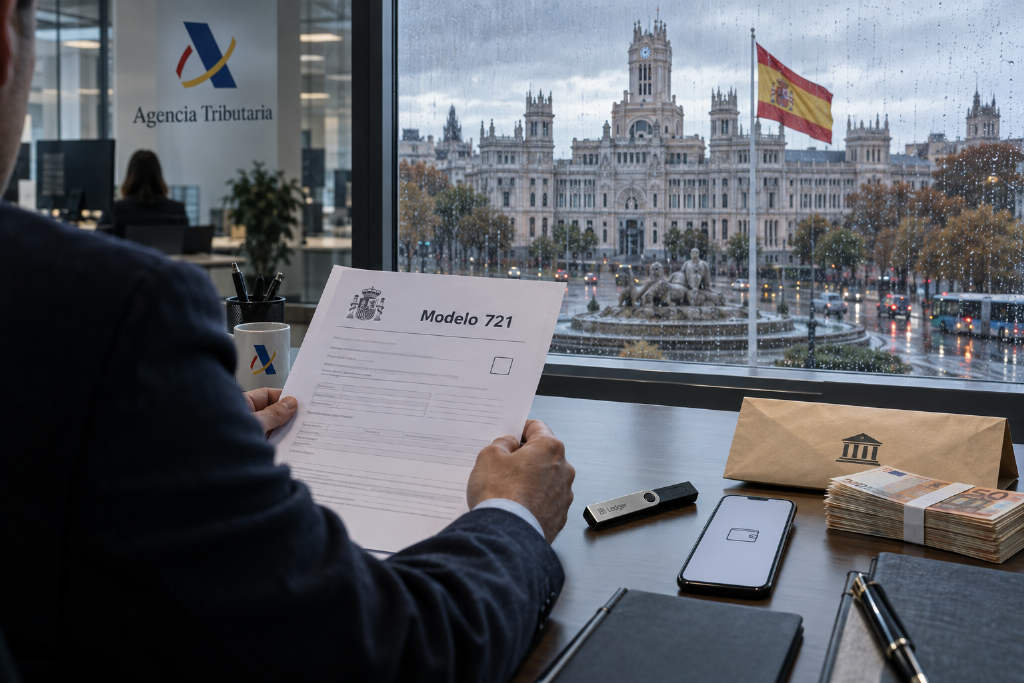
Spain2026-09-29 02:37:12Spain’s tax agency says self-custodied crypto does not fall under Modelo 721 reportingSpain’s State Tax Administration Agency, or AEAT, has updated its FAQ for Modelo 721, the information return covering crypto assets held abroad. In the updated guidance, the agency states that self-custodied cryptocurrencies are not subject to this filing requirement when the holder retains direct and full control of the private keys. The clarification narrows the scope of the reporting obligation. Under the rule described by AEAT, a Spanish tax resident must file the report only when the private keys are entrusted to a third-party institution that is not a Spanish tax resident and the total value of crypto assets held abroad exceeds 50,000 euros as of Dec. 31 each year. In that case, the information return must be submitted between January and March of the following year. The update was reported by Techub News, citing Wu Blockchain.250
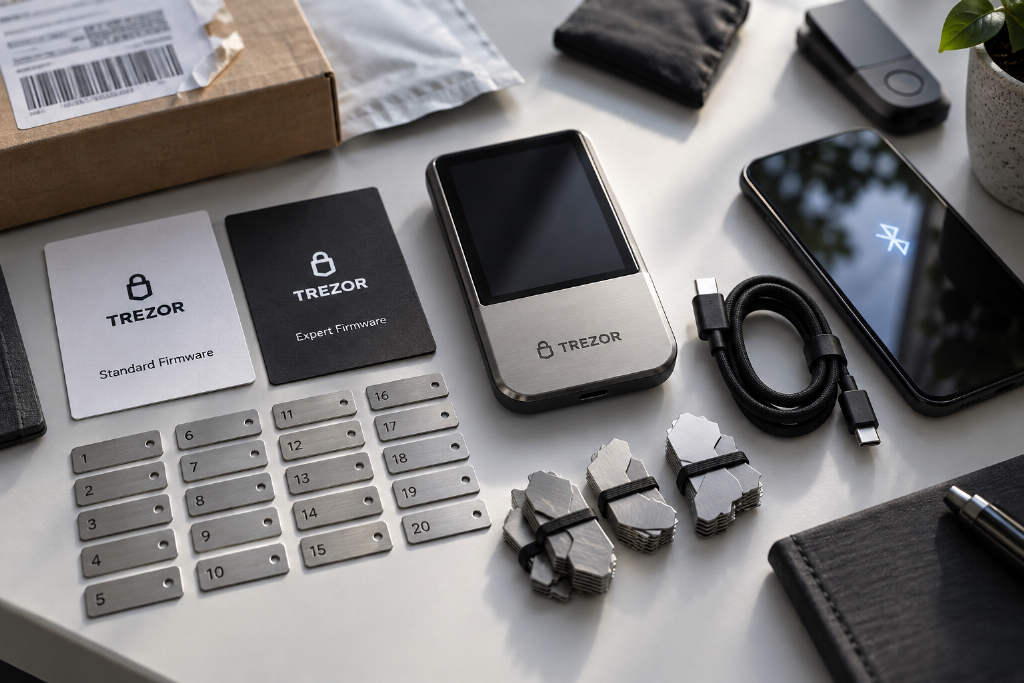
Trezor2026-09-28 14:32:00Bitcoin Magazine Review Says Trezor Safe 7 Sits Between Open-Source Self-Custody and Mainstream Hardware DesignBitcoin Magazine has published an extensive review of the Trezor Safe 7, describing the device as a middle-ground option between fully open-source, self-custody-first hardware wallets and more consumer-oriented products built around polished design and user guardrails. The review highlights the wallet’s metal body, large edge-to-edge screen, tactile approval flow, and dual firmware approach, with separate multi-coin and Bitcoin-only stacks that users can switch between regardless of the device color they bought. A major focus of the piece is Trezor’s use of 20-word SLIP-39 backups and the company’s Shamir backup system. According to the review, the extra words do not increase entropy beyond the 128 bits users would expect from a 12-word seed, but they enable migration from a single-seed setup to Shamir shares without moving funds on-chain. The article also covers Safe 7’s Bluetooth support, Qi2 wireless charging, LiFePO₄ battery choice, and the security trade-offs that come with moving away from a stricter air-gapped model. The review further examines Safe 7’s four entropy sources, the absence of direct user-supplied entropy at wallet creation, and Trezor’s comments on why that design remains under discussion. It also points to the recent ShipMonk data breach affecting 67,000 U.S. customer records and notes Trezor’s plan to roll out an anonymous delivery option in the EU within weeks, followed by the U.S. soon after.240
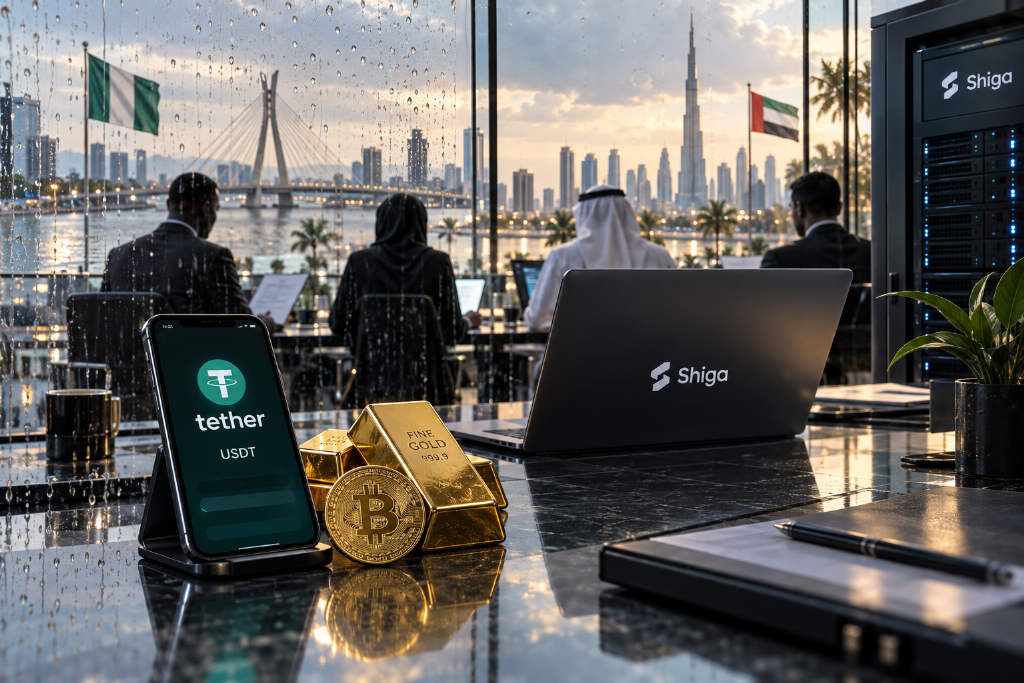
Tether2026-09-28 12:25:00Tether partners with Shiga to roll out self-custody products in Africa and the GCCTether has partnered with fintech company Shiga to launch self-custody financial products for users and institutions in Africa and the Gulf Cooperation Council, according to an official announcement cited by ChainCatcher. The collaboration will use Tether’s open-source Wallet Development Kit, or WDK, as the technical base for the rollout. The two companies plan to introduce two flagship offerings. The first is ENTA, a self-custody wallet for individuals and businesses that supports funding with fiat currency or Bitcoin and allows users to hold and transfer Tether (USDT), Bitcoin, and Tether Gold (XAUT). The second is Pulse, an infrastructure product for banks and financial institutions designed to help them tailor digital asset services to specific payment rails and settlement workflows while keeping key control through private deployments. Shiga is also in the final approval stage for a Nigerian digital asset intermediary license. Once approved, the company plans to operate compliant digital asset trading, brokerage, and custody services in the country.280
PancakeSwap2026-09-20 06:18:21PancakeSwap launches Pre-Access portal for tokenized pre-listing private company exposurePancakeSwap has introduced a Pre-Access portal that offers indirect exposure to tokenized private companies before they go public. The portal operates through time-limited subscription events, with PancakeSwap providing the access point while third-party service providers arrange the underlying tokenized exposure. Eligible users can participate after completing qualification checks and accepting the relevant terms. Subscriptions are made through self-custodial wallets, and users retain control of their assets throughout the process. Each event page will disclose the company and token details, the subscription asset, issuance price, implied valuation, event timeline, claim arrangements, and risk disclosures. After an event ends, participants will move into either a claim process or a refund process based on the specific rules of that offering.250
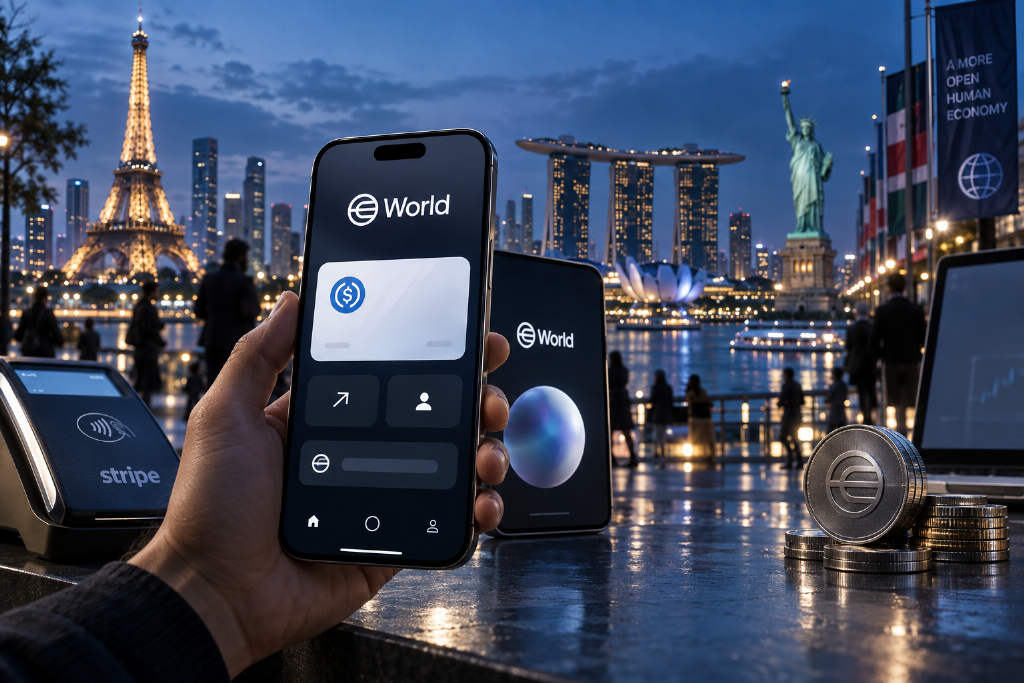
World2026-09-18 03:40:28World rolls out self-custodial finance app World Money in more than 150 countriesWorld has launched World Money, a self-custodial financial app that brings together stablecoin payments, digital asset rewards and trading. The rollout started Thursday across more than 150 countries, with available features depending on the user’s location. Users can send supported digital assets, including stablecoins, to a recipient’s World username, deposit eligible assets to earn rewards, and buy or sell digital assets through exchanges. The app also includes access to Mini Apps such as Kalshi, Credit and Morpho. Through a partnership with Stripe, users in the United States can fund accounts and purchase stablecoins with Apple Pay. World said the launch also marks a product split: identity services now sit in World ID App, while wallet, payments and other financial functions move to World Money. Existing World App and World ID App accounts can be used to access the new app.370
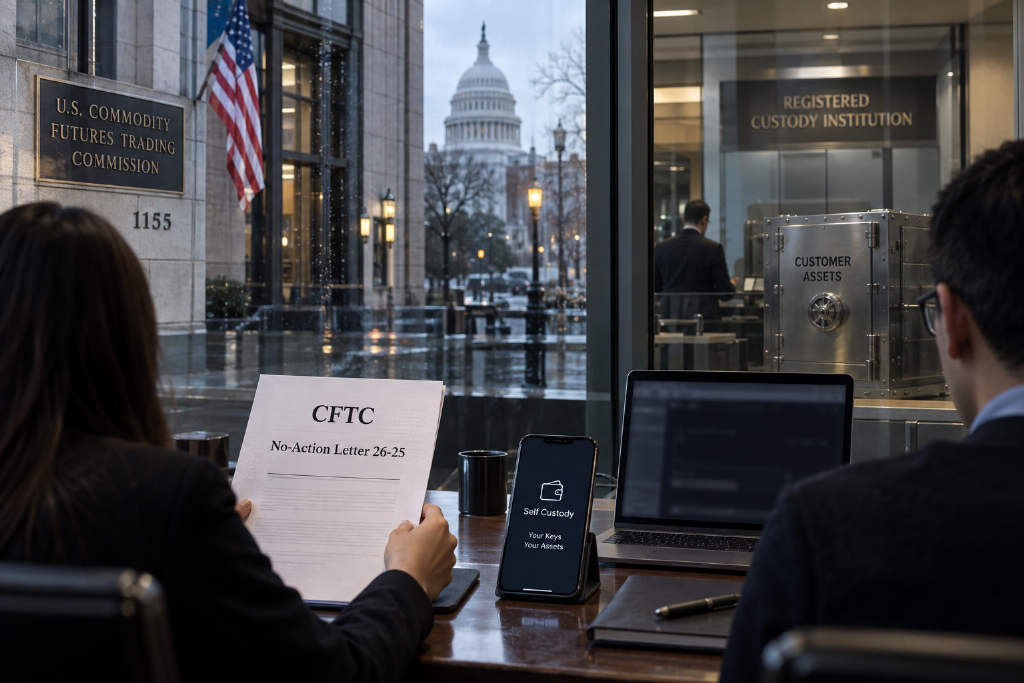
CFTC2026-09-18 02:45:26CFTC’s Letter 26-25 Does Not Ease Crypto Rules and Bars Software Firms From Handling Client AssetsThe U.S. Commodity Futures Trading Commission’s Sept. 17 no-action letter, known as Letter 26-25, has been framed in some coverage as a green light for crypto firms. The text says otherwise. Rather than loosening oversight, the letter limits the circumstances in which a passive software provider can avoid broker registration and ties that relief to the same custody structure used in existing exchange-traded derivatives markets. The letter says covered activity applies only when users trade on a designated contract market, either as members or as customers of a futures commission merchant or introducing broker that is a member. User collateral must stay with the market’s clearing organization or a member futures commission merchant. The software provider cannot hold, control, or custody user assets at any point, cannot generate explicit buy or sell signals, and cannot exercise discretion over order routing or execution. The relief also comes with 10 conditions. The most consequential one requires the software provider and its partner registered entity to sign a written undertaking accepting joint and several liability for legal violations tied to covered activity, while also submitting to CFTC investigative and enforcement jurisdiction. The letter states that it reflects staff views only, does not bind the Commission, and remains in effect only until the Commission adopts effective rulemaking or guidance on how introducing broker registration requirements apply to software developers.380
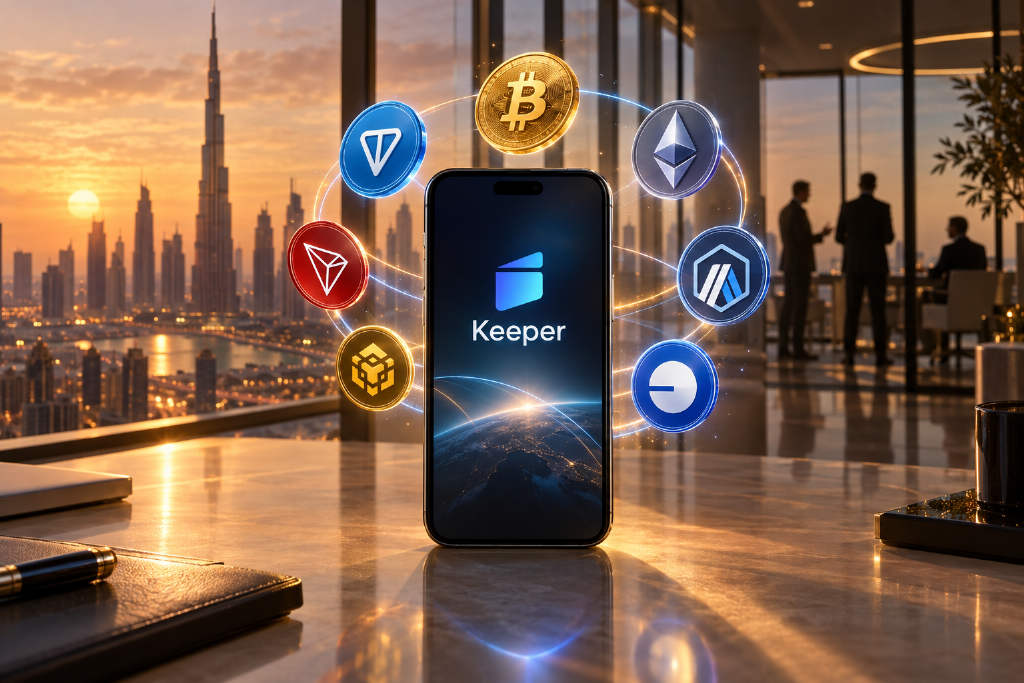
Keeper2026-09-15 10:36:06Tonkeeper rebrands to Keeper and expands from TON wallet to seven-chain productTonkeeper, a self-custodial wallet from the TON ecosystem, has rebranded as Keeper and broadened its product from a single-chain TON wallet into a multichain wallet supporting seven blockchain networks. In a statement shared exclusively with The Block, the company said Keeper now supports TON, Bitcoin, Ethereum, TRON, BNB Smart Chain, Arbitrum and Base. Tonkeeper describes itself as the largest self-custodial wallet in the TON ecosystem, with more than 77 million registered users. The rebrand comes after a management change. The Open Platform took over operational leadership of the wallet last month, while co-founders Oleg Andreev and Oleg Illarionov remain shareholders. Andrew Rogozov, founder and CEO of The Open Platform, said Keeper represents the team’s next chapter, with an aim to bring its simple wallet experience beyond TON and make it a default self-custodial wallet for a multichain crypto economy. The company also said Keeper includes Battery, a gasless transaction infrastructure that lets users pay network fees without holding each chain’s native gas token, and it plans to extend that system to all supported networks over the next year alongside new DeFi, payments, cross-chain swap and perpetual trading features.660
Olas2026-09-14 11:29:49Olas says its self-custodial AI agents are built to help prediction market newcomersOlas, previously known as Autonolas, is pitching a self-custodial AI agent framework for prediction market trading, with a particular focus on new users. In a discussion with Laura, co-founder David Minarsch said the system lets users run customizable local agents that can call on specialized agents and, on a pay-per-request basis, frontier models from labs including Anthropic and OpenAI. He argued that simply asking a model for a prediction and trading off that output is a naive approach, and framed Olas instead as a modular setup where users can choose what data to share and what services to pay for. Minarsch said Olas has already facilitated more than 14 million transactions between AI agents and settles onchain in USDC and xDAI. The conversation also touched on privacy concerns tied to frontier AI models during the dispute over whether OpenAI used a researcher’s work tied to a Navier-Stokes proof, with Minarsch hinting at an Olas response. He also traced the project’s roots to Fetch.ai in 2019, said ChatGPT changed the trajectory of the space, and noted that Olas Connect, launched a couple of months ago, gives local Claude Code or Codex sessions their own wallet so developers can build custom agents for Polymarket without relying on Pearl’s default app. Olas is also planning a Robinhood launch in the coming weeks and new DeFi-focused products.870