TBC

Taiwan regula
2026-09-04 03:42:16

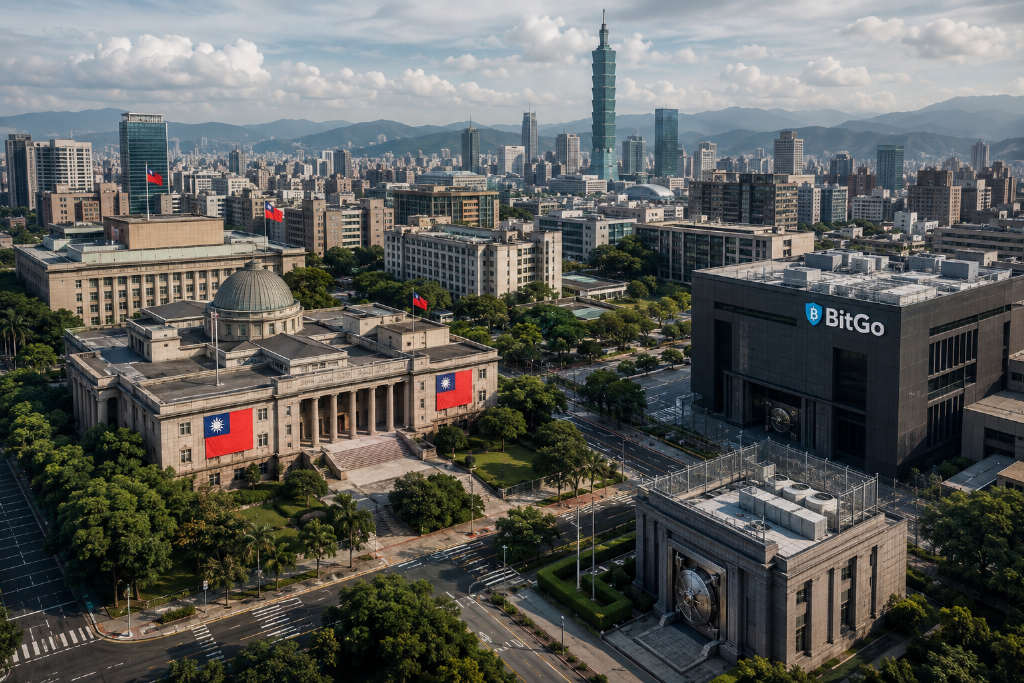
Red Capital and BitGo on Taiwan’s crypto finance opening after the Virtual Asset Service Act

Taiwan’s legislature passed the Virtual Asset Service Act on June 30, moving the local crypto sector from a registration-based gray zone to a licensing regime. In an interview published by BlockTempo, Red Capital co-founder and TAAS co-founder Denny Yang and BitGo Asia-Pacific lead Ivan outlined how they see Taiwan’s next phase taking shape. The conversation covered a 12-month digital asset forum aimed at financial institutions, BitGo’s decision to treat Taiwan as its first agency market, and the practical bottlenecks facing banks and listed companies. Those bottlenecks include custody pilots, stablecoin accounting treatment, recognition of Bitcoin on corporate balance sheets, and how regulators should focus on control rights rather than locking policy to specific technologies. The two also discussed DAT, or digital asset treasury strategy, and argued that Taiwan should not copy the high-leverage playbook associated with MicroStrategy. Instead, they described a more gradual model in which listed firms keep building their core businesses while allocating a small share of cash positions to Bitcoin over time. In their view, Taiwan’s edge is not domestic market size alone. It is the island’s semiconductor and AI supply chain, and whether stablecoin payments, custody, accounting, and banking can be linked into usable financial infrastructure.

890
Red Capital and BitGo on Taiwan’s crypto finance opening after the Virtual Asset Service Act
Bitcoin
2026-08-06 06:29:41

Hashi’s 25-Plus Institution Stress Test Puts Focus on Where Bitcoin Programmability Should Live

Hashi’s testnet on Sui has drawn participation from more than 25 institutions in a push to let Bitcoin take part in DeFi without leaving the Bitcoin network. The article argues that the market debate has shifted: the question is no longer whether BTC should be programmable, but where that programmability should sit. Hashi keeps the underlying BTC in 2-of-2 multisig Bitcoin addresses while execution happens on Sui, a setup the author says improves asset safety but still leaves users relying on two systems at once. Against that backdrop, TuringBitChain, or TBC, is presented as a different route. Rather than splitting assets and contract logic across chains, it says it writes Turing-complete smart contracts directly into the UTXO model at Layer 1. The piece contrasts the two approaches across trust assumptions, architecture, performance claims, developer trade-offs, and institutional readiness, framing the broader contest around whether programmable BTC finance will be built through external execution layers or within UTXO itself.

1890
Hashi’s 25-Plus Institution Stress Test Puts Focus on Where Bitcoin Programmability Should Live
BitMart
2026-07-26 06:08:18

BitMart starts wind-down process, halts trading on Aug. 26 and plans full shutdown by Jan. 31, 2027

Crypto exchange BitMart said on July 26 that it will begin an orderly wind-down of operations, immediately stopping new user registrations and all deposits while limiting futures users to position reductions only. The platform said all spot, futures and other trading will end on Aug. 26, with the exchange scheduled to formally shut down on Jan. 31, 2027. Users are being urged to complete identity verification and close positions before 01:00 UTC on Aug. 26, and to submit withdrawal requests before 05:00 UTC the same day. BitMart said delayed or late withdrawals could be pushed into a separate handling process, and warned that review times may be extended by heavy demand, missing documentation, KYC checks, source-of-funds reviews, and Travel Rule sanctions screening. The announcement stands in sharp contrast to the exchange’s May 23 statement, when it denied a withdrawal crisis, said operations were normal, and promised to release proof of reserves at a later date. That disclosure never arrived before the shutdown notice. The report also noted BitMart’s earlier actions in the three days before the announcement, including restrictions for identified U.S. users, fees for dormant accounts, and the removal of spot margin services.

2200
BitMart starts wind-down process, halts trading on Aug. 26 and plans full shutdown by Jan. 31, 2027