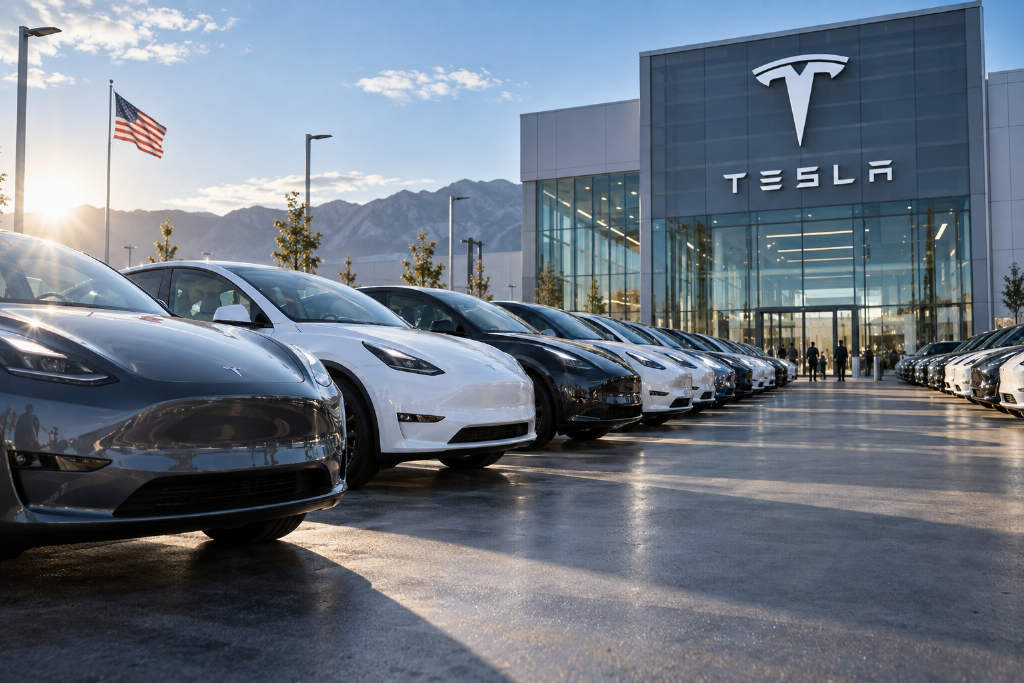
Tesla2026-10-02 13:03:45Tesla Q3 Deliveries Reach 486,532, Beating Market EstimatesChainCatcher reported that Tesla delivered 486,532 vehicles in the third quarter, above the market estimate of 463,761. Based on the disclosed figures, actual deliveries exceeded expectations by 22,771 vehicles. The update was published as a brief market item, with no additional details provided in the source beyond the delivery total and the consensus estimate.40
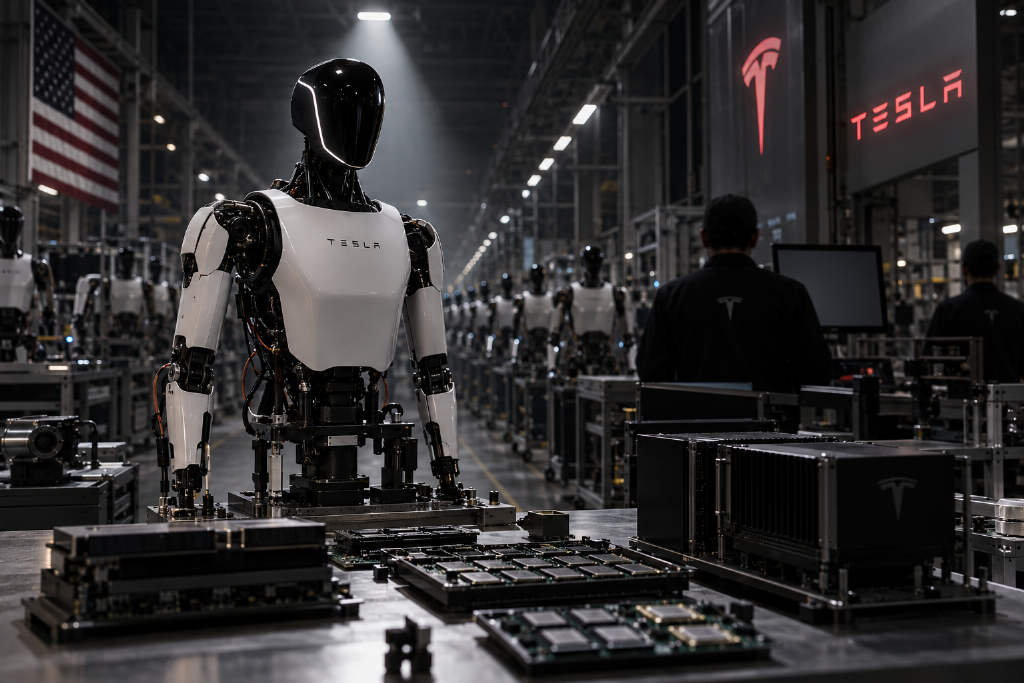
Tesla2026-10-01 20:06:41Tesla cuts RAM in AI5 and AI6 chips to speed Optimus productionTesla has reduced the amount of RAM in its AI5 and AI6 chips as part of an effort to improve cost efficiency and scale up production, according to a Techub News brief citing Crypto Briefing. The change is aimed at accelerating manufacturing of the company’s Optimus humanoid robot. The report said Tesla expects the adjustment to lift profit margins without affecting robot performance. The brief did not disclose further technical details about the RAM reduction or the production timeline.40
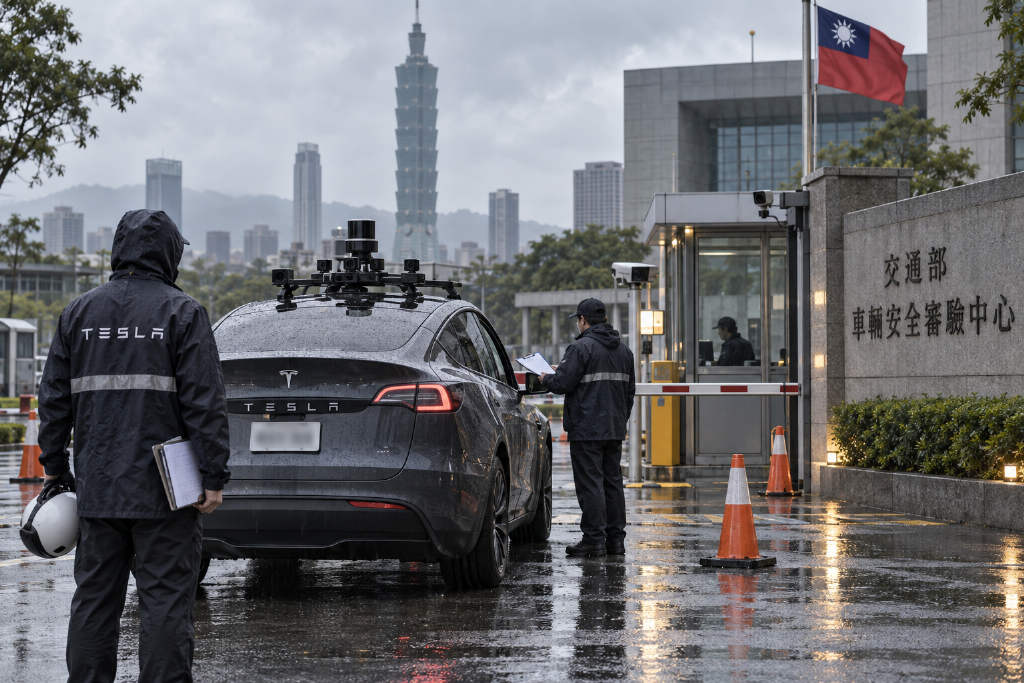
Tesla2026-10-01 07:59:45Tesla FSD review in Taiwan remains stuck in document supplements, with approval now seen no earlier than Q2 2027Tesla’s Full Self-Driving (Supervised) review in Taiwan is still stalled at the document confirmation and supplementary filing stage, according to the Vehicle Safety Certification Center. The case has not yet cleared the technical review meeting, a key first step in the approval path. Rechecking its own four-stage timeline first published on July 15, BlockTempo said that initial estimates are now running more than two months behind schedule. Based on the revised timeline, the outlet said the earliest possible completion date for certification has shifted from late 2026 to the beginning of the second quarter of 2027. Under a more conservative scenario, the process could slip into the second half of 2027. The recalculation assumes the first stage wraps up in mid-November at the earliest, followed by ministry approval, road testing, a safety validation report review, and final certification. At the same time, Tesla Taiwan has opened Vehicle Operator positions in both Taipei and Kaohsiung. The roles require driving prototype test vehicles for six to eight hours a day on fixed routes and public roads, in different weather and time conditions. BlockTempo said the hiring points to preparation for local road data collection, but does not mean the regulatory review is close to completion. The report also noted that Tesla has already shifted FSD sales in Taiwan from a one-time purchase model to a subscription model, while feature activation remains dependent on regulatory clearance.20
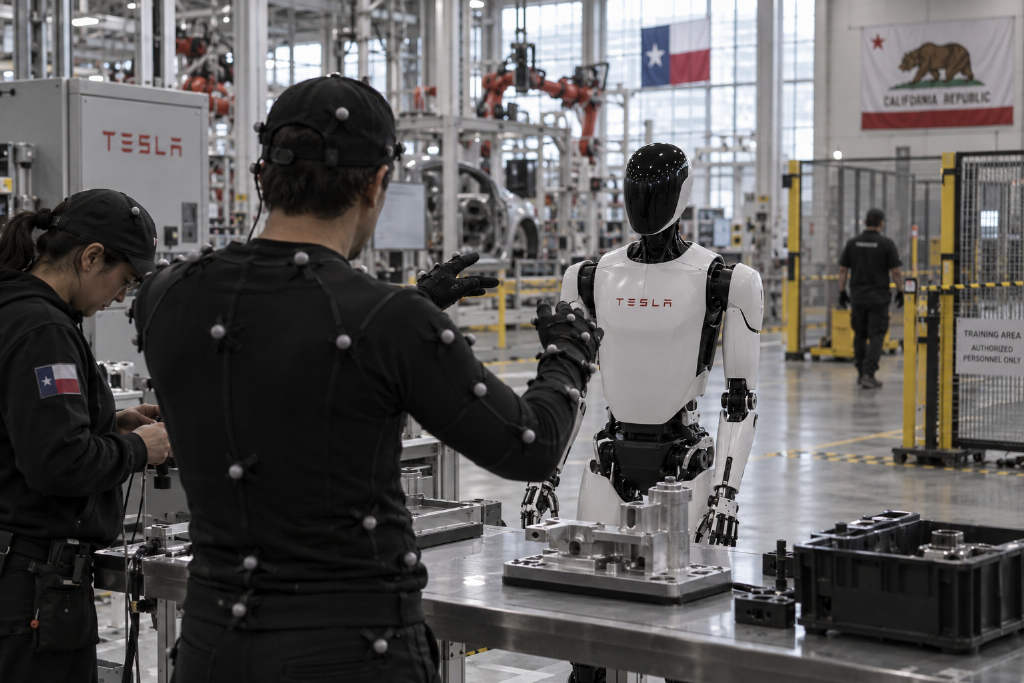
Tesla2026-10-01 07:13:04Tesla had factory workers wear motion-capture gear to train Optimus on their own jobsTesla asked workers at its Texas and California factories earlier this year to wear motion-capture equipment and demonstrate their tasks step by step so Optimus could learn them, according to a report by The Information. Some employees complained because they understood the robots were ultimately being built to replace human labor. Rather than abandoning the approach, Tesla shifted the work to dedicated data collectors and moved much of the data-gathering process away from active production lines. The report says the company also installed cameras in factories to record operations. Electrek later reported that Tesla expanded the effort over the summer by opening training centers in Colorado, Arizona, and Florida. Those workers wore camera helmets and motion-capture suits, and Tesla had accumulated more than 500,000 hours of training data, with a goal of doubling that total by year-end. Even so, the report says Optimus is still far from fully replacing people: its hands and forearms contain more than 100 small parts, including screws, that still require manual assembly, and some newly built robots need immediate fixes. Robots also still need task-specific programming for particular settings.20
Tesla2026-10-01 03:37:02Tesla Lines Up $30 Billion in Credit Facilities as Free Cash Flow Turns NegativeTesla signed three credit agreements on Sept. 29, 2026, securing a combined $30 billion in committed borrowing capacity, with Citibank and Wells Fargo serving as administrative agents. In an 8-K filing, the company said it had no outstanding borrowings at signing and does not currently plan to draw on the facilities in 2026. The move came as Tesla’s second-quarter results showed record revenue of $28.24 billion and deliveries of 480,126 vehicles, but much weaker profitability and cash generation. Operating income fell 57% year over year to $398 million, leaving the operating margin at 1.4%, down from 4.1% a year earlier. GAAP net income was still positive at $1.11 billion, down 5%, while free cash flow swung to negative $1.09 billion from positive $150 million in the same quarter last year. Capital expenditures rose 142% to about $5.8 billion, and Tesla said full-year 2026 capex is expected to exceed $25 billion. Electrek argued the facilities look like a response to shrinking profits and heavier spending, though Tesla’s filing states the company does not plan to use them this year.20
Policy Regula2026-09-30 21:00:57Jensen Huang and Elon Musk frame “superintelligence” around power, computing and safetyABMedia reported that U.S. President Donald Trump, through an executive order, set the policy direction for artificial intelligence around “Superintelligence,” or SI, and argued that the word “Artificial” should be removed as the industry moves beyond AI. At an America.gov event, Nvidia CEO Jensen Huang and Tesla founder Elon Musk discussed how that idea could translate into industrial practice, focusing on electricity supply, orbital computing, data center economics and controls for autonomous agents. According to the report, Musk linked power consumption directly to economic output, saying that every 1% increase in electricity use could create an opportunity for GDP to rise by 1% as well. He said the sector is looking at grid upgrades and market-driven energy development, including fusion, fission and advanced battery storage, to meet rising generative computing demand. He also described “Orbital Computing” as a way to send computing hardware into orbit with heavy-lift rockets and tap solar power in space. Huang, for his part, described the shift from traditional data centers to “superintelligence factories” that generate ongoing economic value. On safety, the report said Nvidia is using Open Shell sandboxing to isolate agents and restrict access, while Bluefield chips provide external real-time monitoring. ABMedia also said the industry has signed a joint statement with the White House covering internal controls and third-party audits.20
Tesla2026-09-29 21:27:01Tesla secures $30 billion in new credit lines for Cybercab and Optimus expansionTesla said it has secured $30 billion in new credit lines that will be used to expand production capacity for its Cybercab robotaxi and Optimus humanoid robot programs. The company said it does not expect to draw on the new facilities this year, as it has already planned at least $25 billion in capital expenditures. The update was cited by TechCrunch. The announcement centers on financing capacity and production expansion, while also indicating that the newly arranged credit is not expected to be tapped in the near term. Tesla framed the facilities as support for scaling two of its closely watched projects: Cybercab, its autonomous taxi effort, and Optimus, its humanoid robot program.150
Elon Musk2026-09-29 21:04:46Musk says SpaceX and Tesla target 200 gigawatts of solar production a yearElon Musk said SpaceX and Tesla are aiming to reach 200 gigawatts of solar production annually, according to a ChainCatcher newsflash. The brief update did not include a timeline, how production would be split between the two companies, or any operational details tied to the target. No additional comments, figures, or project specifics were provided in the source item. The statement was presented as a short market update by ChainCatcher.120