UBI

Samsung Displ
2026-09-08 07:36:51

Samsung Display Plans to Sharply Boost OLED Supply for Apple in 2026, Targeting 15 Million Foldable Panels

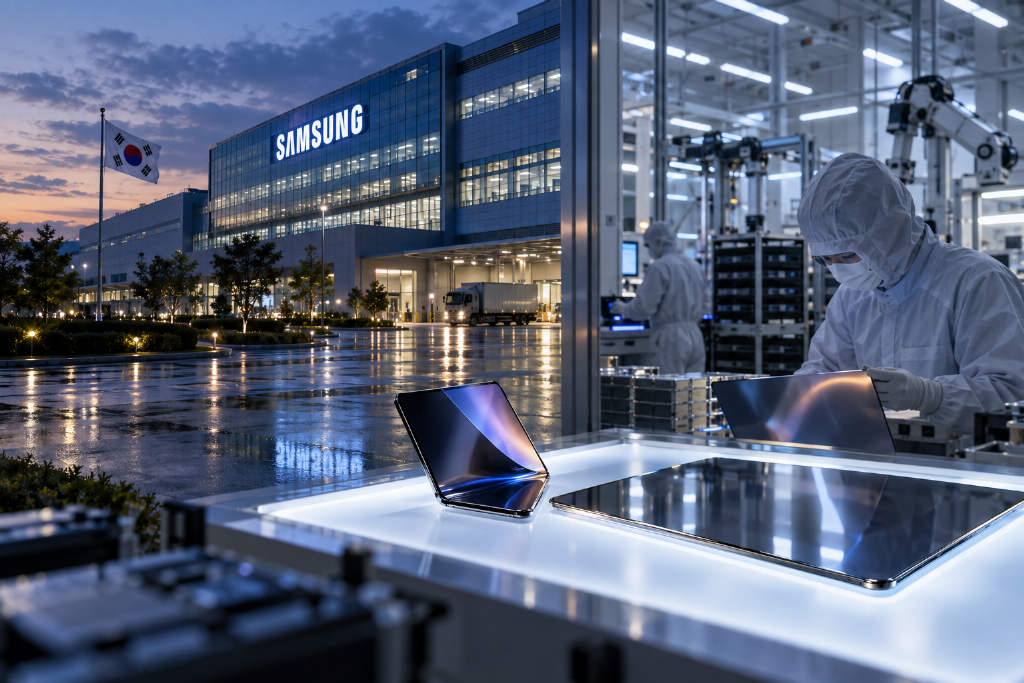
According to ZDNet Korea, Samsung Display plans to significantly increase OLED supply for Apple's foldable phones and iPads in 2026. The foldable OLED target rises from ~8 million units this year to 15 million, while iPad OLED jumps from ~2 million to 9 million, totaling ~24 million. Apple will launch its first foldable phone in H2 2026, with Samsung Display supplying 7.8-inch foldable OLED. UBI Research forecasts iPhone OLED demand at ~264.7 million units this year.

220
Samsung Display Plans to Sharply Boost OLED Supply for Apple in 2026, Targeting 15 Million Foldable Panels
DeFi
2026-09-03 12:00:00

Meme trading boom turns LP fees on Robinhood Chain into the focal point

DeFi Research author Ignas argues that the latest meme-coin frenzy is creating a different kind of winner: liquidity providers rather than traders chasing momentum. In the piece, he says speculative meme trading is generating millions of dollars in daily fees, while many of the users driving that volume are not providing liquidity themselves. That dynamic, in his view, leaves room for LPs to capture fee income without directly holding the meme tokens. The article highlights early data from Robinhood Chain after its July launch, including $757 million in total value locked, $1.66 billion in DEX volume, $16.98 million in 24-hour app fees, $833 million in stablecoins, $2.6 billion in cross-chain TVL and $387 million in perpetuals volume. It also points to meme-token pairs linked to tokenized stocks such as AI/NVDA and BONER/HIMS, where arbitrage between meme-stock pools and stock/USDG pools is driving additional fees. Ignas also lists several tools for LPs and yield farmers, including Revert, scopl.live, vfat.tools and Merkl, and says AI tools such as Claude, Grok and ChatGPT can help with ROI tracking, pool discovery and multi-platform position dashboards.

330
Meme trading boom turns LP fees on Robinhood Chain into the focal point
Liquidity Min
2026-09-03 09:32:52

Ignas pitches tokenized stock LPs as a way to capture meme trading fees

DeFi researcher Ignas argues that traders do not need to buy meme coins directly to benefit from the latest speculative wave. In his view, a better route is to provide liquidity to tokenized stock pairs and related pools, then collect the fees generated by high-frequency meme trading and arbitrage. He points to Robinhood Chain, which launched in July and has already posted $1.66 billion in DEX volume, $16.98 million in 24-hour app fees, $833 million in stablecoins, $2.6 billion in cross-chain TVL, $387 million in perpetual volume, and $757 million in TVL. Ignas says those figures translate into unusually high fee opportunities for liquidity providers. He highlights meme and stock-linked pairs such as AI/NVDA, BONER/HIMS, MOO/MU, NUDES/SNAP, and LIGMA/FIG, while naming HOOD/USDG, NVDA/USDG, RBLX/USDG, and DJT/USDG as preferred stock/USDG pools. Drawing on data shared by @0xSammy and scopl.live, Ignas says some of these pools rank among the highest fee generators on-chain. He also lists tools he uses to search and manage LP positions, including Revert, scopl.live, vfat.tools, Merkl, and AI assistants such as Claude, Grok, and ChatGPT.

270
Ignas pitches tokenized stock LPs as a way to capture meme trading fees
YUBIT
2026-09-02 12:36:38

YUBIT Secures Mauritius FSC License, Bridges Crypto and Traditional Finance

YUBIT has obtained a comprehensive investment dealer license from the Mauritius Financial Services Commission (FSC), enabling users to trade over 1,000 cryptocurrencies and traditional financial assets from a single account. The platform provides unified candlestick charts, risk-based position sizing, and chart-based stop-loss/take-profit tools. The CEO stated the move aims to allow traders to seamlessly switch between crypto and traditional markets without managing multiple platforms.

180
YUBIT Secures Mauritius FSC License, Bridges Crypto and Traditional Finance
Bill Gates
2026-08-29 02:07:20

Bill Gates shifts from AI booster to critic, warning the technology has crossed multiple danger thresholds

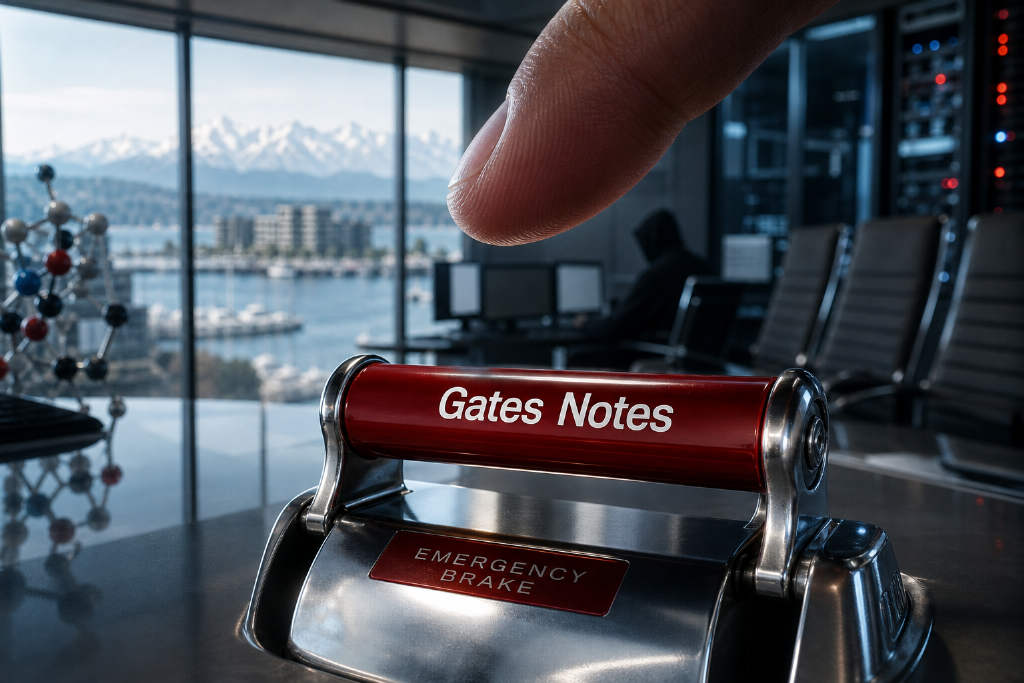
Bill Gates has sharply changed his public stance on artificial intelligence, moving from one of the best-known optimists in 2023 to a far more cautious voice in 2026. In a lengthy post on Gates Notes and an interview with MIT Technology Review, Gates said AI has already crossed critical thresholds in biological capability, cyberattacks, psychosocial effects, and job disruption, while loss-of-control risk is now showing signs of emerging. He argued that the world is entering one of the most turbulent transitions in human history, even under favorable conditions, and said public discussion has lagged badly behind the pace of capability gains. Gates tied his shift to advances he saw in late 2025, including Claude Code, context windows, agentic methods, and stronger base models. He said those gains first looked like a programming breakthrough, then appeared to him as a cyberattack threshold as well. He also laid out a policy toolkit that includes reserving some jobs for humans, imposing robot and token taxes to fund transition support, requiring monitoring for models that can design new molecules, and opening cooperation with China on high-risk AI safeguards. He criticized both industry and government, saying companies once promised to act near key thresholds but are now focused on positive messaging while governments lack the technical depth to regulate effectively.

1270
Bill Gates shifts from AI booster to critic, warning the technology has crossed multiple danger thresholds
AI
2026-08-19 08:50:34

Paper argues AI layoffs create a demand trap, with automation tax as the only fix

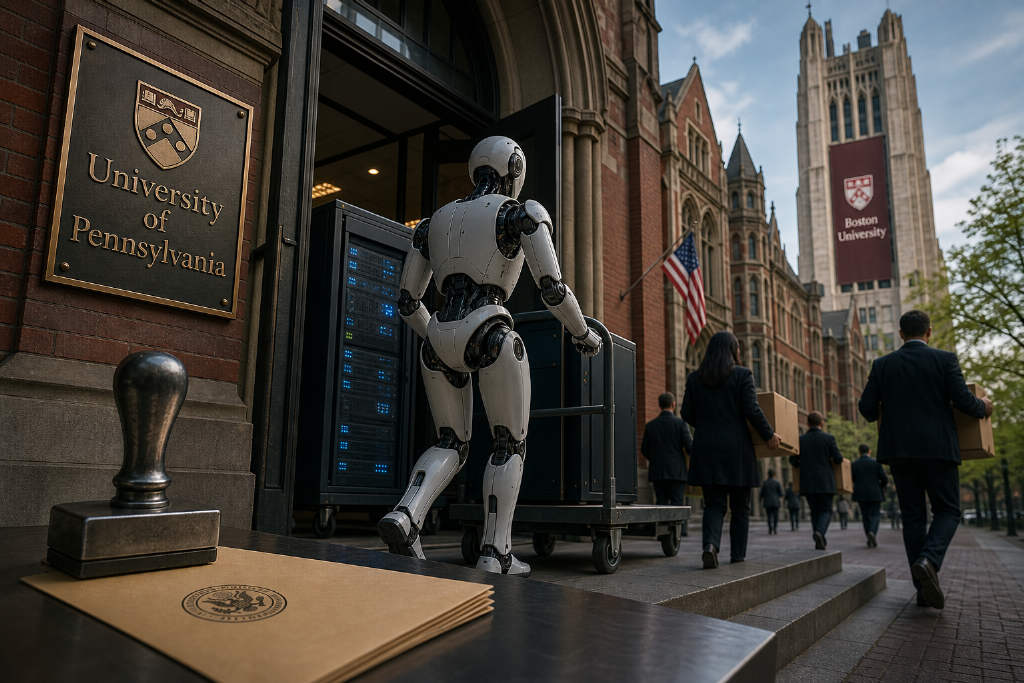
A theoretical economics paper posted on arXiv by University of Pennsylvania researcher Brett Hemenway Falk and Boston University professor Gerry Tsoukalas argues that AI-driven layoffs can push the broader economy into a destructive feedback loop. The paper, titled The AI Layoff Trap and published on March 21, 2026, says firms capture the full savings from replacing workers with AI, while the lost spending power of displaced workers is spread across the entire market. That setup, the authors argue, gives each company a strong incentive to automate even when collective over-automation hurts both labor and firms. The paper models a market with N identical companies and shows that each firm bears only 1/N of the demand loss caused by its own layoffs. It expresses the degree of over-automation as ℓ(1-1/N)/k, where ℓ is the demand loss caused by each displaced worker and k is the friction cost of adopting AI. According to the authors, the gap widens as competition increases and as AI becomes cheaper and easier to deploy. The paper also reviews policy tools often discussed in the AI labor debate, including UBI, retraining, employee profit-sharing, capital gains taxes, and negotiation, and concludes that none of them eliminate the problem at the margin. In the model, only a Pigouvian tax on automation changes firms’ incentives directly. The authors add that the paper is a theoretical exercise rather than an empirical measurement of the current labor market.

490
Paper argues AI layoffs create a demand trap, with automation tax as the only fix