BackUniswapX

UniswapX

RWA
2026-08-08 04:03:15

RWA Hits $32 Billion On-Chain, but Most Tokenized Assets Still Sit Idle

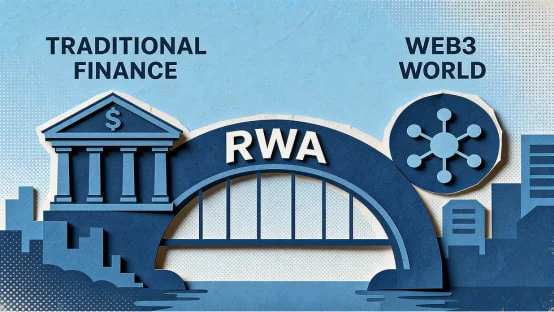
Real-world assets became one of crypto’s hottest themes in July, with on-chain value rising to a record $32 billion, up about 22% from the start of the month and above the previous high set in April. Yet the expansion in issuance has not translated into broad on-chain activity. Data cited from BeInCrypto Intelligence, RWA.xyz, Stacks partner Edgy, and DWF Labs shows that a large majority of tokenized assets are barely moving: more than 70% of tracked assets recorded no weekly transfer activity, while roughly 87% to 90% of the market remains outside lending, collateral, or other DeFi use cases. The gap is also visible across major platforms. Securitize leads in scale with more than $4.9 billion in tokenized assets but posts DeFi utilization of only about 0.7%. Ondo Finance manages nearly $3.5 billion across more than 10 chains and 168 integrations, yet its utilization rate is only around 2.7%. Maple Finance, by contrast, manages a smaller $2.3 billion but has more than $1.6 billion in active loans, over $22 billion in cumulative loan originations, and a utilization rate of 62%. The article argues that asset design, compliance restrictions, and weak market infrastructure are the main reasons tokenization has not automatically produced circulation. As the sector matures, competition is shifting from issuance volume to actual use, liquidity, and distribution.


310
RWA Hits $32 Billion On-Chain, but Most Tokenized Assets Still Sit Idle
DEX
2026-08-03 18:33:21

DEX Spot Volume Reached 24.14% of CEX Volume in July, a Record in The Block’s Data Series

Decentralized exchanges accounted for 24.14% of centralized exchange spot volume in July, the highest share since The Block began tracking the metric in 2019. The milestone came during a weaker month for trading overall, with both DEX and CEX volumes declining, though onchain activity held up better than centralized venues. According to Blockworks, DEX spot volume fell 26% month over month to $130.77 billion from $177.55 billion in June, the lowest monthly total since September 2024. Daily DEX volume topped $6 billion only once during the month, on July 8. Even so, DEX market share continued to rise after spending most of 2024 below 10% of CEX volume and climbing into an 18% to 21% range through the first half of 2026. DefiLlama data as of Aug. 3 showed Uniswap leading all DEXs by trailing 30-day volume, followed by PancakeSwap and Pump.fun’s PumpSwap. By chain, Solana ranked first, ahead of BNB Chain, Ethereum and Base. Robinhood Chain also emerged quickly after launching its public mainnet on July 1, becoming the fifth-largest chain by DEX volume over 30 days. Blockworks said stablecoin pairs made up about 30% of July DEX activity, while K33 Research said the broader slowdown looked seasonal rather than structural.

1230
DEX Spot Volume Reached 24.14% of CEX Volume in July, a Record in The Block’s Data Series
Uniswap
2026-07-31 08:39:16

UNI nearly doubled as Uniswap’s fee switch finally started feeding real buybacks

UNI outperformed much of the crypto market in June and July, climbing from around $2.3 in early June to nearly $4.6 by the end of July. The move came months after Uniswap’s long-debated fee switch was formally implemented through the UNIfication governance proposal on Dec. 28, 2025, which routed protocol revenue into TokenJar and then into the Firepit contract to buy and permanently burn UNI. At first, the mechanism looked too small to matter. Dune data cited in the article showed that only about $800,000 worth of UNI was burned in the first 12 days, implying roughly $26 million to $27 million on an annualized basis, far below what the market needed to reprice the token, especially with a 20 million UNI annual growth budget still in place. The picture changed in July after Robinhood Chain launched on July 1 with Uniswap v2, v3, v4 and UniswapX deployed on day one. The chain pushed Uniswap daily volume to $500 million within eight days, while cumulative volume crossed $1 billion on July 10. After the v4 fee switch went live on July 27, DefiLlama data showed protocol revenue nearly tripled and daily funds flowing into UNI burns rose from about $114,000 in early July to $325,000, with Robinhood Chain contributing roughly $170,000. The article argues that the market is no longer pricing UNI on expectation alone. It is now reacting to visible cash flow and a working buyback-and-burn path, while the next major test will come when Robinhood Chain’s gas subsidy expires roughly 90 days after launch.

610
UNI nearly doubled as Uniswap’s fee switch finally started feeding real buybacks
UNI
2026-07-31 08:30:41

UNI Nearly Doubled in Two Months as Uniswap Buyback-and-Burn Starts Showing Up in Cash Flow

UNI has been one of the stronger large-cap crypto tokens through June and July, rising from around $2.3 in early June to nearly $4.6 by the end of July. According to Foresight News, the move was not simply a delayed reaction to Uniswap’s long-debated fee switch, but a repricing tied to visible protocol revenue and token burn data after the UNIfication proposal went live on Dec. 28, 2025. Under that framework, parts of trading fees from Ethereum mainnet v2 pools and some v3 pools, along with Unichain sequencer revenue after OP sharing and L1 data costs, are routed into TokenJar. The treasury contract can only send funds to Firepit, which buys UNI on the market and burns it permanently. Uniswap also burned 100 million UNI from its treasury, while Uniswap Labs cut front-end, wallet, and API fees to zero and received an annual 20 million UNI growth budget. The first months were quiet, with burn value too small to impress the market. That changed in July after Robinhood Chain launched and v4 fee activation expanded the mechanism. Foresight News argues that the market is no longer trading UNI as a pure governance token story, but increasingly as an asset tied to protocol cash flow.

600
UNI Nearly Doubled in Two Months as Uniswap Buyback-and-Burn Starts Showing Up in Cash Flow
RWA
2026-07-30 10:30:00

RWA Hits $32 Billion On-Chain, but Most Tokenized Assets Still Sit Idle

Real-world assets became one of crypto’s hottest narratives in July, with on-chain RWA supply rising to a record $32 billion, up about 22% from the start of the month and above the previous peak set in April. Yet the surge in issuance has exposed a harder question for the sector: what happens after assets are tokenized? Data cited from BeInCrypto Intelligence, RWA.xyz, DWF Labs and Stacks contributor Edgy points to the same problem. More than 70% of tokenized assets worth over $100,000 saw no on-chain transfer over a week, while roughly 87% of the market remains outside lending, collateral, or active trading flows. In other words, scale has grown much faster than utility. That split is also visible across the leading platforms. Securitize has built the largest footprint, with more than $4.9 billion in tokenized assets, but its DeFi utilization sits at about 0.7%. Ondo Finance manages nearly $3.5 billion and has broad multichain distribution, yet utilization is only around 2.7%. Maple Finance, by contrast, runs a smaller $2.3 billion asset base but reports more than $1.6 billion in active loans and a 62% utilization rate. The gap reflects differences in product design, securities compliance rules, and missing market infrastructure. As the market moves past the issuance race, competition is shifting toward distribution, liquidity, and real on-chain use.

1240
RWA Hits $32 Billion On-Chain, but Most Tokenized Assets Still Sit Idle