Unit

Trump
2026-08-20 10:16:11

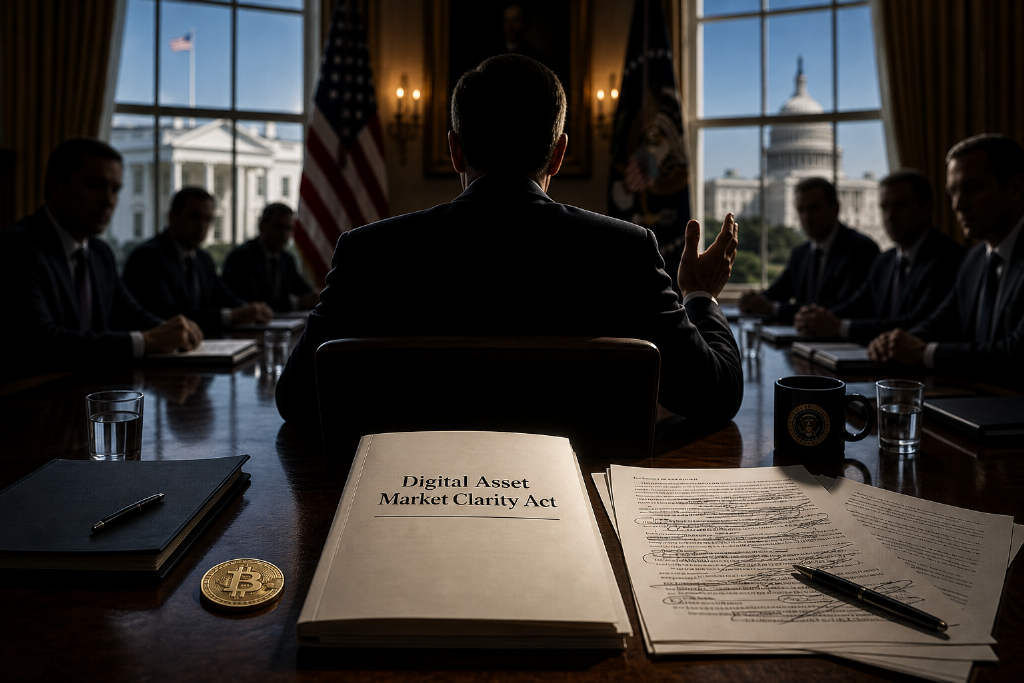
Trump urges Congress to pass a “fair version” of the Clarity Act at White House crypto meeting

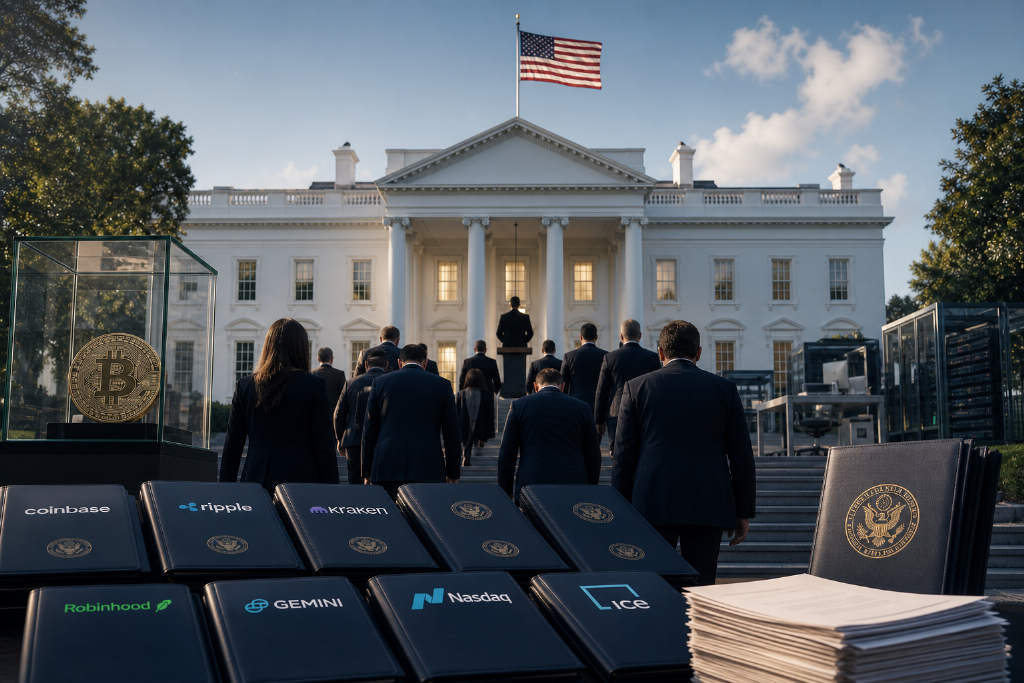
President Donald Trump used a White House meeting with crypto and technology executives on Wednesday to push Congress to advance the Digital Asset Market Clarity Act, saying lawmakers need to take the next step on crypto market structure. His call for a “fair version” of the bill pointed to the language dispute that has kept the measure stuck in the Senate for months. Trump framed the legislation as part of U.S. competition with China and linked it to his administration’s digital asset agenda, including a strategic bitcoin reserve, a digital asset stockpile, a ban on a U.S. central bank digital currency, and the GENIUS Act. The bill needs 60 votes in the Senate, where Republicans are still roughly seven Democrats short, and it is set to return in September after no procedural vote was held before the August recess. The meeting included top executives from Coinbase, Ripple, Robinhood, Nasdaq, ICE, Kraken, Chainlink, Blockchain.com, Gemini and a16z crypto, along with SEC Chair Paul Atkins, CFTC Chair Michael Selig and White House crypto adviser Patrick Witt.
70
Trump urges Congress to pass a “fair version” of the Clarity Act at White House crypto meeting
Policy Regula
2026-08-21 04:21:00

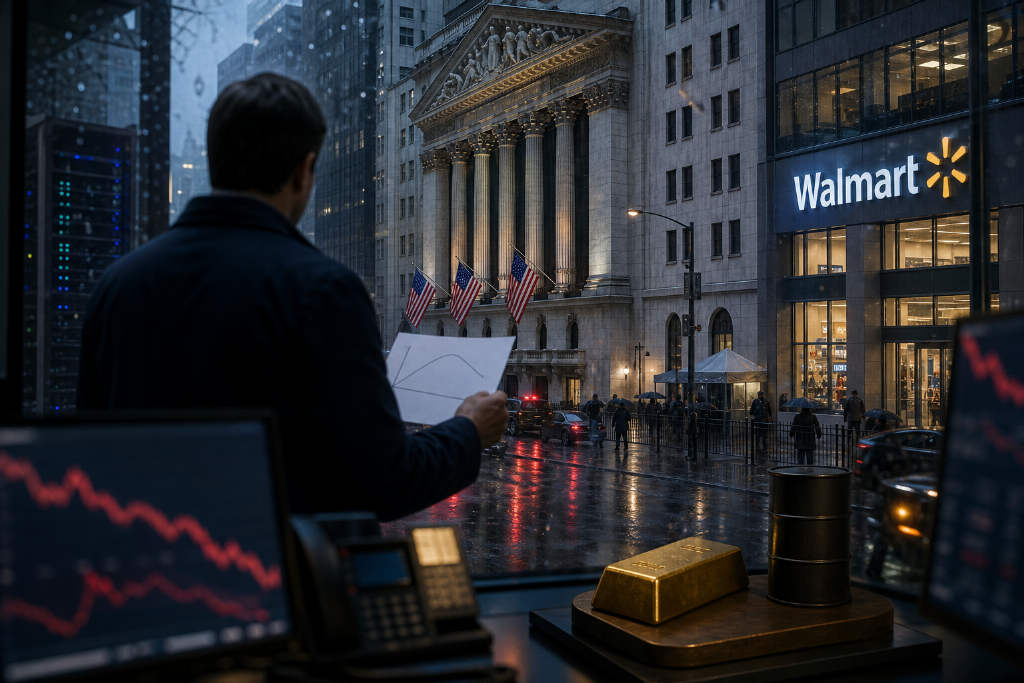
Treasury buyback boost fades in a day as Walmart slump drags U.S. stocks lower

U.S. stocks closed lower after a brief relief rally tied to the Treasury’s expanded long-bond buyback plan faded almost immediately. The S&P 500 fell 0.87%, the Nasdaq dropped 1.00%, and the Dow lost 1.32%, while the VIX rose 7.52% to 16.01. Treasury yields climbed back toward pre-announcement levels, with the 10-year near 4.70% and the 30-year around 5.25%, as investors concluded that buybacks may help liquidity but do little to address deficits, inflation, or heavy bond supply. Walmart was the clearest drag on the session. Its U.S. same-store sales rose 2.6%, below the 3.8% expected by the market and the slowest pace in more than six years. Even though revenue and adjusted EPS beat estimates and some full-year guidance was raised, the company’s full-year EPS outlook missed expectations, sending the stock down 9.15% and weighing on consumer names. Energy and precious metals moved the other way. WTI crude rose about 2.5% to $86.83 and Brent gained 2.4% to $93.78, both near one-month highs, while COMEX gold futures added 0.71% to about $4,577 an ounce. In equities, storage chips and optical networking stood out, with Micron, Lumentum and Marvell posting gains even as large-cap tech broadly weakened.

40
Treasury buyback boost fades in a day as Walmart slump drags U.S. stocks lower
Taiwan
2026-08-21 04:40:42

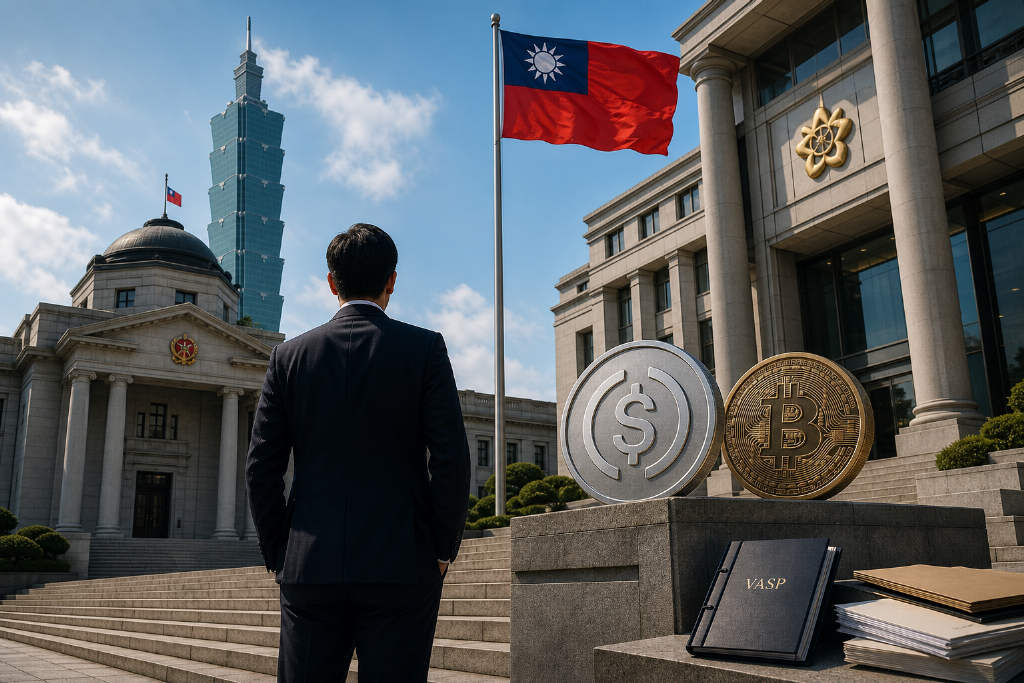
Taiwan’s digital asset law is in force, but Chen Ching says stablecoin policy still needs top-level coordination

Taiwan’s Virtual Asset Service Act cleared its third reading on June 30, 2026 and was promulgated on July 22, formally putting virtual asset service providers under a dedicated legal regime. But former premier and former Financial Supervisory Commission chairperson Chen Ching said the law’s success should not be judged by how many licenses are issued. His main test is whether the government gives the sector sustained attention at the highest level. Speaking on episode 100 of XREX Group’s podcast Web3 Big Westward Expansion, Chen said the hardest questions begin after passage of the law: how Taiwan wants to develop virtual assets and stablecoins, who has final authority when agencies disagree, and whether firms will get a review process that is clear and predictable. He pointed to a structural issue in the law’s stablecoin provisions, where the Financial Supervisory Commission is the competent authority but approval for issuance also requires the central bank’s consent. Chen argued that stablecoins should be viewed not only as a financial product subject to compliance rules, but also through the lens of monetary sovereignty and national strategy. XREX co-founder and Group CEO Wayne Huang added that if trading can remain legally onshore, local currency has a chance to remain on-chain as well, especially as tokenized real-world assets become more important.

50
Taiwan’s digital asset law is in force, but Chen Ching says stablecoin policy still needs top-level coordination
Grayscale
2026-08-21 04:12:32

Grayscale says SEC crypto proposal could reopen compliant token fundraising in the US

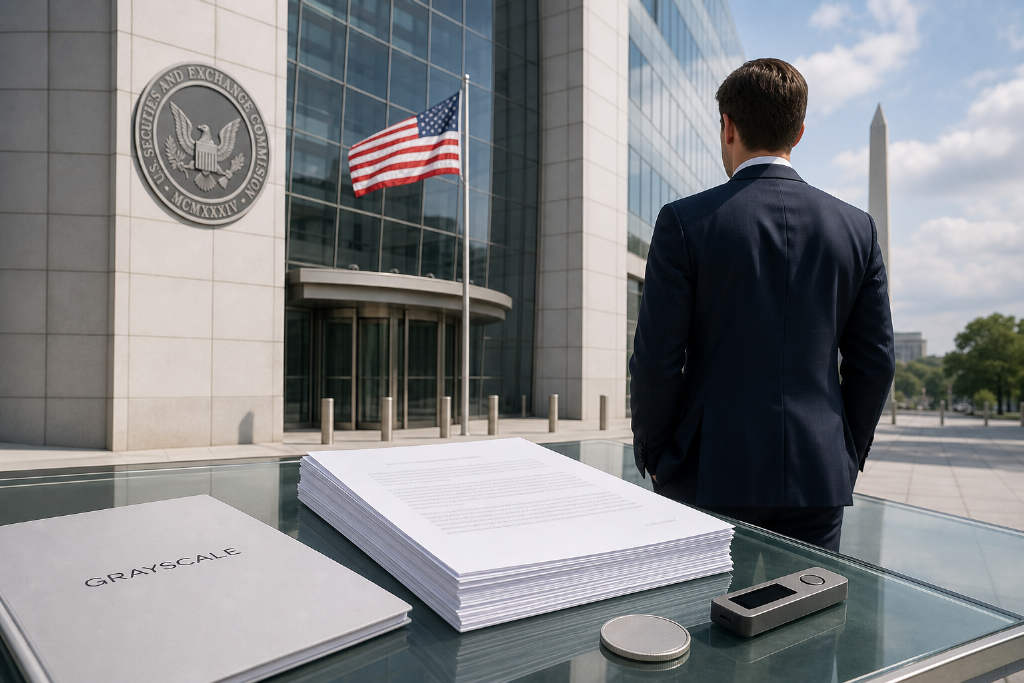
Grayscale Research said a proposed U.S. Securities and Exchange Commission framework for crypto asset regulation could reopen a compliant route for token fundraising in the United States if adopted. According to the proposal, the SEC would create an exemption mechanism that allows issuance caps of up to $5 million or $75 million. The proposal was released on Aug. 18 and remains in the public comment stage. Analysis cited by NewsBTC said clearer exemption standards could help startups avoid moving operations offshore, while also imposing more explicit disclosure and compliance requirements. The proposal is still under review, and no final rule has been announced.

20
Grayscale says SEC crypto proposal could reopen compliant token fundraising in the US
China export
2026-08-21 03:34:35

China’s slower customs clearance disrupts key optical and aerospace material flows to Taiwan

China has recently slowed customs clearance on exports to Taiwan of germanium-based and quartz-based optical materials, along with some rare-earth magnets used in aerospace applications, according to a Nikkei Asia report cited by ABMedia. The delays have stretched delivery schedules for Taiwanese manufacturers and, in some cases, led to lost orders. Industry sources said the issue has affected multiple companies, with some optical firms reporting that extended review times at Chinese customs have become a broad supply-chain problem since last year. People familiar with the matter also said some Chinese suppliers had been questioned by authorities about customer identities and shipments. The report said quartz remains especially hard to replace because chip equipment makers require extremely high quality and precision, while alternative suppliers outside China are limited. In aerospace, executives said neodymium magnets and other permanent magnets from China have become a bottleneck for motor production. Against that backdrop, Taiwan’s Ministry of Economic Affairs is backing the Industrial Technology Research Institute, or ITRI, in developing domestic rare-earth capabilities, with a goal of building its first pilot production line within three years.

30
China’s slower customs clearance disrupts key optical and aerospace material flows to Taiwan
Capital.com
2026-08-21 03:40:14

Capital.com plans spot crypto rollout in the UAE after affiliate secures license

Capital.com is planning to launch spot cryptocurrency services in the United Arab Emirates, according to a Techub News brief citing Cointelegraph. The report said an affiliated company of the trading platform has obtained the relevant license from a local regulator. With the approval in place, customers in the UAE will be able to buy and hold cryptocurrencies directly through the Capital.com app. That would expand the platform’s local offering beyond contracts for difference, or CFDs, which only provide price exposure rather than direct ownership of the underlying assets. The update points to a shift in how Capital.com may serve users in the UAE market. Instead of limiting crypto access to derivative-style products, the company is preparing to offer direct spot access through its app.

00
Capital.com plans spot crypto rollout in the UAE after affiliate secures license
White House C
2026-08-21 04:03:31

White House crypto summit puts Sept. 15 CLARITY vote at the center as Trump and CFTC raise pressure

The White House crypto summit on Aug. 19 pushed U.S. digital-asset policy toward a single date: Sept. 15. President Donald Trump met executives from Coinbase, Ripple, Kraken, Robinhood, Gemini, Nasdaq and ICE alongside SEC Chair Paul Atkins and CFTC Chair Michael Selig, then used the session to press for passage of what he called a fair version of the CLARITY Act. Trump also said the U.S. could consider buying more Bitcoin and signaled support for bringing Hyperliquid into the country through a fully compliant legal structure. The summit came one day after the SEC proposed its Regulation Crypto Assets framework, which includes two fundraising exemptions and an investment contract safe harbor. Less than 24 hours later, Selig said that if Congress fails to move the CLARITY Act on Sept. 15, the CFTC will quickly draft its own crypto market-structure rules. Those rules, as described in the report, could allow registered exchanges and some currently unregistered crypto platforms to offer leverage and margin trading under CFTC oversight, while also opening discussions on compliant operating models for DeFi platforms. The report says the biggest unresolved issue is not the crypto language itself, but ethics provisions tied to whether federal officials, including the president, can profit from crypto businesses.

50
White House crypto summit puts Sept. 15 CLARITY vote at the center as Trump and CFTC raise pressure
Scallop
2026-08-21 03:04:21

Scallop founder says suspicious job applicant blocked him after anti-Kim identity test

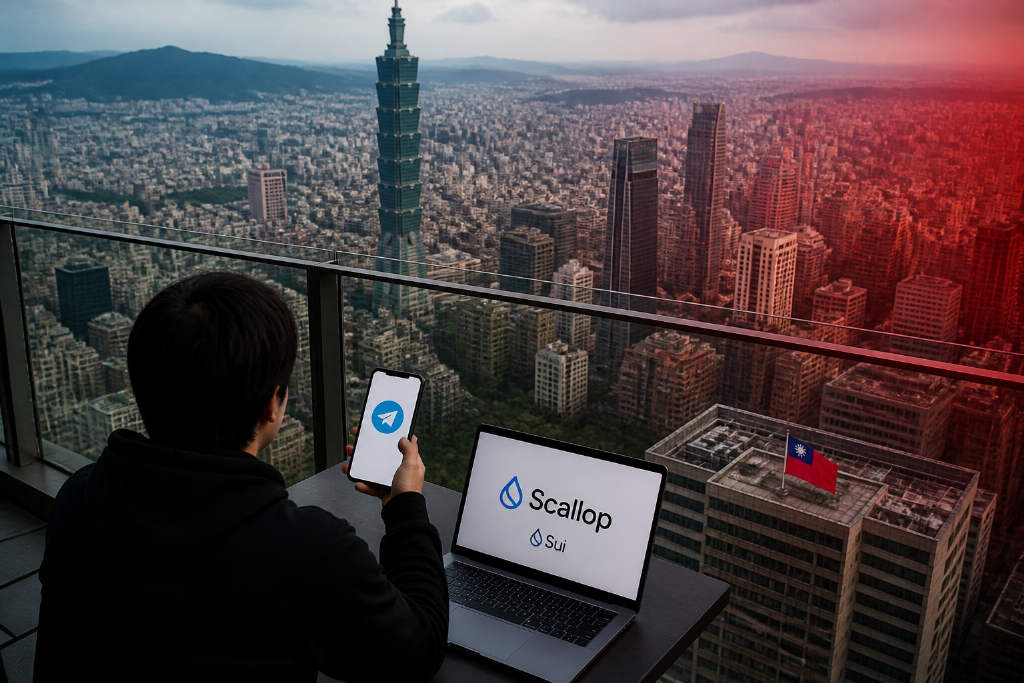
Taiwanese DeFi project Scallop said it encountered a suspicious engineering job approach that its founder, Kris Lai, believed could be linked to North Korean IT worker tactics. According to Lai, a Telegram account named Yuto Kazuma, claiming to be a blockchain engineer based in Tokyo, contacted him on Aug. 19 and said he had studied Scallop’s GitHub, Sui lending protocol, Sui Kit, Scallop SDK, and a newer AI Skill integration. The applicant also described experience across blockchain infrastructure, backend systems, distributed services, Solana RPC and WebSocket infrastructure, transaction pipelines, smart contracts, and AI agents. Instead of moving into a normal interview process, Lai replied with a blunt verification request: record a FaceTime video saying 「Kim Jong-un is an ugly pig」. He later said the account blocked him within hours. Lai viewed the exchange through the lens of a broader security concern that has drawn repeated warnings from U.S. authorities: North Korean remote IT workers using false identities to secure overseas tech jobs, collect salaries, and in some cases gain access to internal systems. The report also points to prior estimates that such operations generated billions of dollars over two years, alongside court cases in the United States involving so-called laptop farms used to make overseas workers appear to be operating from inside the country. Scallop, a DeFi lending protocol on Sui, said in 2024 that it had raised a cumulative $3 million.

00
Scallop founder says suspicious job applicant blocked him after anti-Kim identity test