ZCSH

Grayscale
2026-09-08 14:03:56

Grayscale says Zcash spot ETF ZCSH is now available for options trading

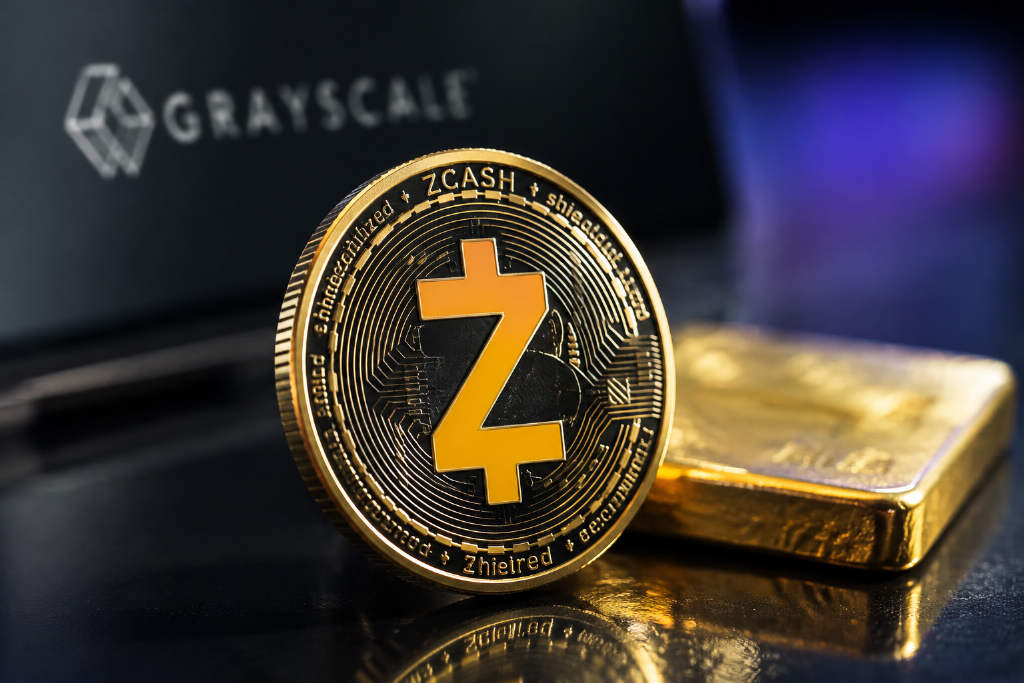
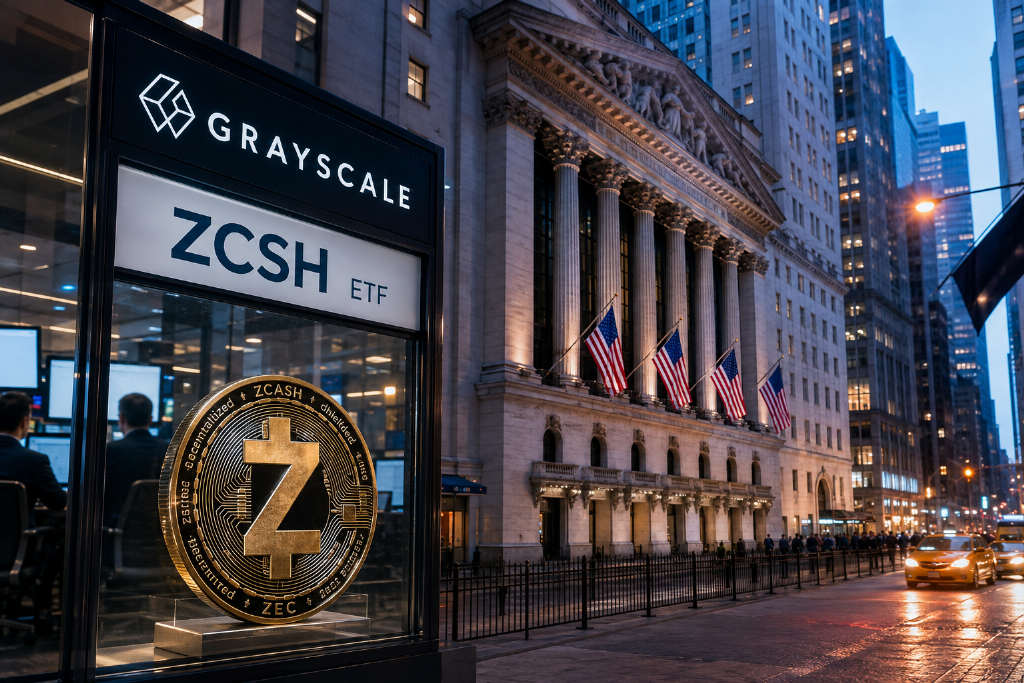
Grayscale said on Sept. 8 that options trading is now open for ZCSH, the firm’s Zcash spot ETF. The update was published through Grayscale’s official channel and was cited by BlockBeats. According to the input, ZCSH is described as the world’s first Zcash spot ETF. No additional details were provided on where the options are listed, when trading began during the day, or what contract specifications are available. The source material also did not include volume data, pricing information, or comments beyond the announcement itself. As a result, the report is limited to the confirmed facts in the original item: Grayscale announced that ZCSH, its Zcash spot ETF, has opened options trading.

690
Grayscale says Zcash spot ETF ZCSH is now available for options trading
ChainCatcher
2026-09-08 02:11:43

ChainCatcher Morning Brief: Korean memory inventory warning and Hunter Biden’s LAPTOP token plan lead a packed crypto cycle

ChainCatcher’s latest morning roundup spans a wide mix of crypto, macro, security and tech-capex developments from the past 24 hours. Bitcoin slipped nearly 1% to around $79,700 as rising oil prices, linked in the report to an escalation between the U.S. and Iran, added fresh pressure to risk assets. At the same time, spot crypto ETFs kept attracting money, with Bitcoin spot ETFs posting $987 million in weekly net inflows and Ethereum spot ETFs drawing $218 million, both marking a third straight week of net inflows. Beyond price action, several project and security updates stood out. Vitalik Buterin pushed back on claims that AI could break Bitcoin’s security assumptions, while Galaxy Research said roughly 45% of the assets stolen in the Coldcard “Wave 3” incident have now moved into cross-chain or mixing paths. Liquid Network and SideSwap also remained in focus after an exploit involving 4,000 L-BTC, and Blockstream said the vulnerability tied to the incident had been patched. On the corporate and policy front, KB Securities warned that Samsung Electronics and SK Hynix have memory inventories below 10 days, pointing to a tighter supply picture as AI infrastructure spending expands. The Wall Street Journal separately reported that Hunter Biden plans to launch a meme coin called LAPTOP on Base on Sept. 9, with a detailed token allocation, lockup and burn-or-charity framework tied to preset future events.

700
ChainCatcher Morning Brief: Korean memory inventory warning and Hunter Biden’s LAPTOP token plan lead a packed crypto cycle
ZEC
2026-09-07 23:34:10

Taiki Maeda’s ZEC trade review centers on privacy, reflexivity and a concentrated bet

Crypto trader Taiki Maeda used a roughly 38-minute video to explain why he has placed most of his net worth into ZEC, and why he chose to sell after the Orchard security scare only to buy back at a higher price once the market recovered. His core argument is not simply that ZEC can keep rising, but that Zcash may be moving from the market’s old “privacy coin” label toward a more ambitious role as a privacy-focused store-of-value asset alongside Bitcoin. In Maeda’s framework, ZEC’s price matters because it may help shape fundamentals rather than just reflect them. As the token price rises, the dollar value inside Zcash’s shielded pool also rises, potentially making the privacy set more useful for larger transfers. If that improves adoption, it could strengthen the store-of-value narrative and attract more capital. He also points to Grayscale’s Zcash ETF, which began trading on NYSE Arca on Aug. 25 under the ticker ZCSH, as a new access route for traditional investors, while stressing that listing alone does not prove durable demand. The trade remains highly conditional. Maeda says the thesis depends on continued growth in shielded pool balances, sustained ETF inflows, relative strength against BTC, confidence in supply integrity after the Orchard vulnerability, and broader interest in privacy and quantum security. Without those pieces, the same reflexive dynamic could run in reverse.

830
Taiki Maeda’s ZEC trade review centers on privacy, reflexivity and a concentrated bet
Zcash
2026-09-07 12:42:38

Zcash Price Hits Highest Since 2016, Market Cap Exceeds $20 Billion as Grayscale ETF Drives Rally

Zcash (ZEC) surged to its highest price since 2016, briefly reaching $1,249.28 before settling around $1,195, according to CoinGecko. The privacy coin's market capitalization surpassed $20 billion. The rally was fueled by Grayscale's conversion of its Zcash Trust into an exchange-traded fund (ETF), which began trading under the ticker ZCSH on the NYSE ARCA on August 25. The ETF closed at $83.77 on Friday, with assets under management of $463.2 million. Zcash's technology allows users to choose between transparent and shielded transactions, with the latter using zero-knowledge proofs to hide transaction details. Grayscale's head of research, Zach Pandl, said in an August 31 analysis that this feature could become a "must have" for privacy-conscious users, especially as artificial intelligence makes it easier to link on-chain activity to identities. Despite the surge, ZEC remains well below its all-time high of $3,191.93 set in October 2016. The development marks a significant milestone for the privacy coin sector and institutional adoption.

840
Zcash Price Hits Highest Since 2016, Market Cap Exceeds $20 Billion as Grayscale ETF Drives Rally
Bankless
2026-09-07 07:33:00

Bankless co-founder’s post-ETH rotation into five tokens outpaced ETH over the next three and a half months

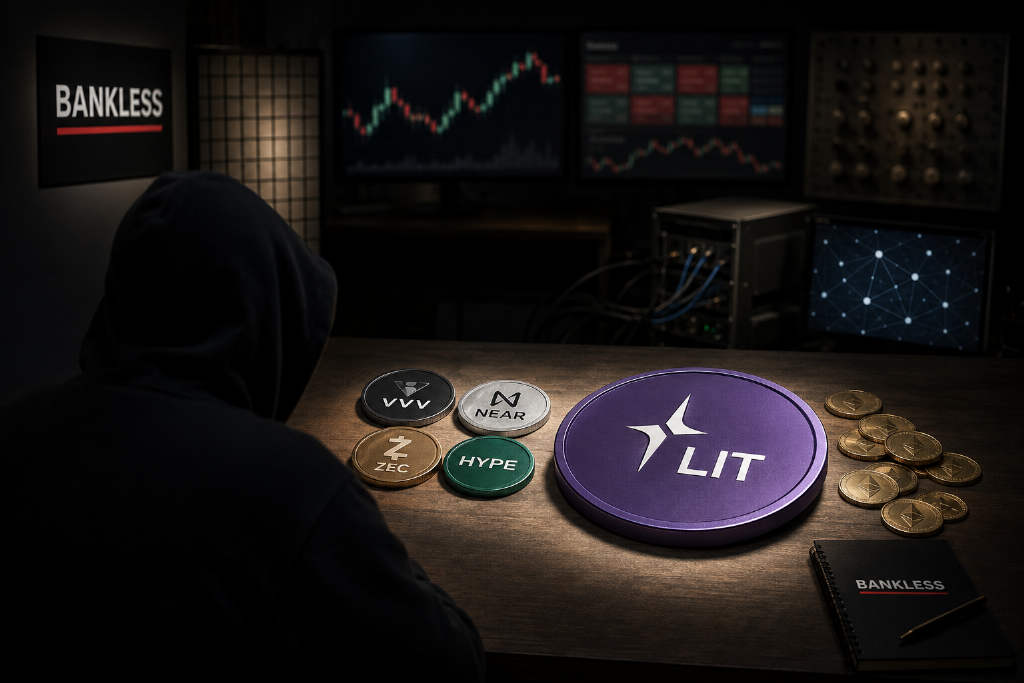
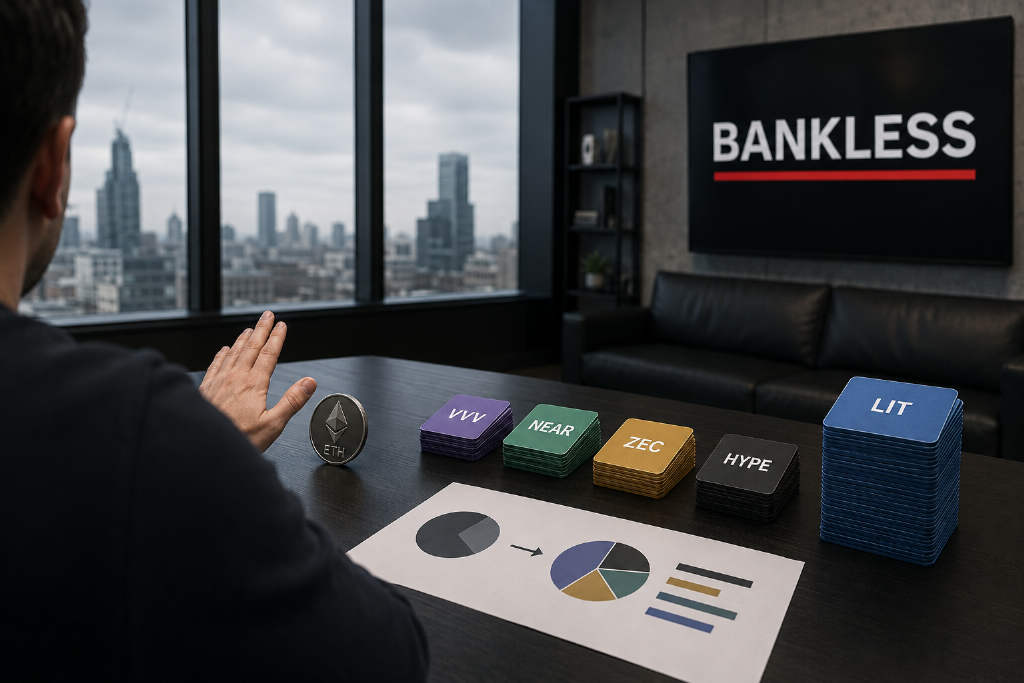
Bankless co-founder David Hoffman said on May 21 that he had sold his last ETH, a notable move for someone long associated with the Ethereum ecosystem. According to the PANews report, he later disclosed that the proceeds were split into two buckets: roughly half went immediately into VVV, NEAR, ZEC, and HYPE, while the other half was reserved for dollar-cost averaging into LIT, the token of zkRollup-based perpetuals exchange Lighter. Using approximate early-June entry levels and early-September prices cited in the article, the basket returned about 90% to 120%, versus roughly 17% for ETH over the same period. ZEC rose on the back of the Grayscale ZEC spot ETF launch on NYSE Arca and a short squeeze, HYPE benefited from Hyperliquid’s token burn and protocol revenue, and LIT delivered the largest absolute contribution because it accounted for about half of the portfolio. PANews argues the broader takeaway is a shift in crypto valuation focus: away from Layer 1 network valuation and toward application-layer revenue, buybacks, measurable demand, and other onchain data points that can be independently verified.

820
Bankless co-founder’s post-ETH rotation into five tokens outpaced ETH over the next three and a half months
Bankless
2026-09-07 07:16:04

Bankless co-founder’s post-ETH rotation into five tokens returned 90%-120% in about three and a half months

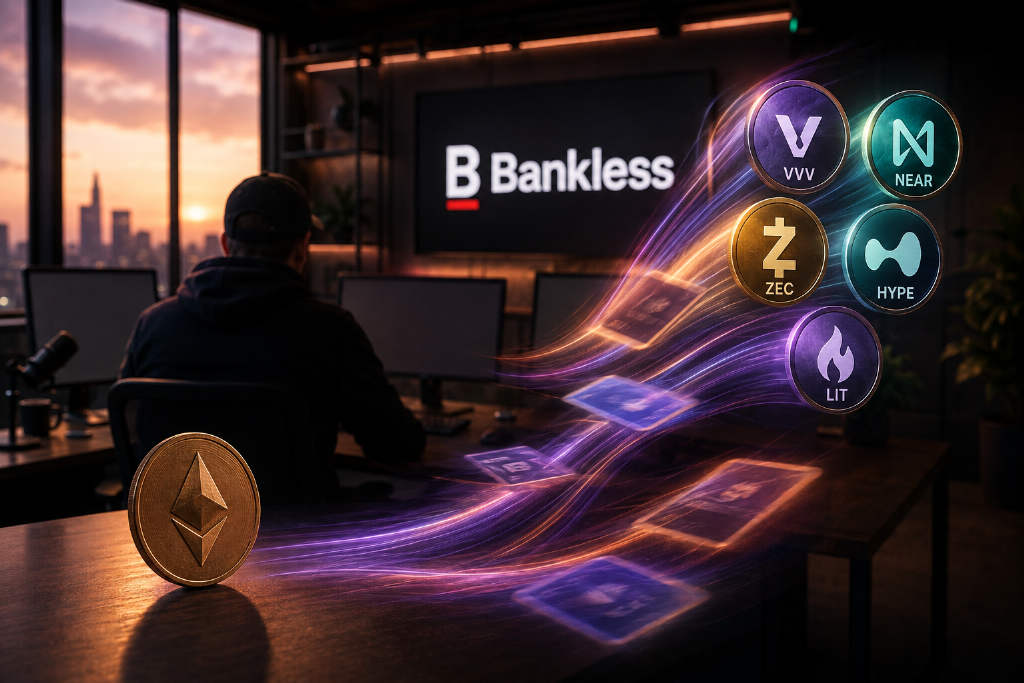
Bankless co-founder David Hoffman exited his entire ETH position in late May and rotated the capital into five crypto assets tied to different market themes: VVV, NEAR, ZEC, HYPE and LIT. Based on the position path he later disclosed and the price references cited in the report, the portfolio returned roughly 90% to 120% over about three and a half months, well ahead of ETH’s gain of about 17% over the same period. The allocation was split into two parts: around half went immediately into VVV, NEAR, ZEC and HYPE, while the other half was reserved for dollar-cost averaging into LIT, a token tied to the zkRollup-based perpetual exchange Lighter. The report lays out the logic behind each position. ZEC was framed as a privacy trade, HYPE and LIT as bets on on-chain derivatives, NEAR as exposure to cross-chain infrastructure and AI agent narratives, and VVV as a decentralized AI inference play. It also highlights catalyst-specific moves, including the launch of Grayscale’s ZEC spot ETF on NYSE Arca on Aug. 25, HYPE’s token burn and protocol revenue figures, and LIT’s rapid climb to a new high. The broader argument in the piece is that capital is moving away from layer-1 valuation stories and toward assets whose value can be tied to measurable revenue, buybacks, transaction flow and other observable on-chain activity.

780
Bankless co-founder’s post-ETH rotation into five tokens returned 90%-120% in about three and a half months
Bankless
2026-09-07 06:33:01

Bankless co-founder’s post-ETH rotation outpaced Ether over the past three and a half months

Bankless co-founder David Hoffman exited ETH in late May and later disclosed how he redeployed the capital into five tokens: VVV, NEAR, ZEC, HYPE, and LIT. According to the source article, roughly half of the proceeds went into VVV, NEAR, ZEC, and HYPE soon after the ETH sale, while the other half was reserved for dollar-cost averaging and was eventually allocated entirely to LIT, the token of zkRollup-based perpetuals exchange Lighter. Using early-June entry levels and early-September prices cited in the article, the portfolio’s estimated return came in at roughly 90% to 120%, versus about 17% for ETH over the same period. The piece argues that the trade worked not simply because of stronger price action in individual names, but because it leaned into assets tied to verifiable protocol revenue, buybacks, institutional catalysts, and measurable usage rather than layer-1 valuation narratives. It frames the switch as a sign that market attention, at least in this stretch, favored application-layer cash flow and observable demand over belief-driven valuation for major L1 assets.

940
Bankless co-founder’s post-ETH rotation outpaced Ether over the past three and a half months
ZEC
2026-09-07 05:47:00

NEAR Intents draws attention as ZEC rally shifts focus to the rails behind the trade

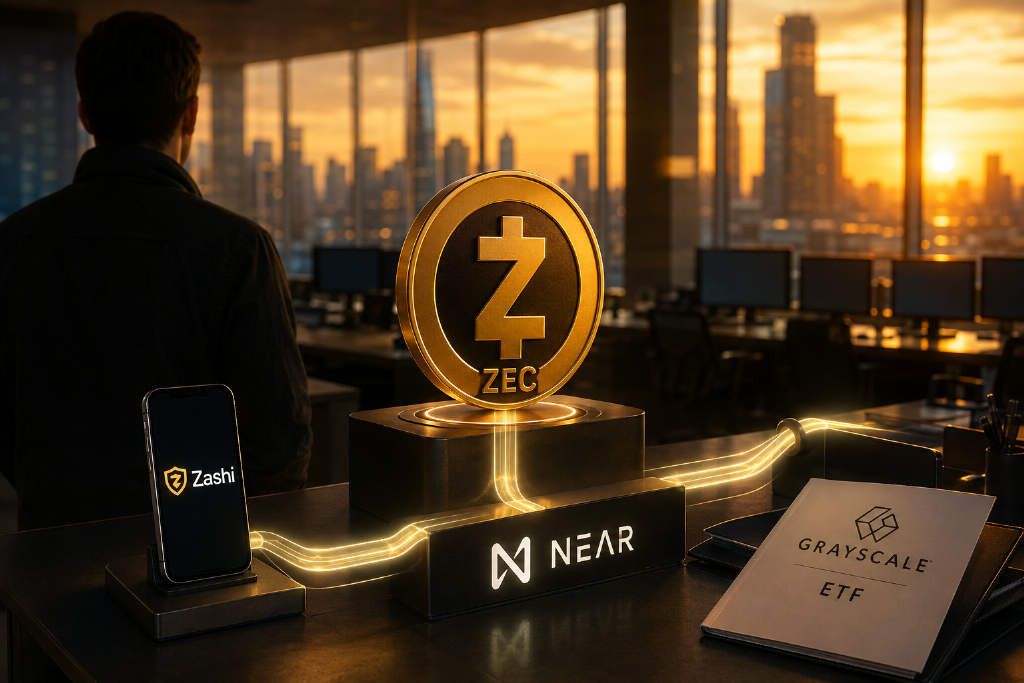
Zcash (ZEC) surged to $1,200 on Sept. 6, marking a 370% gain over three months, while Grayscale’s spot ZEC ETF, ZCSH, pulled in more than $460 million in assets within two weeks of launch. That move has pushed market attention beyond ZEC itself and toward the infrastructure handling its cross-chain flow. At the center of that discussion is NEAR Intents, which powers swap and payment routes inside Zashi, the self-custody wallet built by Electric Coin Company. Since Zashi added Zashi Swaps in October 2025 and later launched CrossPay, users have been able to move into shielded ZEC from assets such as BTC, SOL and USDC, then move out from shielded ZEC into assets on other chains. Both directions route through the NEAR Intents settlement layer. The bullish case rests on NEAR Intents’ Fee Switch, activated on Feb. 23, 2026, under which protocol-level fees are collected in NEAR and 100% of protocol fees are used to buy back NEAR on the open market. Still, the data points to a more restrained picture than social media narratives suggest: while cumulative fees reached about $45 million, DefiLlama shows only about $5.51 million as protocol revenue available for buybacks. ZEC-linked pairs currently account for nearly 40% of volume on NEAR Intents, making the thesis meaningful, but also concentrated.

800
NEAR Intents draws attention as ZEC rally shifts focus to the rails behind the trade