ZCSH

Bankless
2026-09-07 06:10:09

Bankless co-founder’s post-ETH rotation outpaced Ethereum over the past three and a half months

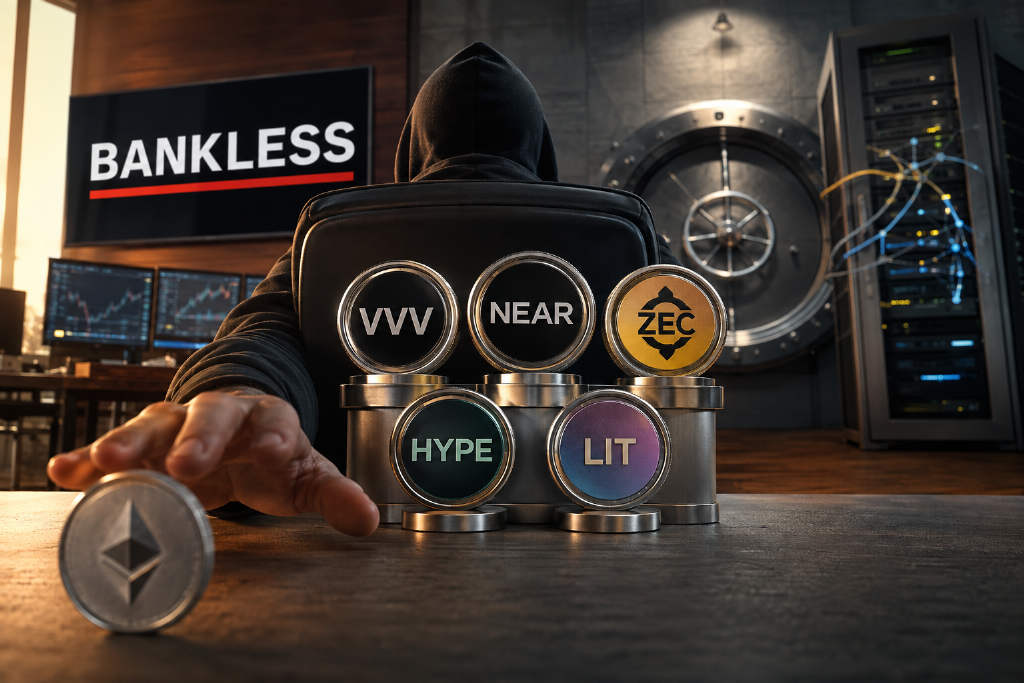
Bankless co-founder David Hoffman sold the rest of his ETH in late May and later disclosed how he redeployed the capital across VVV, NEAR, ZEC, HYPE and LIT. According to the figures cited in the source article, the portfolio was split into two buckets: about half went immediately into VVV, NEAR, ZEC and HYPE, while the other half was reserved for dollar-cost averaging into LIT, the token tied to Lighter, a zkRollup-based onchain perpetuals exchange. Using early-June prices as entry references and early-September prices as the latest comparison point, the article estimates the basket returned roughly 90% to 120%, versus about 17% for ETH over the same period. The report argues that the more important takeaway is not simply which tokens rallied the most, but what Hoffman chose to own after leaving Ethereum. ZEC was framed as a privacy trade tied to the rollout of Grayscale’s ZEC spot ETF, HYPE and LIT as bets on structural growth in onchain derivatives, NEAR as exposure to cross-chain infrastructure and AI agent narratives, and VVV as a decentralized AI inference play. In the article’s view, the common thread across those positions is that their valuation anchors are linked to observable demand, protocol revenue, buybacks or usage data rather than a pure Layer 1 valuation framework.
940
Bankless co-founder’s post-ETH rotation outpaced Ethereum over the past three and a half months
ZEC
2026-09-07 03:28:31

ZEC’s rally has pushed traders toward NEAR Intents, but the fee data shows a narrower payoff

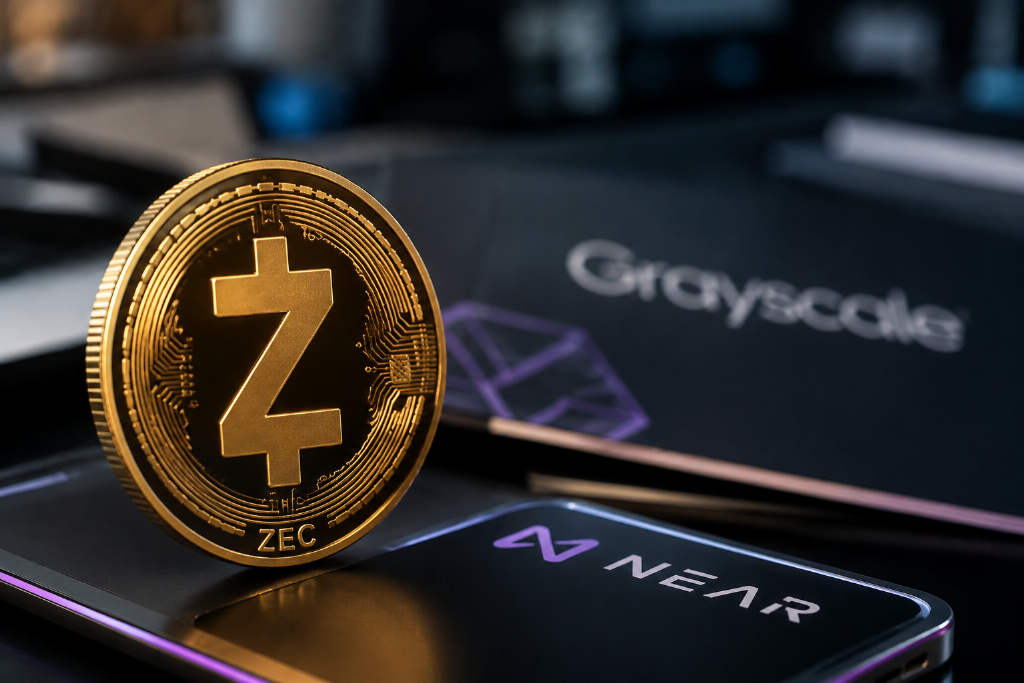
ZEC’s surge to $1,200 on Sept. 6 and its 370% gain over three months have shifted part of the market conversation away from the token itself and toward the infrastructure handling its cross-chain flow. ChainCatcher’s report focuses on NEAR Intents, which sits behind Zashi wallet’s swap and payment routes for shielded ZEC. Grayscale’s spot ZEC ETF, trading under ZCSH, had already gathered more than $460 million in assets within two weeks, adding momentum to the idea that NEAR could benefit as a “picks-and-shovels” play rather than a direct ZEC bet. The underlying product link is specific. Zashi, developed by Electric Coin Company, added Zashi Swaps in October 2025 using NEAR Intents for cross-chain conversions, allowing BTC, SOL and USDC to be swapped into shielded ZEC. CrossPay later opened a route in the other direction, from shielded ZEC to assets on other chains. On Feb. 23, 2026, NEAR Intents turned on its Fee Switch, under which protocol fees are collected in NEAR and 100% of protocol fees are used to buy back NEAR on the open market. Data in the report shows that NEAR Intents had processed about $27.6 billion in cumulative volume by early September, generated about $45 million in fees and logged around $3 billion in 30-day volume. Still, DefiLlama figures indicate only about $5.51 million counted as protocol revenue available for buybacks, with roughly $910,000 in protocol revenue over 30 days. ZEC-related pairs now account for nearly 40% of volume on NEAR Intents, pointing to meaningful exposure but also to concentration risk.

310
ZEC’s rally has pushed traders toward NEAR Intents, but the fee data shows a narrower payoff
Zcash
2026-09-07 08:55:25

Zcash tops $1,200, gains more than 45% in a week and climbs to ninth by market cap

Zcash (ZEC) extended its rally on Sunday, briefly moving above $1,200 and touching roughly $1,249 intraday. According to CoinDesk price data cited by ABMedia, the move lifted ZEC’s market capitalization to about $20.44 billion, enough to overtake HYPE and rank as the ninth-largest crypto asset. The token is up about 134% year to date and roughly 370% over the past three months. ABMedia said part of the latest move appears to be driven by a short squeeze. Data from derivatives platform CoinGlass showed ZEC among the leaders in short liquidations over the past 24 hours, trailing only Ether and Bitcoin, with forced buybacks adding to the upside. ABMedia also pointed to the launch of Grayscale’s Zcash ETF, ticker ZCSH, on Aug. 25 as a key catalyst. The product gives traditional investors a regulated route to gain exposure to ZEC. The report added that BitMEX co-founder Arthur Hayes and Bitwise CEO Hunter Horsley have recently taken a bullish view on ZEC, while Zcash network hashrate at one point rose above 30 GSol per second for the first time.

930
Zcash tops $1,200, gains more than 45% in a week and climbs to ninth by market cap
ZEC
2026-09-07 01:54:08

ZEC’s rally is shining a light on NEAR Intents, but the buyback story is smaller than headline fee numbers suggest

Zcash (ZEC) surged to $1,200 on Sept. 6, capping a 370% gain over three months, while Grayscale’s spot ZEC ETF, ZCSH, pulled in more than $460 million in assets within two weeks of launch. That price move has pushed traders to look beyond ZEC itself and toward the infrastructure handling the flow around it, especially NEAR Intents. The link runs through Zashi, the self-custody wallet developed by Electric Coin Company. In October 2025, Zashi launched Zashi Swaps on top of NEAR Intents, letting users swap assets such as BTC, SOL and USDC directly into shielded ZEC. CrossPay later added the route in the other direction, connecting shielded ZEC to payments in assets on any chain. As a result, both entry and exit flows tied to Zashi pass through NEAR Intents. The market case for NEAR rests on a fee capture model activated on Feb. 23, 2026, when NEAR Intents turned on its Fee Switch. Protocol-level fees began to be collected in NEAR, with 100% of protocol fees used to buy back NEAR on the open market. Still, the data shows an important gap between gross fees and actual protocol revenue: while cumulative fees have reached about $45 million, only around $5.51 million has gone to protocol revenue for buybacks. ZEC-related pairs now make up nearly 40% of volume on NEAR Intents, leaving the trade highly sensitive to whether ZEC demand remains elevated.

800
ZEC’s rally is shining a light on NEAR Intents, but the buyback story is smaller than headline fee numbers suggest
ZEC
2026-09-07 02:03:17

NEAR Intents Draws Attention as ZEC Rally Pushes Traders Toward the Infrastructure Layer

ZEC climbed to $1,200 on Sept. 6, extending its three-month gain to 370%, while Grayscale’s spot ZEC ETF, ZCSH, pulled in more than $460 million in assets within two weeks of launch. That move has shifted part of the market conversation away from ZEC itself and toward the infrastructure handling the token’s cross-chain flow. At the center of that discussion is NEAR Intents, which powers swap activity inside Zashi, a self-custody wallet built by Electric Coin Company. The setup is straightforward. Since October 2025, Zashi Swaps has allowed users to convert assets such as BTC, SOL, and USDC into shielded ZEC through NEAR Intents. CrossPay later opened the reverse path, linking shielded ZEC to payments in assets on other chains. After NEAR Intents activated its Fee Switch on Feb. 23, 2026, protocol-level fees began to be collected in NEAR, with 100% of protocol fees used to buy back NEAR on the open market. Still, the revenue picture is narrower than headline fee figures suggest. Official dashboard data shows cumulative volume of about $27.6 billion and total fees of roughly $45 million, but DefiLlama puts protocol revenue at only about $5.51 million, with around $910,000 over the past 30 days. Current CoinGecko pair data also indicates that ZEC-related pairs account for nearly 40% of volume on NEAR Intents, pointing to a clear dependence on sustained ZEC trading activity.

260
NEAR Intents Draws Attention as ZEC Rally Pushes Traders Toward the Infrastructure Layer
Grayscale
2026-09-04 09:41:45

Grayscale’s Zcash spot ETF has pulled in about $34.4 million since launch, while ZEC is up roughly 31%

Grayscale’s Zcash ETF, trading under the ticker ZCSH, has recorded about $34.4 million in cumulative net inflows since listing on NYSE Arca on Aug. 25, according to BlockBeats. The product was launched by Grayscale and is described as the first exchange-traded product to offer spot exposure to ZEC. Market data cited from HTX showed ZEC moved above $1,000 on Sept. 4, setting a new all-time high. Over the same period since the ETF’s debut, the token has gained about 31%. The figures connect ETF flows with a strong move in ZEC’s market price, covering both capital entering the fund and the token’s performance after the listing.

850
Grayscale’s Zcash spot ETF has pulled in about $34.4 million since launch, while ZEC is up roughly 31%
Policy and Re
2026-08-30 13:55:33

Europe’s two-track digital currency push, Korea staking totals $3.4 billion, and this week’s major crypto project updates

WuBlockchain’s latest roundup pulled together a wide set of policy, payments, exchange and project developments across the crypto market. Forbes reported that Europe is moving on two fronts at once: a public digital euro led by the European Central Bank and private euro stablecoins already entering phased rollout, including Revolut’s EURR on Ethereum issued by Stripe-owned Bridge Building. Separately, stablecoin card provider Redot said cumulative spending through global stablecoin payment cards has passed $10.9 billion, citing Paymentscan data, while arguing that clearer rules, better user experience and improved fiat on- and off-ramps are driving adoption. The digest also highlighted a public rebuttal from Tether CEO Paolo Ardoino to comments from the Bank for International Settlements, arguing that fully reserved stablecoins backed by liquid assets are safer than tokenized bank deposits built on fractional-reserve banking. In South Korea, the four largest KRW exchanges — Upbit, Bithumb, Coinone and Korbit — held about $3.4 billion in staked crypto assets as of the end of July, with 1.2255 million staking users. Vietnam, meanwhile, has not issued its first crypto exchange license, though five companies have already passed the first round of review. The weekly project section covered LayerZero’s planned institutional blockchain exchange, Grayscale’s Zcash ETF launch, Ethena governance and treasury changes, Lido’s revised EarnETH fees, Coinbase tokenized stocks on Base, World Liberty Financial’s conditional OCC approval, Lisk’s DAO shutdown proposal, The Sandbox’s SAND reimbursement plan, and USDe’s growth on Robinhood Chain.

1210
Europe’s two-track digital currency push, Korea staking totals $3.4 billion, and this week’s major crypto project updates
LayerZero
2026-08-30 08:09:59

LayerZero targets institutional exchange launch as Base rolls out tokenized stocks

WuBlockchain’s roundup for Aug. 23 to Aug. 29 tracked a packed week across crypto products, governance and regulation. LayerZero said it plans to launch a blockchain-based exchange for financial institutions this fall, alongside the previously announced debut of its new Layer 1 chain, Zero, with partners including Citadel Securities, DTCC and Intercontinental Exchange. Grayscale, meanwhile, launched ZCSH on Aug. 25 and listed it on NYSE Arca, making it the first U.S. exchange-traded product focused on ZEC after converting its existing Zcash Trust. Ethena Foundation outlined four ecosystem changes: a buyback of remaining locked tokens from certain seed investors that sold ENA in the past nine months, a framework agreement that assigns protocol IP and value accrual to the foundation under token-holder governance, a fee-switch proposal tied to programmatic ENA buybacks, and the release of unvested tokens agreed with lead investors to remove future monthly VC unlock pressure. Other updates included Base bringing Coinbase-issued tokenized stocks onchain under the B20 standard, World Liberty Financial receiving conditional OCC approval for a national trust bank, Lisk proposing to shut down its DAO and burn 100 million LSK, and The Sandbox promising 1:1 reimbursement for users affected by a bridge exploit.

1030
LayerZero targets institutional exchange launch as Base rolls out tokenized stocks