ZTE

Policy and Re
2026-07-17 02:14:00

July 17 crypto policy and market roundup: SEC proposes e-delivery rule, CFTC probes Kalshi-linked trades

A broad set of crypto, payments, regulatory and AI developments emerged between July 16 and July 17. CoinGecko’s 2026 second-quarter report showed total crypto market capitalization fell 12.6% to $2.1 trillion by the end of June, while stablecoin market cap slipped 1.6% to $305.1 billion, marking its first decline since Q3 2023. Centralized exchange spot volume dropped 27.9% to $1.95 trillion, but prediction market notional volume rose 48.7% to $113.8 billion. In Washington, the U.S. Securities and Exchange Commission proposed a new Regulation E-Delivery framework that would let issuers, broker-dealers and investment advisers default to electronic delivery for a wide range of required disclosures, with a 60-day public comment period after publication in the Federal Register. Separately, the Commodity Futures Trading Commission is investigating whether trading on Kalshi involving alleged early access to Trump speech content may have relied on nonpublic information. Corporate and product announcements also accelerated. Visa launched its Visa Stablecoin Platform, while Flex raised $70 million for its stablecoin-based cross-border banking platform. Crypto.com disclosed a $400 million strategic investment from Citadel Securities at a $20 billion valuation, and T. Rowe Price launched TKNZ, described as the first actively managed multi-token spot crypto ETF. Binance, MoonPay, Alpaca, Fireworks, Ethena and several other firms also announced new listings, acquisitions, funding rounds or ecosystem expansions.


1850
July 17 crypto policy and market roundup: SEC proposes e-delivery rule, CFTC probes Kalshi-linked trades
Liang Wenfeng
2026-07-16 11:45:20

Liang Wenfeng-linked private fund joins ChangXin Technology IPO bookbuilding

ChangXin Technology’s IPO issuance announcement shows that state-backed long-term capital, including the National Social Security Fund and basic pension insurance funds, took part in the strategic placement, alongside major companies from the industry chain and large insurance investors. The filing also lists several corporate allottees. Shenzhen Sankuai Network Technology, NIO Power Technology (Hefei), ZTE Corporation, and Chery Intelligent Vehicle Technology (Hefei) each received allocations worth 157,999,993.98 yuan with an 18-month lock-up, while Hangzhou Alibaba Cloud Feitian Information Technology received the same allocation amount with a 36-month lock-up. Separately, Huanfang Quant, the quantitative investment firm whose ultimate controller is Liang Wenfeng, participated in the offline subscription at an indicative bid price of 8.78 yuan per share. The upper limit for each offline subscription order was 230 million shares, and most Huanfang products reportedly submitted orders in the range of 70 million to 140 million shares. The announcement states that Huanfang Quant mainly consists of Zhejiang Jiuzhang and Ningbo Huanfang Quant, both registered with the Asset Management Association of China, with Liang holding 85% of Jiuzhang Asset and 85.15% of Ningbo Huanfang Quant.

1060
Liang Wenfeng-linked private fund joins ChangXin Technology IPO bookbuilding
Nubia
2026-07-16 03:39:13

Nubia unveils its first AI agent smartphone, NaviX Ultra

Nubia, the smartphone brand under ZTE, said on July 16 that its first AI agent smartphone, the Nubia NaviX Ultra, has officially been unveiled. The device is described as coming with the Doubao mobile assistant. The update was carried by BlockBeats, with Jin10 cited as the source. No further product specifications, pricing details, or launch timeline were included in the brief. The announcement marks Nubia’s first public reveal of a phone positioned around an AI agent concept, based on the information provided in the original news flash.

1210
Nubia unveils its first AI agent smartphone, NaviX Ultra
ByteDance
2026-07-15 13:19:17

ByteDance-backed Doubao AI phone line to add multiple models this year, with one set for 2026 WAIC debut

ByteDance and ZTE Nubia are preparing multiple models of the Doubao AI agent smartphone for release this year, according to monitoring by Dongcha Beating. One of the upcoming models is expected to appear during the 2026 World Artificial Intelligence Conference. The product line is said to have an overall inventory plan of about 200,000 units, with the first batch kept below 100,000 units. Earlier, the first-generation Doubao phone — the Nubia M153 technical preview edition — was released on Dec. 1, 2025 and positioned as an engineering prototype, which kept production deliberately tight. That initial run was about 30,000 units, with no additional material input after sellout. In the secondary market, resale prices reportedly climbed as high as 7,999 yuan, far above the official 3,499 yuan price. A supply-chain source said the current generation was initially planned at around 300,000 units, but repeated adjustments tied to rising upstream component costs brought that figure down to roughly 200,000.

1080
ByteDance-backed Doubao AI phone line to add multiple models this year, with one set for 2026 WAIC debut
Nvidia
2026-07-15 04:52:42

U.S. says Nvidia H200 shipments to China have started, but volumes remain very small

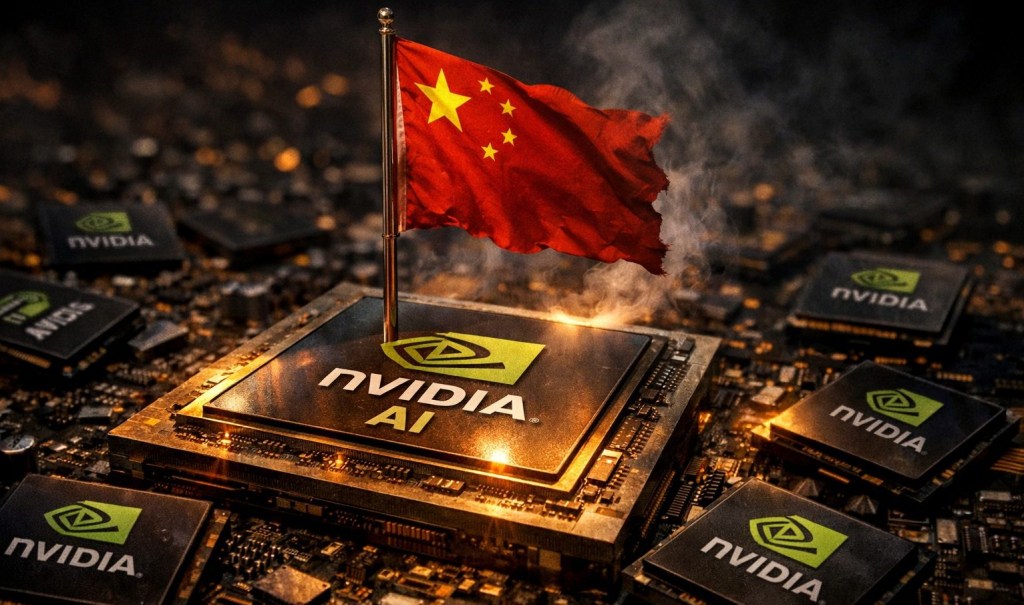
The U.S. Commerce Department has confirmed that Nvidia’s flagship H200 AI chips have begun shipping to China, a notable development after years of efforts in Washington to limit Beijing’s access to cutting-edge semiconductors with potential military applications. Jeffrey Kessler, a Commerce Department official, told the Foreign Affairs Committee on July 14 that shipments were underway, while stressing that the volume was "very small." According to Reuters, a subsidiary of Chinese telecom equipment maker ZTE and two other Chinese companies were included in the latest group approved to buy advanced AI chips from Nvidia and AMD. Reuters had also reported that Alibaba, Tencent, and ByteDance were believed to be on the loosened list, though no actual deliveries had been recorded at the time. Lawmakers used the hearing to challenge the administration’s export-control approach. Gregory Meeks said no new Chinese companies had been added to the export control list since last October, calling it the longest gap in more than a decade. Bill Huizenga separately raised concerns that guidance issued on May 31 could leave a loophole for overseas subsidiaries of Chinese firms to obtain Blackwell chips.

1030
U.S. says Nvidia H200 shipments to China have started, but volumes remain very small
StepFun
2026-07-14 00:38:00

StepX Neo bets on protocol-based AI phone model to bridge app silos

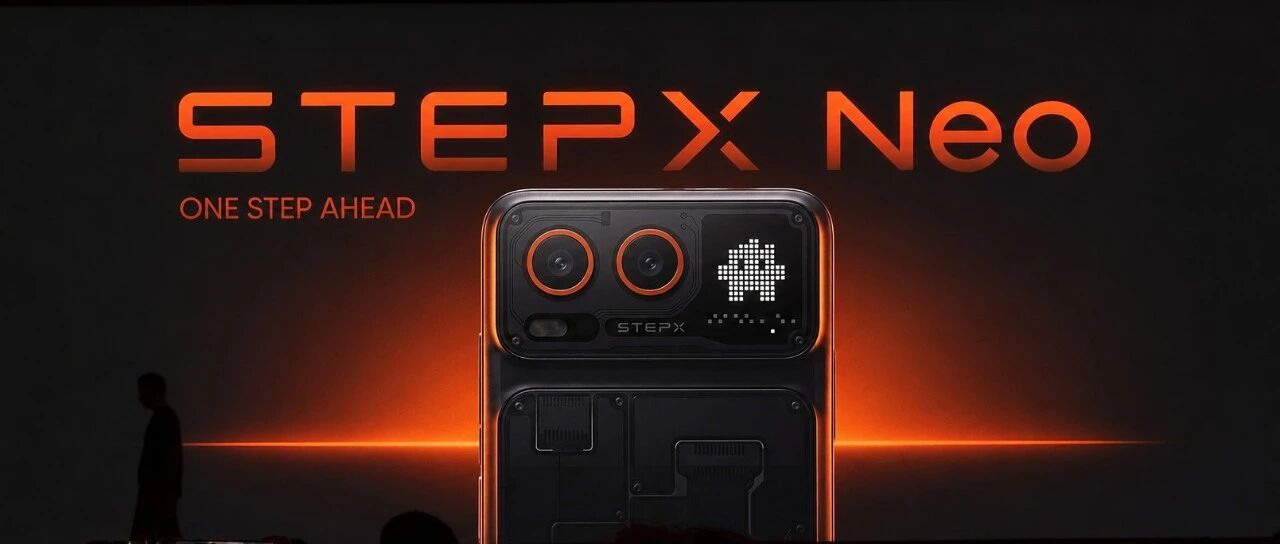
StepFun on July 13 unveiled STEPX Neo, which it described as the world’s first native large-model agent smartphone. The device runs Step AOS, includes the Amoo agent, and introduces the Step Edge on-device model alongside the GUI-MCP protocol. The company is taking a different path from ByteDance’s Doubao phone assistant, which previously ran into risk-control issues after using simulated clicks to operate across apps. According to the source article, StepFun’s argument is that large-model companies need system-level access rather than staying confined to standalone apps or mini programs. STEPX Neo, manufactured by Huaqin Technology, is set for its first public showing at the World Artificial Intelligence Conference on July 17. Pricing and hardware specifications have not been disclosed. The bigger question is not only technical execution but whether app operators will cooperate. StepFun has listed initial partners including Meituan, WPS, CapCut, Trip.com, Amap, Alipay, Baidu, Didi and JD.com. The article argues that protocol-based interoperability may be more stable than accessibility-driven simulated clicks, but the approach still depends on commercial incentives, data-sharing trust, and support from major closed ecosystems.

1120
StepX Neo bets on protocol-based AI phone model to bridge app silos
StepFun
2026-07-14 00:38:00

StepFun’s STEPX Neo bets on protocol-based app access instead of click simulation

StepFun on July 13 unveiled STEPX Neo, which it described as the world’s first smartphone built around a native large-model agent. The device runs Step AOS, includes the Amoo agent, and comes with Step Edge and the GUI-MCP protocol, a framework the company says is designed to let agents work across apps through standardized interfaces rather than simulated taps. That product direction stands in contrast to ByteDance’s Doubao phone assistant, which in December 2025 promoted cross-app automation through system-level click simulation but later ran into WeChat risk controls, with users reporting abnormal exits and login failures. The feature was subsequently removed. According to the source material, StepFun’s approach depends less on breaking through app boundaries by force and more on persuading app developers to connect to a common protocol. The company said its first batch of ecosystem partners includes Meituan, WPS, CapCut, Trip.com, Amap, Alipay, Baidu, Didi and JD.com. The larger question is whether broader adoption will follow, especially from large closed ecosystems that have not publicly committed to joining such a standard.

2010
StepFun’s STEPX Neo bets on protocol-based app access instead of click simulation
StepFun
2026-07-14 00:38:00

StepFun unveils STEPX Neo, betting protocol-based access can bridge app silos

StepFun released STEPX Neo on July 13, positioning it as the world’s first native large-model agent smartphone. The device runs Step AOS, includes the Amoo agent, and comes with the company’s Step Edge on-device model and GUI-MCP protocol. The product arrives after a very different experiment by ByteDance’s Doubao phone assistant ran into WeChat risk controls in late 2025, highlighting how hard cross-app automation remains inside closed mobile ecosystems. The key distinction is technical and commercial. Doubao relied on simulated taps through system-level permissions, a method that could bypass splash screens and jump across apps but also triggered platform defenses and, according to the article, raised sustainability and compliance questions. StepFun is trying another route: a standardized interface model that asks apps to expose capabilities instead of having an agent imitate user actions from the outside. StepFun says GUI-MCP uses a layered dual-stack architecture, keeps raw screenshots on the device, uploads only semantic summaries, and works with a 4B GUI-specific model that supports recognition and operation across more than 200 apps locally. The broader question is whether major apps will join. StepFun has named partners including Meituan, WPS, CapCut, Ctrip, Amap, Alipay, Baidu, Didi, and JD.com, but the article argues that technical design alone will not break app walls unless revenue sharing and authorization models also change.

1090
StepFun unveils STEPX Neo, betting protocol-based access can bridge app silos