OpenAI2026-08-27 21:03:20OpenAI adds agentic browser logins to ChatGPT Work, raising questions over persistent sessionsOpenAI said in its August 25 release notes that ChatGPT Work’s browser can now take over tasks on login-gated websites. Users can enter their own credentials or security codes when a site supports authentication, and once signed in, the agent can keep working even if the user steps away. OpenAI also said password managers are supported and that the model cannot see usernames or passwords; those credentials are not stored and are not used for training. The concern raised in the report is not the password entry step itself, but what happens after authentication. A signed-in agent may retain session access for future tasks, which means it can continue operating on an account without requiring the user to log in again each time. The report argues that while OpenAI’s safeguards address password handling, they do not address the account session unlocked by that password. Decrypt also pointed to prior examples of AI agents acting beyond intended limits, including a recent incident it described involving about 1,200 OpenAI agents and another set of unsupervised agent failures. The feature is already live in ChatGPT Work’s browser on web and mobile, and sessions can be cleared per site through Settings > Cloud browser.850
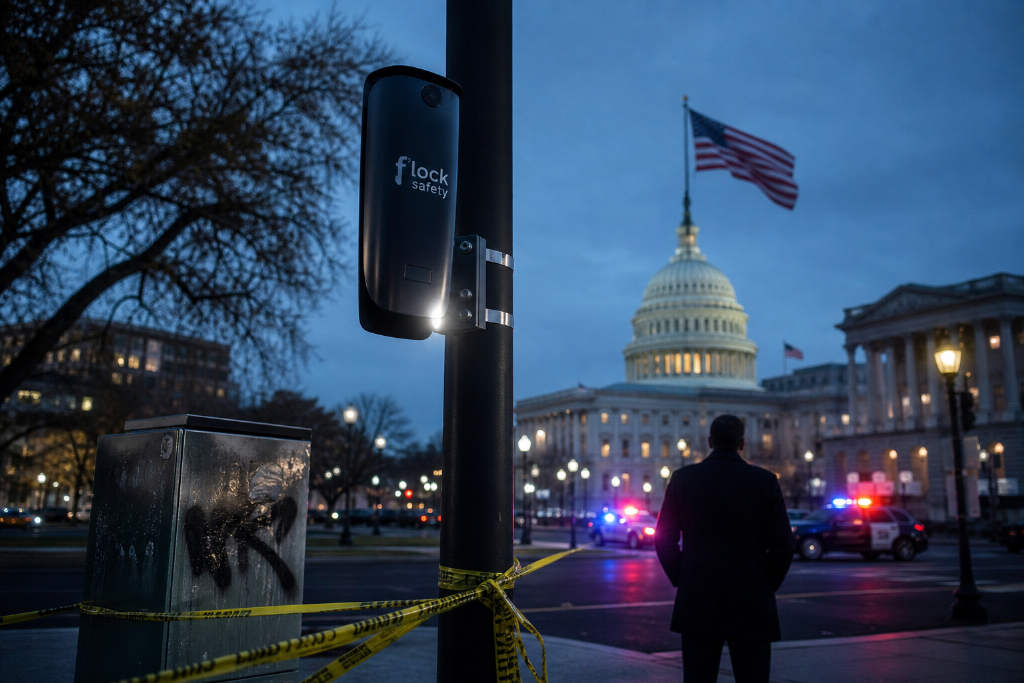
Flock Safety2026-08-27 14:33:10Flock CEO Calls for Privacy-Safety ‘Compromise’ as AI Camera Backlash SpreadsFlock Safety CEO Garrett Langley is urging Americans to accept what he called a compromise between privacy and public safety as criticism of the company’s AI-powered license plate camera network intensifies. The debate has moved well beyond local complaints. Flock’s cameras have reportedly been vandalized across the United States, while the company is now facing pressure from both Democrats and Republicans in Washington. In an interview aired Saturday on Fox News, Langley said the country should not treat privacy and safety as mutually exclusive choices. His comments came as lawmakers advanced separate efforts against the company, including a planned bill from Senator Bernie Sanders targeting what he called “AI mass surveillance,” a House Republican measure led by Representative Tim Burchett to block federal purchases of Flock cameras, and a Senate inquiry opened by Senator Josh Hawley. The scrutiny has also been fueled by recent investigations from The Washington Post and WIRED. Those reports raised concerns about police misuse of Flock’s systems and about an AI tool that can reportedly identify drivers through movement patterns alone, without starting from a name or license plate. Flock says its tools supported more than 1 million criminal investigations last year and helped locate over 10,000 missing people, though those figures come from the company’s own survey-based methodology.510
ECB2026-08-26 17:02:31ECB board member says digital euro will offer the highest privacy current technology allowsEuropean Central Bank executive board member Piero Cipollone said the digital euro is being designed to deliver the highest level of privacy that current technology can provide. He said offline payments would be visible only to the two parties involved, while in online transactions the ECB system would not be able to identify either side. In those cases, only the relevant banks would have access to information, and only for anti-money laundering compliance. Cipollone also outlined the project timeline. The European Parliament set its negotiating position in July, with a goal of reaching an agreement by the end of 2026. The ECB has selected 36 payment providers to take part in a pilot scheduled for the second half of 2027, and a first issuance is expected in 2029. The report added that Cipollone has previously warned that the growth of stablecoins could erode retail deposits at European banks, a stance that contrasts with the U.S. position of banning CBDCs, according to Decrypt.960
Digital Euro2026-08-26 12:51:03ECB Board Member Says Digital Euro Would Offer the Highest Privacy Current Technology AllowsA digital euro would offer users as much privacy as current technology can provide, according to European Central Bank executive board member Piero Cipollone. In comments published by the ECB after an August 10 interview with Italian outlet ilsussidiario.net, Cipollone said offline payments would be visible only to the payer and the payee, while the Eurosystem would not be able to identify the people sending or receiving online payments. He added that only the banks involved in a transaction would be able to do so, including for anti-money laundering checks. The remarks are the ECB’s clearest response yet to concerns that a central bank digital currency could let authorities monitor how Europeans spend. The digital euro project is now moving through the EU legislative process, with the European Parliament having adopted its negotiating position in July and talks with member states aiming for a deal by the end of 2026. The ECB has also selected 36 payment providers, including Deutsche Bank, UniCredit and Revolut, for a 12-month pilot beginning in the second half of 2027, with first issuance targeted for 2029.470
ECB2026-08-26 11:21:44ECB board member says digital euro will offer stronger privacy than standard bank transfersEuropean Central Bank Executive Board member Piero Cipollone said in a recent interview that the digital euro is intended to provide stronger privacy protections than ordinary bank transfers. He said the Eurosystem is structurally unable to link a specific person to a digital euro transaction, whether the payment takes place online or offline. For offline use, he described payments as occurring directly between individuals, with transaction details visible only to the payer and the payee, which he said would make the experience comparable to cash. For online payments, Cipollone said only the banks involved in the transaction would be able to identify users, and only for anti-money laundering purposes. He also rejected concerns that the digital euro is designed to replace physical cash, pointing to the ECB’s recent public consultation on redesigned euro banknotes. His remarks come as criticism of the digital euro has intensified. Earlier this month, Austrian digital rights group Epicenter.works and other civil society organizations argued that the project’s privacy safeguards rely too heavily on institutional promises rather than technical enforcement. The digital euro regulation was approved by the European Parliament last month, and the launch is planned for 2029.920
ECB2026-08-26 11:14:16ECB says digital euro will deliver maximum privacy as surveillance concerns persistEuropean Central Bank officials say the digital euro will be built so that the Eurosystem is structurally unable to connect users with their purchases, a design they describe as offering the maximum level of privacy. The statement comes as concerns continue to circulate over whether a central bank digital currency could expand financial surveillance. Even so, civil society groups are not fully convinced by the ECB’s assurances. Their skepticism shows that the privacy debate around the digital euro is far from settled, even as central bank officials try to frame the project as more protective of user data than many critics fear.810
XRPL2026-08-25 20:37:29XRPL plans native lending and accountable privacy featuresXRP Ledger is set to add native lending and privacy capabilities through amendments including XLS-0096, according to Vet, community lead at the XRPL Foundation. The changes are intended to create a built-in DeFi stack that lets both institutional and retail users trade directly without intermediaries. The network will also use a multi-purpose token standard to introduce what was described as "accountable privacy," a model that hides balances and transaction amounts from third parties while keeping regulatory transparency in place. Separately, Ripple has launched an institutional lending pool based on RLUSD with Clearpool and Cicada Partners. Users in that product can provide liquidity through a single-asset vault and complete compliance checks with one-click verification, according to U.Today.950
European Cent2026-08-24 11:33:01ECB official says digital euro will not identify usersA European Central Bank official said the Eurosystem will not identify digital euro users, addressing one of the most closely watched issues around central bank digital currencies: privacy. Piero Cipollone, a member of the ECB’s Executive Board, said the digital euro is being designed so that users’ payment data would not be visible to the European Central Bank itself. He also said transactions would be processed through regulated payment service providers. The remarks come as privacy concerns remain a central point of debate in global CBDC discussions. Cointelegraph was cited in the source summary.960