AI2026-09-19 14:01:01Crypto pioneer warns AI could spark systemic shocks in banking and infrastructureCrypto pioneer Marc van der Chijs says his view on artificial intelligence has turned more cautious, warning that the technology could cause systemic shocks across banking and critical infrastructure. He described the situation bluntly, saying, "we have lost control." The warning comes after he had previously sold much of his bitcoin to invest in AI. Now, as concerns around the technology grow, he is moving some of those profits back into crypto. The shift highlights a change in capital allocation rather than a broad market call: van der Chijs had leaned heavily into AI, but is now rotating part of the gains from those investments back into digital assets. The report was published by CoinDesk in its markets coverage, written by James Van Straten and edited by Jamie Crawley. It was published on Sept. 19, 2026.290
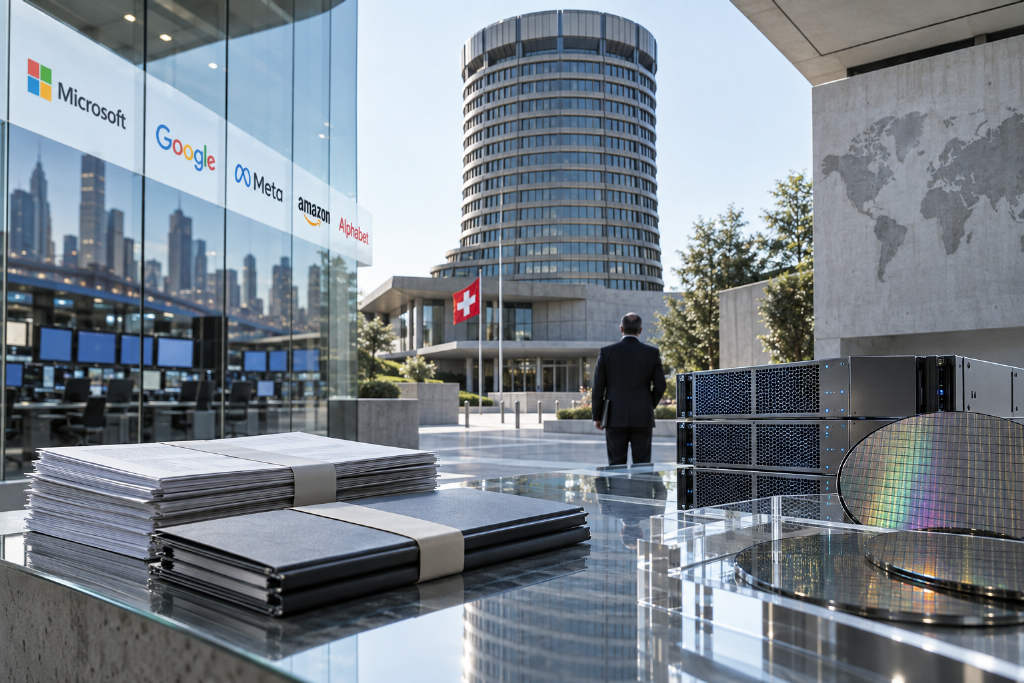
BIS2026-09-10 12:52:31BIS chief warns debt-fueled AI spending boom could threaten financial stabilityBank for International Settlements President Pablo Hernandez said the current surge in artificial intelligence investment is being propelled by opaque debt financing and private credit, creating risks that could spill into the broader financial system if returns fall short of expectations. In a public speech on Thursday, Hernandez did not say an AI bubble is certain to burst, but he argued that the scale and pace of spending, along with aggressive assumptions about future commercial payoffs, warrant caution. The BIS pointed to plans by five major technology companies — Microsoft, Alphabet, Meta, Amazon and Apple — to spend more than $1 trillion on AI-related projects across 2025 and 2026. It also cited data showing global AI investment could rise from roughly $500 billion now to $3 trillion to $4 trillion by 2030. Hernandez said capital expenditure at the largest AI firms has moved beyond cash flow support, with debt and private credit filling the gap. He framed the current cycle against earlier technology manias, including canal building, railway speculation, electrification and the late-1990s dot-com boom, while also highlighting hidden links among chipmakers, hyperscalers and AI startups. The speech said AI itself is not the problem; the core question is whether the size and speed of investment have moved beyond what the economy can absorb.960
BIS2026-09-10 12:02:10BIS chief warns AI capex race built on opaque debt may create systemic risksBank for International Settlements chief Pablo Hernandez warned that the race to fund artificial intelligence capital spending is relying on opaque debt and could pose systemic risks to the broader financial system. He drew comparisons with earlier railway and dot-com bubbles, pointing to periods when heavy investment ran ahead of underlying profits. His caution centers on the idea that spending driven by hype rather than actual earnings can leave the wider economy exposed to a sharper correction. The remarks, reported by CoinDesk, frame AI financing not simply as a technology story but as a potential source of broader economic vulnerability if leverage and funding structures remain unclear.300
a16z2026-08-25 18:14:12a16z Partner Martin Casado Warns of Systemic Risk From Concentrated AI ResourcesAndreessen Horowitz, or a16z, partner Martin Casado has reassessed the risks tied to artificial intelligence and warned that concentration may become a core problem. According to the Techub News item citing Crypto Briefing, Casado said that if scaling laws continue to hold, excessive control of AI resources by a small number of companies could create the risk of systemic disruption. His comments shift the focus from AI’s model capabilities alone to the structure of ownership and access around the technology. Casado said the response should include targeted regulation rather than broad, undefined policy moves. He also pointed to diversified investment as part of the answer, arguing that concentration risk cannot be addressed through regulation alone. The brief did not provide further details on what form those measures might take, but it framed his view around the growing concern that AI infrastructure and resources may cluster in too few hands.850
Michael Burry2026-08-09 05:59:01Burry revives 1987 crash warning as Bloomberg columnist says permabears usually miss the markMichael Burry has again pointed to a possible replay of the 1987 stock market crash, arguing that falling volatility can push volatility-targeting funds and other momentum-driven strategies to add leverage as the S&P 500 keeps setting records. In his Aug. 4 newsletter, Burry said weaker volatility forces those funds to increase leverage, raising the risk of a sharper unwind if volatility spikes. Bloomberg columnist Jonathan Levin pushed back on that comparison. He acknowledged that Burry’s focus on volatility mechanics does echo part of the dynamic behind the Oct. 19, 1987 “Black Monday” sell-off, when the Dow Jones Industrial Average fell 22.6% in a single day. Levin also agreed that regulators should pay attention to systemic risks tied to automated selling and crowded positioning. Still, he argued that those warnings are not especially useful as market-timing signals. Levin wrote that flash crashes driven by market structure often reverse quickly when fundamentals remain intact. He also noted that Burry highlights the scale of the 1987 decline but leaves out how stocks recovered much of the damage in 1988 and moved to fresh highs in 1989. In Levin’s view, long-term bears are often better at calling danger than at identifying when to get back in, which is why he sees long-term holding as a stronger strategy than trying to time exits and re-entry points.1770
Perpetual Fut2026-07-29 13:00:00Perpetual futures systemic-risk debate misses the real issue, CoinDesk opinion saysA CoinDesk opinion piece argues that the systemic-risk case against perpetual futures is aimed at the wrong object. The article says risk in crypto derivatives markets is shaped less by the no-expiry contract itself than by the design of the venue listing it — including leverage limits, margin rules, funding design and default management. In that framing, liquidation cascades become systemic when bad market structure allows forced selling, false-price triggers or auto-deleveraging to transmit losses across venues. The piece was written by Bullish Exchange President Chris Tyrer and product marketing lead Tram Doman. It notes that Bullish has filed with the U.S. Commodity Futures Trading Commission for designation as a Designated Contract Market and for registration as a Derivatives Clearing Organization. The authors also address a separate objection raised in a recent JPMorgan note: that institutional demand for perpetuals is limited because they are speculative tools, lack term structure and carry basis risk. Their counterargument is narrower. Institutions, they say, often use perpetuals not as substitutes for dated futures, but as liquid instruments for delta hedging options exposure. In their view, the key test is not whether perpetuals are inherently dangerous, but how a venue handles defaults when markets come under stress.2090
AI governance2026-07-24 09:50:19AI Godfather Bengio and Audrey Tang Lead 25 Scholars: The 7 Democratic Failure Modes of AIA paper by Yoshua Bengio, Audrey Tang, and 23 others outlines seven systemic risks AI poses to democratic governance, even with perfect alignment. It proposes seven countermeasures, citing Taiwan's deliberative democracy experiments.300
IMF2026-07-24 03:31:07IMF warns AI’s deeper role in finance could amplify volatility and systemic riskThe International Monetary Fund said artificial intelligence is moving into the core of the financial system, reshaping how trading, lending, regulation and financial infrastructure operate. While the technology can improve liquidity, cut costs and strengthen risk detection in normal market conditions, the IMF said large-scale and synchronized use of AI models could create new stability risks. According to the IMF, regulators should focus on three priorities: tighter governance over AI-driven trading, lending and supervisory technology; greater transparency around how firms use AI, which models they depend on and where risks sit; and stronger international coordination to improve resilience and cyber defenses across the financial system. The IMF also warned that AI is shortening decision-making time in markets and that similar models trained on similar signals may adjust positions at the same time, creating an “AI herd effect.” It added that opaque models can make oversight harder, while concentrated reliance on a small group of cloud, data and AI providers could expose multiple institutions to the same operational, cyber or geopolitical disruptions. The fund said AI should support supervisory judgment, not replace human decision-making.730