

CXMT’s listing has become a landmark moment for China’s memory-chip sector. After a strong market debut, a rapid rise in valuation, and fresh A-share records, the company quickly emerged as one of the most watched names in semiconductors. It also gave China a DRAM maker seen as capable of competing on the same stage as Samsung, SK Hynix, and Micron.
Less widely remembered is that China backed another DRAM company in the same year that CXMT began: Fujian Jinhua Integrated Circuit Co. In 2016, the two projects looked strikingly similar. Each was assigned the task of advancing domestic DRAM production. Each planned a 12-inch wafer fab. Each drew investment in the hundreds of billions of yuan. Each carried expectations of reshaping China’s memory industry.
A decade later, the gap is obvious. CXMT became a symbol of China’s rise in DRAM, while Fujian Jinhua largely disappeared from public view for years. The split was not simply a matter of management execution, and not only the result of one IP dispute. Fujian Jinhua’s story reflects the first time China’s memory sector ran directly into the full complexity of global competition rules.
In 2016, Fujian Jinhua was not seen as the company likely to lose
The backdrop matters. In 2013, China had more than 1.2 billion mobile-phone users, yet fewer than 20% of the chips used in those phones were independently developed and produced in China. The most advanced 4G smartphone chips at the time were almost entirely imported.
Data from China’s Ministry of Industry and Information Technology showed that the country’s integrated-circuit imports reached $231.3 billion in 2013, versus about $219.6 billion for crude oil imports in the same period. Integrated circuits had exceeded oil imports for more than a decade and remained China’s largest import category.
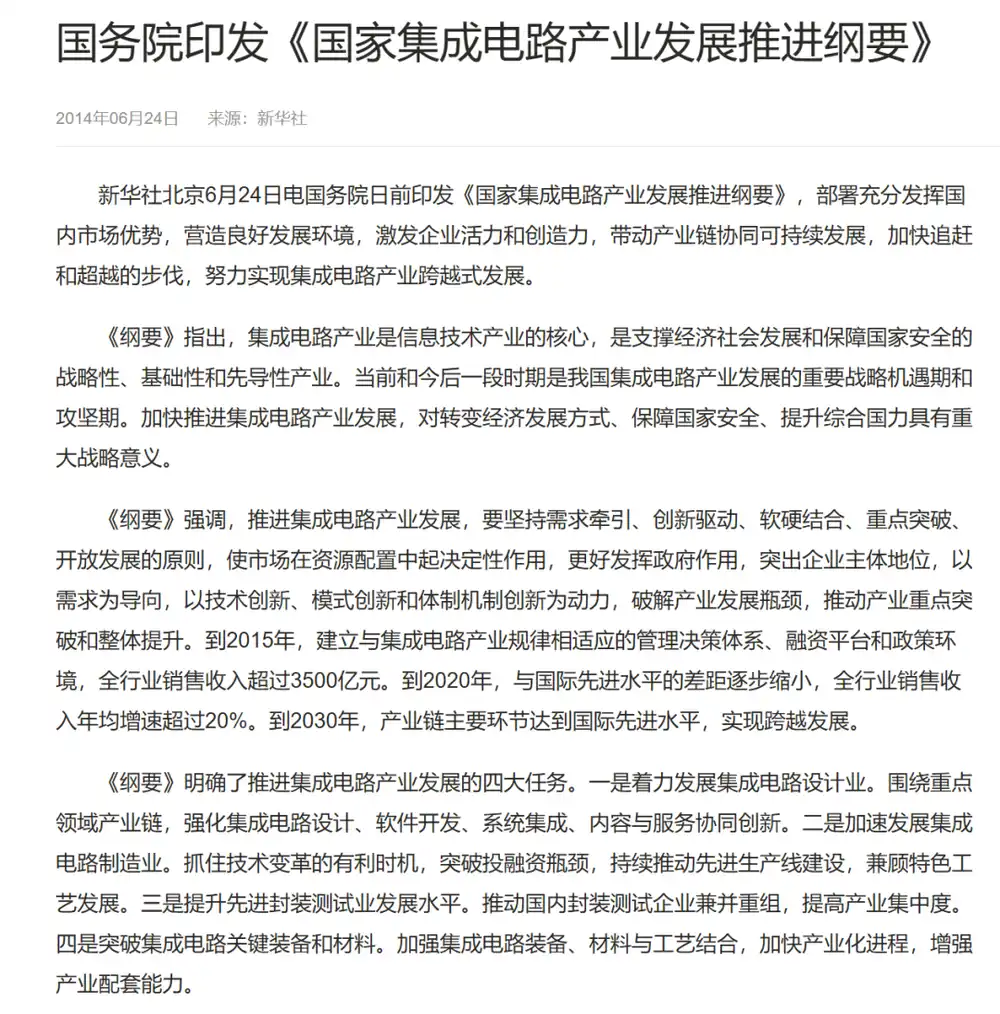
After the State Council released the National Guidelines for Promoting the Development of the Integrated Circuit Industry in 2014, China began its first systematic push into memory. By 2016, both CXMT and Fujian Jinhua had emerged to challenge a DRAM market then dominated by Samsung, SK Hynix, and Micron.
Both companies faced the same problem: China had little mature experience in DRAM manufacturing. The barriers were not limited to fab construction costs. DRAM production also required years of accumulated expertise in circuit design, cell architecture, process integration, and yield improvement. For a newly formed Chinese company, retracing several decades of development from scratch was close to impossible on a compressed timeline.
Fujian Jinhua chose what then looked like the fastest route. It sought to shorten development by leaning on an external team with established capabilities. In May 2016, Fujian Jinhua signed a cooperation agreement with Taiwan-based United Microelectronics Corp., or UMC. Fujian Jinhua would provide the funding, build the 12-inch wafer fab, and supply special-purpose equipment. UMC would provide the technology and develop a 32 nm DRAM process, with the results shared by both sides.
In July that year, the 12-inch DRAM project in Jinjiang, Fujian, officially broke ground. The first phase involved planned investment of about RMB 37 billion. The target was to begin production in 2018, with monthly capacity set at 60,000 wafers. At that stage, CXMT was still quietly assembling its team. In terms of project speed alone, Fujian Jinhua at one point appeared to be ahead.
The arrangement itself was not unusual. Technology cooperation, recruitment of outside talent, and joint development were standard ways for new entrants to build manufacturing capability more quickly. The problem was the degree of dependence. On key technology, R&D structure, and external collaboration, Fujian Jinhua became deeply tied to UMC. That dependence later proved to be a major vulnerability.
A legal fight that lasted about six years pushed the project off course
The turning point came a year later. In 2017, Micron sued UMC and Fujian Jinhua in Taiwan and the United States, citing trade-secret theft by former employees and patent infringement. In its U.S. case against UMC, Micron alleged that UMC had obtained IP, including memory-chip technology, from Micron employees in Taiwan and then passed it to Fujian Jinhua.
Fujian Jinhua and UMC responded with their own legal action, asking the court to order Micron to stop infringing Fujian Jinhua patents. In July 2018, a court ruled that Micron’s Shanghai unit should stop selling some Micron chips and that Micron’s Xi’an unit should stop manufacturing and importing several memory-module products.
Up to that point, the conflict still looked like a corporate legal battle over trade secrets and patents. A few months later, it changed character.
On Oct. 29, 2018, the U.S. Commerce Department added Fujian Jinhua to the Entity List. The official reasoning was blunt: Fujian Jinhua was “on the verge” of building large-scale DRAM capacity, and that new output could threaten the long-term viability of relevant U.S. suppliers. The action came not after volume production had begun, but when the company was only one step away from it.
Under U.S. export-control rules, once Fujian Jinhua was placed on the Entity List, any export by U.S. companies of products, software, or technology subject to the Export Administration Regulations required a license in advance. The policy for such licenses was a presumption of denial.
According to the original report, the impact was immediate. On the first day of the controls, on-site staff from Fujian Jinhua’s U.S. semiconductor partners left the fab. Installation work on tools stopped. Assistance tied to production stopped. Equipment that had been ordered but not yet shipped was put on hold. U.S. suppliers including Lam Research and Applied Materials halted technical support and cut off phone and email contact. Fujian Jinhua’s software systems were also tied to U.S. vendors. Its MES system, for example, had been procured from IBM, and communication channels were cut that same day.
Two days later, UMC said it would suspend cooperation with Fujian Jinhua. Because UMC had been central to process R&D under the partnership model, the halt effectively shut down the project’s most critical source of technical development and follow-on support at the same time the supply chain was freezing up.
Equipment, materials, process development — the core links needed to push DRAM into mass production were all hit together.
By the time the case ended, the production window had passed
Just one month later, the U.S. Department of Justice formally charged Fujian Jinhua, UMC, and Chen Zhengkun, among others, turning what had begun as civil litigation into a criminal case. The charges included conspiracy to commit economic espionage.
Over the following years, Fujian Jinhua remained tied down by litigation connected to Micron. In 2020, UMC reached a settlement with the U.S. Justice Department and paid a fine. In 2021, UMC also settled with Micron, ending years of litigation between those parties. By the end of 2023, Fujian Jinhua and Micron announced a global settlement and withdrew all lawsuits worldwide.

In February 2024, the U.S. District Court for the Northern District of California ruled that prosecutors had failed to prove Fujian Jinhua stole Micron trade secrets. After roughly six years, the case ended with Fujian Jinhua found not guilty.
But by then, more than five years had passed since the company’s planned start of production. After 2023, AI demand helped push the global memory sector into a new upcycle, with DRAM prices continuing to rise. Chinese memory companies gained a rare growth window. CXMT expanded rapidly during that cycle and ultimately reached the capital market. Fujian Jinhua, once only a step away from production, missed that period.
The original report says Fujian Jinhua never exited the stage entirely. The company remains in operation. Its fab and team still exist, and hiring and related business activity have continued. Even so, the DRAM line that had been scheduled to begin operating in 2018 at 60,000 wafers per month did not become the starting point of China’s DRAM rise in the way originally envisioned.
Why CXMT avoided the same path
Fujian Jinhua’s experience shows how difficult DRAM is not only as a technical industry but also as one constrained by IP rules, supply chains, and export controls. That raises the obvious question: if CXMT also started in 2016 and also pursued DRAM, why did it not run into the same outcome?
The explanation in the original article is not that CXMT faced no pressure. It is that the international environment, the technology path, and the industrial base had changed.
From the beginning, CXMT placed greater emphasis on building its own R&D structure and IP position. It continued to recruit international talent and expand research teams, while also strengthening its patent portfolio through licensing and patent purchases. At the end of 2019, CXMT signed a patent-license and patent-purchase agreement with Polaris, a unit of Canada-based IP operator WiLAN, obtaining access to part of the former Qimonda DRAM patent portfolio and related patent assets. The deal gave it an IP framework for later commercialization.
Timing also mattered. When Fujian Jinhua was hit by sanctions, China’s DRAM ecosystem and related upstream and downstream support remained weak. By the time CXMT was moving into gradual mass production, China had made visible progress in wafer fabrication, packaging and testing, equipment, and materials.
CXMT’s path was not smooth either. According to its IPO prospectus, the company was still posting a loss of about RMB 9.05 billion in 2024. It was only in 2025, with DRAM prices recovering, product mix improving, and production and sales volumes expanding, that the company recorded its first annual profit.
The article also notes that the United States has not dropped its pressure campaign against Chinese memory-chip development, including pressure aimed at CXMT. The U.S. Department of Defense has placed CXMT on its Section 1260H list of Chinese military companies. The U.S. Commerce Department has at one point considered adding the company to the Entity List, and members of Congress have repeatedly urged tighter export controls.
According to the article, the reason Washington has not acted more aggressively is not a change of heart but an internal calculation over cost and effectiveness. U.S. academic and policy circles, it says, have already recognized that excessively harsh export controls can accelerate self-sufficiency in China’s semiconductor supply chain. The fast rise of CXMT and YMTC is presented as evidence of that concern.
Fujian Jinhua is operating again, but the lost window remains the key cost
The original report says that after sanctions and production-line disruption, Fujian Jinhua has now fully resumed operations. Its 12-inch fab is running steadily at 40,000 wafers per month, with a plan to expand to 60,000 wafers per month by 2026.
Its biggest loss was not simply the burden of an international legal fight. It was the missed timing. Fujian Jinhua was once only one step from mass production. It has since returned to the industry track, but the structure of the market changed while it was stalled.
The company’s experience forced Chinese firms to confront the DRAM industry’s IP barriers, the supply-chain breaks created by the Entity List, and a hard lesson in global semiconductor competition: capital and fabs alone are not enough. In that sense, Fujian Jinhua may not have become China’s answer in DRAM, but it became one of the sector’s clearest lessons.