
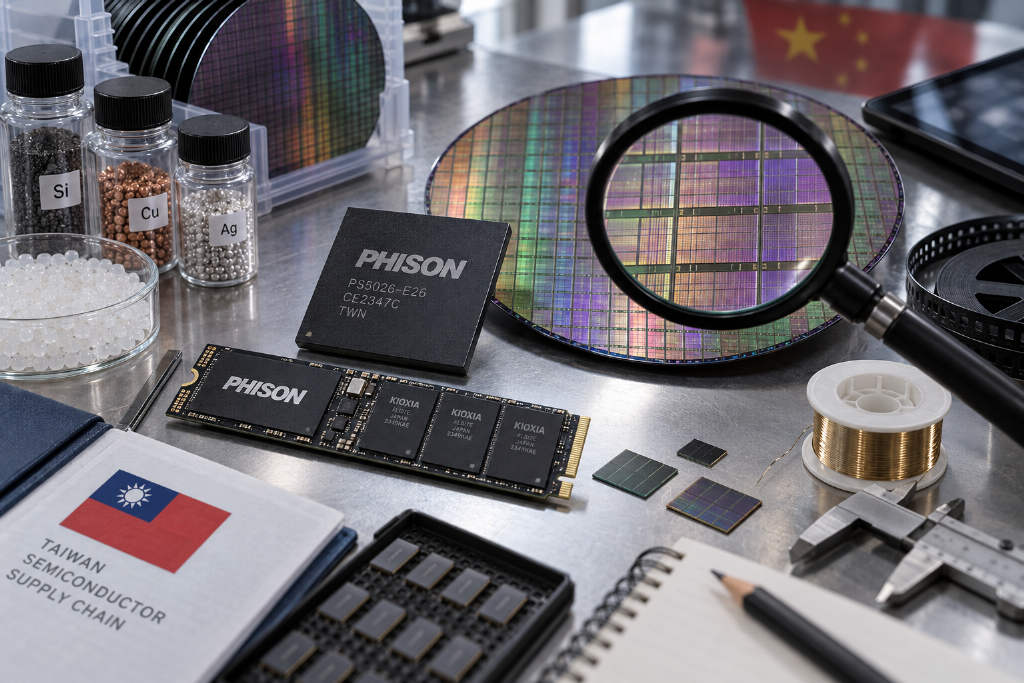
Phison Electronics CEO K.S. Pua said the market reaction to ChangXin Memory Technologies' latest 4F² memory cell architecture was overdone, calling it a "market ghost story" in an interview with Economic Daily on Oct. 15.
CXMT, a Chinese DRAM maker, recently said it had completed the design of a next-generation 4F² memory cell architecture. The announcement triggered selling in global memory shares, with South Korean markets even hitting circuit breakers multiple times. Pua said the technology had only just been unveiled and remained far from mass production.
He said the process still has to move through technical verification, yield improvement and formal mass production, and each stage takes time. "Pregnancy also takes nine months," he said, arguing that industry supply and demand cannot change overnight. In his view, the near-term impact is limited, while the market has rushed to price in competitive pressure too early and is simply "making up a story out of nothing."
Mass production remains the key question
The concern in the market is that if the new architecture can raise chip density, it could eventually reshape memory cost structures and competition. Even so, whether that becomes real supply still depends on production yields, manufacturing scale and how quickly customers adopt the products. A technical breakthrough does not mean a large volume of new supply will arrive immediately.
4F² refers to the layout method of a single DRAM memory cell. The goal is to fit more cells into the same area, improving chip density and manufacturing efficiency. Most mainstream DRAM products in the industry currently use a 6F² layout. If 4F² reaches successful mass production, it could theoretically lower bit costs.
Memory shares fell after CXMT plans surfaced
Chain News had previously reported that CXMT, described as the world’s fourth-largest DRAM manufacturer, plans to roll out DDR5 server memory based on the technology by the end of 2026. After that report, memory stocks across Taiwan, South Korea and the U.S. all moved lower. As of today, Micron was down 7.2%, Samsung Electronics had fallen 17%, SK Hynix was down 21.2%, and Japan’s Kioxia had dropped 17.1%. In Taiwan, Nanya Technology and Winbond fell 13.6% and 7%, while Phison declined 7.6%.
Tesla CEO Elon Musk had also commented on X at the time, saying that once China masters a manufacturing method, its ability to expand capacity often exceeds what outsiders expect. He cited lithium batteries and solar power as examples, which deepened market concern over how quickly Chinese memory producers could scale. At the same time, he said memory "may be different," adding that newer technologies such as HBM and 3D stacking are harder for China to catch up with.
Phison says orders are not the problem
Pua said the market is still facing a serious memory shortage and customer demand at Phison remains strong. The company has had to choose which orders to take. What worries him more than order visibility is a lack of materials that could prevent products from being delivered on schedule.
He said the severe supply shortfall will not change in the short term, which is why he expects the industry next year to face a situation where "everything is in short supply except orders." For Phison, the immediate challenge is on the supply side, not the demand side.
Pua rejects the view that memory has no upside left
Pua also disagreed with the recent market view that the memory industry has little room left for upside surprises. He said gross margins at memory manufacturers remain high and are still rising, while cloud demand is still strong. He added that if AI applications continue to extend from the cloud to local devices, the market could see another wave of explosive growth that would lift memory demand further.
For now, his message on market worries was to wait and watch.