ADR

ETHTaipei
2026-08-19 08:02:52

ETHTaipei 2026 sets Sept. 13-14 dates in Taipei with Polymarket and Uniswap among first speakers

ETHTaipei 2026 will take place on Sept. 13-14 at POPOP Taipei in Nangang, marking the fourth edition of the annual Ethereum-focused developer conference in Taiwan. This year’s event will be split into two themed days for the first time: Cryptonative Day on Sept. 13 for Ethereum developers and technical communities, and Institution Day on Sept. 14 for banks and financial institutions. The first batch of speakers includes teams from Polymarket, Uniswap, the Ethereum Foundation, ChainSafe, LINE NEXT, CertiK, OneSavie Labs, Quantstamp, Across Protocol and PIF12. Organizers said the agenda will span core protocol research, DeFi, Layer 2 scaling, zero-knowledge and privacy, wallets, account abstraction, security, cross-chain systems, RWA, tokenized U.S. stocks, institutional custody, stablecoin risk management and AI Agent-driven machine finance. The event is backed by corporate and institutional sponsors including BSOS, DADRC, Sigmarket, Taishin Shin Kong Financial Holding, Quantstamp and KlickKlack. Registration is now open through the event’s official website.
50
ETHTaipei 2026 sets Sept. 13-14 dates in Taipei with Polymarket and Uniswap among first speakers
Policy and Re
2026-08-19 04:30:00

Rising global bond yields and AI financing concerns drive a broad sell-off in U.S. tech stocks

U.S. stocks fell for a third straight session Tuesday as higher long-term bond yields put fresh pressure on richly valued technology names. The Nasdaq Composite dropped 1.33%, underperforming the Dow Jones Industrial Average and the S&P 500, while the 30-year U.S. Treasury yield briefly touched 5.338%, its highest level since 2007. The move was part of a wider global bond sell-off that also pushed long-dated yields higher in France, Germany, Japan and the U.K. Markets are increasingly focused on the growing debt burden tied to artificial intelligence expansion. According to figures cited in the report, AI-related bond issuance has reached $489 billion so far this year, well above an earlier full-year 2025 estimate of roughly $322 billion, while The Wall Street Journal reported that nine major technology companies have about $3 trillion in off-balance-sheet AI commitments. That backdrop hit semiconductors, memory, optical communications and AI cloud-service providers especially hard. Investors are also weighing fiscal deficits, oil-driven inflation risks tied to the Iran situation, and a heavy event calendar that includes U.S. tariffs on some Canadian products, a 20-year Treasury auction, Federal Reserve minutes and China’s one-year LPR decision.

90
Rising global bond yields and AI financing concerns drive a broad sell-off in U.S. tech stocks
AI
2026-08-18 12:48:08

AI Revenue Updates and Nvidia Support Help Storage Stocks Rebound, SOX Returns to Bull Market

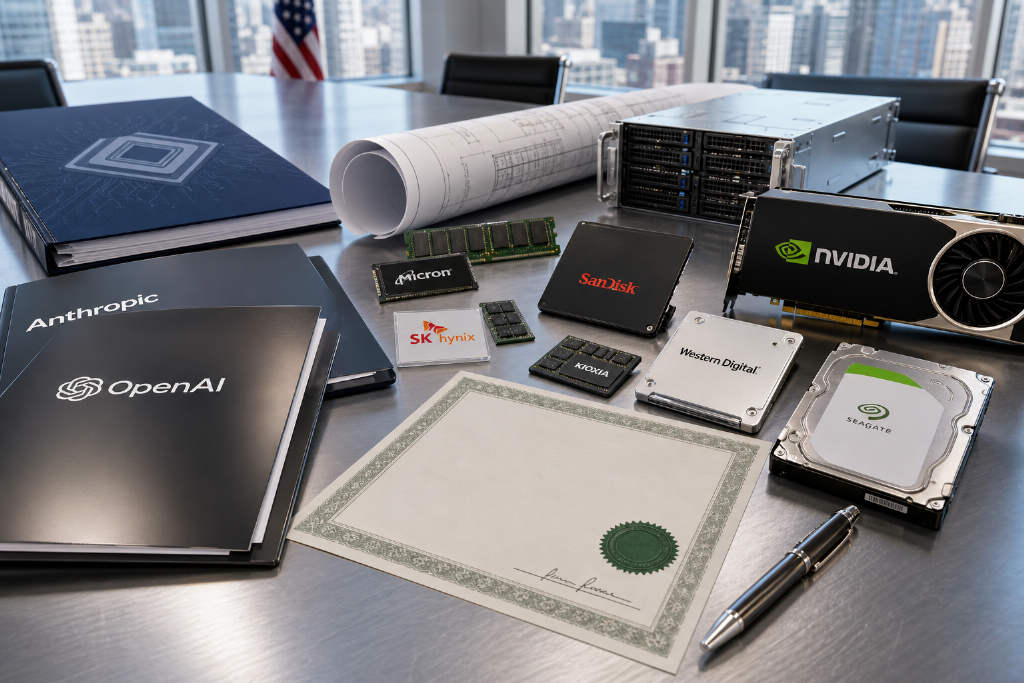
AI enthusiasm got another boost this week after Anthropic and OpenAI reported strong financial updates and Nvidia pledged support for data center construction. The rebound lifted U.S. storage stocks and pushed the Philadelphia Semiconductor Index back into a technical bull market. Micron, SanDisk, SK Hynix, Western Digital and Seagate all moved higher, while Kioxia ADR jumped on gains in Japan. Analysts said the latest revenue disclosures from Anthropic and OpenAI, along with Nvidia’s financing role in AI infrastructure, are the main near-term catalysts for chips and memory names.

100
AI Revenue Updates and Nvidia Support Help Storage Stocks Rebound, SOX Returns to Bull Market
AI stocks
2026-08-18 21:12:38

AI Stocks Drop as Oil, Yields and Middle East Tensions Reprice Risk

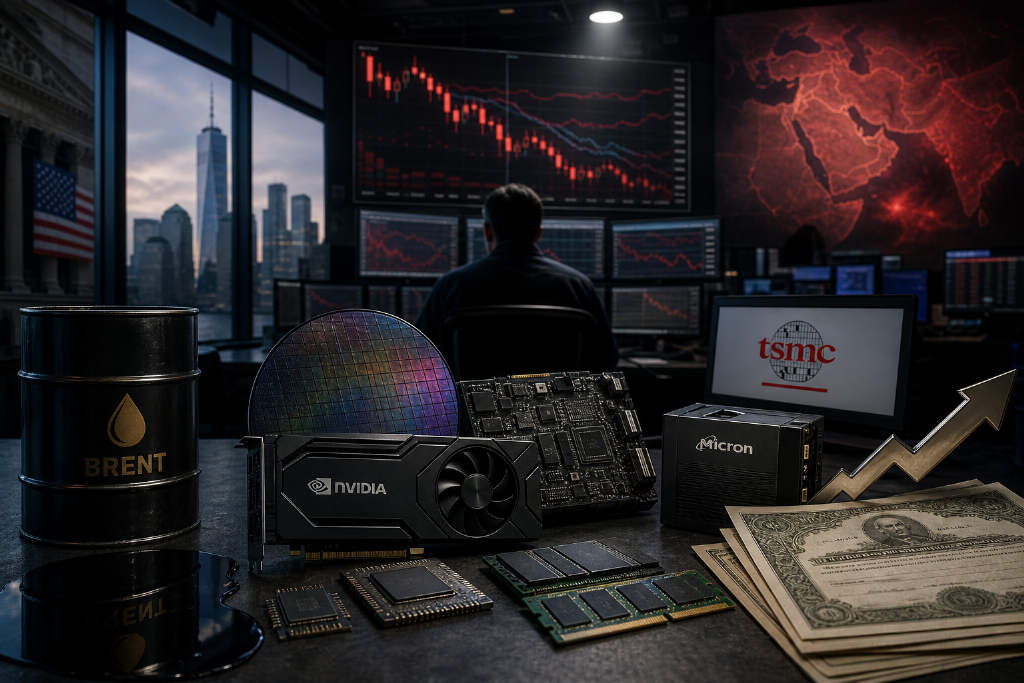
U.S. equities opened lower on Aug. 18, with AI and semiconductor names leading the decline. Micron briefly fell nearly 7%, TSMC ADR lost about 4%, and NVIDIA, Broadcom and Meta also weakened. The move followed rising oil prices, higher Treasury yields and renewed Middle East tensions, not a single earnings report or an abrupt collapse in AI demand. Reuters reported that U.S.-Iran talks stalled and Brent crude climbed back near $90 a barrel. That in turn revived inflation concerns and pushed long-dated Treasury yields higher, with the 30-year yield touching about 5.29%, the highest since 2007, while the 10-year yield held around 4.71%. Energy stocks rose instead, with XLE up more than 1% intraday. Still, the article says there is not enough evidence that AI infrastructure demand has turned. U.S. industrial output for July rose 0.2%, semiconductor production increased 2.4%, and Microsoft and Amazon’s latest results still point to strong cloud demand. Gold and silver did not rally either, suggesting investors were focused more on yields and the dollar than on classic safe-haven flows. The piece highlights three numbers to watch next: Brent above $90, the U.S. 10-year yield, and AI companies’ revenue, orders and free cash flow.

40
AI Stocks Drop as Oil, Yields and Middle East Tensions Reprice Risk
SK Hynix
2026-08-18 12:35:59

SK Hynix ADR Still Trades at a 10% Premium as Korean Retail Investors Poured $4.5 Billion Into U.S. Stocks in July

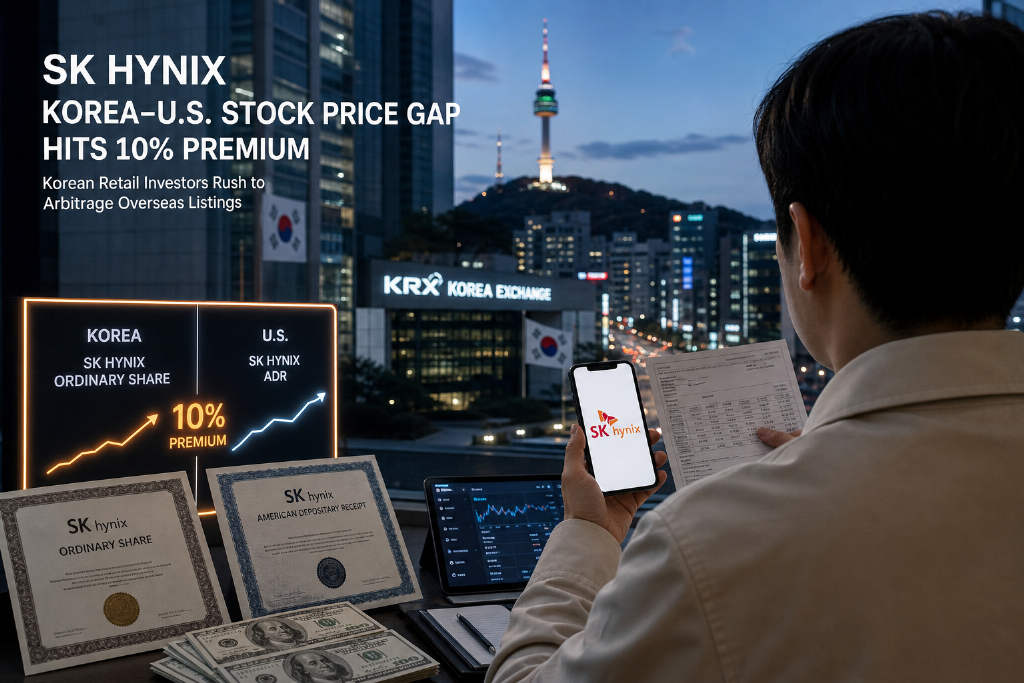
Korean retail investors bought about $4.5 billion of U.S. stocks in July, according to the Korea Securities Depository, with roughly $840 million flowing into SK Hynix’s U.S.-listed ADR. That ADR is trading about 10% above the company’s shares in Korea, while financing balances on the Korean stock market fell from about 37 trillion won at the end of June to about 27 trillion won in early August. Acadian Asset Management executive vice president Owen Lamont said the price gap could be a sign of excessive speculation, even a symptom of a bubble. The shift into U.S. markets has not reduced risk-taking. AI, semiconductors and leveraged products remain the main bets, and four of the 10 most-purchased U.S. stocks in July were leveraged products, led by Direxion Daily Semiconductor Bull 3X Shares (SOXL). Analysts said Korean investors may simply be moving high-risk AI trades from the domestic market to the U.S. rather than exiting risk assets altogether. Industry participants also said Korea’s capital base is not large enough to move the broader U.S. market, but concentrated trading could still amplify swings in volatile names such as AI chips, quantum computing and leveraged ETFs.

40
SK Hynix ADR Still Trades at a 10% Premium as Korean Retail Investors Poured $4.5 Billion Into U.S. Stocks in July
AI investing
2026-08-15 13:25:25

Situational Awareness 13F shows how an AI-heavy, unhedged book unraveled

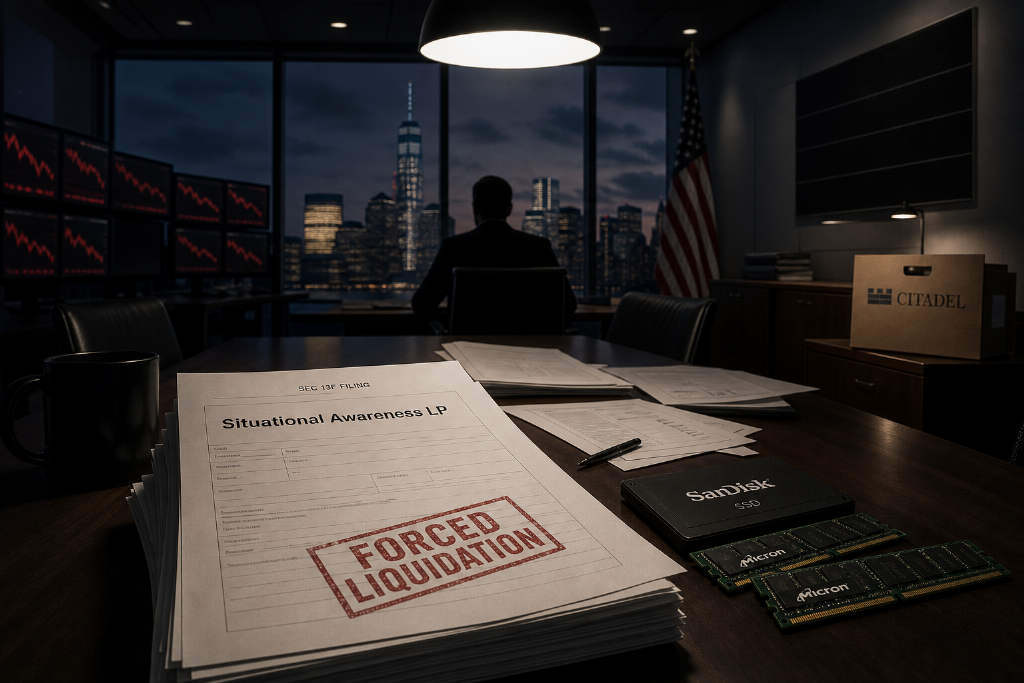
Situational Awareness LP, the fund run by Leopold Aschenbrenner, has disclosed its quarterly 13F filing for positions held as of June 30, offering the clearest view yet into the portfolio that preceded its recent collapse. The filing shows a nominal portfolio worth about $20.24 billion spread across 26 positions, but the diversification was mostly superficial: the fund had concentrated more than half of its disclosed exposure in SanDisk and Micron, with much of the rest tied to the same broad thesis around AI infrastructure, including power, advanced manufacturing, cloud compute, data centers, and related capacity buildout. The report also highlights a decisive shift from the prior quarter. In Q1, the fund had held more than $8 billion in put options tied to major chip and storage names and related vehicles, including SMH, NVDA, ORCL, AVGO, AMD, and ASML. By Q2, those downside hedges were gone. At the same time, Micron and SanDisk call options were closed and replaced with large outright equity stakes. According to Odaily, that move turned what had been a hedged structure into an effectively unprotected long book just before a broad selloff in AI and storage names. Weeks earlier, the fund had already suffered major losses as AI-linked stocks retreated and leverage amplified the drawdown, forcing large-scale liquidation of public-market holdings. Odaily said most of the stock portfolio was later sold at a discount to Citadel, the firm founded by Ken Griffin.

130
Situational Awareness 13F shows how an AI-heavy, unhedged book unraveled
SEC
2026-08-15 03:28:19

SEC filing shows Leopold Aschenbrenner fund was heavily concentrated in Sandisk and Micron before July selloff

A new U.S. Securities and Exchange Commission filing shows what Leopold Aschenbrenner’s fund, Situational Awareness LP, held before the July blowup tied to AI-related stocks and leverage pressure. The firm filed a 13F-HR on Aug. 14, 2026, disclosing a public-equity snapshot that carried a reported value of about $20.24 billion. The portfolio was sharply concentrated: roughly $5.674 billion in Sandisk, or about 28.0% of the book, and about $5.574 billion in Micron, or 27.5%. Together, those two memory names accounted for more than $11.2 billion, or around 55.5% of reported holdings. Beyond storage, the filing listed large positions in Bloom Energy, TSMC ADR, Nebius, CoreWeave, and Core Scientific, along with exposure to Applied Digital, IREN, Riot Platforms, and CleanSpark. The filing offers a view into a portfolio built around the AI infrastructure chain, spanning memory, foundry capacity, cloud compute, power, data centers, and mining infrastructure. The document also has limits: 13F reports only cover U.S.-listed securities and some options as of June 30, and do not show intraday trading, the full short book, financing structure, or sales made after that date.

370
SEC filing shows Leopold Aschenbrenner fund was heavily concentrated in Sandisk and Micron before July selloff
US inflation
2026-08-14 04:32:57

Cooling CPI and PPI lift Wall Street, but long-dated Treasuries and drone tariffs keep pressure in view

U.S. equities ended higher after softer inflation data helped push the S&P 500 to another record close, with the Nasdaq and Dow also advancing. July producer prices cooled to 4.7% year over year from 5.5% in June, while the market lifted the odds of the Federal Reserve holding rates steady in September to around 65%. Even so, the long end of the Treasury market sent a different signal: the 30-year bond auction cleared at 5.216%, the highest since 2001, and indirect bidding weakened, pointing to growing concern over fiscal supply and term premium. Sector leadership was narrow. SanDisk surged after issuing aggressive long-term targets at its 2026 investor day, lifting Western Digital, SK Hynix, Seagate, Micron and the Roundhill storage ETF. Workday also jumped on a Reuters report that Silver Lake had held acquisition talks for months. In contrast, optical networking names and parts of the AI hardware trade reversed lower, while Cisco fell despite record quarterly revenue as investors focused on margin concerns. Oil prices retreated after both the IEA and OPEC lowered demand expectations, and Donald Trump signed a proclamation imposing 10% to 100% tariffs on imported drones and related parts on national security grounds.

390
Cooling CPI and PPI lift Wall Street, but long-dated Treasuries and drone tariffs keep pressure in view