ASP

Taiwan
2026-09-03 07:31:32

Taiwan’s Virtual Asset Service Act Passes Third Reading, Subsidiary Regulations Targeting Stablecoins Due by Q1 2027

Taiwan’s Financial Supervisory Commission (FSC) chairperson Peng Jin-long announced that the Virtual Asset Service Act (VASP Act) passed its third reading on June 30 this year. The FSC is drafting nine subsidiary regulations, including rules for stablecoins, which are expected to be published in the first quarter of 2027. The development reflects Taiwan’s shift toward a three-track financial system combining traditional finance, digital finance, and blockchain finance, with stablecoins and blockchain technology emerging as key infrastructure for cross-border fund flows.

270
Taiwan’s Virtual Asset Service Act Passes Third Reading, Subsidiary Regulations Targeting Stablecoins Due by Q1 2027
semiconductor
2026-09-02 12:13:13

China’s chip equipment push moves into tougher territory as metrology advances and bottlenecks persist

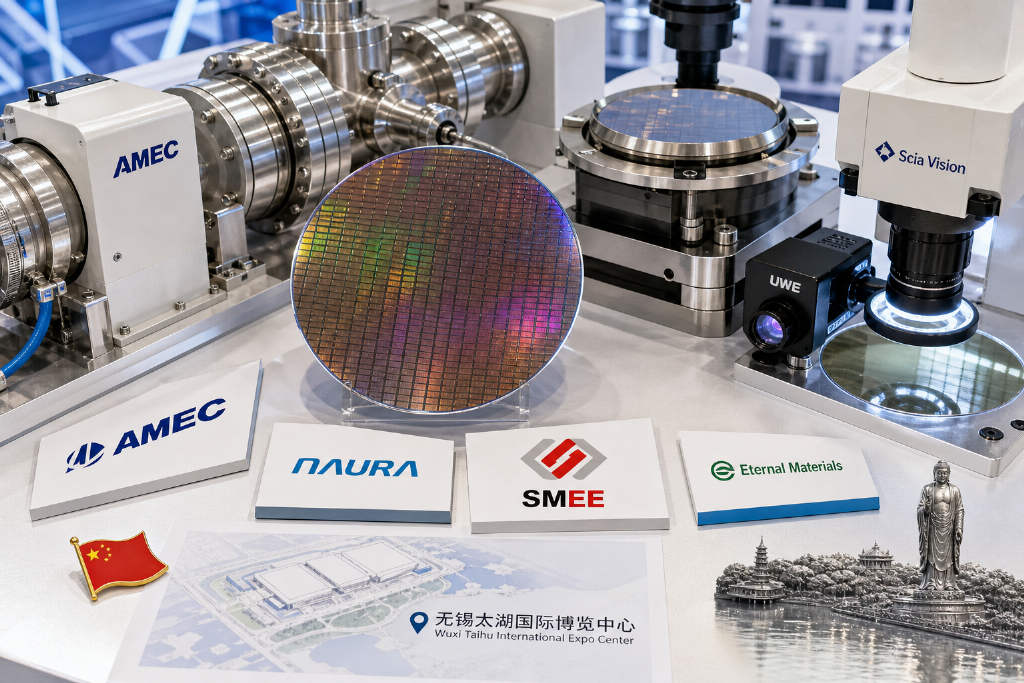
China’s semiconductor equipment industry is entering a more demanding phase, with the easiest import-substitution wins largely behind it and harder categories now drawing the most attention. At CSEAC 2026 in Wuxi, equipment makers and component suppliers used the show to present where domestic progress stands across process tools, metrology and inspection systems, advanced packaging, and core parts. In process equipment, companies such as Advanced Micro-Fabrication Equipment Inc. China (AMEC), NAURA, and Shanghai Micro Electronics Equipment showed continued expansion across etch, deposition, and lithography-related systems. But ion implanters remain a major weak spot. According to data cited by Aion Semiconductor, overall localization in ion implantation is still below 15%, with high-current tools below 10% and high-energy tools largely blank. Metrology and inspection appear to be moving faster. eGenerate, Yuwei Semiconductor, and SDRA were among the companies highlighted for equipment already in volume delivery or advanced validation. In advanced packaging, wafer-to-wafer bonding is more mature, while die-to-wafer bonding is still largely in validation. The report also points to continued progress in domestic core components, arguing that the sector is shifting from isolated breakthroughs toward broader ecosystem building, even as trust barriers, validation constraints, and long R&D cycles remain in place.

260
China’s chip equipment push moves into tougher territory as metrology advances and bottlenecks persist
Bitget
2026-09-02 05:45:08

Bitget Joins Future Mode as Gold Sponsor, CEO Gracy Chen to Speak on VASP Rules and RWA

Bitget will attend Future Mode 2026 in Taipei as a Gold Sponsor from Sept. 4 to 6. CEO Gracy Chen will take part in a fireside chat on global regulation, VASP policy and real-world asset trends. The booth will showcase the UEX vision and tokenized US stocks via rToken, with a giant vending machine and limited giveaways. A "Liquidity Supply Station" near the venue will offer 300 servings of egg pancakes and 500 drinks over three days.

260
Bitget Joins Future Mode as Gold Sponsor, CEO Gracy Chen to Speak on VASP Rules and RWA
Dell Technolo
2026-09-02 01:36:55

Dell Raises Full-Year Forecast as AI Server Orders Lift Taiwan Suppliers

Dell Technologies raised its full-year revenue forecast to $192 billion, with AI server revenue expected to reach $74 billion, three times the level of the previous year. The company said it had received more than $130 billion in AI server orders over the past 12 months, while its remaining AI server backlog stood at $95 billion. Dell’s quarterly revenue and adjusted earnings per share also came in above market expectations, sending its stock up about 10% in after-hours trading. The company’s traditional general-purpose server business has recovered as enterprises deploying complex systems such as AI agents still require CPU servers for resource allocation and task management. Dell’s PC division reported 20% year-over-year revenue growth to $15 billion, while segment profit rose 42% after higher component costs, including memory, were passed on to end customers. Taiwan-based suppliers Wistron, Hon Hai, Inventec, Compal, and cooling and power-component makers are positioned within the supply chain linked to Dell’s server demand. The article says shipment volumes could extend into next year, while system-integration complexity, cost pass-through and gross-margin changes remain key measures of the actual benefit to suppliers.

60
Dell Raises Full-Year Forecast as AI Server Orders Lift Taiwan Suppliers
AFA Awards
2026-09-01 11:11:56

XREX Named the Only Taiwanese Winner at AFA Awards 2026

XREX was the only Taiwanese company to win an award at the inaugural AFA Awards 2026, taking the Regulatory Excellence Award at the final held in Taipei on September 1. The awards, organized by the Asia FinTech Alliance, drew more than 100 companies from 16 economies. After selection rounds that reduced the field to 30 and then 10 finalists, five awards were presented. Singaporean companies won three categories, while Malaysia’s PolicyStreet took the Fastest Growing Award. The other Singaporean winners were First Answer Pte Ltd, Liquid Group Pte. Ltd. and Finmo Tech Pte Ltd. XREX was founded in 2019 by Wayne Huang and Winston Hsiao. Its Taiwan entity is one of the first virtual asset service providers in Taiwan to complete anti-money-laundering registration with the Securities and Futures Bureau of the Financial Supervisory Commission. Its Singapore entity holds a Major Payment Institution license from the Monetary Authority of Singapore and operates the stablecoin-focused B2B cross-border payments platform XREX Pay. Five other Taiwanese companies also reached the shortlist, with BaaS Innovation and CyCraft entering the Top 10 and three others reaching the Top 30.

280
XREX Named the Only Taiwanese Winner at AFA Awards 2026
MiCA
2026-09-01 08:16:11

A MiCA CASP License Can Travel Across the EU, but It Does Not Turn Into a Universal Financial Passport

A MarsBit analysis argues that the biggest misunderstanding around the EU’s Markets in Crypto-Assets framework is not whether a crypto-asset service provider, or CASP, can expand across borders after authorization. It can. The real issue is what exactly gets carried into other member states through passporting, and what does not. Under MiCA, a CASP authorized in its home state may extend approved crypto-asset services into other EU countries through a branch or on a freedom-of-services basis, without setting up a separate licensed entity in each market. But the scope remains limited to the services already listed in the authorization. A cross-border notification does not automatically add fiat conversion, trading venue operations, order execution, or investment advice. The article also says many business models, especially crypto payments, sit partly outside CASP authorization. Stablecoin flows may overlap with payment regulation, and the European Banking Authority has discussed how MiCA interacts with PSD2, particularly for EMT-related transfers and some custodial wallet functions after transitional arrangements end on March 2, 2026. It also highlights ESMA’s 2025 warning about the “halo effect,” where users may wrongly assume that all products in a group app are MiCA-regulated just because one EU entity holds a CASP license. The broader point is that passporting removes duplicate licensing, not every local, product, and group-structure compliance issue.

310
A MiCA CASP License Can Travel Across the EU, but It Does Not Turn Into a Universal Financial Passport
MCP
2026-09-01 07:39:38

MCP Servers Become New AI Attack Surface: 40% Found Vulnerable

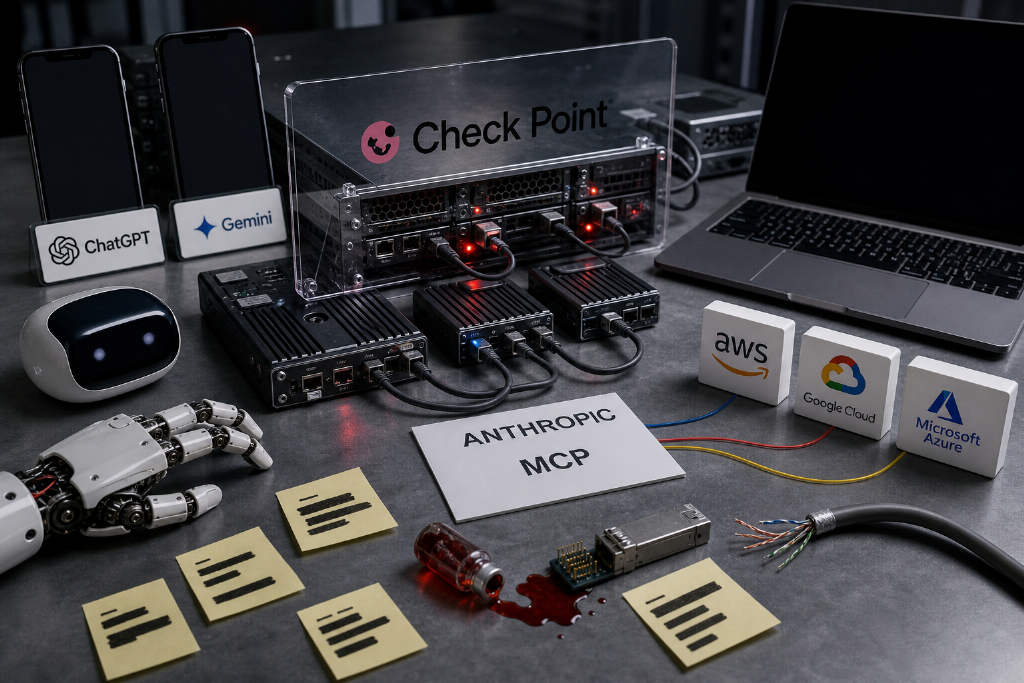
Security firm Lakera analyzed 10,000 MCP servers and found that roughly 40% have exploitable security weaknesses. Threats include tool poisoning and rug pull attacks, where attackers can manipulate AI agent behavior via malicious instructions. Check Point and other vendors are developing dedicated AI firewalls. MCP, released by Anthropic in November 2024 as an open standard, had over 10,000 active public servers by December 2025, with support from AWS, Google Cloud, and Azure. Major AI platforms like ChatGPT, Gemini, and Microsoft Copilot have adopted the protocol.

210
MCP Servers Become New AI Attack Surface: 40% Found Vulnerable
US Treasury
2026-09-01 01:52:00

US expands Iran secondary sanctions, applying sector designation to digital assets for the first time

The U.S. Treasury on Aug. 24 launched what the source describes as an "economic expulsion" action against Iran, widening secondary sanctions to five sectors: aviation, cryptocurrency, gold, shipping, and technology. Treasury said the move targets economic channels that sustain the Iranian regime and the Islamic Revolutionary Guard Corps, while adding nearly 60 Iran-linked entities, individuals, and vessels to the sanctions list. According to the Treasury statement cited in the report, Iran has used crypto to evade sanctions, gold to hedge inflation, aviation networks to move weapons and funds, and shipping networks to transport oil illicitly. The report says this is the first time Executive Order 13902 sector designation has been applied to the digital asset industry, allowing the Office of Foreign Assets Control to sanction foreign persons operating in, or supporting, designated sectors of Iran's economy without separately establishing links to terrorism, weapons proliferation, or other sanctioned parties. It also highlights crypto-related cases including UAE-based freight broker Ivan Obukhov, who was accused of handling more than $100 million in crypto payments since 2023 for Iranian oil sales tied to the IRGC-QF, and several individuals allegedly linked to an Iran Ministry of Intelligence-directed cybercrime group. Foresight also cited Beosin's on-chain review of 37 sanctioned crypto addresses across BTC, ETH, and TRON, tracing flows to exchanges including Binance, CoinEx, BingX, WhiteBit, Kucoin, and Bybit.


210
US expands Iran secondary sanctions, applying sector designation to digital assets for the first time