ASP

Chainalysis
2026-08-30 18:11:48

Chainalysis Sues ICE Over $94.6M Sole-Source Contract to TRM Labs

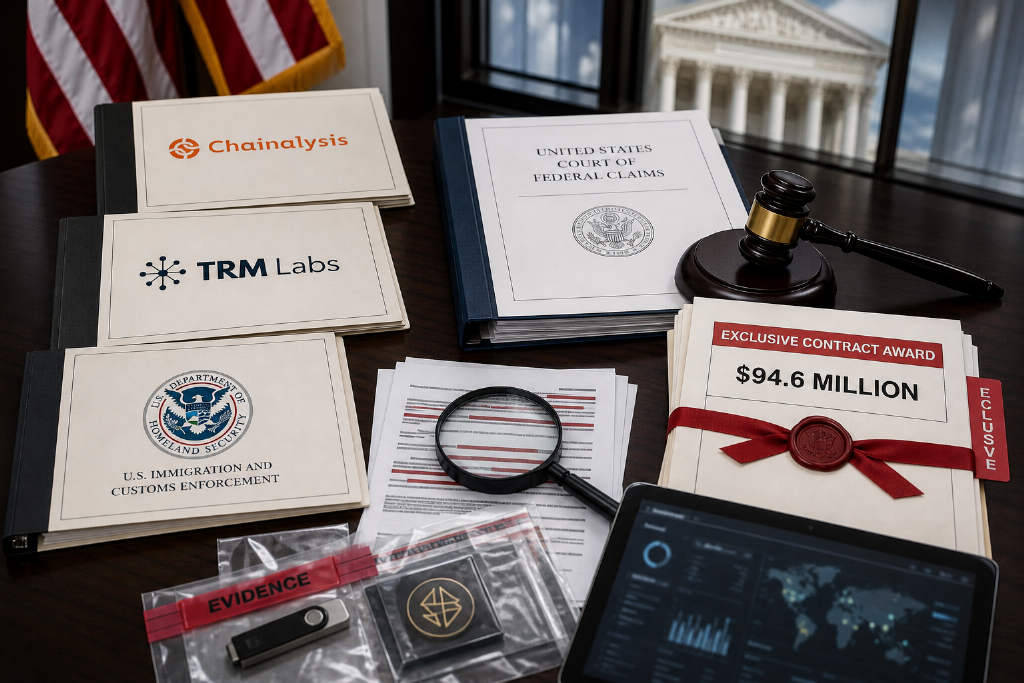
Blockchain analytics company Chainalysis has sued ICE before the U.S. Court of Federal Claims, alleging that the agency unlawfully awarded a $94.6 million sole-source contract to competitor TRM Labs. The contract provides forensic software and support for Homeland Security Task Force investigations, with a performance period running from July 1, 2026 to June 30, 2027. Chainalysis says it is the largest U.S. government blockchain-analysis contract awarded to date. In the complaint, Chainalysis says ICE issued an RFI on May 28 with 18 questions covering a proprietary fraud-victim database, AI-agent data retrieval, automated notices to virtual asset service providers to execute voluntary freezes, and cooperation with stablecoin issuers. Less than two weeks later, the final Statement of Need omitted many of those requirements, while ICE's market research used the RFI standard to conclude Chainalysis could not meet its needs. The suit also says “sextortion” appeared as one of three mission areas in the Statement of Need even though the RFI never mentioned it, and that some requirements closely match TRM’s proprietary product architecture. Chainalysis says it was the only company to submit a capability statement, yet ICE completed its market research the next day and named TRM the only supplier able to meet all requirements. ICE, according to the complaint, did not ask Chainalysis any follow-up questions.
180
Chainalysis Sues ICE Over $94.6M Sole-Source Contract to TRM Labs
ESMT
2026-08-30 15:48:09

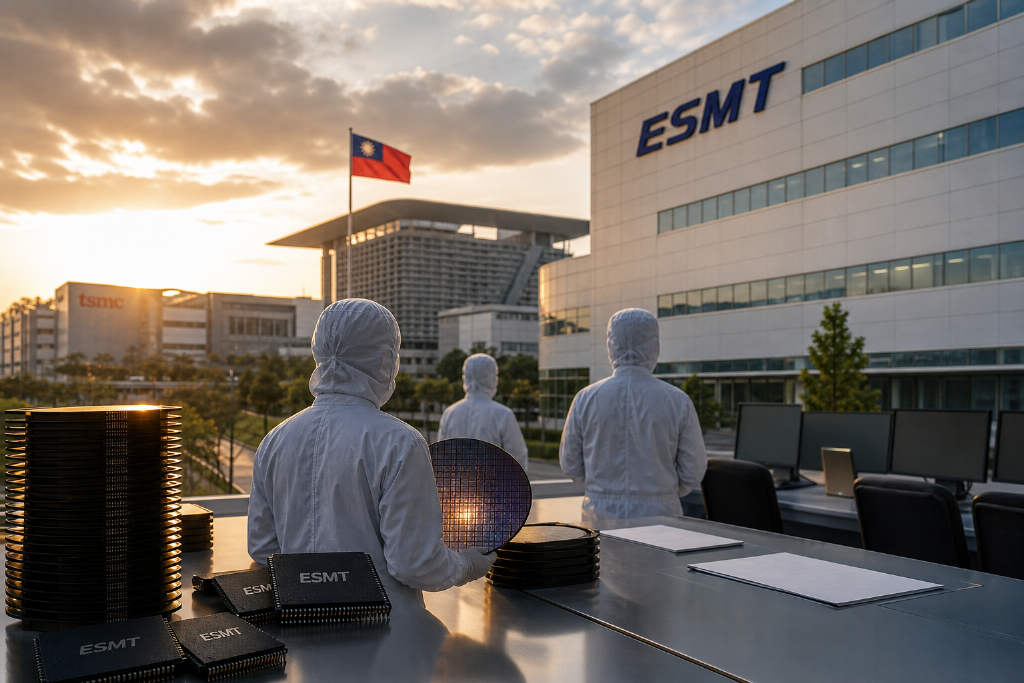
Serenity Turns More Bullish on ESMT as DDR3 Gains Beat Q2 Forecasts

Serenity published a fresh analysis of Taiwan memory chip firm ESMT (3006) on Aug. 30, highlighting a sharp upward revision in its Q2 pricing outlook. Hua Nan Securities, which in March had guided for Q2 DDR3 4Gb contract prices to rise roughly 50% quarter over quarter, now sees ESMT's blended Q2 ASP climbing 105% to 113% QoQ, with DDR3 gains clearly better than expected. Fubon Securities had earlier projected DRAM prices up 40% QoQ. Serenity argues the niche-memory price rally is no longer just a revenue story but a major profit amplifier, with operating leverage fully unlocked. Powerchip's wafer costs may double in the second half, and customers are accepting cost pass-throughs far more willingly than anticipated. ESMT posted about $109 million in July net profit, well above prior model estimates, putting its rough annualized valuation at as low as 1.9x PE. Demand remains sticky: DDR3 is widely used in IP cameras and hard drives, where memory chips account for a tiny share of the BOM, and paying a few dollars more per chip beats redesign or re-certification. With peers shifting capacity to HBM and DDR5, DDR3/DDR2 supply is structurally tightening.

230
Serenity Turns More Bullish on ESMT as DDR3 Gains Beat Q2 Forecasts
Serenity
2026-08-29 13:15:23

Serenity: Sivers Photonics' Sweden Focus Risks Trapping Its Valuation

Serenity, the investor known as the 'White-Hair Stock God,' has publicly questioned Sivers Photonics' (SIVE) current strategy, arguing that the company remains overly focused on the Swedish market while US investors are more likely to reward its future growth potential and the real economic value of its order book. According to Serenity, American analysts would be more interested in what Sivers' two recent wafer fab capacity allocations actually mean—and, with supply bottlenecks and rising average selling prices (ASP), how much revenue and operating leverage those volumes could translate into. Serenity also said topics like NPO/CPO, pluggable optical modules, the 2028 volume ramp of CPO makers such as Ayar, the ELS product collaboration with O-Net, and the scale and potential total addressable market (TAM) of six newly added pluggable customers deserve deeper discussion. By contrast, local market participants keep pressing management on 'how to stop the bleeding,' why private customers cannot be disclosed, why the company is focused on transceivers, and what the 'business opportunity pipeline' actually means—forcing management to spend considerable time defending itself instead of talking about future growth. Serenity believes the more time Sivers spends on the Swedish market, the more its valuation becomes constrained by Swedish market investment logic, and it should therefore present its growth opportunities and their economic value more aggressively to US investors.

200
Serenity: Sivers Photonics' Sweden Focus Risks Trapping Its Valuation
Revolut
2026-08-27 07:17:34

Revolut launches EURR euro stablecoin, with Bridge as legal issuer and reserve manager

Revolut has started a phased rollout of EURR, its first euro-denominated stablecoin, beginning with selected eligible customers in Denmark, Poland and Portugal. The company said the token will later expand to other markets across the European Economic Area during 2026 and will be integrated into the Revolut retail app to connect euros, crypto assets, external wallets and supported blockchain networks. Despite carrying the Revolut brand, EURR is not legally issued by Revolut Bank or another Revolut group crypto entity. The legal issuer is Luxembourg-registered Bridge Building S.A., which also handles minting, burning, reserve management and fiat redemptions. Under the white paper, EURR is classified as an e-money token under MiCA and is designed to maintain a value equivalent to €1 per token. Each circulating EURR must be backed by €1 or equivalent euro-denominated reserve assets. The rollout also adds a new layer to Revolut’s existing crypto stack, which already includes its retail app, the Revolut X trading platform and Revolut Ramp. At launch, media checks and Bridge’s reserve page showed live deployment on Ethereum and Polygon, while the white paper listed a broader set of supported networks.

300
Revolut launches EURR euro stablecoin, with Bridge as legal issuer and reserve manager
Japan regulat
2026-08-26 13:13:00

Nomura’s Laser Digital wins Japan crypto license as market structure shifts toward institutional services

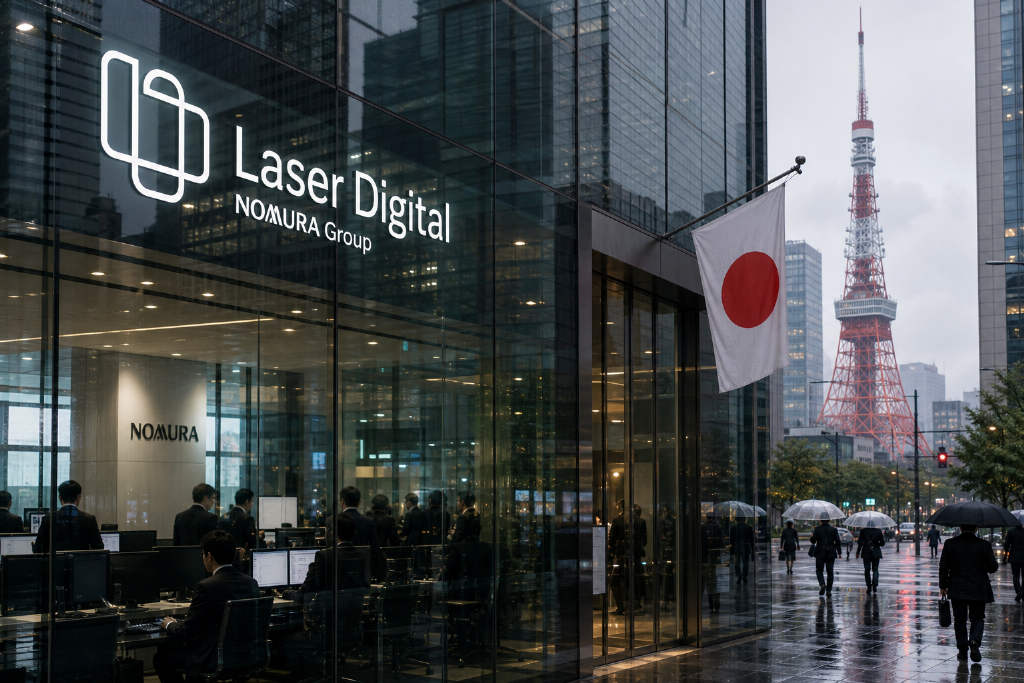
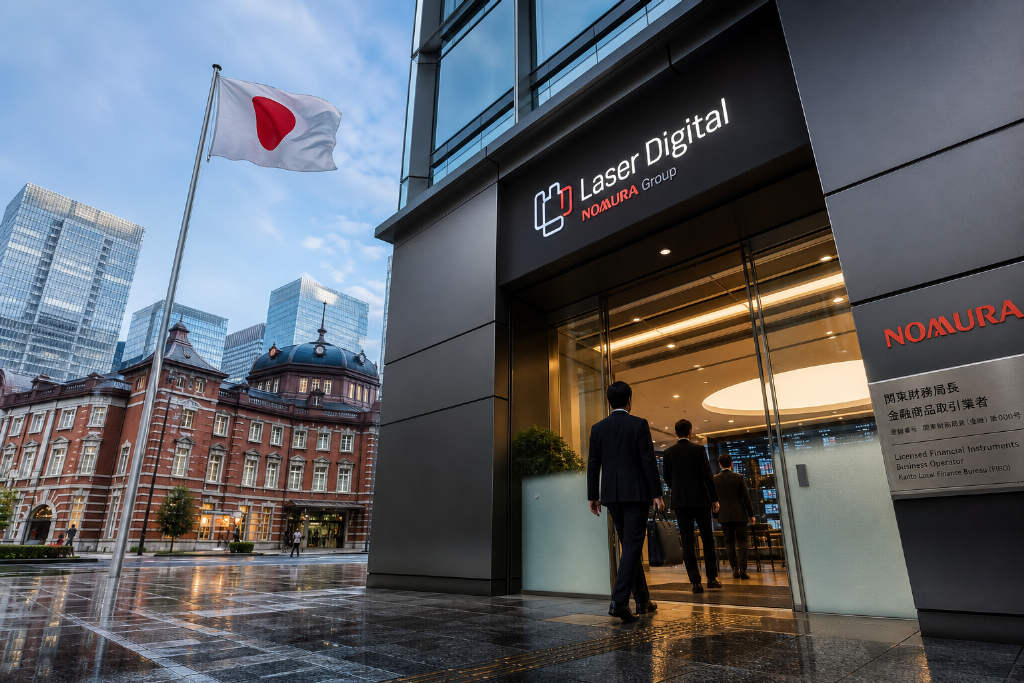
After nearly four years without a new entrant, Japan has added a fresh licensed crypto exchange operator. On Aug. 21, Laser Digital Japan, part of Nomura Holdings, completed registration as a crypto asset exchange service provider, becoming the first newly added licensed trading institution in the country since 2022. Rather than targeting retail traders, the company plans to start by providing liquidity to locally licensed virtual asset service providers in Japan, then expand into digital asset trading services for institutional investors. The development stands out not only because of the rarity of the license, but because it reflects a broader change in how Japan’s crypto market is being reorganized. Japan was one of the first jurisdictions to establish a formal regulatory framework for crypto trading, but tighter rules introduced after major platform security incidents raised entry barriers and helped create a market with limited, tightly supervised participants. At the same time, new legal and tax reforms are gradually bringing crypto closer to the country’s capital markets framework, lowering the cost for traditional financial institutions to plug crypto services into existing channels. In that setting, Laser Digital’s strategy points to a different competitive model: instead of building a retail exchange from scratch, it is moving into liquidity, execution, and institutional-facing services, areas where Nomura’s existing client network, compliance systems, and market infrastructure can be put to work.

250
Nomura’s Laser Digital wins Japan crypto license as market structure shifts toward institutional services
Japan regulat
2026-08-26 13:26:11

Nomura’s Laser Digital wins a rare Japan crypto license and heads straight for institutional flow

Japan has added its first new licensed crypto trading operator since 2022, with Laser Digital Japan, a unit of Nomura Holdings, completing its crypto-asset exchange registration on Aug. 21. The approval ends a nearly four-year stretch without a new entrant and stands out not only because of the scarcity of licenses, but because of what Nomura plans to do with it. Laser Digital is not starting with retail. Its initial plan is to provide liquidity to licensed domestic virtual asset service providers in Japan, then expand into digital asset trading for institutional investors. That approach reflects the structure of Japan’s market, where established platforms such as Coincheck, bitFlyer, bitbank, SBI VC Trade, GMO Coin and Binance Japan already dominate retail channels with existing users, apps, brands and payment rails. The move also lands as Japan is reshaping how crypto fits into its wider financial system. Legal amendments passed in July 2026 set a direction for shifting crypto trading oversight from the Payment Services Act to the Financial Instruments and Exchange Act. Tax reform proposals for fiscal 2026 also point to a 20% separate tax rate for qualifying crypto trading gains, with losses allowed to be carried forward for three years, subject to the regulatory changes taking effect. At the same time, a new intermediary framework introduced in June is lowering the cost for financial institutions to offer crypto-related services without operating a full exchange themselves.

280
Nomura’s Laser Digital wins a rare Japan crypto license and heads straight for institutional flow
South Korea
2026-08-25 02:03:55

Asia crypto roundup: Ripple lands Korean bank deal as Pakistan opens licensing portal

South Korea’s Jeonbuk Bank has partnered with Ripple to roll out cross-border payments for business clients, adding another institutional banking use case for blockchain-based settlement in Asia. The service is aimed at import-export firms, tech startups and online content creators, with Ripple saying it can lower costs and speed up transfers compared with conventional remittances routed through intermediary banks on SWIFT. Elsewhere in the region, South Korean lawmakers moved to expand the Financial Intelligence Unit’s powers over unregistered crypto firms, while authorities also took aim at Polymarket and advanced new market and enforcement initiatives. Japan saw a fresh crypto exchange approval for Nomura-backed Laser Digital, a $68 million fundraising round for Fasset led by SBI Group, and new tokenized bond access for retail investors through Toyota Finance. Across broader Asia and the Middle East, Pakistan opened its licensing portal for exchanges and other VASPs, Singapore unveiled tax incentives to compete with Hong Kong for fund business, and several companies disclosed new moves tied to AI infrastructure, spot crypto access and regulated stablecoin distribution.

410
Asia crypto roundup: Ripple lands Korean bank deal as Pakistan opens licensing portal
CXMT
2026-08-25 01:03:39

CXMT Output Hits 240,000 Wafers a Month as DRAM Prices Are Seen Rising Further in 2026

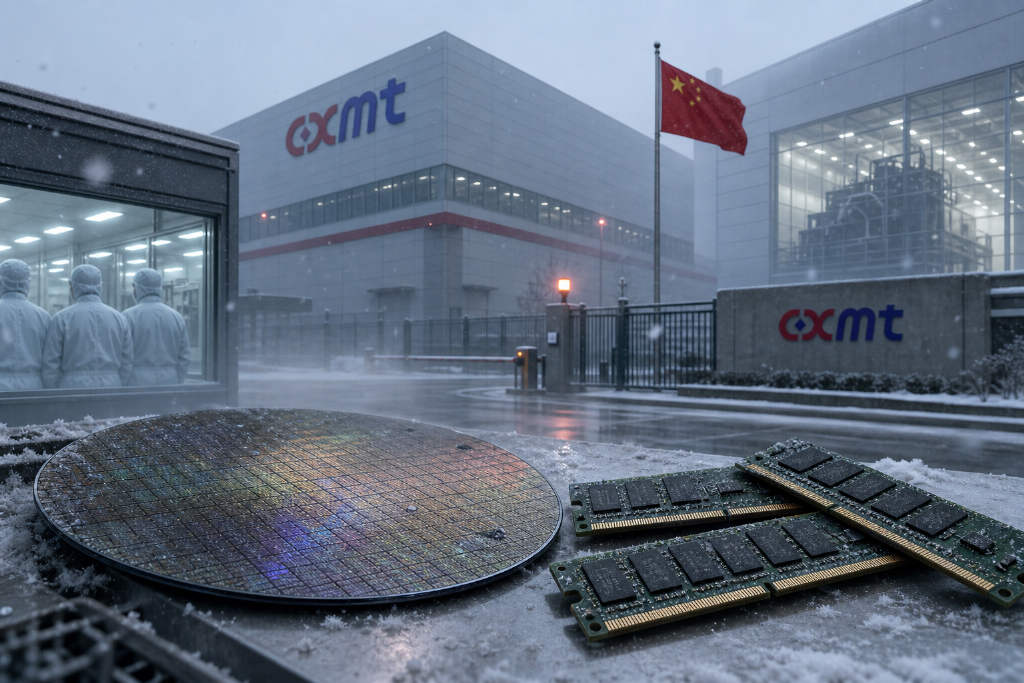
ChainCatcher cited analysis saying CXMT, China’s main DRAM maker, reached a monthly wafer output peak of about 240,000 wafers at the end of 2025 and is expected to stay flat in 2026. The same analysis said U.S. export controls on advanced semiconductor equipment, especially EUV lithography tools, are limiting CXMT’s expansion, with meaningful capacity gains unlikely before 2027 and dependent on domestic equipment supply chain progress. Goldman Sachs said CXMT is expected to cover only about 41% of China’s DRAM demand in 2026 and roughly 50% in 2028, pointing to a structural supply gap that may last for years. TrendForce projected traditional DRAM contract prices to jump 90%-95% quarter on quarter in Q1 2026 and another 58%-63% in Q2, while Jefferies expects gains of 40%-50% in Q3 and 30%-40% in Q4. Server DRAM pricing looks even steeper. Samsung and SK Hynix have reportedly asked Microsoft and Google, among other customers, for 60%-70% price increases in Q1. S&P Global expects Samsung’s traditional DRAM revenue per bit to rise 116% year on year to $0.79 in 2026, while Micron’s ASP is seen climbing 54% to $1.06. Bernstein said SK Hynix’s DRAM gross margin could reach 92.7% in Q4 2026. Multiple forecasts put supply relief no earlier than late 2027 or even 2028.

450
CXMT Output Hits 240,000 Wafers a Month as DRAM Prices Are Seen Rising Further in 2026