‹ BackCLARITY

CLARITY

Charles Hoski
2026-09-19 15:27:34

Hoskinson says crypto could "eat" AI within a decade, sees CLARITY Act delayed until 2029

Cardano founder Charles Hoskinson said on the Deeptech Insights podcast that cryptocurrency could "eat" artificial intelligence over the next five to 10 years. He argued that the current boom in data center construction is not sustainable and said blockchain could address several unresolved AI issues, including payments, alignment, and data provenance. Hoskinson also outlined a model in which distributed networks would use everyday consumer devices to help train AI systems rather than relying only on centralized infrastructure. On U.S. regulation, he said the CLARITY Act may not clear Congress until 2029. He also criticized what he described as mistakes by the Trump administration, including tying the public image of crypto too closely to Trump-branded tokens. His comments came one day after the Senate failed to move the bill forward on Sept. 15 because it did not reach the required 60 votes. The remarks were cited by BeInCrypto and summarized by Techub.

150
Hoskinson says crypto could "eat" AI within a decade, sees CLARITY Act delayed until 2029
Coinbase
2026-09-19 15:31:21

Coinbase seeks single-stock perpetuals as TechFlow tracks fresh moves across crypto and AI

TechFlow’s Sept. 19 intelligence roundup highlighted a broad set of developments across crypto, AI, technology, equities and macro markets, with Coinbase’s filing for single-stock perpetual contracts standing out on the crypto side. The exchange is seeking to list perpetuals tied to Apple, Tesla and Nvidia, a move TechFlow framed as part of the ongoing “tokenization” or crypto-format migration of traditional financial assets into round-the-clock trading venues. The report also pointed to regulatory and product shifts in crypto. The U.S. Commodity Futures Trading Commission, or CFTC, has started crypto rulemaking while Congress remains stalled, and Bastion received conditional approval from the Office of the Comptroller of the Currency for a national trust bank charter. In ETFs, 21Shares updated its Injective filing, saying 40%-60% of INJ would be staked, with BNY Mellon serving as administrator and custodian and Nasdaq listing the product under the ticker TINJ. On the AI side, TechFlow said OpenAI was reported to have shelved hundreds of AI-generated mathematical proofs. It also cited a report that Anthropic has built a physical lab for drug experiments, while a tiny 8-29MB automation model, Cactus Needle 3, drew attention for performance that TechFlow said matched DeepSeek V4 Flash on certain tasks. The roundup closed by arguing that crypto is pushing into the time dimension of finance through 24/7 markets, while AI is moving deeper into scientific and industrial output.

260
Coinbase seeks single-stock perpetuals as TechFlow tracks fresh moves across crypto and AI
CLARITY Act
2026-09-19 14:17:27

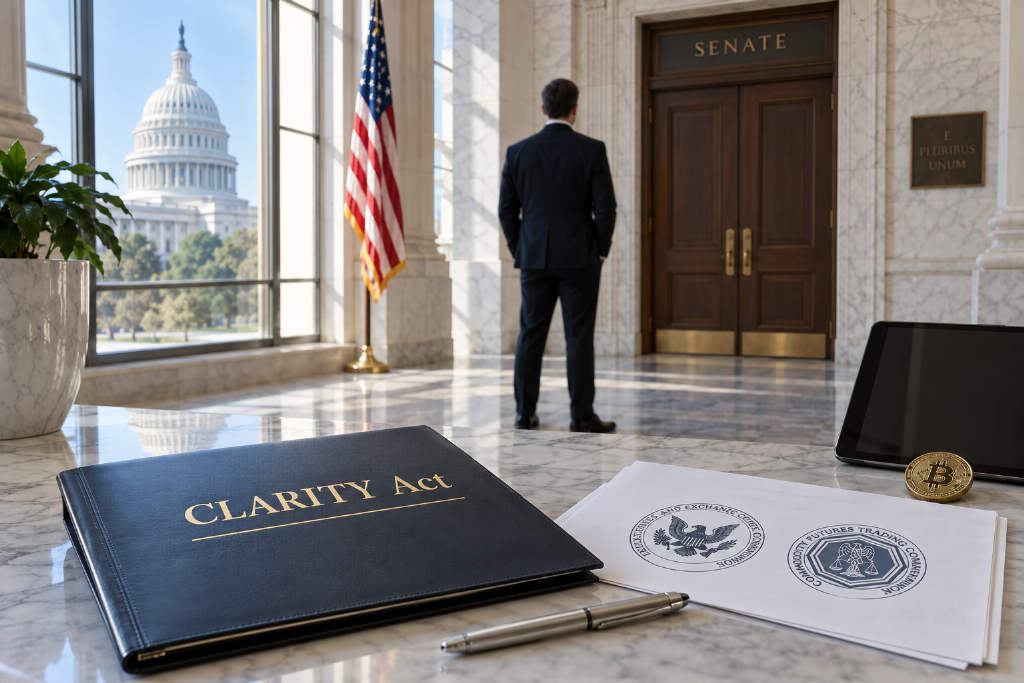
Galaxy research chief says CLARITY setback hurts, but the US crypto rulemaking window remains open

Alex Thorn, head of research at Galaxy, said the US Senate’s failure on Tuesday to advance the CLARITY Act was a major blow for people who have spent years working on crypto market structure legislation. He said North Carolina Republican Senator Thom Tillis still has a path to revisit the cloture motion before the current Congress ends, and some people are still trying to revive the bill behind the scenes, but he does not expect meaningful progress this year. Thorn argued that the bill was a strong bipartisan product that could have strengthened investor protections, helped curb illicit finance, supported innovation, and reinforced the global standing of US capital markets. Even so, he said bitcoin, crypto, and blockchain development do not depend on the CLARITY Act in the near term because US regulators are already moving to clarify how existing laws apply to digital assets. He pointed to changes at the Securities and Exchange Commission, the Commodity Futures Trading Commission, the Office of the Comptroller of the Currency, the Federal Deposit Insurance Corporation, the Federal Reserve, the Department of Justice, the Department of Labor, and the Internal Revenue Service. Still, Thorn said regulators cannot solve everything on their own. CFTC spot-market authority, conflicts with state-level regimes, and durable protections for non-custodial developers all require Congress to change the law.

200
Galaxy research chief says CLARITY setback hurts, but the US crypto rulemaking window remains open
Hyperliquid
2026-09-19 12:31:06

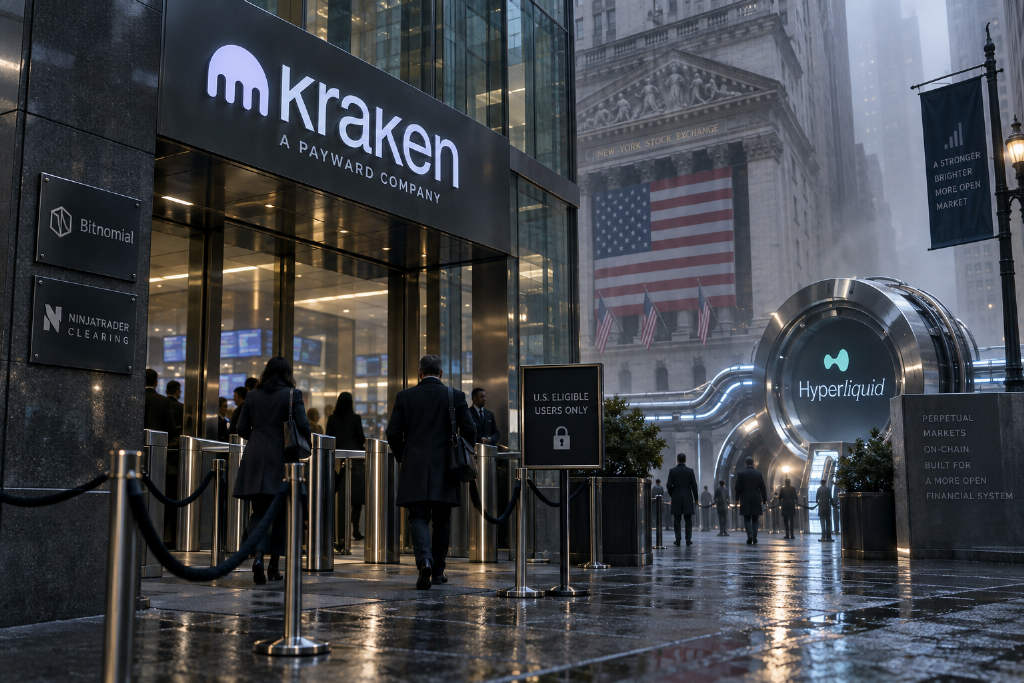
Payward maps out Hyperliquid’s U.S. route through HIP-3, with access still tightly restricted

Payward, the parent company of Kraken, has laid out how it plans to bring part of Hyperliquid’s trading infrastructure into the U.S. market. The company said it will use its regulated entities, Bitnomial and NinjaTrader Clearing, to launch a custom perpetual futures market on Hyperliquid’s mainnet using HIP-3. Trading would still take place on Hyperliquid’s public blockchain and use its onchain order book, while account handling, clearing, and compliance for U.S. customers would sit with Payward-affiliated entities overseen by the Commodity Futures Trading Commission, or CFTC. The disclosure confirms that this is not a full opening of Hyperliquid to U.S. users. Access would be limited to approved accounts that pass NinjaTrader review and are placed on both NinjaTrader and Bitnomial whitelists. The products discussed so far cover only the HIP-3 market deployed by Bitnomial, not all perpetual contracts already available on Hyperliquid. The announcement came on the same day the U.S. Senate failed to advance the CLARITY Act by a 49-50 procedural vote, highlighting a regulatory backdrop in which agencies are still using existing tools to shape crypto market access even as broader legislation remains unsettled.

260
Payward maps out Hyperliquid’s U.S. route through HIP-3, with access still tightly restricted
SEC
2026-09-19 10:03:33

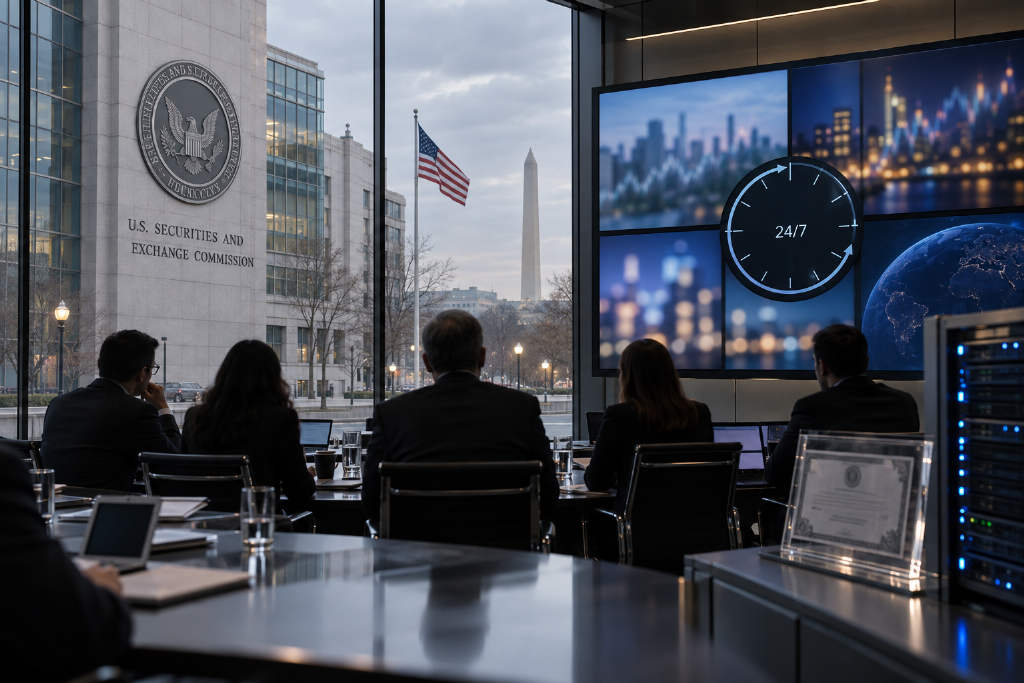
SEC Weighs 24/7 Stock Trading as Atkins Ties Market Hours to Tokenization Push

The U.S. Securities and Exchange Commission held a roundtable in Washington on Thursday to discuss extending U.S. stock trading beyond traditional hours and into overnight and holiday sessions, a move that would bring equities closer to the around-the-clock rhythm long seen in crypto markets. SEC Chair Paul Atkins linked that discussion to the agency’s newly issued innovation exemption for tokenized securities, saying blockchain-based systems could improve real-time inventory management, raise efficiency, and reduce settlement failures. He also said the SEC is reviewing how to balance a growth-friendly framework with protections against market misconduct. Commissioner Hester Peirce summed up the comparison bluntly, telling attendees that crypto markets do not sleep. At the same time, she flagged practical concerns tied to longer trading hours, including wider spreads, sharper price swings, less time to handle technical issues, and more difficult surveillance. Atkins said several necessary preparations are already underway or completed, indicating the agency has moved beyond theory and begun work tied to both regulatory and market-structure changes.

230
SEC Weighs 24/7 Stock Trading as Atkins Ties Market Hours to Tokenization Push
21Shares
2026-09-19 09:20:00

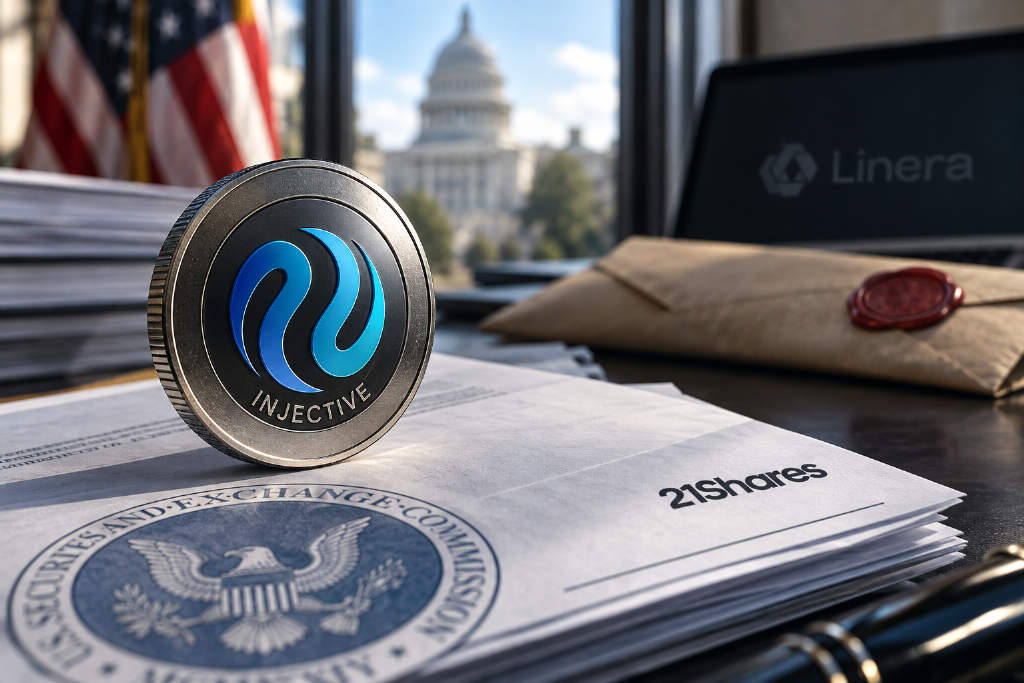
21Shares files amended S-1 for spot INJ ETF as Linera shuts down and refunds token buyers

PANews’ daily roundup on Sept. 19 covered a wide spread of crypto developments, from regulation and product filings to whale activity and ETF flows. The headline items were 21Shares’ amended S-1 filing with the U.S. Securities and Exchange Commission for a proposed spot Injective ETF, and Linera’s decision to cease operations after its token sale failed to meet the minimum fundraising threshold, with all subscription funds returned in full. Elsewhere, the Cronos community proposed using revenue from Ult and Cronos Launch to buy back and burn CRO on a monthly basis, while oracle project Switchboard said it will wind down operations and end support on Sept. 25. Coinbase said it has applied to launch single-stock perpetual futures in the U.S., and Bloomberg reported that Yahoo Finance has ended its partnership with Polymarket. The roundup also included a large set of market and on-chain data. SoSoValue showed $433 million in net inflows into U.S. spot Bitcoin ETFs on Sept. 18 and $144 million into spot Ether ETFs. EmberCN said a whale entity tied to Garrett Jin once accumulated more than 100,000 BTC and that several major losses over the past year were tied mainly to selling BTC. Additional alerts covered large ETH transfers to Bitfinex, TRUMP token movements, a forced ZEC short liquidation, and TRM Labs’ report on malicious fake AI trading bot tutorials on YouTube.

360
21Shares files amended S-1 for spot INJ ETF as Linera shuts down and refunds token buyers
Coinbase
2026-09-19 04:48:58

Brian Armstrong says WSJ is trying to blame Coinbase for CLARITY Act failing to pass

Coinbase Chief Executive Officer Brian Armstrong said on X that The Wall Street Journal is preparing a report that would blame Coinbase and Armstrong personally for the failure of the U.S. CLARITY Act to pass. Armstrong said the newspaper’s earlier coverage of the bill showed clear hostility and repeated arguments from banking industry lobbying groups. He said he did oppose one draft of the CLARITY Act from reaching a committee vote in January because it still had major flaws on DeFi, tokenization, the scope of Commodity Futures Trading Commission oversight, and stablecoin rewards. In his view, those issues could have harmed the crypto industry, and the bill also lacked enough support to pass at that stage. Armstrong said Coinbase later worked with multiple parties to revise the legislation, and that all four issues were addressed in the version sent to committee about four months later. He added that the final version of the CLARITY Act submitted to the Senate was "good" and that he strongly supported it. Armstrong said opposing the early draft did not mean opposing the CLARITY Act itself, but reflected an effort to push for a stronger and fairer regulatory framework for crypto.

230
Brian Armstrong says WSJ is trying to blame Coinbase for CLARITY Act failing to pass
Federal Reser
2026-09-19 03:02:49

Crypto Rallies After Fed Rate Hike as Bitcoin Draws Comparisons to Early 2022

Crypto prices moved higher after the Federal Reserve raised rates by 25 basis points on Wednesday, a move that would normally weigh on risk assets. Bitcoin gained nearly 1% over the past 24 hours, while Zcash surged more than 23% to a new high. BlockTempo said the market response has revived comparisons with the early phase of the 2022 hiking cycle, when Bitcoin was also sitting about 40% below its prior peak before staging a brief rebound. The report noted that Bitcoin is now roughly 40% below the $126,000 high it set in October, a setup that resembles March 2022, when the Fed began tightening and Bitcoin was also down about 40% from its November 2021 top. Back then, Bitcoin rose 18% in the 12 days after the hike, then went on to fall 50% over the following months. At the same time, spot Bitcoin ETFs saw $746 million in outflows across Tuesday and Wednesday, while the U.S. dollar index climbed back above 100 and stayed above its 200-day moving average. Treasury yields eased, offering some support. With futures markets pricing in another 75 basis points of hikes over the next six months, the report said traders are now watching whether this rebound can hold through month-end or whether the pattern seen in 2022 will start to repeat.

120
Crypto Rallies After Fed Rate Hike as Bitcoin Draws Comparisons to Early 2022