‹ BackCLARITY

CLARITY

SEC
2026-09-17 17:34:03

SEC Opens a Temporary Path for Onchain Tokenized Stocks as CFTC Broadens Relief for Passive Software Providers

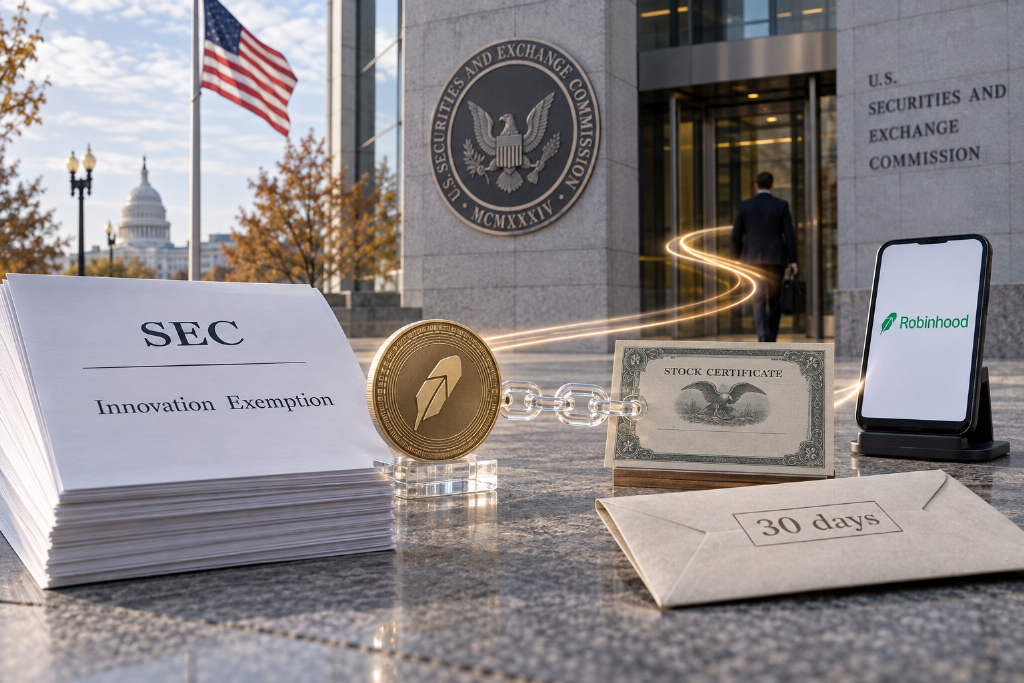
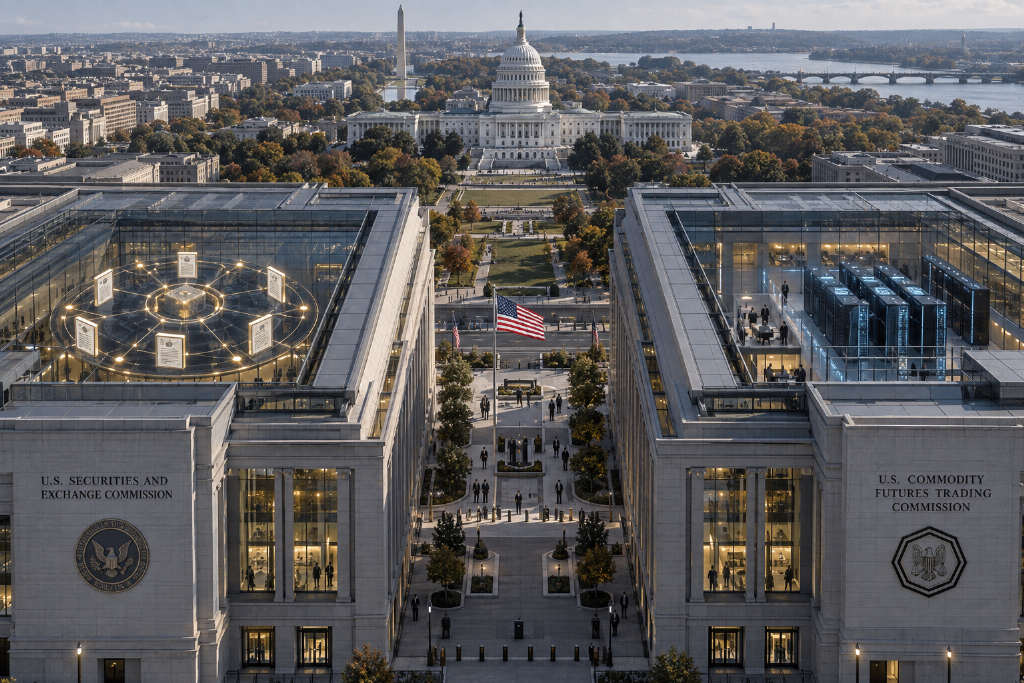
U.S. regulators moved within hours of each other on Thursday, using existing authority rather than new legislation to carve out limited crypto-related relief after the Senate failed to advance H.R. 3633. The Securities and Exchange Commission created a temporary, conditional exemption for Tokenized Securities Venues, allowing certain tokenized National Market System stocks to trade onchain through permissioned liquidity pools, while the Commodity Futures Trading Commission expanded no-action relief for passive software providers that route users to registered futures intermediaries. The SEC order is narrow and time-limited. It lasts five years unless amended or withdrawn earlier, does not permit primary issuance, and leaves antifraud rules, OFAC sanctions compliance, and Securities Act registration for primary offerings untouched. It also imposes hard caps on symbols and trading volume, requires public-ledger smart contracts that can be audited, mandates trading halts when the underlying stock is halted on its primary exchange, and gives issuers the power to block third-party tokenized listings within 30 calendar days. The CFTC’s Staff Letter 26-25 extends a path that had previously been available only to Phantom Technologies. It says staff will not recommend enforcement against qualifying passive software providers for failing to register as introducing brokers, subject to 10 conditions. Industry groups welcomed the SEC move, while SIFMA repeated concerns that broad exemptions could create parallel but unequal trading systems.
490
SEC Opens a Temporary Path for Onchain Tokenized Stocks as CFTC Broadens Relief for Passive Software Providers
SEC
2026-09-18 02:05:42

SEC opens five-year path for tokenized U.S. stock trading, but keeps DeFi outside the core framework

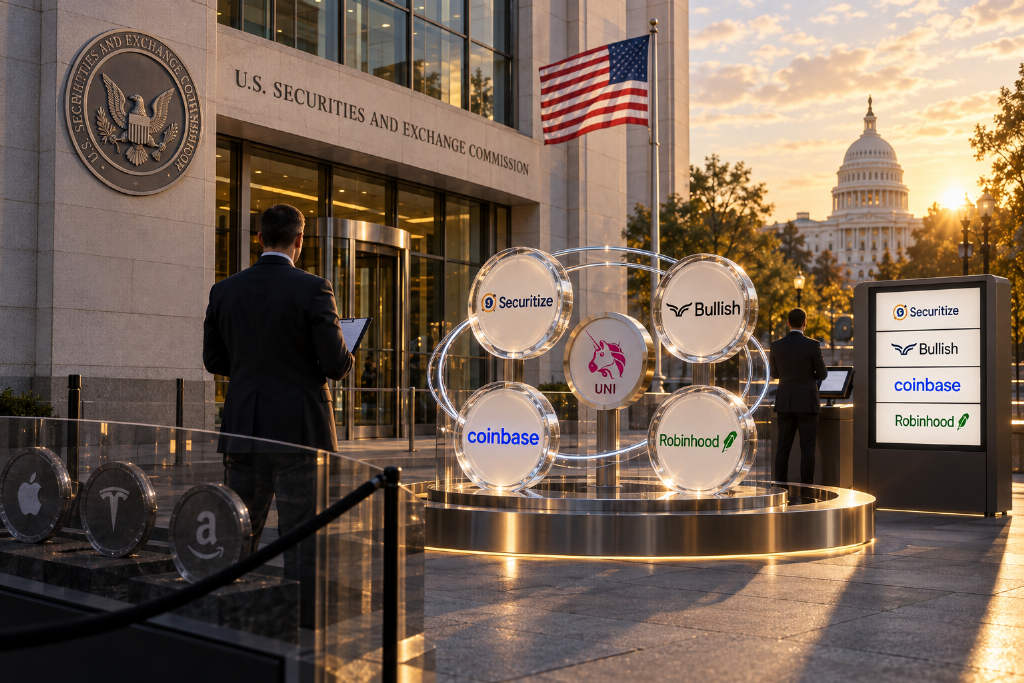
The U.S. Securities and Exchange Commission has issued an "Innovation Exemption" order that creates a five-year compliance window for certain on-chain trading venues handling tokenized National Market System stocks. Under the order, qualifying Tokenized Securities Venues, or TSVs, can use permissioned AMM liquidity pools to trade tokenized equities without being treated as exchanges under the Securities Exchange Act of 1934, while liquidity providers using their own capital may avoid dealer status. The order sets clear limits. Tokenized shares must carry the same economic and governance rights as traditional stocks, including dividends and voting rights. Issuers get a veto right over third-party tokenized listings after a 30-day notice period, and synthetic products that only track price exposure are excluded. The SEC also requires auditable smart contracts, public deployment on permissionless distributed ledgers, synchronized halts when underlying stocks are suspended, and regular public disclosures on prices, trade size, time, pool addresses, and end-of-day balances. The announcement lifted tokenization-related names including Securitize, Bullish, Coinbase, Robinhood, and UNI, while drawing opposition from Citadel Securities and SIFMA. The move arrives after the CLARITY Act stalled in the Senate, making administrative exemptions a key tool for SEC Chair Paul Atkins and fellow commissioners pushing a digital-market agenda.

590
SEC opens five-year path for tokenized U.S. stock trading, but keeps DeFi outside the core framework
SEC
2026-09-18 10:07:54

SEC sets terms for tokenized U.S. stocks as CLARITY Act stalls in the Senate

The U.S. Securities and Exchange Commission on Sept. 17 released an "innovation exemption" framework for tokenized securities, laying out some of its clearest conditions yet for bringing listed equities on-chain in the U.S. The document says tokenized stocks must carry the same dividend and voting rights as the underlying shares, and any third party seeking to tokenize a public company’s stock must first notify the issuer in writing and allow a 30-day objection period. Those standards echo the recent public dispute between AMC CEO Adam Aron and Robinhood over tokenized AMC stock. The SEC framework does not directly rule on Robinhood’s existing offshore product. Robinhood Chain, launched in June 2025 and expanded in July 2026 to more than 190 tokenized stocks and ETFs across over 120 countries, is issued by Jersey-based Robinhood Assets, targets non-U.S. users, and offers no voting or dividend rights. The SEC document instead applies to compliant trading venues operating in the United States. The timing matters. Two days earlier, a procedural vote on the CLARITY Act drew 49 votes in the Senate, short of the 60 needed to advance. Rather than wait for Congress, the SEC moved through a conditional five-year administrative exemption. SEC Commissioner Hester Peirce also said the exemption is not meant for DeFi systems driven by permissionless smart contracts, while Uniswap founder Hayden Adams said ordinary trading in Uniswap’s main pools would fall outside the new framework.

480
SEC sets terms for tokenized U.S. stocks as CLARITY Act stalls in the Senate
CFTC
2026-09-18 01:44:28

CFTC expands passive software relief, letting crypto wallets connect to regulated derivatives venues without broker registration

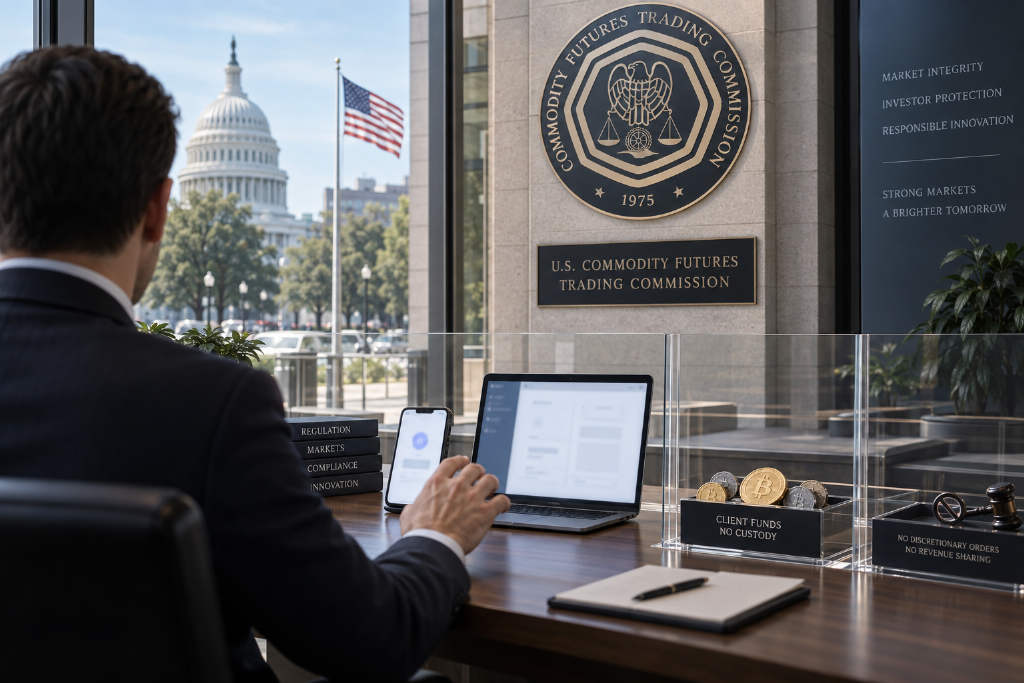
The U.S. Commodity Futures Trading Commission has widened its no-action relief for "passive software" providers, opening the door for crypto wallets, DeFi wallets, and other applications to connect users to regulated derivatives exchanges and prediction markets without registering as introducing brokers. The move extends beyond the agency’s March relief for Phantom Technologies and sets out a broader compliance path for software providers that act only as access points. The relief is not open-ended. To qualify, providers cannot exercise discretion over user orders, cannot handle customer funds, and must remain limited to passive access functions. In practical terms, the wallet can serve as a bridge, but it cannot trade on a user’s behalf or operate like a traditional intermediary. The timing also stands out. The CFTC action came two days after the CLARITY bill failed to advance in the Senate, where a cloture motion received 49 votes, short of the 60-vote threshold. On the same day, CFTC Chair Michael Selig and SEC Chair Paul Atkins each signaled that rulemaking would continue even without congressional legislation, and the SEC separately approved temporary relief for tokenized U.S. stock trading on qualified on-chain venues.

280
CFTC expands passive software relief, letting crypto wallets connect to regulated derivatives venues without broker registration
CLARITY Act
2026-09-18 01:44:09

Kevin O’Leary says CLARITY Act could return next year as crypto tax bill advances

Kevin O’Leary said the CLARITY Act’s failed procedural vote in the U.S. Senate should be seen as a delay rather than the end of the bill, and he expects it could return to the congressional agenda as early as the first or second quarter of next year. Speaking at Avalanche Summit in New York on Thursday, the Shark Tank investor tied that view to movement on a separate tax measure in the House. The House Ways and Means Committee has already advanced the Digital Asset Tax Certainty Act, which would set tax rules for staking, mining, small crypto transactions, and broker reporting. O’Leary argued that once Congress starts taxing crypto activity, lawmakers will be forced to put a market structure framework in place as well. He also said staking taxation is effectively certain and that the policy framework for it must be included in CLARITY. His comments come as debate continues over how the Securities and Exchange Commission and the Commodity Futures Trading Commission should divide oversight of the crypto market, and as the SEC signals it may move ahead with its own rules regardless of whether Congress passes the bill.

250
Kevin O’Leary says CLARITY Act could return next year as crypto tax bill advances
CFTC
2026-09-18 01:50:07

CFTC staff says it will not recommend enforcement against qualifying passive software providers over IB registration

The U.S. Commodity Futures Trading Commission’s staff issued a no-action position on Sept. 17 for firms that provide what it calls "passive software." If they meet the stated conditions, staff said it will not recommend enforcement action based on a failure to register as an introducing broker. The relief is tied to software used to facilitate trading with registered futures commission merchants, introducing brokers, and designated contract markets, and it applies only to the provision and marketing of that software for that purpose. The CFTC’s language does not limit the position to crypto, even though some coverage framed it that way. On the same day, the U.S. Securities and Exchange Commission released an innovation exemption for tokenized NMS stocks. Both moves came after the CLARITY Act fell short in the Senate on Sept. 16, with regulators turning to existing authority rather than new legislation. The CFTC position is not a formal rule and does not bind courts or other agencies.

310
CFTC staff says it will not recommend enforcement against qualifying passive software providers over IB registration
SEC
2026-09-18 02:54:30

SEC and CFTC issue separate temporary relief measures after Senate stalls the CLARITY Act

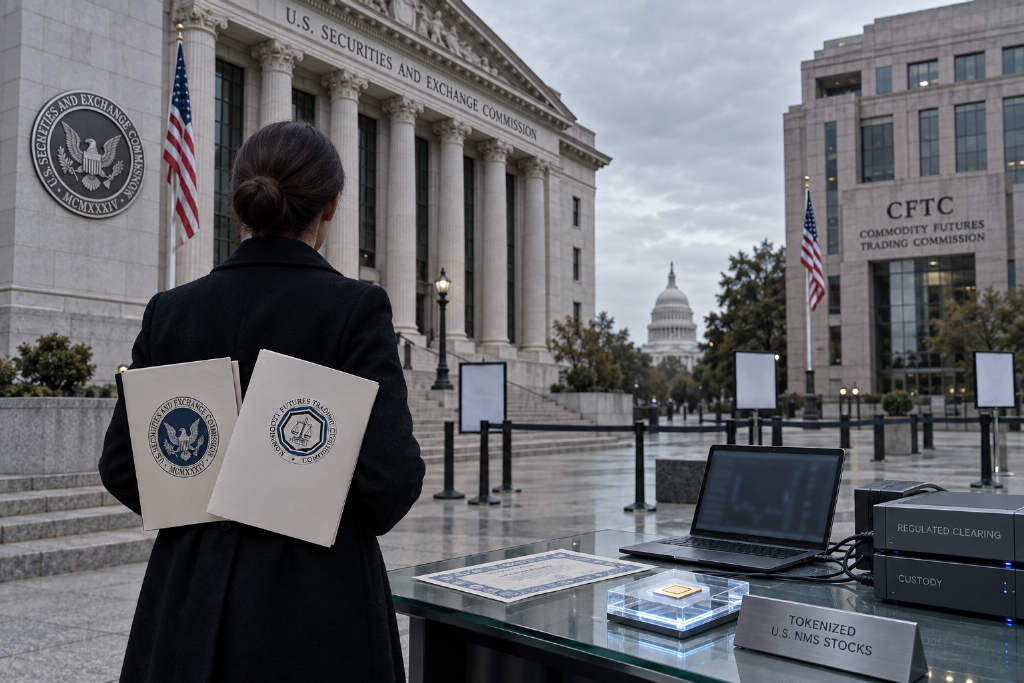
One day after the CLARITY Act failed to advance in the Senate on Sept. 16, the U.S. Securities and Exchange Commission and the Commodity Futures Trading Commission each released a separate document that was widely described as regulatory relief. Read side by side, though, the two actions do very different things and both are explicitly temporary. The CFTC’s No-Action Letter 26-25 deals with registration status. It says front-end software providers do not need to register as introducing brokers if users trade on designated contract markets, customer funds remain with a derivatives clearing organization or its members, the software provider never holds or controls customer assets, does not exercise discretion over order routing, and shares joint responsibility with a registered intermediary. The SEC’s innovation exemption is broader in legal effect. It exempts certain tokenized U.S. NMS stock activity from the Exchange Act’s definition of “exchange” and also relieves some liquidity providers with market-making features from dealer registration. The order applies to tokenized securities, not crypto assets generally, and carries conditions that transplant traditional stock-market protections on-chain. Both measures expire: the CFTC letter lasts until rulemaking or guidance takes effect, while the SEC order runs for five years and is tied to later rulemaking.

300
SEC and CFTC issue separate temporary relief measures after Senate stalls the CLARITY Act
US crypto reg
2026-09-18 02:47:56

US House tax panel advances digital asset bill covering stablecoins, wash sales and staking income

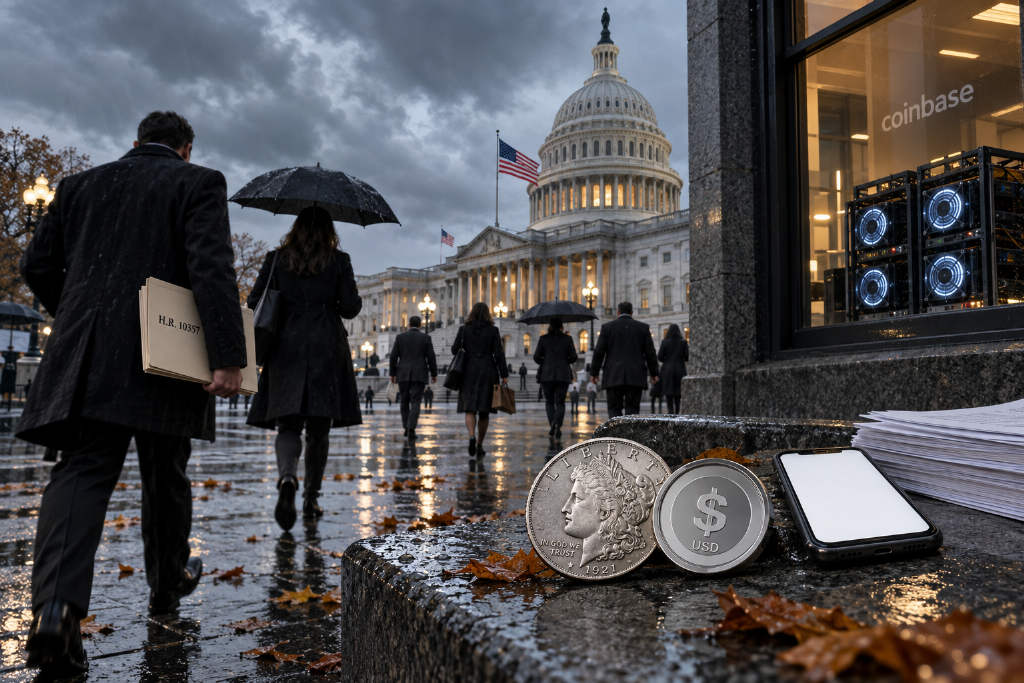
A US House committee has advanced H.R. 10357, the Digital Asset Tax Certainty Act, moving a broad crypto tax package one step closer to a full House vote. The bill was introduced on Sept. 14 by House Ways and Means Committee Chairman Jason Smith and cleared the committee on Sept. 16 by a 38-5 vote. It still needs approval from the full House, the Senate and the president before becoming law. The proposal focuses on tax treatment rather than market structure. It would let taxpayers ignore gains or losses when digital assets are used to pay qualifying blockchain network fees and transaction-related charges of $10 or less, create an elective simplified accounting method for widely traded digital assets, and establish special tax rules for qualifying US dollar stablecoins using redemption value-based thresholds such as 99.5% and 100.5%. The bill also extends several traditional financial tax rules to digital assets, including lending treatment, mark-to-market elections for certain traders, safe harbor treatment for some foreign investors, and charitable donation provisions. At the same time, it would apply anti-abuse rules such as wash sale and constructive sale treatment to many traded digital assets, classify mining and staking rewards as ordinary income under a new category tied to blockchain validation activity, revise broker reporting rules, and require the Treasury Department to create a voluntary disclosure program after enactment.

330
US House tax panel advances digital asset bill covering stablecoins, wash sales and staking income