IBM

Kingslide
2026-08-11 01:11:11

Kingslide founder Lin Tsung-chi tops Chen Tai-ming in Forbes real-time wealth ranking

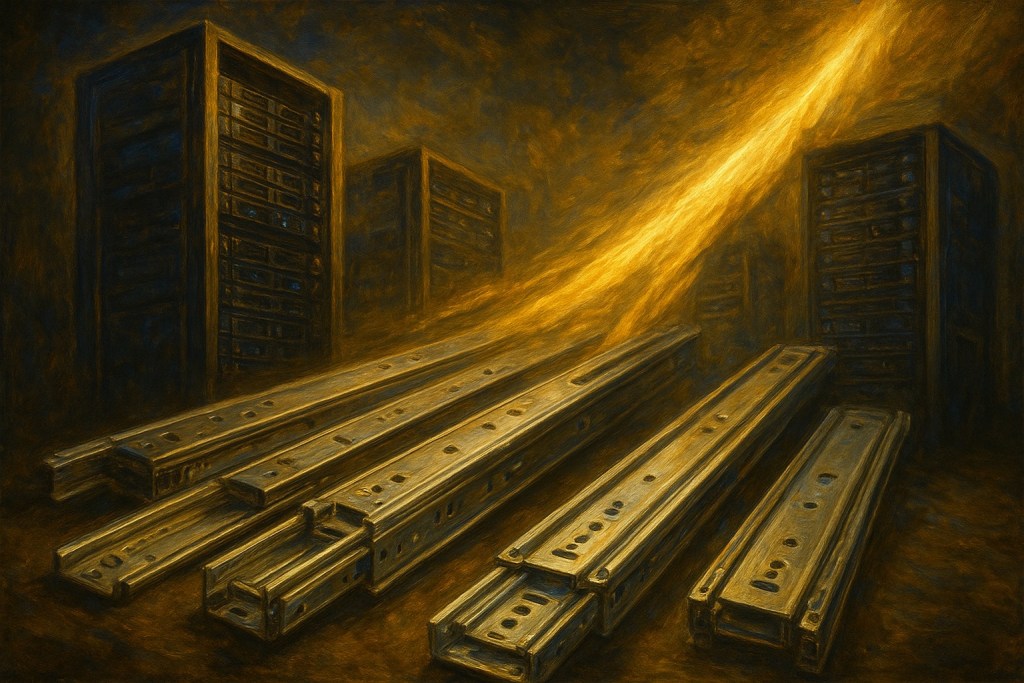
Kingslide, a Taiwanese maker of server rails, has surged into the spotlight as its share price climbed high enough to make it the island’s second-most expensive stock after Aspeed. That run-up has also pushed founder Lin Tsung-chi above several better-known Taiwanese business figures in Forbes’ real-time billionaire list. According to Forbes’ Aug. 10 update, Lin’s net worth reached $16.7 billion, placing him No. 173 globally. That put him ahead of Yageo Chairman Pierre Chen, or Chen Tai-ming, at $16.5 billion and No. 178, as well as Foxconn founder Terry Gou at $15.8 billion and Quanta Chairman Barry Lam at $14.5 billion. The report notes that the ranking changes with daily stock moves, so it is not the same as Forbes’ annual Taiwan rich list. Still, at the latest update, Lin had moved ahead. ABMedia said both Lin and Chen have benefited from the same broad trend: the AI data center buildout. Kingslide sells server rails and related hardware, while Yageo supplies MLCCs, tantalum capacitors and other electronic components used in AI infrastructure.

1600
Kingslide founder Lin Tsung-chi tops Chen Tai-ming in Forbes real-time wealth ranking
AI
2026-08-10 12:41:07

Hassabis says an AI ‘Move 37’ moment in mathematics looks like a matter of time

Demis Hassabis, the DeepMind co-founder who helped lead the AlphaGo project, says a future AI breakthrough on a Millennium Prize-level math problem would be comparable to the system’s famous “Move 37” against Lee Sedol. In his view, reaching that level now appears to be a question of when, not why. The comparison ties today’s math-focused AI race back to the 2016 match in Seoul, where AlphaGo’s unconventional move shocked professional players and changed how many people understood machine intelligence. The article traces how AI systems moved from making basic arithmetic mistakes in 2023 to reaching silver-medal and then gold-medal level performance in the International Mathematical Olympiad through systems such as AlphaProof, AlphaGeometry 2, and Gemini Deep Think. It then follows the shift from contest solving to research assistance and open-problem work, citing cases involving GPT-5, Claude Fable 5, OpenAI’s internal reasoning model, and DeepMind’s Aletheia. Alongside those advances, the piece revisits Lee Sedol’s “Move 78” as a counterpoint, arguing that human value may increasingly lie in framing questions, choosing directions, and working with AI in what Hassabis describes as a scientific “centaur era.”

250
Hassabis says an AI ‘Move 37’ moment in mathematics looks like a matter of time
India
2026-08-10 06:35:15

AI pressure builds on India’s IT outsourcing model as hiring slows and layoffs widen

A tragedy in Bengaluru has become part of a broader conversation about how artificial intelligence is reshaping India’s software and outsourcing industry. The report centers on a 32-year-old software engineer, Bhanu Chandra Reddy, who died after losing his U.S. job in an AI-driven workforce adjustment and failing to secure another stable high-paying role over nearly a year. His wife, Bibi Shaziya Siraj, who worked at IBM, also died shortly after, according to the report. The article places that case against a much larger industry shift. India’s IT outsourcing sector, valued at $280 billion in a 2025 NASSCOM report, accounts for 7% of GDP, supports 5.67 million engineers and underpins nearly a quarter of the country’s export earnings. Yet the labor-arbitrage model that helped firms such as TCS, Infosys and Wipro grow is being challenged as AI tools reduce the need for large coding, testing and maintenance teams. The piece cites McKinsey as saying around 30% of India’s work hours could be automated by 2030. It also points to layoffs, weaker growth at major IT companies, youth unemployment and the limited scale of India’s domestic AI startup sector. The result, as framed in the source report, is a structural test for India’s long-standing dependence on selling software labor to global clients.

1070
AI pressure builds on India’s IT outsourcing model as hiring slows and layoffs widen
Jim Cramer
2026-08-05 12:09:32

Jim Cramer Says He’s Selling Bitcoin Over Quantum Fears as ETF Inflows and Ethereum Proposal Lead Crypto Morning Brief

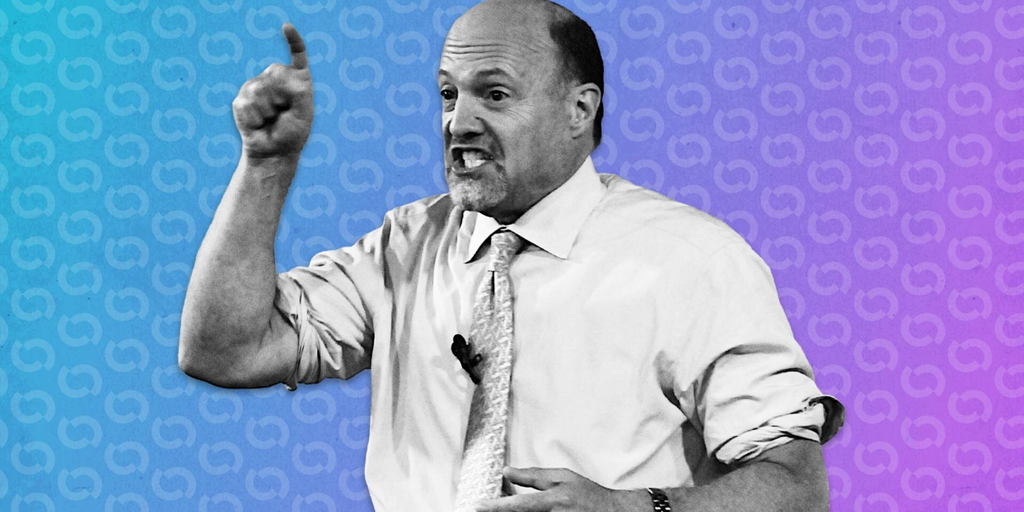
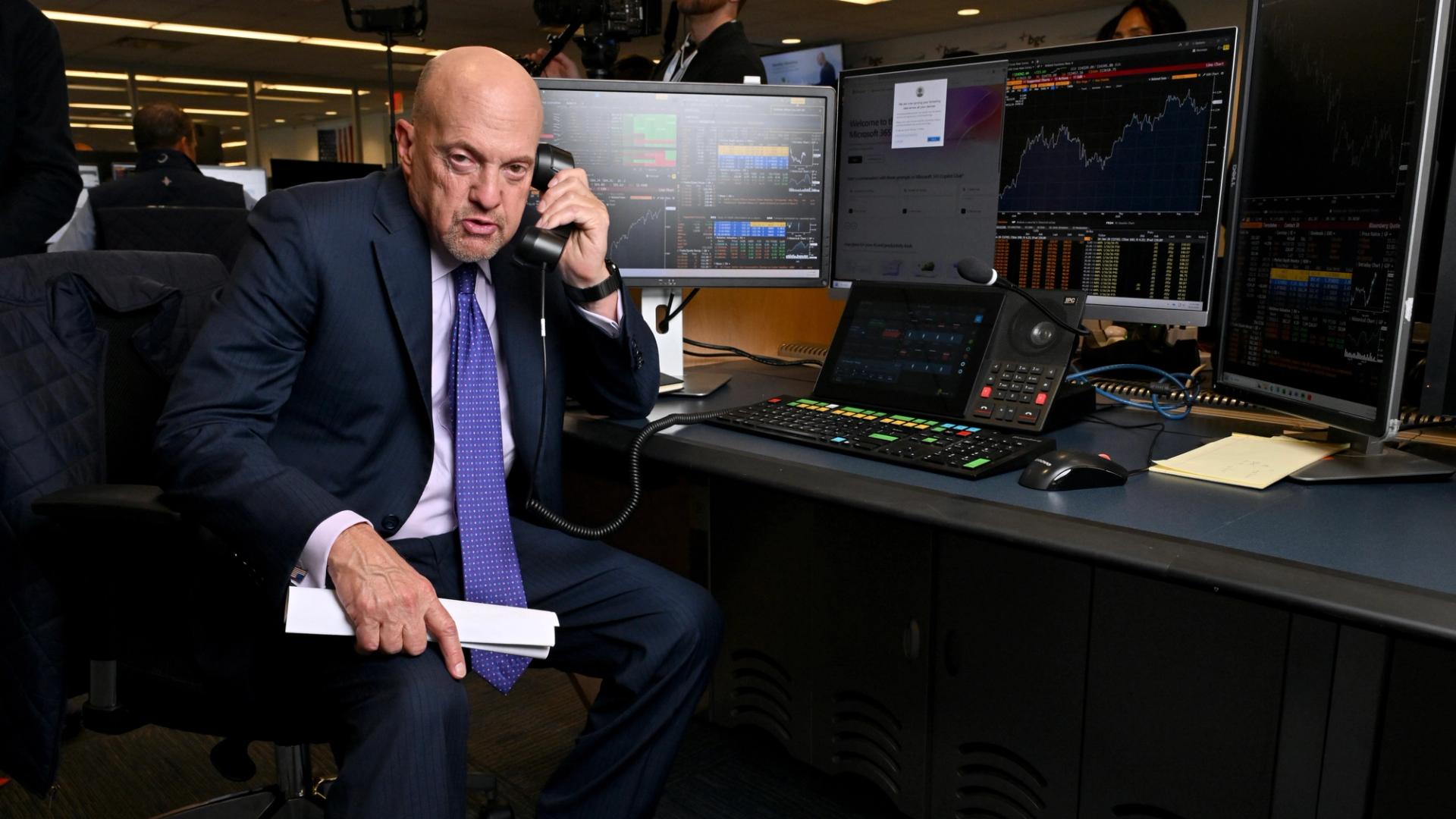
CNBC host Jim Cramer said on air that he is selling his Bitcoin after asking IBM CEO Arvind Krishna whether quantum computers could eventually break the cryptography protecting crypto holdings. Krishna said that in three to four years he would become "rather paranoid," prompting Cramer to say he would sell his coins and add that Ethereum might be "even worse." Bitcoin still rose about 1.6% on the day of the remark, and traders on Crypto Twitter quickly revived the long-running "inverse Cramer" joke. Decrypt’s Morning Minute also ran through a wide set of market updates. Major crypto assets were slightly higher while U.S. stocks pushed to fresh all-time highs, with BTC up 0.5% to $64.1K and ETH flat at $1,868. Bitcoin ETFs pulled in $211 million on Tuesday and $380 million across the first two sessions of the week, while ETH ETFs added $53 million. Elsewhere, Justin Drake and five other researchers proposed EIP-8361, a tapered issuance burn mechanism aimed at reducing Ethereum inflation as staking rises. The newsletter also highlighted Cloudflare Wallets for AI agent payments, Circle’s $701 million in Q2 revenue, Wells Fargo’s tokenized deposit plans, BitGo’s WBTC move to Chainlink, Robinhood Chain meme coin gains led by CASHCAT, and a softer NFT market.

1120
Jim Cramer Says He’s Selling Bitcoin Over Quantum Fears as ETF Inflows and Ethereum Proposal Lead Crypto Morning Brief
Binance
2026-08-06 06:02:13

Binance to Support Cash Dividend Distribution for Apple, IBM bStocks Holders

Binance said on Aug. 6 it will support cash dividend distribution for holders of Apple (AAPL) and IBM (IBM) tokenized stocks bStocks. Dividends, after withholding tax, fees and other costs, will automatically be reinvested into additional or fractional shares of the underlying securities, and eligible users will receive distributions in the form of AAPLB and IBMB bStocks. Holders must meet position requirements at the record snapshot scheduled for 00:00 UTC on Aug. 10, 2026 to qualify. On-chain holders will receive their dividends through a multiplier adjustment method. Binance added that AAPLB/USDT and IBMB/USDT trading will be unaffected. The 1:1 conversion between AAPL/IBM shares and AAPLB/IBMB bStocks will be suspended at 23:30 UTC on Aug. 7; deposits and withdrawals for AAPLB and IBMB will be suspended at 23:30 UTC on Aug. 9. Services will resume after the dividend distribution is completed.

1340
Binance to Support Cash Dividend Distribution for Apple, IBM bStocks Holders
Fujian Jinhua
2026-08-05 12:29:20

Fujian Jinhua and CXMT started in the same year. A decade later, their paths split sharply

ChangXin Memory Technologies’ listing has pushed China’s DRAM industry back into the spotlight, but the attention has also revived comparisons with another project launched in 2016: Fujian Jinhua Integrated Circuit Co. Both companies were created to break China’s dependence on foreign DRAM suppliers. Both planned 12-inch wafer fabs. Both drew investment measured in the hundreds of billions of yuan. Yet their outcomes diverged dramatically. Fujian Jinhua moved quickly at the start, signing a May 2016 cooperation agreement with United Microelectronics Corp. under which Jinhua would fund and build a 12-inch fab while UMC developed a 32 nm DRAM process. The first phase of the Jinjiang project carried planned investment of about RMB 37 billion, targeted mass production in 2018, and was designed for monthly capacity of 60,000 wafers. But in 2017, Micron sued UMC and Fujian Jinhua in Taiwan and the United States, alleging trade secret theft and patent infringement. The dispute escalated in October 2018, when the U.S. Commerce Department placed Fujian Jinhua on the Entity List, triggering a broad halt in equipment, software, and technical support. The legal fight dragged on for about six years. By the time a U.S. federal court in Northern California ruled in February 2024 that prosecutors had failed to prove Fujian Jinhua stole Micron trade secrets, the company had already missed the industry upcycle that later helped CXMT expand and reach the capital market. The comparison highlights differences in IP strategy, supply-chain resilience, and timing in China’s memory-chip push.

1560
Fujian Jinhua and CXMT started in the same year. A decade later, their paths split sharply
Jim Cramer
2026-08-04 20:45:18

Jim Cramer Says He’s Selling Bitcoin Over Quantum Computing Fears, Reviving the ‘Inverse Cramer’ Trade

CNBC host Jim Cramer said he plans to sell his Bitcoin after raising concerns about whether future quantum computers could compromise crypto holdings. His comments followed an interview with IBM CEO Arvind Krishna, who said investors may want to give themselves three to four years before becoming seriously worried about the risk. The remarks quickly spread across X and YouTube, where crypto traders treated the call as a familiar contrarian signal. That reaction reflects the long-running “inverse Cramer” meme, built on the idea that doing the opposite of his market calls has often worked better than following them. Traders pointed back to late 2022, when Cramer said he had sold everything and would not touch crypto “in a million years,” shortly before Bitcoin went on to gain more than 400% over the next three years. Still, the underlying issue is not fictional. IBM and University of Chicago researchers said on July 30 that they had demonstrated a verified quantum advantage using 70 logical qubits and a new error-correction method. That does not mean Bitcoin’s elliptic curve cryptography has been broken, but it has renewed discussion around long-term exposure. Coinbase’s quantum advisory council has estimated that roughly 7 million Bitcoin could eventually face risk tied to exposed public keys and address reuse.

870
Jim Cramer Says He’s Selling Bitcoin Over Quantum Computing Fears, Reviving the ‘Inverse Cramer’ Trade
Bitcoin
2026-08-04 07:53:18

Jim Cramer’s quantum-computing warning fails to shake bitcoin, which stays near $64,000

Jim Cramer says he plans to sell all of his bitcoin because he worries that advances in quantum computing could weaken crypto security within three to four years. The comment came after his July 31 interview with IBM Chairman and CEO Arvind Krishna, who said quantum computers could challenge modern cryptography within that time frame and told investors to be “paranoid” about the risk. Yet bitcoin has shown little reaction. According to CoinDesk, BTC has continued to trade around $64,000 even as the market also digested a Coldcard hardware wallet hack, higher bond yields, and disclosed bitcoin sales by major corporate holder Strategy. Cramer’s latest call has instead triggered a familiar response from the crypto crowd: many traders are treating it as a bullish signal because of his long record of reversals and public misses. That reputation gave rise to the “inverse Cramer” trade and even an ETF, SJIM, which launched in 2023 and shut down in early 2024 after failing to attract meaningful assets. CoinDesk also revisits several of Cramer’s earlier bitcoin calls, from dismissing BTC in 2017 to buying around $10,000 in 2020, selling most of it in 2021, warning of a harsh ETF-driven selloff in 2024, turning positive again in 2025, and then swinging bearish last month before now planning a full exit in August 2026.

1040
Jim Cramer’s quantum-computing warning fails to shake bitcoin, which stays near $64,000