LPDDR

CXMT
2026-07-27 02:57:09

Nomura Starts Coverage on CXMT With a RMB 116 Target, Built on Aggressive AI Memory Assumptions

Nomura has initiated coverage on Chinese DRAM maker ChangXin Memory Technologies, or CXMT, with a Buy rating and a target price of RMB 116, according to a report discussed in a ChainCatcher article by “The Dream of the Fourth Dimension.” The front page of the report also showed an IPO price of RMB 8.66 and implied upside of 1,239.5%, making it, in the author’s view, the most aggressive target price so far from a foreign institution on the company. The target is based on 20x projected 2028 earnings per share of about RMB 5.8. Nomura anchors that multiple to Micron’s historical forward valuation range, then adds what it sees as an A-share premium using ACM Research Shanghai versus its U.S.-listed parent as a reference. The report also projects a steep jump in revenue, net profit attributable to shareholders, gross margin, cash, and return on equity through 2028. Its broader thesis rests on rising memory demand from agentic AI, supply bottlenecks across cleanrooms, tools, materials and engineers, and CXMT’s own capacity ramp, yield improvement, and share gains. The original article, however, argues that the model’s most aggressive assumption is gross margin reaching 83.7% in 2026 and more than 90% by 2028, and suggests the figures are better read as an upside case than a long-term midpoint.
1650
Nomura Starts Coverage on CXMT With a RMB 116 Target, Built on Aggressive AI Memory Assumptions
SK hynix
2026-07-24 08:44:16

SK hynix pushes 3D stacked DRAM for on-device AI, with Apple named as a likely partner

SK hynix has begun laying the groundwork to commercialize 3D stacked DRAM-on-Logic technology for next-generation on-device AI memory, according to the source article. The company is recruiting design engineers through its U.S. subsidiary in California, and a job description cited by Korean media says the work involves close collaboration with a U.S. customer on co-designing 3D stacked DRAM logic chips. Citrini analyst Jukan identified Apple as the most likely partner, arguing that Apple’s long-running in-house A-series and M-series chip development, its focus on package-level integration, and its existing memory ties with SK hynix make it a plausible fit. The report frames 3D stacked DRAM as a potential answer to the limits of current PoP smartphone packaging, which struggles to deliver the bandwidth, power efficiency, and space utilization needed for on-device AI inference. At the same time, the article stresses that broad commercialization remains distant, with technical maturity, production readiness, and supply-chain alignment still ahead.

200
SK hynix pushes 3D stacked DRAM for on-device AI, with Apple named as a likely partner
Samsung Elect
2026-07-21 03:33:40

Samsung, SK Hynix and Micron pull back from in-house CXL controller plans

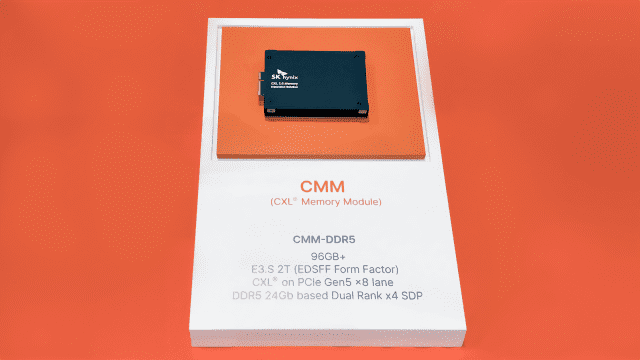
The world’s three largest memory makers are backing away from commercializing their own Compute Express Link, or CXL, controllers, according to a report translated by TechFlow from ZDNet Korea. Samsung Electronics, SK Hynix and Micron have either scaled back or dropped plans to bring internally developed CXL expansion device controllers to market, with design work increasingly shifting to fabless chip companies including Montage, Astera Labs and Primemas. The reported reason is not a loss of confidence in CXL itself. Instead, memory manufacturers are weighing the business risk of selling high-priced integrated CXL modules that could erode demand for the commodity DRAM DIMMs that still generate core revenue. Major data center customers are said to prefer lower-cost disaggregated architectures, where a CXL controller is installed separately on the system board and paired with standard DIMMs. Micron has already shut down its standalone controller development line and adopted a Primemas solution. SK Hynix has told key partners it is ending in-house CXL controller development and is reallocating staff to processing-in-memory, or PIM. Samsung is taking a more limited approach, keeping its internal controller for research use while buying fabless-designed controllers for external products. The report says Samsung also removed formal commercialization of its internal controller from its roadmap.

390
Samsung, SK Hynix and Micron pull back from in-house CXL controller plans