NOR

Hefei model
2026-08-18 11:55:08

Changxin’s IPO thrust Hefei’s state capital strategy into focus as paper gains topped RMB 1 trillion

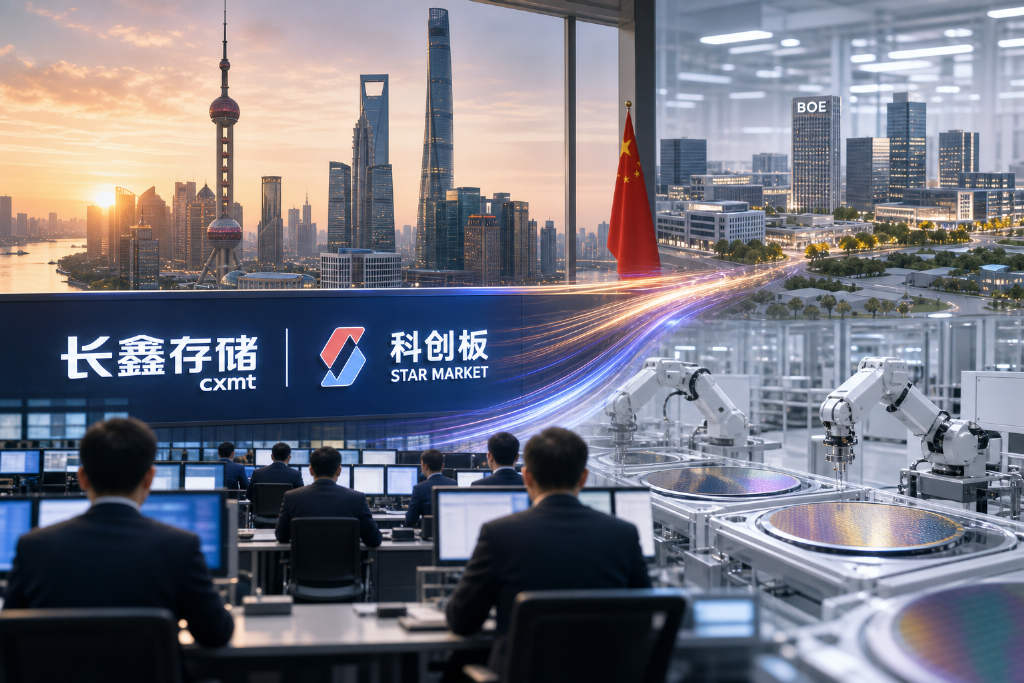
Changxin Memory’s market debut on Shanghai’s STAR Market on July 27, 2026, turned a long-running industrial bet by Hefei into one of the most discussed capital stories in China. The company opened at its RMB 8.66 offer price, surged more than 465% by the close, and finished its first day with a market capitalization of about RMB 3.3 trillion. On the following day, its valuation briefly climbed to RMB 3.66 trillion. That move sharply lifted the value of Hefei’s state-owned holdings. Based on the final ownership structure cited in the source article, Hefei’s state capital system was sitting on paper gains of more than RMB 1 trillion, built from cumulative investment of roughly RMB 26 billion to RMB 30 billion over nearly a decade. The article traces that outcome back to 2016, when Zhu Yiming pushed a DRAM industrialization plan that many places declined as too risky, while Hefei agreed to back the project. The report also links Changxin with an earlier BOE investment in 2008 to explain what is now widely called the “Hefei model”: using patient state capital to support strategically important industries through long loss-making cycles, then using the capital market to reprice those holdings. At the same time, the article argues the model is not easy to duplicate. It points to four factors behind Hefei’s result: unusual policy continuity, specialized state investment platforms, favorable timing tied to the AI-driven memory boom, and organizational discipline that many other cities have struggled to match.
460
Changxin’s IPO thrust Hefei’s state capital strategy into focus as paper gains topped RMB 1 trillion
Winbond
2026-08-07 07:02:35

Winbond targets top global SLC NAND supplier spot by 2027 as DRAM shortages stretch on

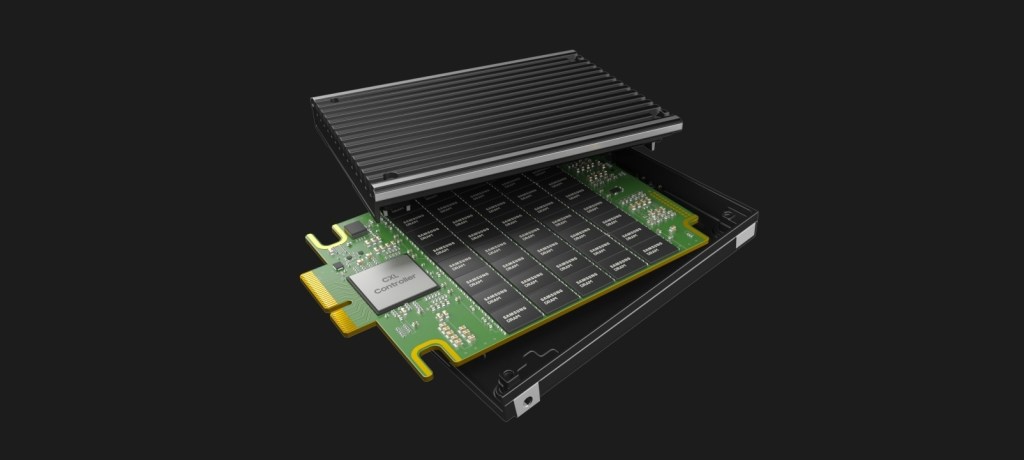
Winbond said DRAM supply will remain tight through 2027 and could get even tighter next year, while some customers are already discussing long-term supply agreements for 2029 and 2030. The company also outlined a plan to become the world’s largest SLC NAND supplier by 2027, backed by capacity expansion in Kaohsiung and a shift to 16nm. Analysts say the market is underestimating SLC demand tied to CMX and CXL-based AI server expansion.

620
Winbond targets top global SLC NAND supplier spot by 2027 as DRAM shortages stretch on
Trump
2026-07-31 15:48:14

Trump approval hits second-term low as Iran war and gas prices weigh on sentiment

President Donald Trump’s approval rating has fallen to its lowest level of his second term, according to political analyst Nate Silver, who tied the drop to the ongoing Iran war and a sharp rise in gasoline prices. Silver said the timing closely matches the return of fighting with Iran and higher energy costs. With the war nearing the six-month mark, data from the American Automobile Association showed the U.S. average gasoline price at about $4.11 per gallon as of Friday morning, up from roughly $3.15 a year earlier. Polling averages from Decision Desk HQ put Trump’s overall approval at 40.6%, while his average disapproval stood at 57.5%. Other surveys point to broader public opposition to the conflict. A Quinnipiac University poll found 60% of U.S. voters opposed the war, the highest share since the conflict began on Feb. 28. Nearly three-quarters of Americans said they opposed sending U.S. troops to Iran. An AP-NORC poll found 64% of Americans viewed the war as “not worth it,” including 87% of Democrats, 37% of Republicans and 68% of independents.

1110
Trump approval hits second-term low as Iran war and gas prices weigh on sentiment
Polygon
2026-07-30 21:31:21

Polygon Brings Kansai Electric Loyalty Points Onchain Through JPYC

Users of MOACT, a rewards app operated by a wholly owned subsidiary of Kansai Electric Power, can now convert NORM loyalty points into JPYC on Polygon, according to a Thursday press release from wallet developer HashPort. The feature went live on July 30 and moves points earned through social-impact missions in the app into users’ own HashPort Wallets, where they can connect to DeFi platforms. Previously, MOACT points could only be redeemed for electronic gift certificates. JPYC, issued by JPYC Inc., is described as Japan’s first regulated yen-pegged stablecoin and can be redeemed one-for-one for yen under the country’s Payment Services Act. The rollout adds to a broader push to bring Japan’s loyalty-point economy onchain. HashPort previously enabled Diners Club point conversions into JPYC on June 1 and launched an in-store yen stablecoin payment pilot with KDDI at Lawson stores on July 13. Polygon said it now handles more JPYC volume than all other chains combined, while 84% of JPYC holders use HashPort Wallet.

1180
Polygon Brings Kansai Electric Loyalty Points Onchain Through JPYC
GigaDevice
2026-07-30 11:46:09

GigaDevice’s controller sold about $4.4 billion yuan in stock, then proposed buying support as shares tumbled

GigaDevice Semiconductor became the focus of market debate after its share price fell from an intraday record of 846.66 yuan on June 29 to 364.03 yuan at the close on July 29, wiping out more than 330 billion yuan in market value over 22 trading days. The controversy centers on a sequence of events involving chairman and actual controller Zhu Yiming, who disclosed a reduction plan on April 8 and then sold 11.1106 million shares between May 6 and June 12 for about 4.4 billion yuan, at prices ranging from 339.44 yuan to 538.90 yuan per share. After the sell-down was completed, Zhu’s direct stake fell from 6.53% to 4.94%, though he and acting-in-concert party Hong Kong Yingfude Co., Ltd. still held 6.8% combined. On July 29, after the stock had dropped sharply, Zhu disclosed four announcements in one night: the result of the share sale, a plan to increase holdings by no less than 1 billion yuan, a proposal for the company to buy back 1 billion to 2 billion yuan in stock, and a pledge not to reduce holdings for 12 months. The original article also cites the listing of CXMT on the STAR Market, a Morgan Stanley report on memory pricing, and concerns that the timing of the sale damaged investor confidence despite strong earnings.

1350
GigaDevice’s controller sold about $4.4 billion yuan in stock, then proposed buying support as shares tumbled
CXMT
2026-07-27 13:30:00

CXMT Debuts on STAR Market With RMB 3.35 Trillion Intraday Value After Years of Losses

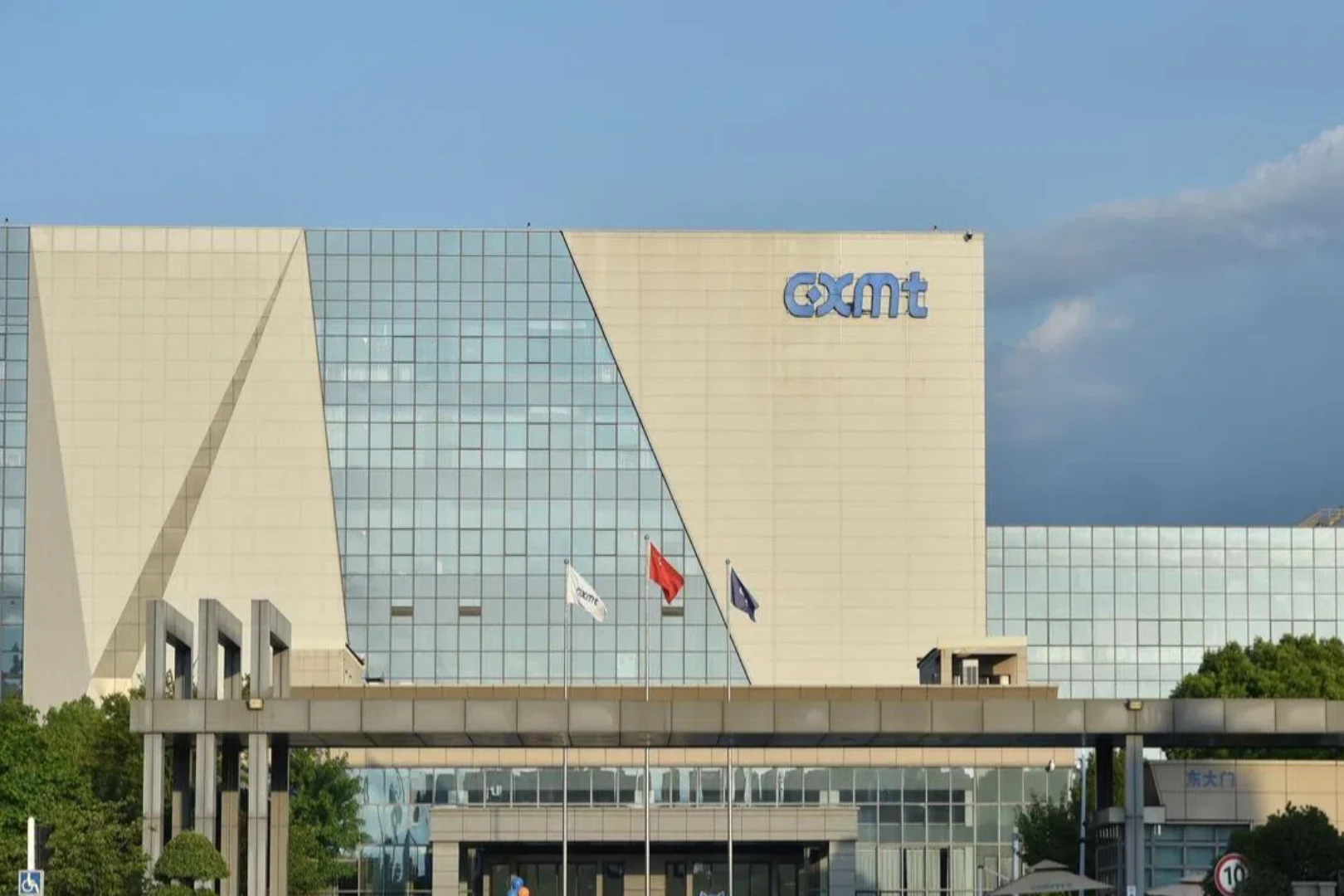
Chinese DRAM maker ChangXin Memory Technologies, or CXMT, officially listed on Shanghai’s STAR Market on July 27, 2026, reaching an intraday market capitalization of about RMB 3.35 trillion, according to 8Marketcap. The valuation is a sharp jump from its IPO value of RMB 579.2 billion and comes despite accumulated uncovered losses of RMB 36.65 billion as of the end of 2025. The company’s turnaround story traces back to the 2016 launch of the “506” domestic DRAM project in Hefei under the leadership of GigaDevice founder Zhu Yiming, backed by Hefei state capital and later a mix of brokers, market investors, bank-affiliated AIC funds, and internet companies. After years of heavy spending on fabs, process development, and yield improvement, CXMT posted a first-quarter 2026 revenue of RMB 50.8 billion and attributable net profit of RMB 24.762 billion, helped by a surge in DRAM contract prices and AI-related memory demand. The report also notes that the valuation carries substantial domestic substitution and AI premium, while process gaps, higher bit costs, customer concentration, and remaining historical losses still weigh on the company’s longer-term fundamentals.

1360
CXMT Debuts on STAR Market With RMB 3.35 Trillion Intraday Value After Years of Losses
CXMT
2026-07-27 10:00:00

CXMT’s STAR Market debut lifts valuation above $3.2 trillion yuan, handing Hefei a paper gain of more than 1.2 trillion yuan

Changxin Technology, also known as CXMT, made its debut on Shanghai’s STAR Market on July 27, 2026, closing at 49 yuan, up 465.82% from its offer price and pushing its market capitalization above 3.2 trillion yuan. That made it the largest company on China’s A-share market by market value, according to the source text, surpassing Industrial and Commercial Bank of China. Behind the listing stands Hefei, which spent a decade backing the memory-chip maker through losses that accumulated to 36.65 billion yuan. Based on an approximately 36.79% holding across Hefei’s state-owned capital system, the city’s paper stake is now worth more than 1.2 trillion yuan. The article traces founder Zhu Yiming’s path from GigaDevice to CXMT, the company’s legal acquisition of DRAM technology assets from Qimonda, the 2019 launch of its 8Gb DDR4 chip, and the severe 2023 downturn that drove annual losses to 16.34 billion yuan. It also details how Hefei kept adding capital, including nearly 2 billion yuan used to buy existing shares at the end of 2024, and argues that the investment reshaped the city’s industrial base, expanding its integrated-circuit cluster to more than 450 companies by the end of 2025.

1430
CXMT’s STAR Market debut lifts valuation above $3.2 trillion yuan, handing Hefei a paper gain of more than 1.2 trillion yuan
GigaDevice
2026-07-22 01:22:02

Trade.xyz lists GIGADEV with 10x leverage and 24/7 trading

Trade.xyz said in a post on X that GIGADEV, the product tied to GigaDevice Semiconductor Inc., is now live on the platform with up to 10x leverage and round-the-clock trading. The instrument tracks the value of one A-share of GigaDevice Semiconductor Inc., which is listed on the Shanghai Stock Exchange under ticker 603986. According to the description provided, the oracle converts the stock’s CNH-denominated price into U.S. dollars using the current USD/CNH exchange rate. The company behind the underlying stock, GigaDevice Semiconductor Inc., is described as a Beijing-headquartered fabless chipmaker and a global leader in NOR flash, with additional products spanning specialty DRAM, microcontrollers, and analog chips.

1050
Trade.xyz lists GIGADEV with 10x leverage and 24/7 trading