NOR

Google
2026-09-04 04:49:30

Google to Mandate Developer Verification for APK Sideloading, Global Rollout by 2027

Google is set to mandate developer identity verification for APK sideloading, starting September 30, 2026 in Brazil, Indonesia, Singapore, and Thailand, with a global rollout by 2027. Critics including Tuta and EFF say the move "Apple-fies" Android, threatening the open sideloading ecosystem that crypto wallets and privacy tools rely on. Google claims sideloaded apps carry over 50 times more malware than Play Store apps, but opponents argue the real motive is control and profit. The policy also introduces limited accounts and advanced flows for users who need to install unverified apps.

80

Google to Mandate Developer Verification for APK Sideloading, Global Rollout by 2027
SEC
2026-09-02 03:33:44

SEC proposal lays out a compliance path for crypto fundraising and an exit from securities oversight

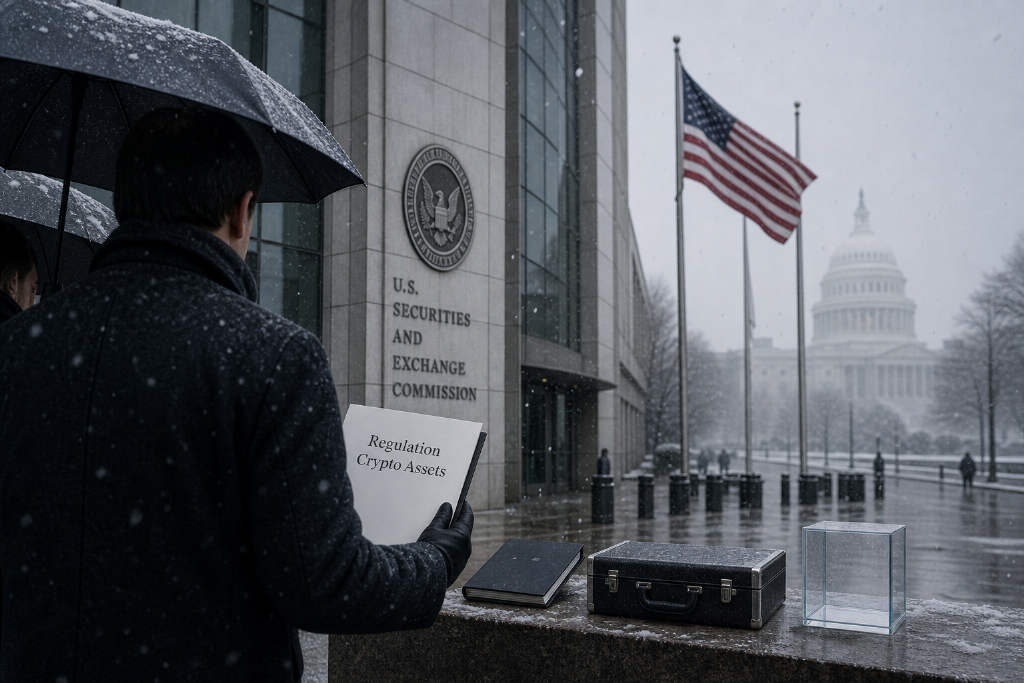
The U.S. Securities and Exchange Commission has released a proposal titled Regulation Crypto Assets, outlining a step-by-step route for crypto projects to raise capital legally, develop their networks, and eventually move their tokens outside securities regulation. Drawing on the SEC datasheet, the article says the framework centers on three pieces: a startup exemption that allows up to $5 million over four years, a fundraising exemption with Tier 1 capped at $20 million in 12 months and Tier 2 capped at $75 million in 12 months, and an investment contract safe harbor that would let a token cease being treated as a security once certain conditions are met. The commentary argues the proposal matters for more than compliance. In its view, the crypto sector has struggled to produce high-quality native assets since the collapse of FTX in 2022, while regulatory uncertainty shut off viable U.S. fundraising channels for new projects. The piece links the SEC proposal with the pending Clarity bill, saying the two could form a relay: the SEC framework would cover a token’s path from launch to the end of its securities status, while Clarity would address how mature digital commodities trade on regulated venues if the bill passes.

120
SEC proposal lays out a compliance path for crypto fundraising and an exit from securities oversight
MCU
2026-09-01 09:28:14

China’s MCU makers post broad first-half revenue growth, but the rebound remains uneven

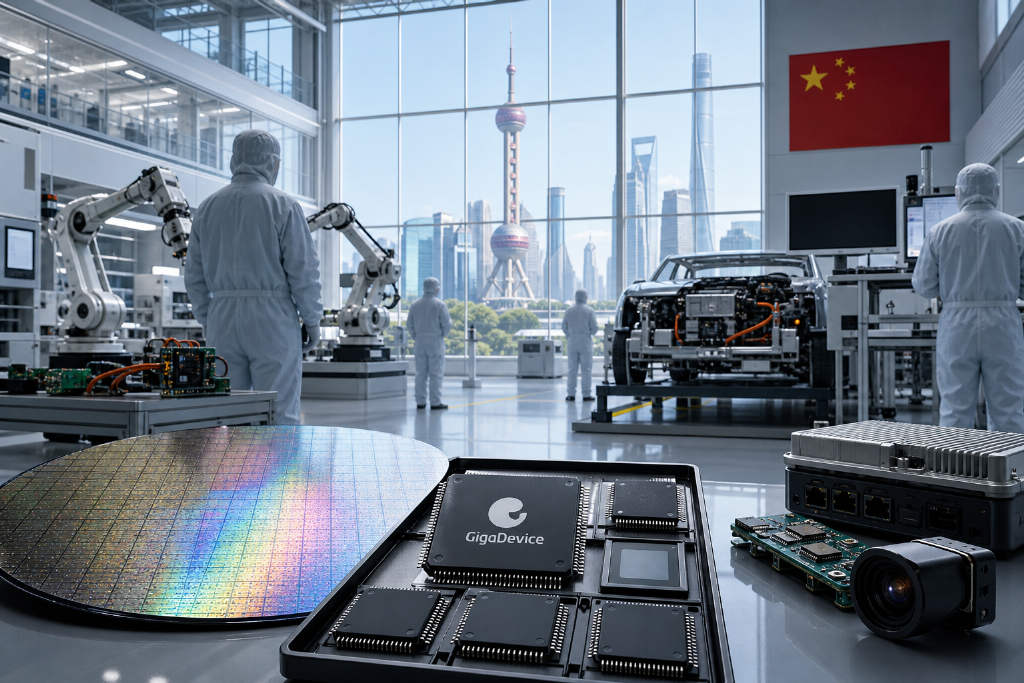
China’s microcontroller unit, or MCU, makers posted a strong top-line recovery in the first half of 2026, but the improvement was far from uniform across the sector. According to an incomplete tally cited by Xinshixiang, 15 of 16 listed companies with MCU exposure reported year-over-year revenue growth, and nine of them expanded by more than 40%. GigaDevice remained the largest player by both revenue and net profit, while Puya Semiconductor posted the fastest revenue growth. Still, the report argues that much of the surge at several companies was tied to memory, not a sudden breakout in MCU demand itself. The article says the current upcycle looks different from prior recoveries. Growth is shifting away from traditional consumer electronics toward industrial control, automotive applications, motor-control chips and edge AI. Companies such as Fudan Microelectronics, Nations Technologies, AutoChips-like automotive MCU suppliers, Beken and others were described as benefiting from tighter supply, longer lead times in higher-performance products, and stronger demand in more specialized segments. At the same time, spot-market conditions remain mixed. Price increase notices have spread from overseas vendors to suppliers in mainland China and Taiwan, yet distributors cited in the report said price pass-through is still uneven and margins remain thin in many categories. The article concludes that China’s MCU market is no longer in a simple destocking phase, but it has not entered a stage of across-the-board shortages or broad-based price increases either.

160
China’s MCU makers post broad first-half revenue growth, but the rebound remains uneven
ChainFeeds
2026-09-01 01:58:12

ChainFeeds research roundup tracks Bitcoin’s 50-week test, Robinhood Chain meme activity, and Uniswap’s UNI burn tailwind

ChainFeeds’ Sept. 1 research roundup pulled together five separate themes shaping the crypto market: a historical Bitcoin signal tied to the 50-week moving average, the rise of social trading as an onchain product category, Uniswap’s growing role on Robinhood Chain, IOSG’s view of Reg CA as a compliance filter rather than a fresh token boom trigger, and the feedback loop powering Robinhood Chain’s meme economy. The report argues that Bitcoin is approaching a level that ended three prior bear markets, though confirmation still depends on a weekly close above and sustained support at the 50-week average. It also highlights how social trading apps are turning transparent portfolios and copy-trading behavior into products that look more like financial social networks. On Robinhood Chain, tokenized stock activity has lifted Uniswap volumes and protocol revenue, while UNI’s Firepit and TokenJar design has translated trading into token burn. A separate section says Pons has tied meme issuance directly to buybacks and burns of its platform token, creating a structure the report contrasts with earlier meme cycles. IOSG, meanwhile, says Reg CA is better read as an administrative path for existing tokens to clear securities status than as a broad green light for issuance.

200
ChainFeeds research roundup tracks Bitcoin’s 50-week test, Robinhood Chain meme activity, and Uniswap’s UNI burn tailwind
SEC
2026-08-31 14:44:58

SEC’s proposed Reg CA may ease token issuance, but IOSG says its real impact is on legacy tokens seeking to shed securities status

An IOSG analysis argues that the U.S. Securities and Exchange Commission’s proposed Regulation Crypto Assets, or Reg CA, should not be read as the trigger for an “ICO 2.0” cycle. The proposal, released by the SEC on Aug. 18 and published in the Federal Register on Aug. 21, remains in the public comment stage through Oct. 20. In IOSG’s view, the rule’s biggest effect would be on the large pool of existing tokens whose legal status has never been formally resolved, rather than on new issuance. The analysis points to the structure of the proposal itself. Rule 200 would allow small token offerings to proceed after filing a Form NOR, but only up to a cumulative $5 million over four years, with one-time use and a broad definition of covered transactions that can include airdrops and network incentives. Rule 300 offers larger fundraising channels at up to $20 million or $75 million per 12 months, but only for issuers that meet demanding U.S. entity, management, asset, and operational tests. IOSG says those limits are too narrow to support a broad reopening of the primary token market. By contrast, Rule 400 creates a path for a token to stop being treated as a security once the issuer completes or permanently halts all promised core managerial efforts and files a Form TR. IOSG argues that this “graduation” mechanism is the center of gravity in Reg CA. The paper also notes that Rule 500, which would preempt parts of state blue-sky law for covered transactions, is both one of the proposal’s most consequential features and one of the sections most vulnerable to pushback before any final rule arrives, likely no earlier than 2027.

160
SEC’s proposed Reg CA may ease token issuance, but IOSG says its real impact is on legacy tokens seeking to shed securities status
Kioxia
2026-08-27 00:03:54

Kioxia commits over ¥1 trillion to new NAND plant as AI storage demand lifts Phison’s supply-chain role

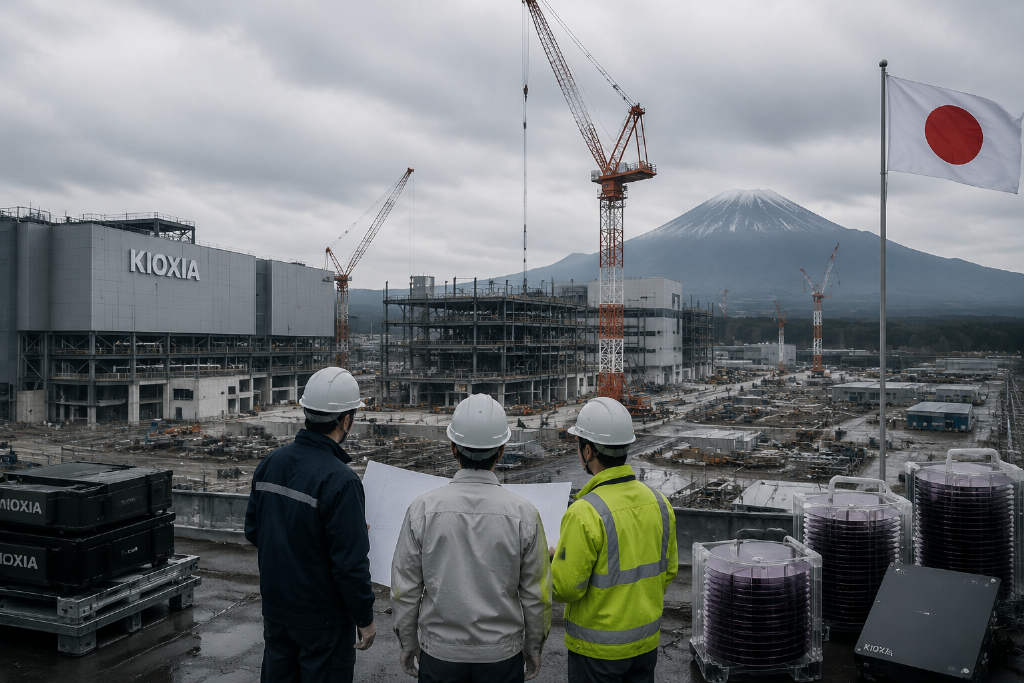
Kioxia plans to spend more than ¥1 trillion, or about $6.27 billion, on a third advanced NAND Flash wafer fab in Kitakami, Iwate Prefecture, according to a report cited by ABMedia. The expansion comes as generative AI drives stronger demand from data centers for high-capacity, high-performance enterprise SSDs. The report said the project also has support from Japan’s Ministry of Economy, Trade and Industry, fitting into Tokyo’s broader semiconductor push alongside support for Rapidus and efforts to draw TSMC to Kumamoto. ABMedia said the move has implications across the Taiwan-Japan memory supply chain, especially for Phison Electronics. The Taiwanese controller chip maker has long-standing ties with Kioxia dating back to 2001, when Toshiba, Kioxia’s predecessor, invested in the company. The two companies now work across NAND procurement, SSD module development, joint development manufacturing, and ODM work for Kioxia’s consumer and enterprise SSD brands. Phison CEO K.S. Pua has warned publicly that the NAND Flash shortage has no visible end. He said AI is reshaping demand patterns, and argued storage is harder to cut than DRAM because the amount of data a customer can process and keep directly affects revenue. He also said new memory capacity typically takes four years to bring online, and projected tighter shortages in the second half of 2026 and a wider gap in 2027.

260
Kioxia commits over ¥1 trillion to new NAND plant as AI storage demand lifts Phison’s supply-chain role
Ingenic
2026-08-25 02:09:10

Ingenic Joins the A+H Ranks After Hong Kong Listing, Backed by Memory, Compute and Analog Chip Lines

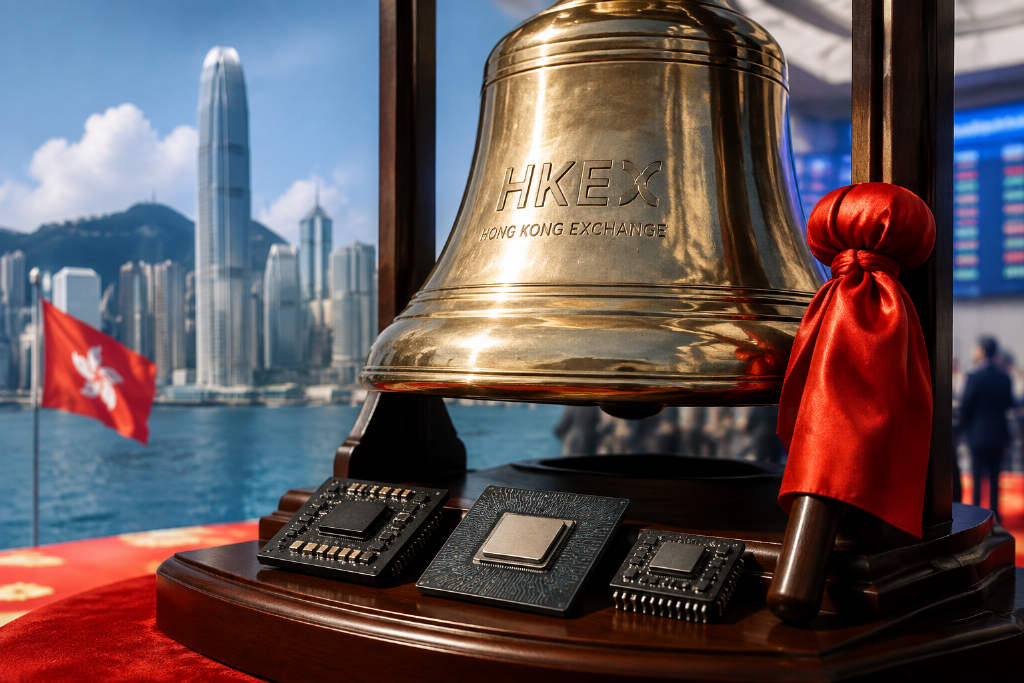
Ingenic rang the opening bell in Hong Kong on Aug. 25, debuting at HK$100 per H share and reaching an opening market capitalization of about HK$51.5 billion. The company had already been listed on Shenzhen’s ChiNext board since May 31, 2011, and the new listing places it among semiconductor companies with both A-share and H-share listings. The prospectus outlines a chip platform strategy built across three product lines: memory, compute and analog. That structure took shape after Ingenic completed its acquisition of Beijing Silicon and indirectly took control of Integrated Silicon Solution Inc. (ISSI) in 2020. Since then, the company has operated around three brands: ISSI for memory, Ingenic for compute and Lumissil for analog. Its recent numbers show a rebound. Revenue moved from RMB 45.31 billion in 2023 to RMB 42.13 billion in 2024, then back up to RMB 47.41 billion in 2025. First-quarter 2026 revenue reached RMB 15.60 billion, up 47.1% from a year earlier, while net profit rose to RMB 3.20 billion and gross margin climbed to 42.6%. Ingenic said it expects to raise HK$3.13 billion from the Hong Kong offering. Half of the proceeds are earmarked for R&D, while 25% is set aside for strategic investments and acquisitions.

380
Ingenic Joins the A+H Ranks After Hong Kong Listing, Backed by Memory, Compute and Analog Chip Lines
automotive ch
2026-08-18 10:28:11

Automotive Chips Enter a New Round of Competition as Inventory Drawdown Nears Its End

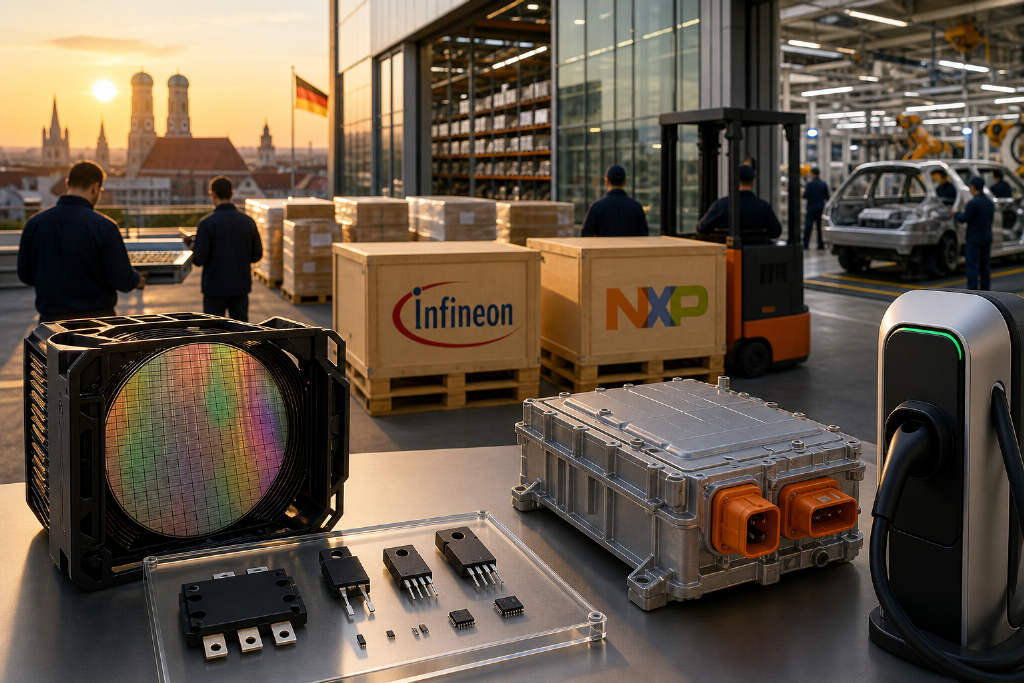
The automotive semiconductor cycle is turning in the second half of 2026. Major overseas chipmakers have reported a rebound, inventories across the supply chain have normalized, Tier 1 orders are recovering, and several product lines are already in a second round of price increases. Deutsche Bank and Bernstein say the industry has entered a structural uptrend, but this recovery is set to be uneven rather than broad-based. Infineon, NXP and other leaders have seen inventory days fall from above 200 to 120-140 days in the first quarter of 2026, while supplier inventory-to-sales ratios have returned to safer levels. Lead times for mainstream automotive power devices have stretched beyond 30 weeks, and SiC modules are taking more than 40 weeks in some cases. That tightening has already pushed prices up 10%-25% across multiple categories. The split is clearest in SiC, high-voltage IGBT, high-end MCU, and in-vehicle storage. 800V platforms are driving demand for higher-value semiconductors, while AI-related demand is absorbing mature 8-inch capacity. For automakers, the key issue is no longer shortage across the board, but which chips are tight, which are normalized, and which are still under pressure.

840
Automotive Chips Enter a New Round of Competition as Inventory Drawdown Nears Its End