ZEC2026-09-07 01:54:08ZEC’s rally is shining a light on NEAR Intents, but the buyback story is smaller than headline fee numbers suggestZcash (ZEC) surged to $1,200 on Sept. 6, capping a 370% gain over three months, while Grayscale’s spot ZEC ETF, ZCSH, pulled in more than $460 million in assets within two weeks of launch. That price move has pushed traders to look beyond ZEC itself and toward the infrastructure handling the flow around it, especially NEAR Intents. The link runs through Zashi, the self-custody wallet developed by Electric Coin Company. In October 2025, Zashi launched Zashi Swaps on top of NEAR Intents, letting users swap assets such as BTC, SOL and USDC directly into shielded ZEC. CrossPay later added the route in the other direction, connecting shielded ZEC to payments in assets on any chain. As a result, both entry and exit flows tied to Zashi pass through NEAR Intents. The market case for NEAR rests on a fee capture model activated on Feb. 23, 2026, when NEAR Intents turned on its Fee Switch. Protocol-level fees began to be collected in NEAR, with 100% of protocol fees used to buy back NEAR on the open market. Still, the data shows an important gap between gross fees and actual protocol revenue: while cumulative fees have reached about $45 million, only around $5.51 million has gone to protocol revenue for buybacks. ZEC-related pairs now make up nearly 40% of volume on NEAR Intents, leaving the trade highly sensitive to whether ZEC demand remains elevated.840
ZEC2026-09-07 02:03:17NEAR Intents Draws Attention as ZEC Rally Pushes Traders Toward the Infrastructure LayerZEC climbed to $1,200 on Sept. 6, extending its three-month gain to 370%, while Grayscale’s spot ZEC ETF, ZCSH, pulled in more than $460 million in assets within two weeks of launch. That move has shifted part of the market conversation away from ZEC itself and toward the infrastructure handling the token’s cross-chain flow. At the center of that discussion is NEAR Intents, which powers swap activity inside Zashi, a self-custody wallet built by Electric Coin Company. The setup is straightforward. Since October 2025, Zashi Swaps has allowed users to convert assets such as BTC, SOL, and USDC into shielded ZEC through NEAR Intents. CrossPay later opened the reverse path, linking shielded ZEC to payments in assets on other chains. After NEAR Intents activated its Fee Switch on Feb. 23, 2026, protocol-level fees began to be collected in NEAR, with 100% of protocol fees used to buy back NEAR on the open market. Still, the revenue picture is narrower than headline fee figures suggest. Official dashboard data shows cumulative volume of about $27.6 billion and total fees of roughly $45 million, but DefiLlama puts protocol revenue at only about $5.51 million, with around $910,000 over the past 30 days. Current CoinGecko pair data also indicates that ZEC-related pairs account for nearly 40% of volume on NEAR Intents, pointing to a clear dependence on sustained ZEC trading activity.330
Zcash2026-09-05 02:56:53Zcash meme launchpad shld.fun opens 270 markets in 43 hours, with ZECAT peaking at 49.4xA new meme-token launchpad in the Zcash ecosystem, shld.fun, created 270 token markets within roughly 43 hours of going live, according to the source article. The top performer, ZECAT, climbed as much as 4,844%, or 49.4x from its bonding-curve starting price. Still, the article says the entire platform’s circulating market cap totaled just 2,502 ZEC, or about $2.55 million, a small figure next to ZEC’s cited $17.2 billion market capitalization. The report pushes back on a claim circulating in crypto communities that shld.fun drove ZEC’s recent price strength. It also says the platform does not use Zcash memo fields for token purchases. Instead, each order is tied to a dedicated shielded address, while balances and pricing are recorded in the platform’s own indexer ledger. In that framing, the tokens are not merely staying inside Zcash — they never exist on the Zcash blockchain in the first place. The article also notes a sharp pullback across leading tokens over the past 24 hours, despite the early surge. shld.fun labels itself an experimental technology, states that users bear the risk, and says it has no affiliation with Electric Coin Company or the Zcash Foundation.1500
Zcash2026-09-04 07:06:09Taiki Maeda explains why he sold ZEC near the bottom and bought it back higherTrader Taiki Maeda used a recent YouTube video to lay out why he has put most of his net worth into Zcash, framing the trade around privacy, zero-knowledge proofs, shielded pool growth and what he sees as a rare asymmetric setup. In the video, later summarized by PANews and republished by MarsBit, Maeda argues that Zcash shares Bitcoin’s basic monetary structure — a 21 million cap, four-year halvings and proof-of-work security — but adds optional privacy through shielded addresses. He says that feature matters more in 2026 as investors increasingly focus on financial privacy and the lack of a clear quantum-resistance roadmap for Bitcoin. Maeda also revisited his own failed ZEC trade. After buying aggressively below $400 and adding as the token rose, he exited all of his holdings below $300 after a serious Orchard shielded pool vulnerability was disclosed by Zcash researcher Taylor Hornsby. He said the risk of undetected over-minting broke his confidence in Zcash as a store-of-value asset. His rule then was simple: if the market fully recovered and price reclaimed pre-bug levels, that would show trust had returned. He would buy back even at a higher price. The rest of his thesis ties Zcash to a broader 2026 market view, a K-shaped rotation inside crypto, and a trading framework influenced by Stanley Druckenmiller and the book Best Loser Wins, with price action used as confirmation rather than something to fade.1020
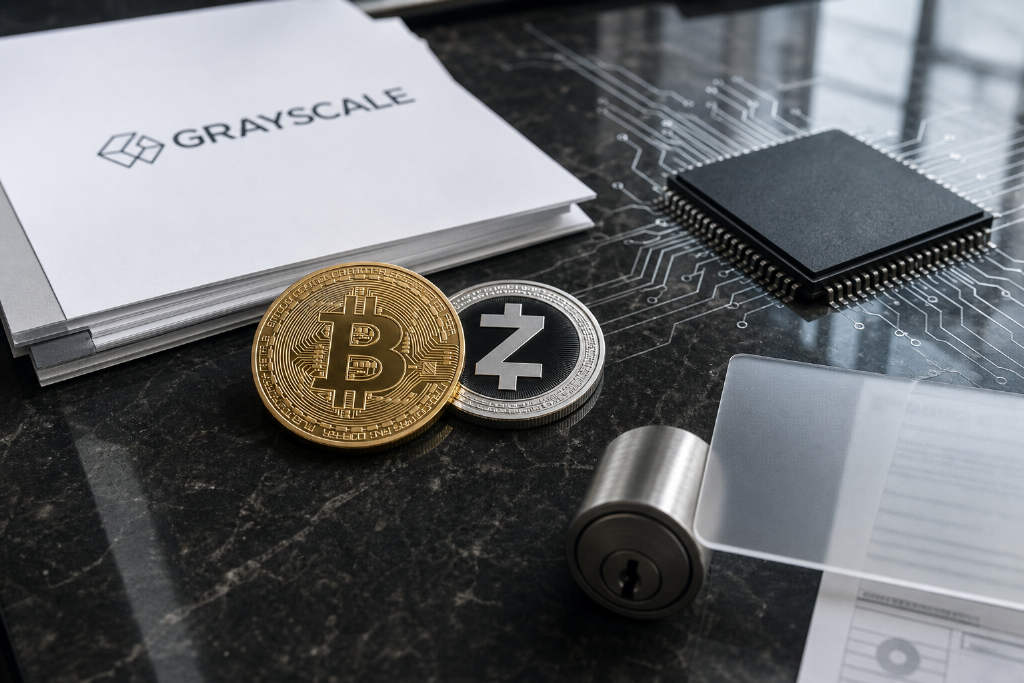
Grayscale2026-09-03 15:57:49Grayscale's Zcash ETF Lists on NYSE Arca, Privacy Coins Gain Wall Street AttentionGrayscale's Zcash ETF has been listed on NYSE Arca, marking a notable entry for privacy coins into regulated investment markets. The listing comes as obtaining direct exposure to such assets becomes increasingly challenging. Meanwhile, major centralized exchanges are scaling back support for privacy coins like Monero, highlighting the evolving regulatory landscape.890
THORChain2026-08-30 16:12:45THORChain Adds Native Monero Swaps, XMR Rises 8.9%THORChain, which is a decentralized cross-chain protocol, has completed an upgrade. The upgrade now supports native Monero (XMR) cross-chain swaps, according to a report by Crypto Briefing that was relayed by Techub News. This upgrade is designed to give privacy-coin users more transaction autonomy, in response to the growing regulatory pressure that exchanges are facing. Following the upgrade, the price of Monero increased by about 8.9%. The integration of native XMR means that users can now swap Monero directly on the THORChain protocol. The news was first covered by Crypto Briefing. The project has described the upgrade as a way to provide more trading autonomy for privacy coin users. The 8.9% price rise happened after the upgrade was announced. There were no additional technical details provided about the upgrade in the report. The upgrade was a direct response to the increasing regulatory pressure on exchanges. Monero is a privacy coin, and its native token is XMR. THORChain is a decentralized cross-chain protocol for swaps between different networks.830
Grayscale2026-08-27 18:51:02Grayscale says Zcash could press Bitcoin’s network edge as demand for privacy growsGrayscale argues that Zcash may become a more credible challenger to Bitcoin than earlier alternatives if demand for financial privacy keeps rising alongside the spread of artificial intelligence. In a new research report, Grayscale head of research Zach Pandl said Zcash has "second mover advantages" that may help it contest Bitcoin’s entrenched network effects, something assets such as Litecoin failed to do. The firm’s case rests on privacy: Zcash can shield transaction data, a feature Grayscale says may become more valuable as AI systems get better at analyzing financial activity at scale and as concerns about AI-enabled surveillance grow. The report follows a roughly 19-fold rise in ZEC over the past year. Even after that move, Grayscale noted that Zcash is still valued at less than 1% of Bitcoin’s market capitalization, which it sees as leaving room for more upside if Zcash gains market share. The firm also cautioned that Bitcoin’s liquidity and established network remain strong defenses, and said Zcash remains a high-risk investment with the potential for uneven and volatile gains.930
Grayscale2026-08-26 19:25:51Grayscale capital markets head says Zcash could be the next major crypto investment after BitcoinKrista Lynch, Grayscale’s head of capital markets, said in an interview with Bloomberg that Zcash (ZEC) is the next major cryptocurrency investment after Bitcoin. She said Zcash’s privacy-focused technology gives it a distinct investment case. In the interview, Lynch discussed the asset’s technical foundation, its potential use in privacy protection, and her view of its market outlook. She also said privacy coins such as Zcash may draw more attention as demand for privacy grows. The comments were cited by Techub News, with Altcoin Daily referenced in the post.900