Risk

crypto scams
2026-08-20 13:34:04

Fake Crypto AML Checkers Try to Trick Users Into Exposing Wallets

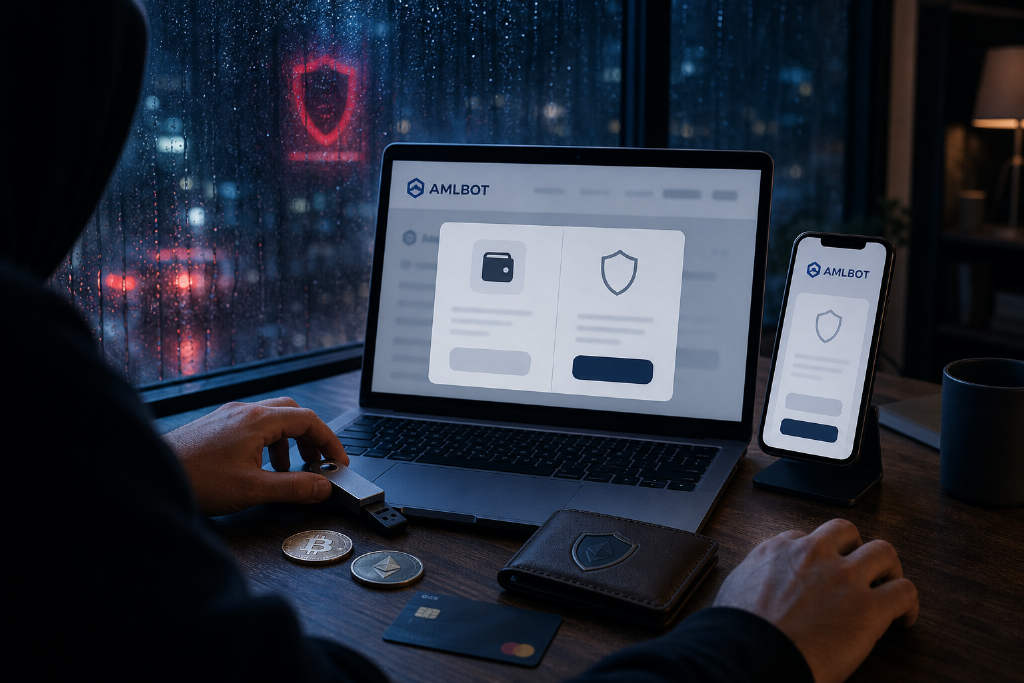
Cybersecurity firm Malwarebytes has warned that scammers are setting up fake anti-money laundering, or AML, checking services aimed at crypto users. The sites claim to assess whether a wallet has touched stolen funds, sanctioned entities, scams, or other suspicious activity, but instead push visitors to connect wallets and approve actions they should never need to authorize for a basic check. Some pages imitate the legitimate service AMLBot, while others use generic branding such as “AML Check.” Malwarebytes said the scam pages often display fabricated progress messages and bogus results to make the process look real, and at least one site asked for a small top-up fee before returning a “Clean, Low Risk” label. The firm stressed that a standard AML wallet screening only requires a public wallet address, not wallet connection, permission approvals, or transaction signatures. Malwarebytes also said the same layout and workflow appeared under multiple names and logos, pointing to a reusable scam kit. The warning comes as crypto phishing campaigns keep surfacing, including cloned sites tied to Coldcard, Pudgy World, and more than 1,200 fake CoinDCX domains identified over a period running from April 2024 to January 2026.
180
Fake Crypto AML Checkers Try to Trick Users Into Exposing Wallets
NAVI Protocol
2026-08-20 07:53:09

NAVI Protocol launches NAVI Prime on Sui with isolated-risk lending vaults

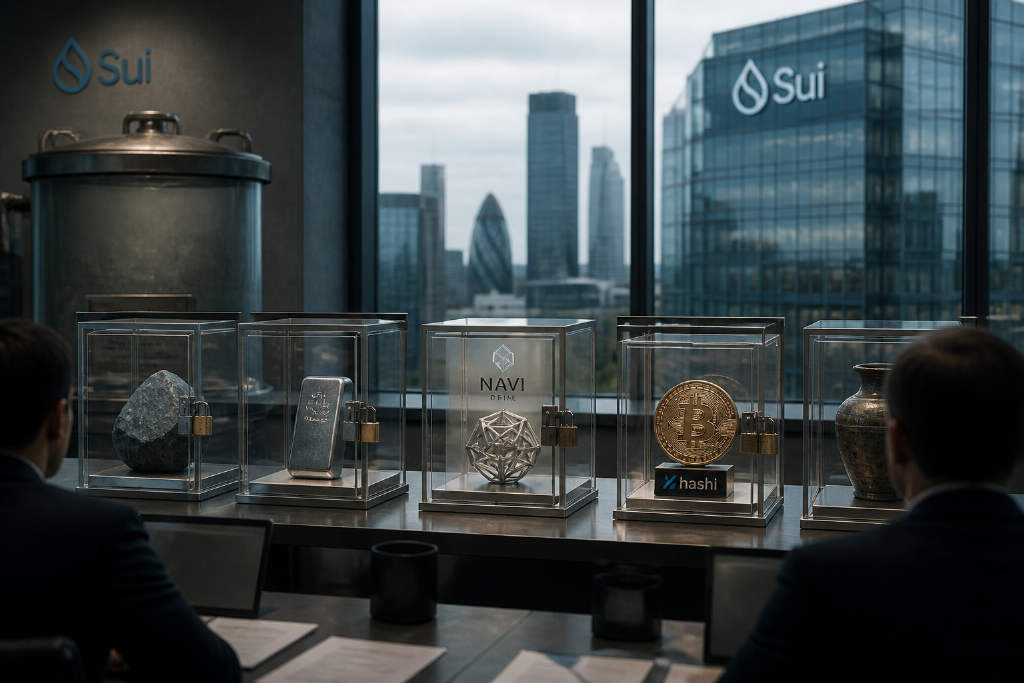
NAVI Protocol has rolled out NAVI Prime, a curated credit marketplace that the project describes as its biggest product overhaul since launch three years ago. Built on Sui, the new product uses isolated risk vaults rather than a single shared pool, allowing curators to create separate liquidity vaults around specific assets or strategies. NAVI says this makes it the first DeFi protocol in the Move ecosystem to put an isolated-risk pool model into production. The launch also ties NAVI Prime to hashiBTC, with the protocol named the exclusive lending partner for the Bitcoin-related ecosystem. According to the project, the setup is meant to provide an institutional-grade venue for Bitcoin lending products, with emphasis on auditable counterparties and isolated risk when BTC is used as collateral. NAVI added that Prime took more than four months to build, passed more than three independent security audits, and saw ecosystem coordination from Mysten Labs during the release process. The protocol, which went live on Sui mainnet in 2023, said its historical TVL peak exceeded $1 billion and that it has served more than 1.1 million users. NAVI also said it has opened applications for curators and asset issuers, with plans to expand the range of collateral assets gradually through a whitelist mechanism.

440
NAVI Protocol launches NAVI Prime on Sui with isolated-risk lending vaults
US Treasuries
2026-08-20 06:34:05

Bessent’s Two Market Interventions in a Month Point to Long-End Treasury Risk

A TechFlowPost article by Fu Peng argues that U.S. Treasury Secretary Bessent moved twice within a month in two different markets, but both actions were aimed at the same pressure point: long-dated U.S. Treasuries. The first move came at the start of the month through joint U.S.-Japan support for the yen. The article says that without U.S. coordination, Japan could have been forced to burn through reserves and eventually sell Treasuries on a large scale to defend its currency, creating a potential overseas selling shock in the U.S. bond market. The second move came on Wednesday, when the scale of long-dated Treasury buybacks was doubled during a seasonally weak August liquidity window, a step the article describes as a direct hit on one-way bearish positioning in the long end.<br><br>The piece distinguishes between short-end and long-end yield drivers. It says short-dated yields are still supported by strong productivity-linked investment demand and sticky inflation compensation, while long-dated yields have been driven higher by a structural repricing of term premium tied to fiscal and institutional uncertainty. It also points to quantitative tightening, reserve diversification by foreign central banks, domestic bank constraints such as SLR, the concentration of low-coupon debt maturities in 2026, and nearly $2 trillion in annual net new deficits as factors that have weakened demand for long-term Treasuries. In the article’s framing, the interventions were designed to compress term premium, cap long-end yields, ease refinancing and mortgage pressure, flatten the curve, and reduce the appeal of cross-border carry trades tied to long-dated U.S. debt.

200
Bessent’s Two Market Interventions in a Month Point to Long-End Treasury Risk
Murata Manufa
2026-08-20 04:34:41

UBS says Murata’s Fukui Takefu plant opened to outsiders for the first time in about 20 years, with roughly 20% output upside left in existing tools

UBS analysts visited Murata Manufacturing’s Fukui Takefu plant on Aug. 18, describing the tour as the first time the site had been opened externally in about two decades. In the note summarized by TechFlowPost, UBS said the visit reinforced three points: Murata’s technical moat in advanced multilayer ceramic capacitors remains hard to replicate, existing equipment still carries around 20% output upside through process optimization, and room for straightforward physical capacity expansion is getting tight. Murata, which the report says holds about 35% of the global MLCC market, uses the Takefu site as a mother plant for advanced products serving AI servers and premium smartphones. UBS highlighted Murata’s segmented production system, its ability to support 50,000 product variants, and a closed loop across materials, in-house equipment and process know-how. The bank described that structure as a “black box” barrier. Management said yield gains, better inter-process feedback and automated inspection together could unlock about 20% more output. UBS contrasted that with constraints on new buildings, labor shortages and longer lead times for components used in Murata’s self-developed equipment. The bank maintained a positive view on mix-driven margin expansion, with a ¥13,200 target price based on 30x expected FY2029 earnings, while also listing risks tied to weaker U.S. demand, technology diffusion in Asia and migration of high-frequency circuits into IC integration.

380
UBS says Murata’s Fukui Takefu plant opened to outsiders for the first time in about 20 years, with roughly 20% output upside left in existing tools
AI
2026-08-20 07:00:00

AI debt wave may put the next real test for U.S. Treasuries in September

A temporary reprieve in the U.S. Treasury market may not last long. After the Treasury said it would expand long-dated bond buybacks, market tension eased, helping stocks rebound while gold and Bitcoin moved higher and the 10-year yield edged down. But several investors and strategists say the bigger challenge may arrive after Labor Day, when the U.S. investment-grade primary market typically becomes busy and AI-driven financing demand from large technology companies accelerates. Market participants cited in the report said September investment-grade corporate bond issuance could reach $200 billion, with a large share tied to AI capital spending. Issuance this year is already up 38% from a year earlier and could hit a record $2.1 trillion for 2026, according to asset managers cited by the article. Firms including Microsoft, Alphabet, Amazon, Meta and Oracle have been raising long-term debt to fund data centers, advanced chips and AI services. That supply is now colliding with a Treasury market already under pressure from a wider fiscal deficit, firmer inflation expectations and uncertainty around Federal Reserve policy. Some managers warn AI-related debt supply is nearing the market’s limit, while others see growing competition between long-dated corporate paper and Treasuries, especially as some issuers carry credit ratings that can rival or exceed the U.S. government.

450
AI debt wave may put the next real test for U.S. Treasuries in September
US Treasury
2026-08-20 03:26:35

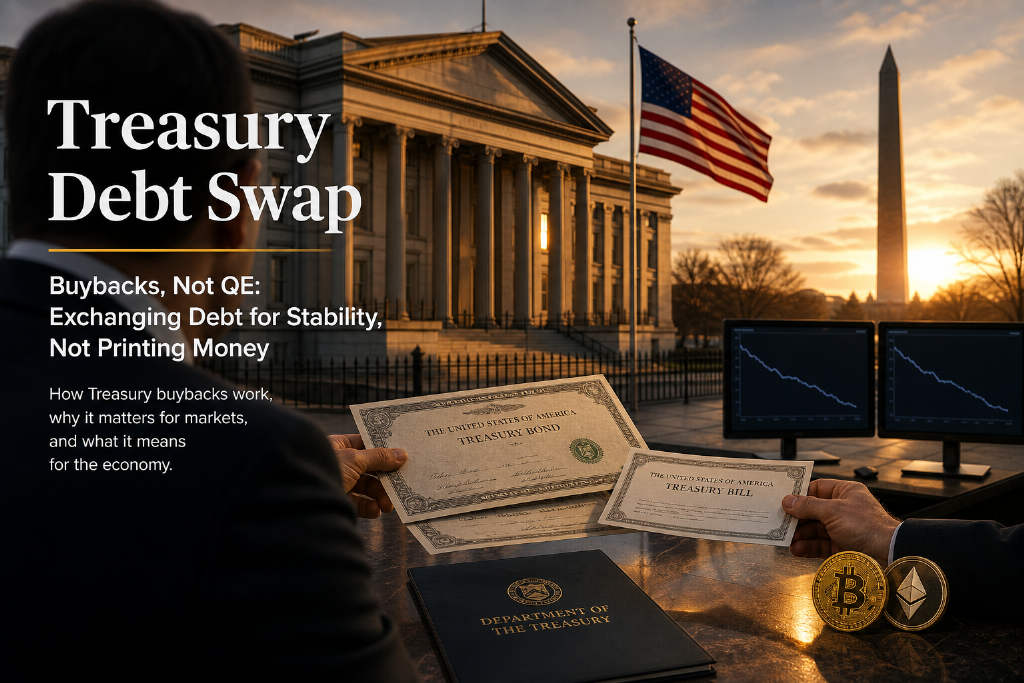
US Treasury doubles long-bond buybacks as markets debate whether the move resembles QE

The US Treasury said it will double the size of its long-dated bond buyback operations, raising the cap for each operation to at least $4 billion. The announcement pushed Treasury yields lower, with the 30-year yield falling from 5.26% to 5.18% and the 10-year yield slipping to 4.647%. Crypto markets also reacted sharply: Bitcoin rebounded from $64,112 to $70,000 before trading at $69,070, while Ether rose more than 10% to reclaim $2,200. The move has stirred debate over whether Treasury buybacks amount to a backdoor form of quantitative easing. Supporters of that view argue that buying long-dated bonds removes duration from the market and can channel liquidity back into the banking system if the funding comes from increased issuance of short-term Treasury bills. Paul Howard, senior director at Wincent, said Bitcoin’s momentum reflected added liquidity support for long-duration Treasuries, though he cautioned that the operation should not be confused with the traditional QE programs seen five years ago. The distinction, according to the article, comes down to funding. Unlike the Federal Reserve, the Treasury cannot create reserves or expand the central bank balance sheet. The operation is financed through new debt issuance, making it a debt swap rather than money creation. Deutsche Bank compared it to Operation Twist, while Wolf Street founder Wolf Richter called the plan a “sleight of hand,” arguing its scale remains too small relative to the roughly $10 trillion long-bond market.

320
US Treasury doubles long-bond buybacks as markets debate whether the move resembles QE
Policy Regula
2026-08-19 09:03:32

Markets Reprice as Hormuz Risk and a No-Guidance Fed Collide

ABMedia said the latest market selloff reflects more than a routine valuation reset. The report argues that investors are dealing with two pressures at once: inflation risk tied to the effective closure of the Strait of Hormuz and a change in how the Federal Reserve communicates under new Chair Warsh. Semiconductor shares led the decline, with the Philadelphia Semiconductor Index down 4.98% overnight and TSMC ADR falling 4.07%, while Taiwan’s stock benchmark ended at 44,719.35, down 1.30% after touching 44,308.71 intraday. The article said the problem is not simply that rates are high, oil is rising, or growth is cooling. Its central point is that markets are still trading as if the Fed will step in early and clearly signal its next move, even though Warsh has explicitly rejected forward guidance and has floated ending quarterly economic projections and the dot plot. At the same time, 10-year Treasury yields have returned to 4.71%, the Fed kept rates at 3.50% to 3.75% on July 29, and three officials favored a 25-basis-point hike. ABMedia described the move as a correction rather than a crash and said investors should watch Treasury yields, progress in Hormuz negotiations, and whether markets can identify the Fed’s new reaction function.

490
Markets Reprice as Hormuz Risk and a No-Guidance Fed Collide
wallet securi
2026-08-19 08:31:25

Wallet security incidents put AI-driven crypto defense under the spotlight

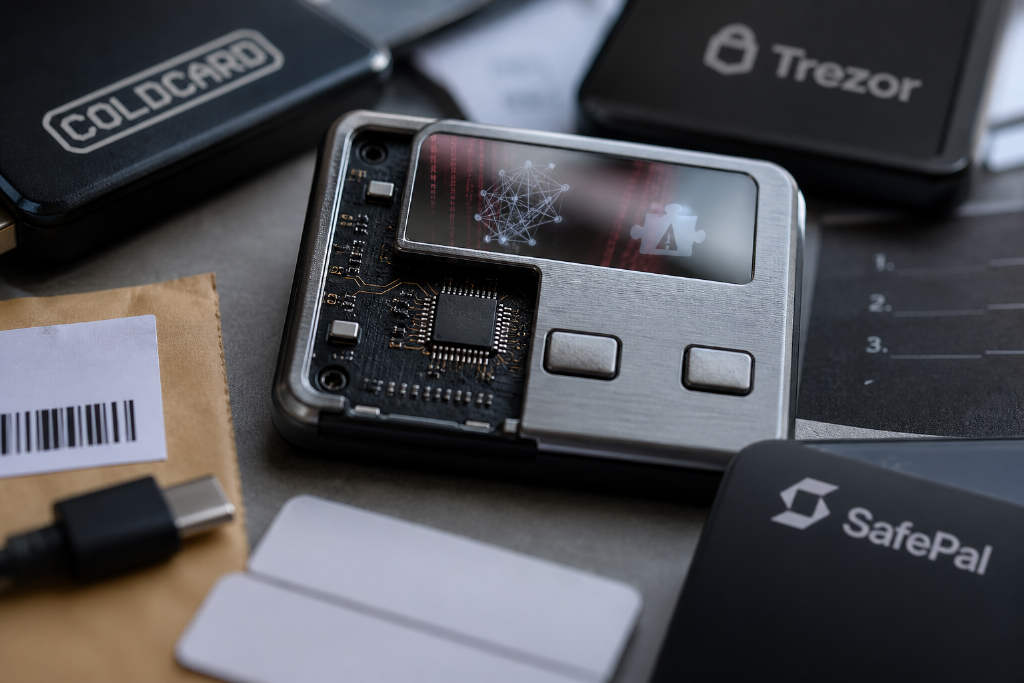
A string of wallet-related security incidents over the past month has sharpened attention on a wider shift in crypto security: the attack surface is expanding well beyond private keys, and AI is making every stage of the attack chain cheaper to run. The article links three separate cases — Coldcard’s random number generation flaw, Trezor’s exposure tied to a third-party logistics service, and SafePal’s risks involving order systems and plugin permissions — to a broader pattern in which code review, phishing generation, target selection and social engineering can all be automated at a much larger scale. It argues that wallet security can no longer be reduced to whether a seed phrase was stolen. Risks now span key generation, hardware, supply chains, user identity data, dApp connections, approvals, support channels and even AI agents. The piece also revisits earlier discussions from imToken on “AI × Web3 security,” outlining a more active defense model in which wallets use AI to review code dependencies, analyze suspicious dApps, simulate transaction outcomes before signing and build dynamic risk models around user behavior. Even so, it stresses that critical actions such as large transfers, new approvals and sensitive contract interactions still need clear user confirmation, least-privilege controls and explainable warnings.

250
Wallet security incidents put AI-driven crypto defense under the spotlight