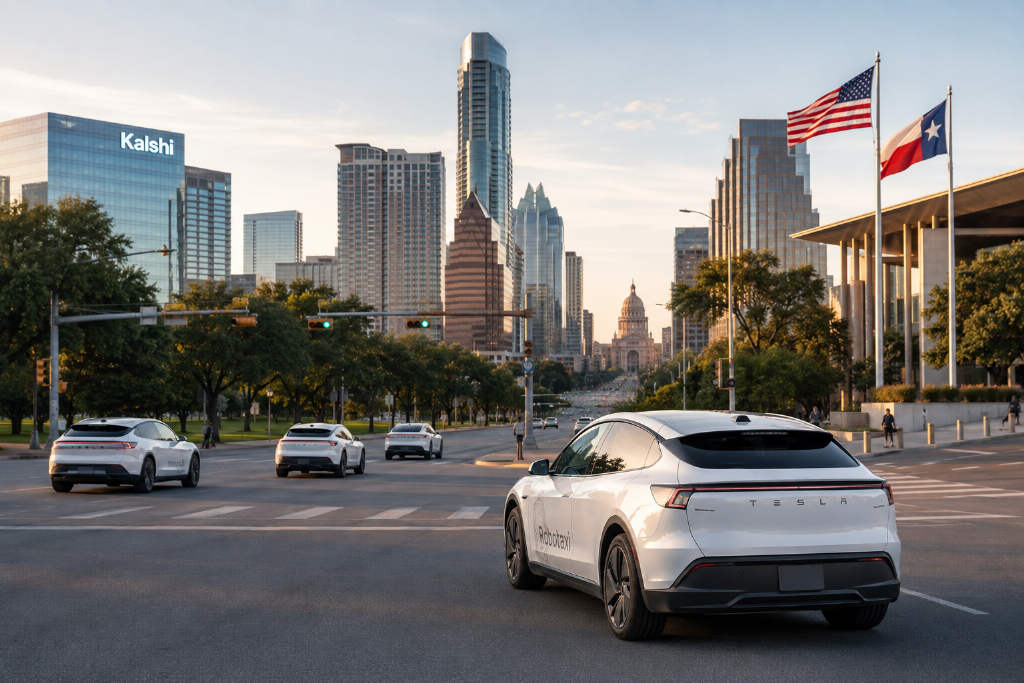
Tesla2026-09-04 12:19:06Tesla's Unsupervised Robotaxi Fleet Surpasses 1 Million MilesTesla announced that its unsupervised robotaxi fleet has accumulated over 1 million miles of driving, marking a milestone in fully autonomous driving. The data reflects the scale of real-world autonomous operations and was reported by Kalshi.1220
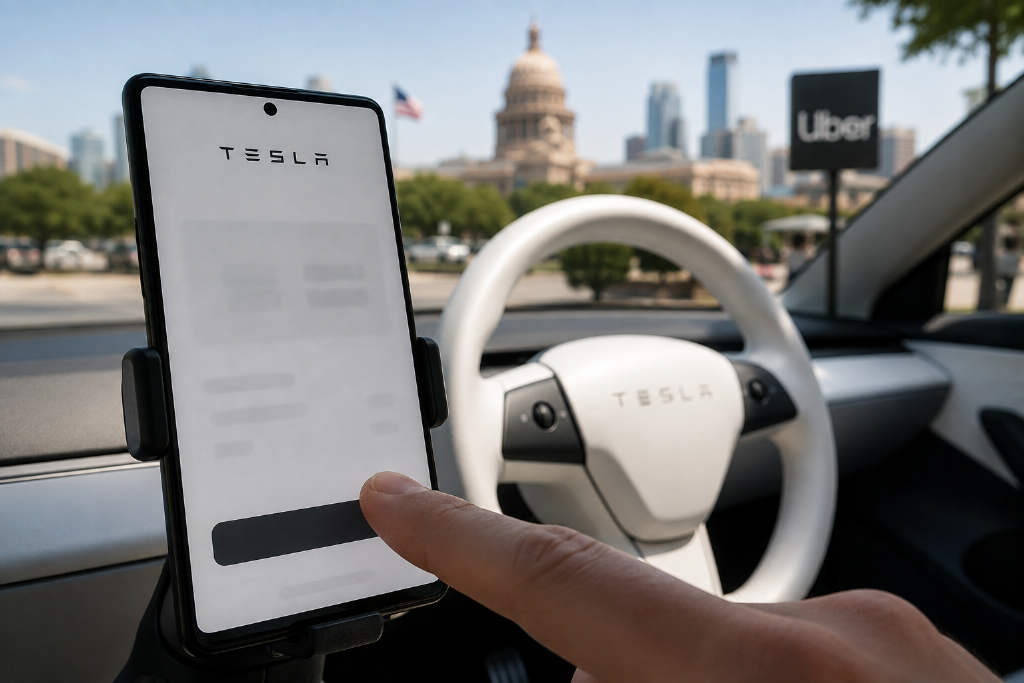
Tesla2026-09-04 09:11:15Tesla Robotaxi undercuts Uber on fares, but prices have risen three times in a yearTesla’s Robotaxi service is still priced below Uber on comparable trips in parts of the U.S., according to figures cited by BlockTempo, but the service has also become more expensive over the past year. In Austin, an 11-mile trip costs $13.71 with Robotaxi, versus $18 to $31 for Uber on the same route. In Dallas, a 2.25-mile, seven-minute ride costs $6.15 with Tesla and $13.93 with Waymo. Tesla’s current pricing model is a $3 base fare plus $1.4 per mile, while Uber is said to charge about $1.5 to $2 per mile. The article says Tesla has changed Robotaxi pricing three times in a year. After launching in Austin last year with a flat $4.2 fare per ride, the service switched in March to a $3.25 base fare plus $1 per mile, and then again the same month to a $3 base fare plus $1.4 per mile. Ride-comparison app Obi found Tesla’s per-mile fare in San Francisco was up 41% from a year earlier, compared with 18% for Waymo, 12% for Lyft, and 5% for Uber. At the same time, Tesla’s operating scale remains limited. Obi’s simulation data showed average wait times near 16 minutes for Tesla in the Bay Area, versus roughly 3 to 6 minutes for Uber, Lyft, and Waymo. Third-party tracker Robotaxi Tracker estimated only 20 to 30 Tesla vehicles were operating without safety drivers at any given time, while Waymo has about 3,500 vehicles across 11 U.S. metro areas.1660
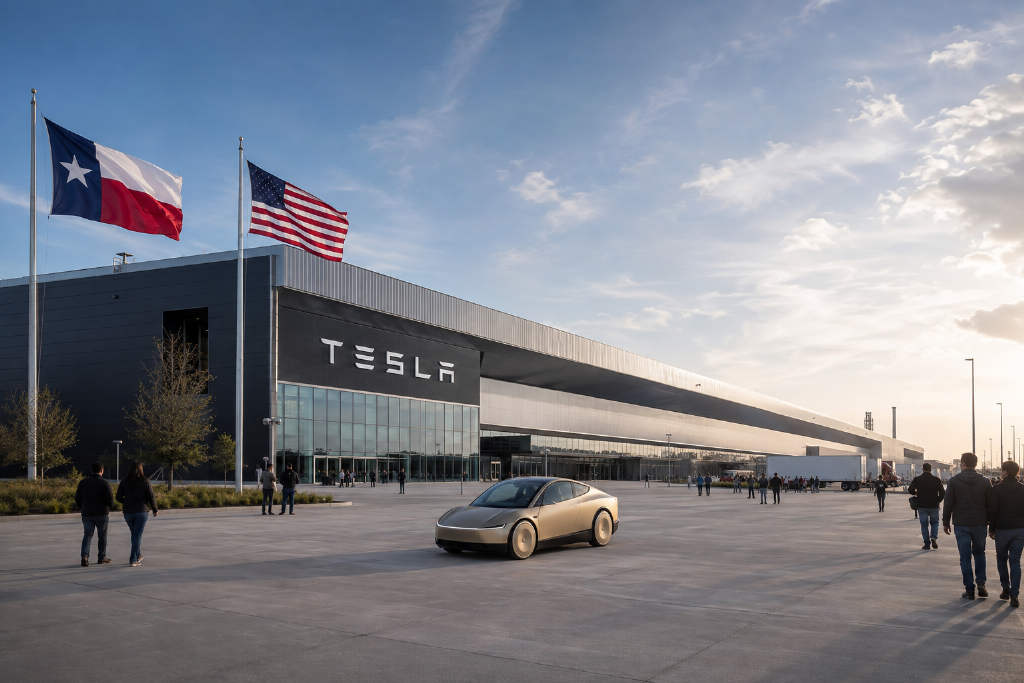
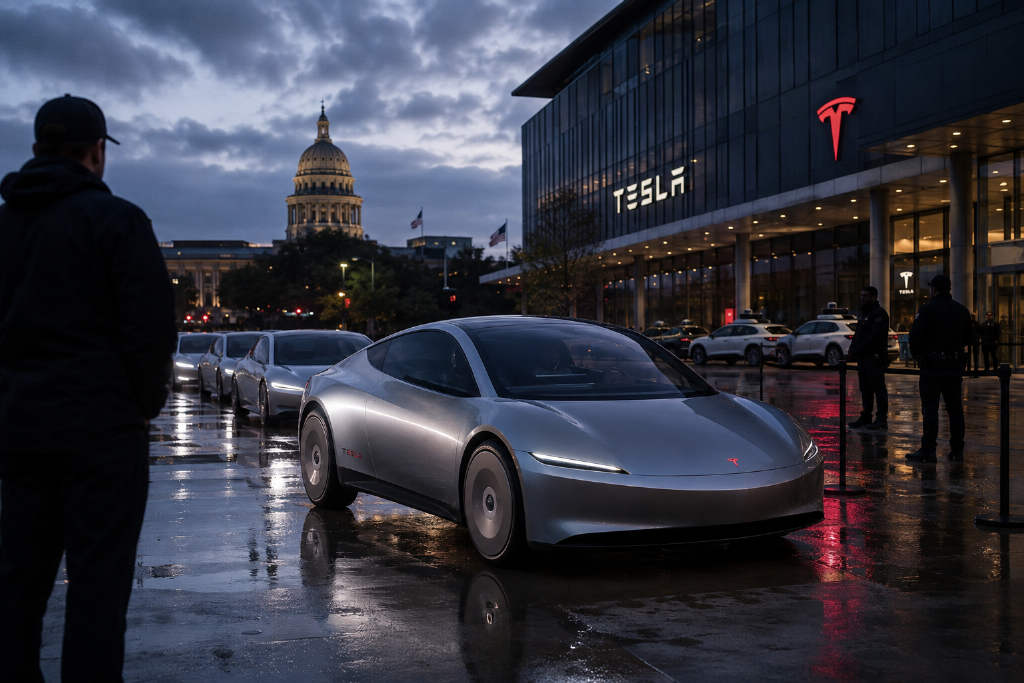
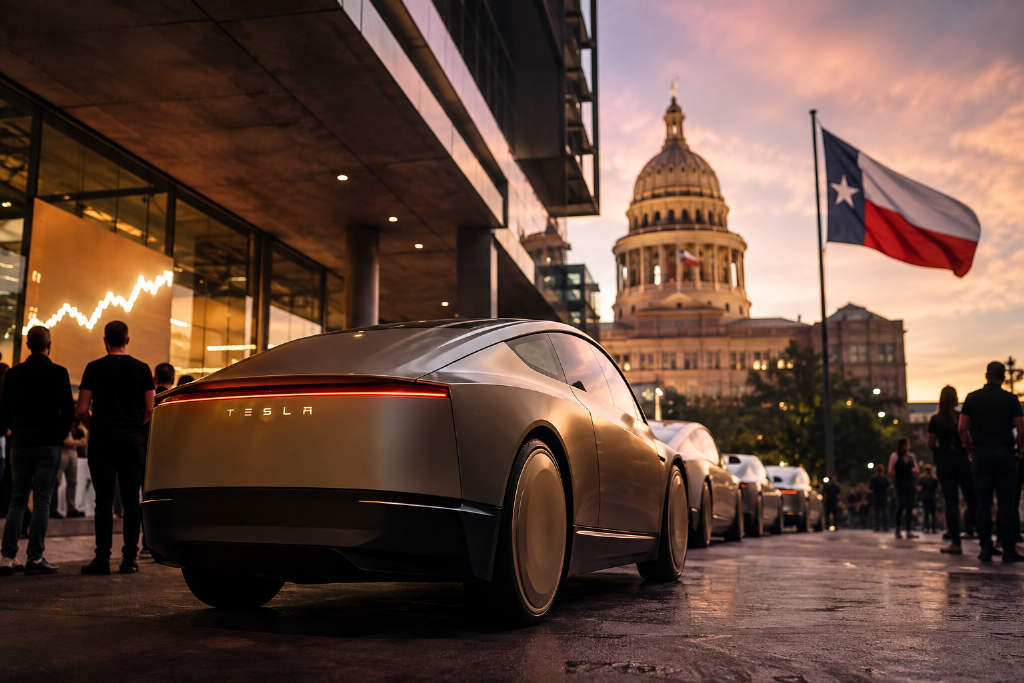
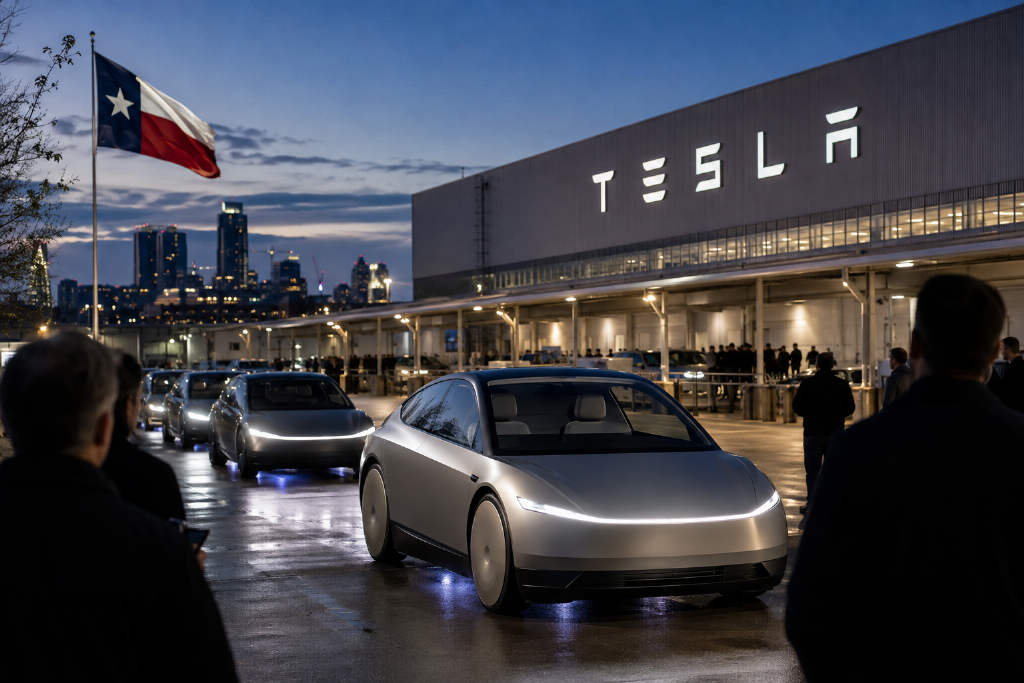
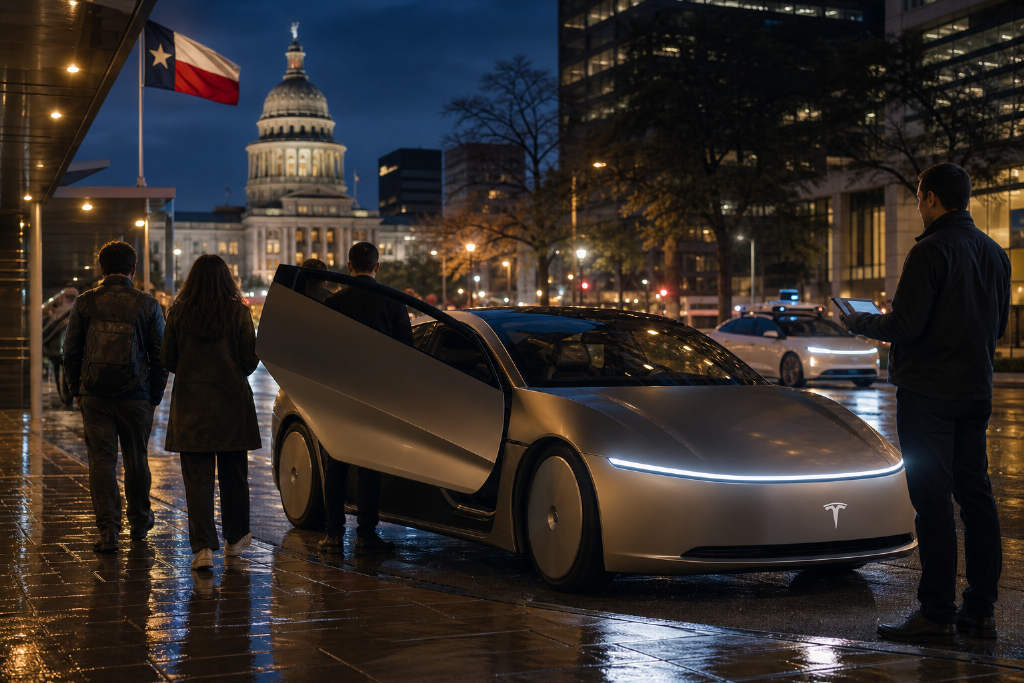
Tesla2026-09-04 04:34:46Tesla Unveils Production Cybercab in Austin: No Steering Wheel, Autonomous OnlyOn September 3, Tesla held a Cybercab launch event in Austin, Texas, unveiling the production version of its autonomous vehicle. The Cybercab has no steering wheel, pedals, or traditional rearview mirrors, features a two-seat layout, and is fully controlled by Tesla's self-driving software. First shown as a concept at the "We, Robot" event in October 2024, the first production unit rolled off the line at Tesla's Gigafactory Texas in February 2026, with mass production beginning in April 2026. The vehicle relies on eight high-definition cameras and an end-to-end neural network, without lidar or high-definition maps. Tesla says its global fleet had accumulated over 22.5 billion kilometers of assisted driving as of September 2026. Efficiency: 9.8 km/kWh, 10.2 kWh/100 km, 673 km range, 1,412 kg curb weight, 47.6 kWh battery, 163 kW motor. Robotaxi operating cost is estimated at $0.20 per mile (0.84 yuan/km). The Cybercab will be displayed in Beijing and Shanghai from mid-September, but Tesla says no sales or commercial robotaxi operations in China are planned.920
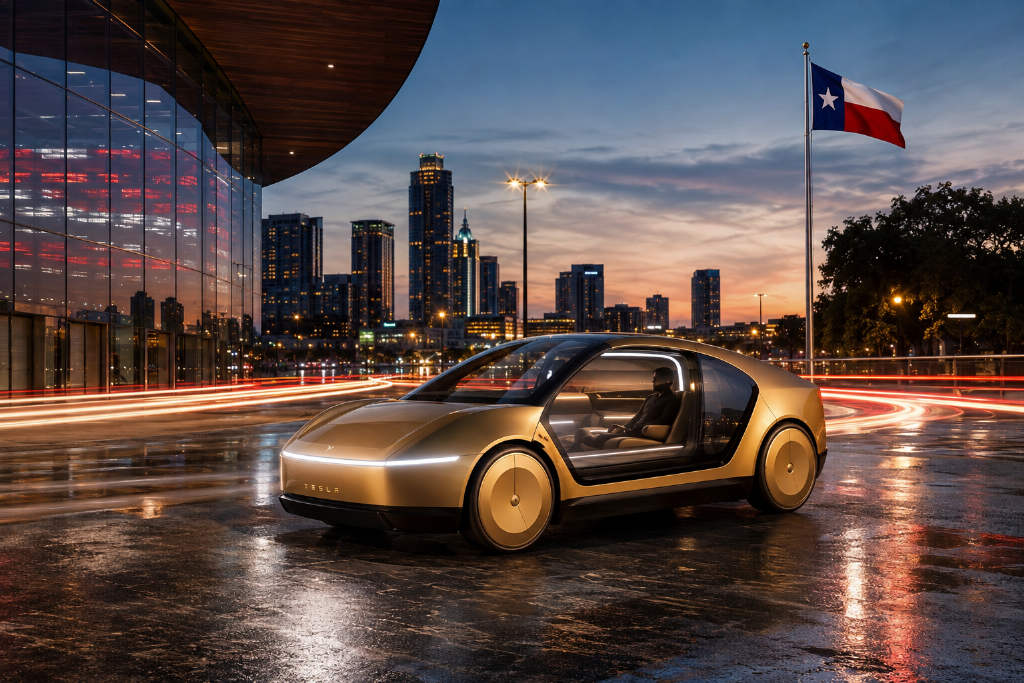
Tesla2026-09-04 00:36:34Tesla launches Cybercab robotaxi in Austin as TSLA jumps more than 5%Tesla formally introduced its Cybercab robotaxi at an invitation-only event held on Sept. 3, 2026, at ACL Live in Austin, Texas, and opened limited public service in the city a day later. The gold-colored two-seat vehicle was built specifically for fully autonomous driving and removes both the steering wheel and pedals, making it Tesla’s first purpose-built self-driving passenger car rather than a conventional electric vehicle adapted for autonomy. According to the report, invited guests were the first passengers to ride in a fully driverless Cybercab. Tesla described the vehicle as both "the safest car on the road" and a "super comfortable mobile lounge," with an interior centered on a 22-inch touchscreen for entertainment, gaming and productivity. The company also highlighted planned Starlink V5 connectivity, automatic doors, self-tightening seat belts, wireless inductive charging, and an in-cabin camera to check cleanliness and forgotten items. The report said Tesla has registered about 45 Cybercab vehicles in Texas, with operations currently limited to a defined area in Austin. Tesla’s Robotaxi service had already been running since 2025 using Model Y vehicles and has expanded to Dallas, Houston and several cities in Florida. The article added that more than 200 unsupervised vehicles are now in service and have logged hundreds of thousands of miles. Tesla shares, trading under TSLA, rose more than 5% following the launch event.980
Tesla2026-09-04 01:01:14Tesla unveils Cybercab in Texas with 45 registered units, trailing WaymoTesla officially introduced its Cybercab at a closed-door event in Austin, Texas, on Sept. 3, taking a notably low-profile approach as the launch was not livestreamed. The Cybercab is a two-seat battery-electric autonomous vehicle built without a steering wheel, pedals, or side mirrors, and it relies on eight cameras and an AI system for self-driving functions. The company has registered 45 Cybercab vehicles in Texas, though it remains unclear how many of them will be deployed for commercial service right away. Across Texas, Tesla currently has 420 autonomous vehicles registered, compared with 988 for Waymo. Data cited from Robotaxi Tracker shows Tesla is operating about 256 driverless vehicles without safety operators across six cities, while Waymo runs about 4,000 such vehicles in 14 cities. Tesla has not announced when the Cybercab will be sold to consumers. It has, however, opened registrations for fleet purchases and related infrastructure partnership interest. The launch is seen as an important step in Elon Musk’s push to shift Tesla from an electric vehicle maker toward an autonomous driving and robotics company, though expansion pace, regulatory approvals, and real-world operating capacity remain key hurdles.910
Tesla2026-09-03 15:58:19Tesla climbs more than 7% intraday ahead of Cybercab event in AustinTesla shares rose more than 7% intraday on Sept. 3, marking the stock’s biggest intraday gain since June, according to market data from BIT(bit.com). The move came ahead of Tesla’s Cybercab launch event, scheduled for later that night local time in Austin, Texas. BlockBeats cited a new Morgan Stanley note saying the event carries more weight than a typical product unveiling and could serve as a key test of Tesla’s progress in commercializing autonomous driving. The bank said the pace of scaling an unsupervised Robotaxi fleet will be a direct driver of Tesla’s stock performance for the rest of the year. Morgan Stanley also pointed to data from the Texas Department of Motor Vehicles showing Tesla has recently registered about 45 Cybercab vehicles for commercial operations. That registration activity underpins the bank’s constructive view going into the event. In its scenario analysis, Morgan Stanley said the stock could react positively if Tesla deploys 25 to 50 Cybercabs in Texas for paid passenger service within days to weeks after the launch. If the event ends up being limited to a supervised retail-style demonstration without a meaningful unsupervised fleet rollout, the bank expects the shares to come under pressure afterward.990
Tesla2026-09-03 14:49:37Tesla shares rise as Cybercab debut in Austin sharpens focus on robotaxi rolloutTesla shares climbed on Sept. 3, rising as much as 4% intraday, after the company held its Cybercab robotaxi launch event in Austin, Texas. According to Yahoo Finance and other reports cited in the source material, investors treated the event as a key step toward the commercial rollout of self-driving transport. Cybercab is described as Tesla’s first vehicle built purely for autonomous driving: a two-seat car with no steering wheel or pedals, powered by the company’s AI4 onboard computer and paired with its Full Self-Driving, or FSD, software. The model is set to join Tesla’s robotaxi fleet in Austin, which began last year with modified Model Y vehicles. Production started in the first half of 2026 at Gigafactory Texas. Reported specifications include a 48 kWh battery pack, a single 219-horsepower front motor, and an unadjusted range figure of 418 miles. The Sept. 3 event was a product reveal rather than approval from the U.S. National Highway Traffic Safety Administration. Public participation remained limited. Tesla has secured a regulatory quota of about 5,000 robotaxis, though Cybercab’s chief engineer told regulators the company expects to deploy about 2,500 vehicles within a year.910
Tesla2026-08-31 17:35:59Tesla adds Cybercab to Texas robotaxi fleet, targets September launchTesla has added its Cybercab model to its autonomous taxi fleet in Texas and plans to roll out the service officially in September, according to Techub News, citing Crypto Briefing. The brief update points to a potentially sharper competitive dynamic in the self-driving car market as Tesla moves ahead with the Cybercab deployment. It also says the step could challenge existing players, including Waymo. No further operational details, deployment scale, or service parameters were disclosed in the source item. The report frames the move as a new competitive development in the autonomous ride-hailing segment rather than a broader product update, with Texas identified as the location of the fleet expansion and September as the target launch window.870