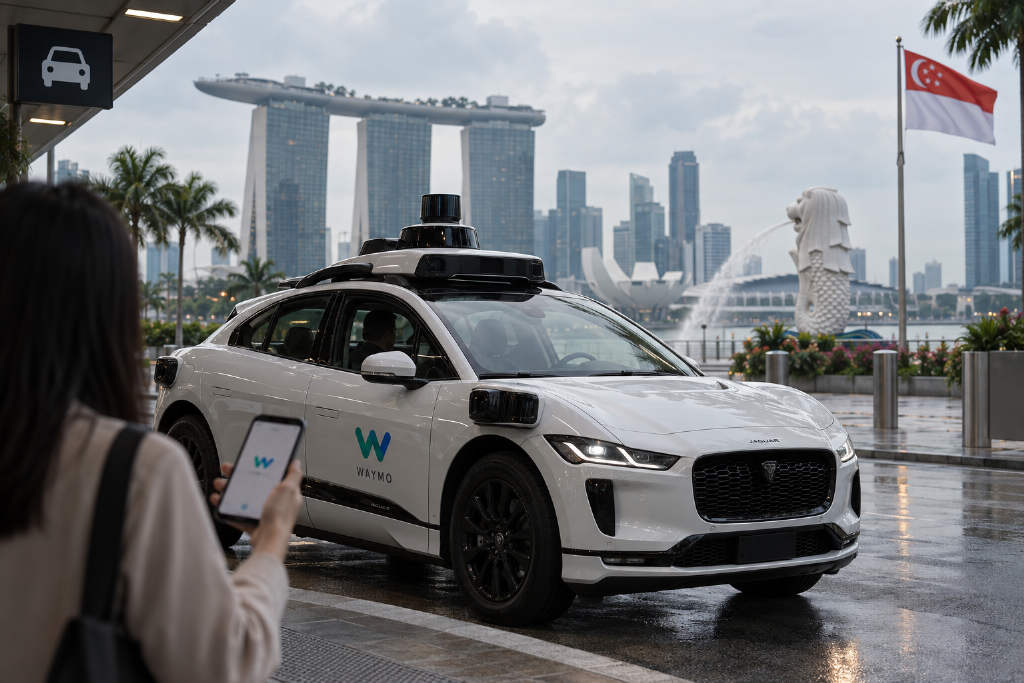
Waymo2026-09-20 07:41:14Waymo targets 2028 launch for autonomous ride-hailing service in SingaporeWaymo said it plans to launch a fully autonomous, all-electric commercial ride-hailing service in Singapore in 2028 through the Waymo app, marking the company’s first move into Southeast Asia. The company said it will work with Singapore’s Ministry of Transport and Land Transport Authority, with the first batch of Jaguar I-PACE vehicles expected to arrive in the coming months to establish local operations. A preparation phase is scheduled for 2027, during which trained autonomous vehicle specialists will manually drive the cars to help the system learn local road geometry, intersection layouts, and monsoon weather conditions while collecting data for regulatory approval. Waymo said it has logged more than 20 million fully autonomous trips globally and more than 300 million kilometers on public roads, adding that injury-causing crashes in its U.S. operating cities were 94% lower than those involving human drivers. Singapore’s Transport Minister and Second Minister for Finance Chee Hong Tat welcomed the company’s entry, saying it would bring world-class technology and operating experience while creating jobs. Singapore currently has only two autonomous vehicle operators, Grab and ComfortDelGro, running 11 and 5 vehicles respectively on three fixed shuttle routes in Punggol.390
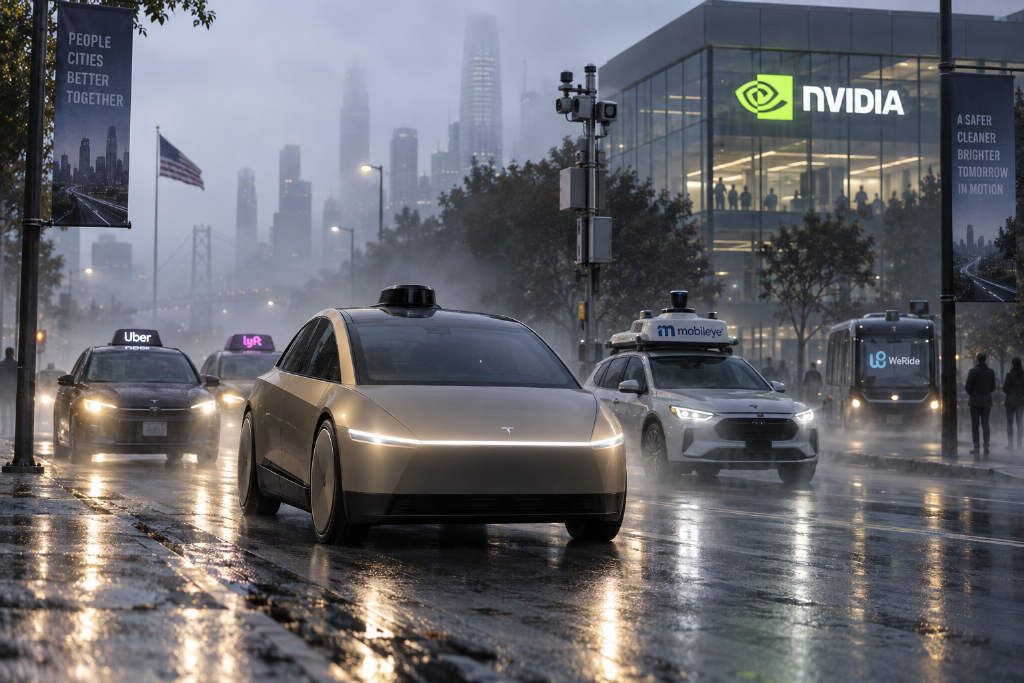
Autonomous Dr2026-09-10 03:44:52Analyst names five U.S. stocks tied to autonomous driving, with Nvidia seen as a key upstream playerABMedia, citing analysis from The Motley Fool, said investors looking beyond Tesla in the autonomous driving trade may want to watch five U.S.-listed names tied to different parts of the ecosystem: Mobileye, Nvidia, Uber, Lyft and WeRide. The report came after Tesla recently unveiled Cybercab and as more than 10 companies globally have moved into autonomous vehicles and robotaxi-related business lines. The analysis breaks the market into several layers, including AI chip suppliers, ADAS providers, fleet operators and demand-matching platforms. Mobileye was highlighted for supplying roughly 30 million vehicles a year with Level 1 and Level 2 driver-assistance chips and software, while Nvidia was described as a central technology supplier through its NVIDIA Drive platform. Uber was framed as a demand aggregator with about 12 autonomous driving partners, Lyft as a potentially attractive acquisition target because of its dispatch network, and WeRide as a company showing overseas expansion, with latest quarterly revenue of $34.1 million and growth of nearly 100% year over year.1070
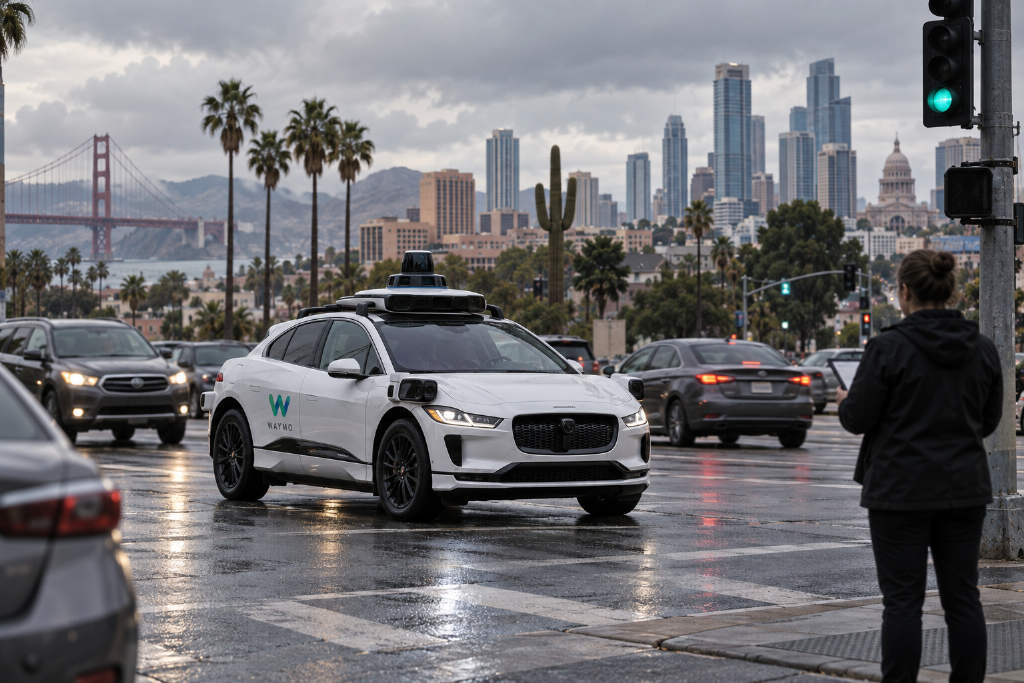
Waymo2026-09-10 03:43:35IIHS says Waymo crash rate was 68% lower than human drivers across four U.S. citiesA July study from the Insurance Institute for Highway Safety found that Waymo’s self-driving vehicles posted a crash rate 68% lower than human drivers across San Francisco, Phoenix, Los Angeles, and Austin. The comparison used 222 billion miles of human driving against 50 million miles logged by Waymo. On an injury-crash basis, Waymo’s rate was 81% lower. The report also stressed that the comparison is far from clean. Researchers said human crashes are often underreported, while Waymo must report even minor incidents to the National Highway Traffic Safety Administration. Operating conditions also differ: Waymo currently runs in a limited number of cities and mostly in favorable weather, while human drivers cover a much broader mix of roads and conditions. IIHS statistics services director Eric Teoh described the findings as encouraging for the future of autonomous vehicles, while warning that crash reporting and data collection systems still need work. The article also pointed to broader public health arguments around road safety, citing World Health Organization figures showing about 1.16 million road deaths globally each year and roughly 40,000 in the United States.840
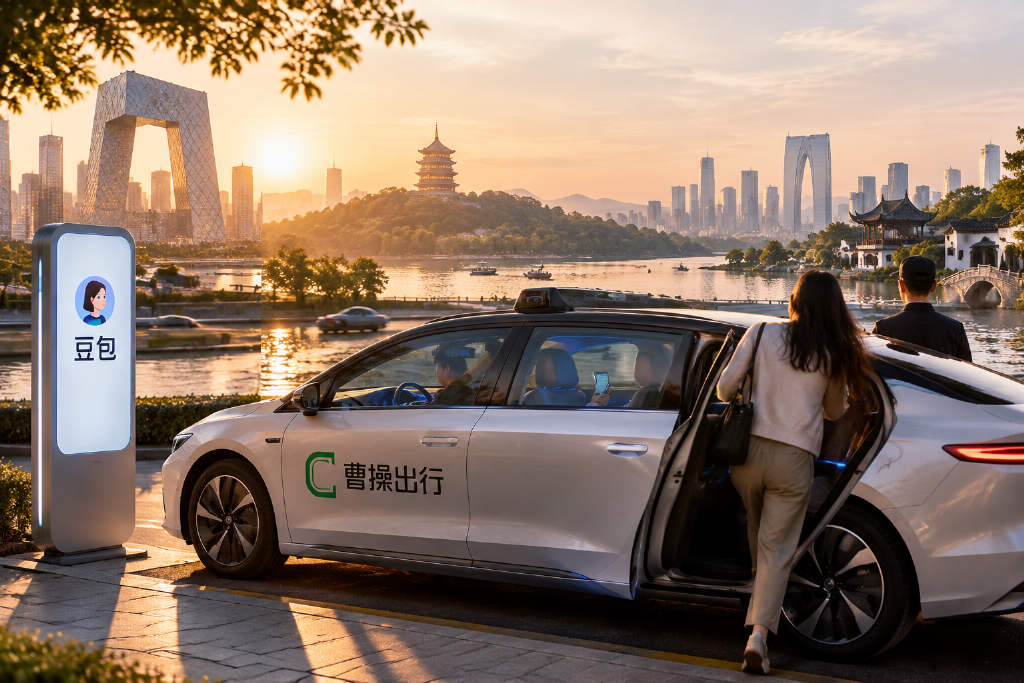
CaoCao Mobili2026-09-09 04:00:18CaoCao Mobility and Doubao roll out AI ride-hailing service in three Chinese citiesCaoCao Mobility said on Sept. 9 that it has launched an AI ride-hailing service with Doubao, with the first rollout set for Beijing, Hangzhou, and Suzhou. The company said the partnership will not stop at the initial launch. It plans to deepen cooperation with Doubao and add more AI-driven mobility features, including intelligent vehicle control. CaoCao Mobility also said it aims to replicate the experience from this launch in more cities over time. In addition, the company said it will explore Robotaxi service capabilities as part of the broader collaboration. The announcement was reported by ChainCatcher in a 7x24 news update.850
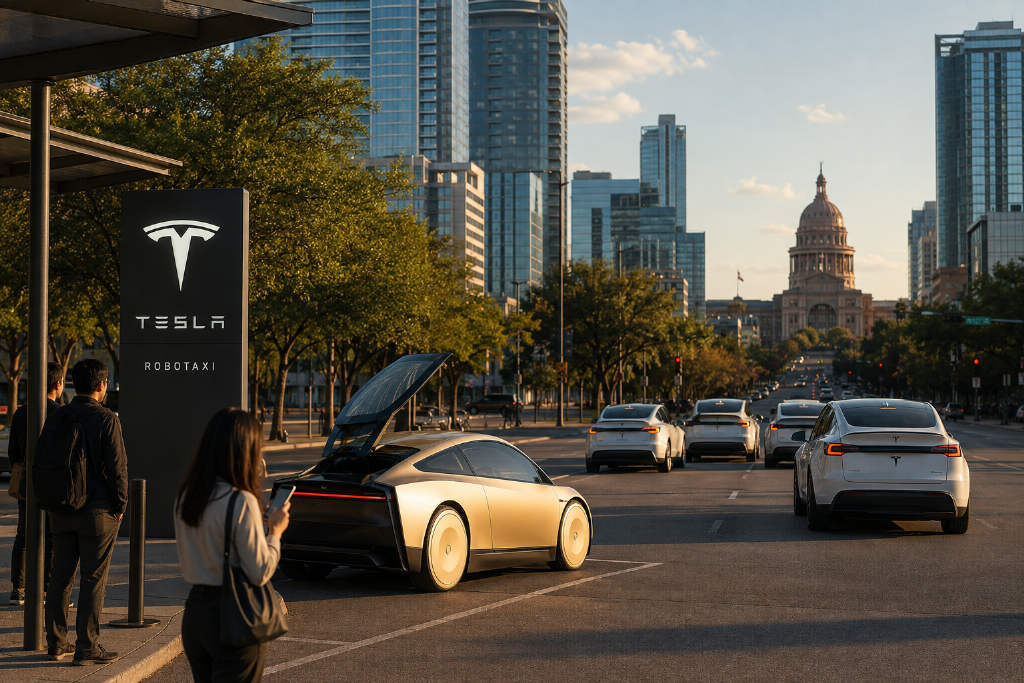
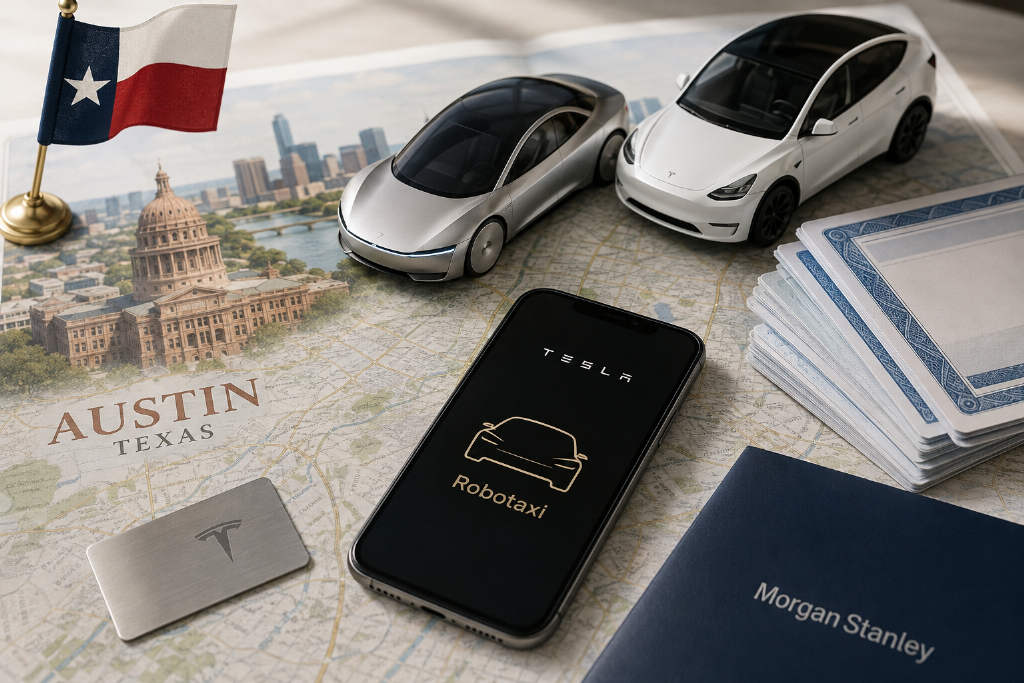
Tesla2026-09-07 09:03:51Tesla opens Cybercab service in Austin as Morgan Stanley keeps a Neutral ratingTesla has opened public access to its Cybercab robotaxi service in Austin, according to a Sept. 4 note from Morgan Stanley, which kept its Neutral rating on the company and maintained a $400 price target. The bank said riders can use Tesla’s Robotaxi app to choose either the two-seat Cybercab or a four-seat Model Y, though the exact size of the commercial rollout has not been disclosed. The report also highlighted growing signs of expansion. Texas DMV data showed that Tesla had registered 420 autonomous vehicles in the state as of Sept. 3, including 45 Cybercabs and 375 Robotaxi-configured Model Ys. Separately, Tesla’s vice president of Autopilot and AI, Ashok Elluswamy, said unsupervised driving mileage had surpassed 1 million miles, up sharply from 380,000 miles disclosed on the company’s second-quarter 2026 earnings call. Morgan Stanley argued that Tesla’s stock outperformance on Sept. 3 already reflected market recognition of progress in Robotaxi, and said the next leg higher would depend on public data showing sustained fleet expansion. The report compared Tesla with Waymo on scale and cost, and broke down the bank’s $400 target price across five business segments, including autos, network services, robotaxi, energy and humanoid robotics.1010
Tesla2026-09-07 08:33:01Morgan Stanley says Tesla’s Cybercab launch in Austin puts Robotaxi into live validation phaseMorgan Stanley said in a Sept. 4 research note that Tesla’s Cybercab has begun offering driverless rides to the public in Austin, marking what the bank described as an operational validation stage for Tesla’s Robotaxi business. Riders can use the Tesla Robotaxi app to choose either the two-seat Cybercab or a four-seat Model Y. The bank kept its Neutral rating and $400 price target, saying the stock’s outperformance on Sept. 3 already reflected growing recognition of Tesla’s progress in Robotaxi. Texas DMV data cited in the note showed Tesla had registered 420 autonomous vehicles in the state as of Sept. 3, including 45 Cybercabs and 375 Robotaxi-configured Model Ys. Morgan Stanley said the Cybercab registration count rose from 7 to 45 within days before the launch event. Tesla’s Autopilot and AI Vice President Ashok Elluswamy also said unsupervised driving mileage had surpassed 1 million miles, up from 380,000 miles disclosed on the company’s second-quarter 2026 earnings call. The note said the next leg higher for Tesla would depend on public data showing sustained fleet expansion. It also compared Tesla with Waymo on deployment scale and cost, while breaking down the bank’s $400 valuation framework across five business lines, including core auto, network services, Robotaxi, energy, and humanoid robotics.490
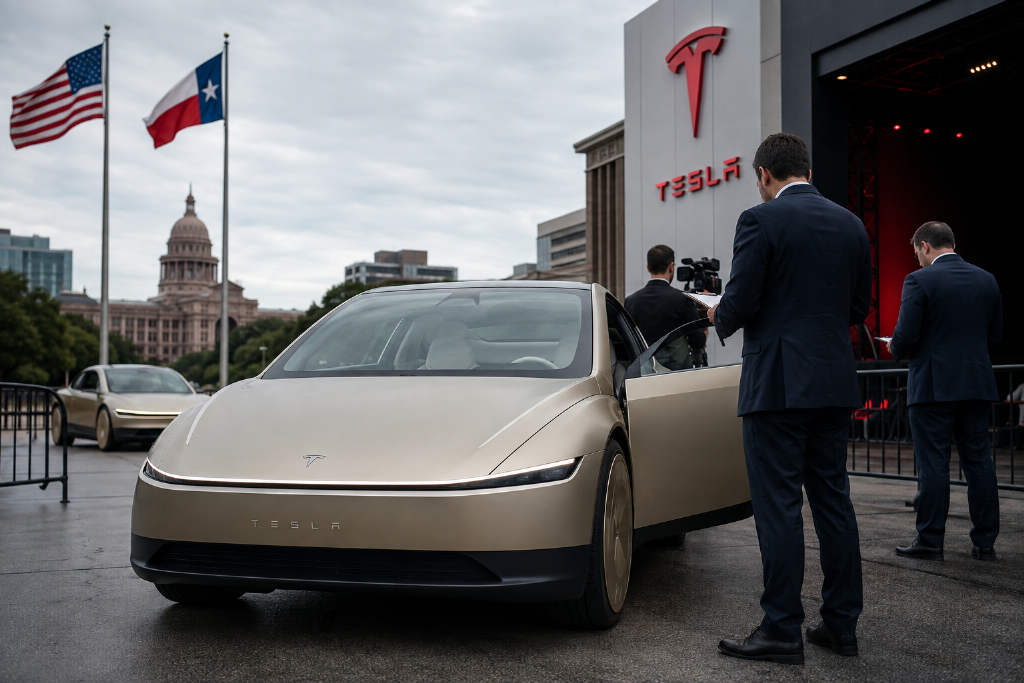
Tesla2026-09-05 08:03:13Tesla Cybercab faces NHTSA audit on launch day as only 45 vehicles are registered for driverless operation in TexasTesla shares fell 5.92% on Sept. 4 to close at $354.08, wiping out roughly $88 billion in market value and erasing the previous day’s gain tied to its Cybercab launch event. On the same day as the Sept. 3 commercialization event in Austin, Texas, the U.S. National Highway Traffic Safety Administration opened audit case AQ26002 to examine how Tesla self-certified Cybercab as compliant with applicable Federal Motor Vehicle Safety Standards, even though the vehicle has no permanently mounted traditional manual controls such as a steering wheel, brake pedal, accelerator pedal, or mirrors. The case, triggered by public information, is estimated to involve 1,000 vehicles. For now, the review does not amount to an allegation of wrongdoing, does not require a recall, and does not halt service in Austin. The larger issue is whether Tesla can avoid the exemption route that would cap deployment at 2,500 vehicles a year. As of Sept. 2, only 45 Cybercabs were registered in Texas for unmanned operation.1040
Tesla2026-09-05 03:14:50Tesla Faces Cybercab Regulatory Hurdle as NHTSA Probes 1,000 Vehicles, Stock Sinks 5.92%Tesla's stock tumbled 5.92% on Friday, wiping out about $88 billion in market cap, as the company's Cybercab ambitions hit a regulatory and market reality check. The NHTSA has launched a review of some 1,000 Cybercabs, focusing on Tesla's compliance process for omitting traditional features like steering wheels and pedals. Meanwhile, Wall Street analysts panned Cybercab's commercialization event as lacking details, though long-term forecasts remain bullish.1270