Sonic

US Treasury
2026-08-26 02:41:00

US Treasury launches quantum-readiness group as Grayscale lists Zcash ETF and BlackRock lowers in-kind Bitcoin ETF threshold

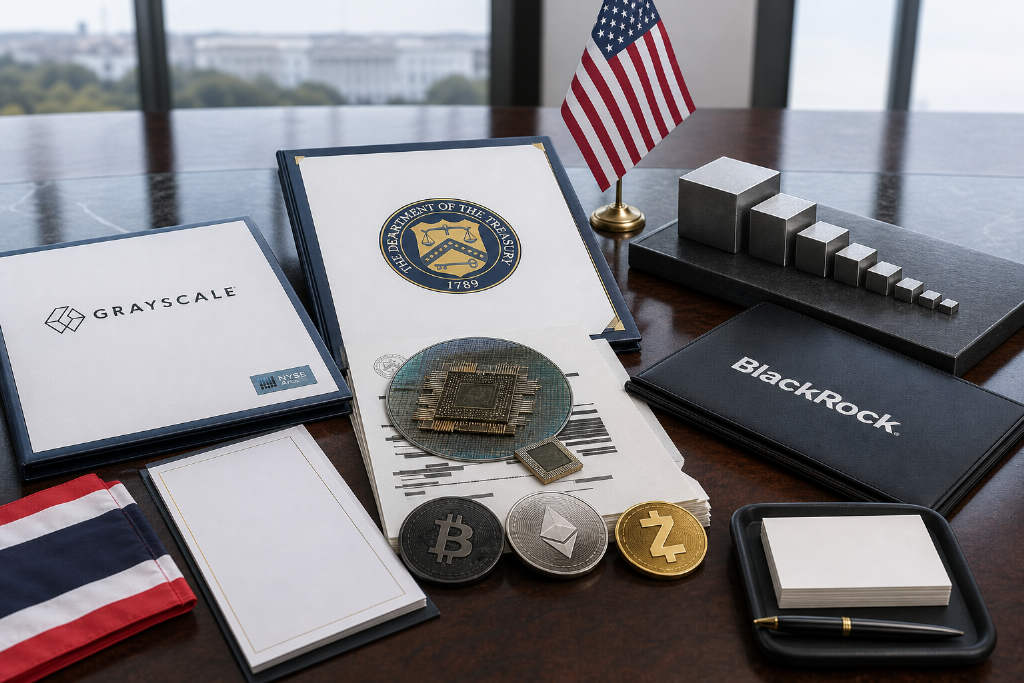
A dense stretch of crypto and adjacent market developments unfolded between Aug. 25 and Aug. 26. The US Treasury said it is launching a Quantum Readiness Working Group, a public-private effort meant to help the financial sector migrate toward quantum-resistant technology in an orderly and operationally resilient way. One of its three workstreams is focused on digital assets and emerging technology risks. In Thailand, the securities regulator opened a public consultation on draft rules for crypto ETFs, with Bitcoin and Ether set as the only eligible assets at the initial stage and comments accepted through Sept. 20. Product launches and market-structure changes also stood out. Grayscale converted its Zcash Trust into the Zcash ETF, ticker ZCSH, and listed it on NYSE Arca, calling it the first ETF to provide direct Zcash exposure. The fund charges a 2.5% fee, and Grayscale said the revenue generated from that fee will flow back to the Zcash ecosystem. BlackRock, meanwhile, cut the minimum trade size for investors using in-kind Bitcoin subscriptions to create ETF shares from $25 million to $1 million in July. Robbie Mitchnick, BlackRock’s head of digital assets, said IBIT has now processed more than $5 billion of those conversions. Elsewhere, Kraken said some customer accounts were temporarily inaccessible after receiving tiny token transfers tied to a wallet associated with sanctioned rival HTX, while LayerZero outlined plans for an institutional onchain exchange called ATLAS. Several funding rounds, whale-position updates, tokenized-equity products, and ETF flow data rounded out the latest batch of market-moving items.
360
US Treasury launches quantum-readiness group as Grayscale lists Zcash ETF and BlackRock lowers in-kind Bitcoin ETF threshold
Hivemind Digi
2026-08-25 13:21:54

Hivemind Digital Group raises $17 million in strategic funding

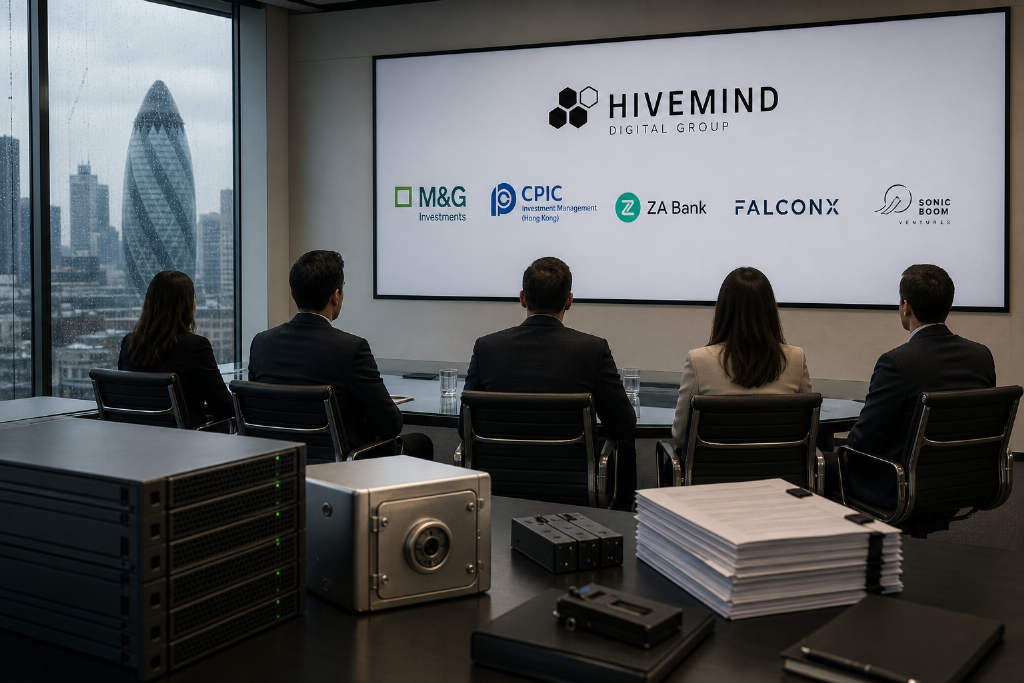
Digital asset investment firm Hivemind Digital Group has raised $17 million in strategic funding, according to PR Newswire. The round was led by M&G Investments, a UK asset manager. Other participants included CPIC Investment Management (Hong Kong), ZA Bank, FalconX and Sonic Boom Ventures. The company said the capital will be used to build asset tokenization infrastructure and to explore blockchain applications in the management, issuance and trading of traditional financial assets.

110
Hivemind Digital Group raises $17 million in strategic funding
Crypto Wallet
2026-08-25 08:00:04

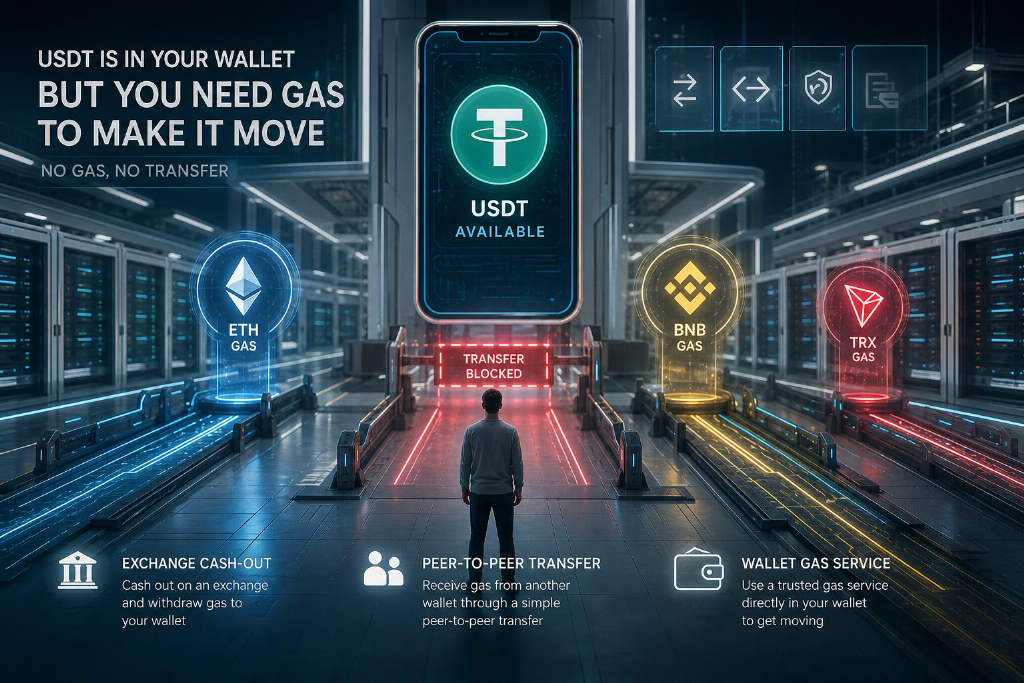
Why USDT in a Wallet Still May Not Be Transferable: The Gas Fee Problem

A Foresight explainer breaks down a common point of confusion for first-time crypto wallet users: holding USDT does not mean a transfer can be sent if the wallet lacks the native token required to pay network fees. The article says blockchain transactions, token swaps, dApp approvals and smart contract interactions all consume network resources, and those resources are paid for with gas on the underlying chain rather than with the token being moved. That is why an ERC-20 USDT transfer usually needs ETH, a TRC-20 transfer usually needs TRX, and a BEP-20 transfer usually needs BNB. The piece also outlines several practical issues users should watch for. Gas fees vary with network congestion and with how complex an action is, so a simple transfer and a DEX swap on the same chain can cost very different amounts. If the gas setting is too low, a transaction may remain pending for a long time. If a transaction reaches the chain but fails during execution, the gas used is generally not refunded. Foresight also warns against draining a wallet’s native token balance to zero, since that can leave other assets stuck. For users who do not hold the required native token, the article lists three common solutions: buying a small amount on a centralized exchange and withdrawing it, asking another user to send a small amount for emergency use, or using wallet-integrated gas services such as SafePal’s Gas Station and unified gas balance options.

280
Why USDT in a Wallet Still May Not Be Transferable: The Gas Fee Problem
Sonic Labs
2026-08-24 15:16:47

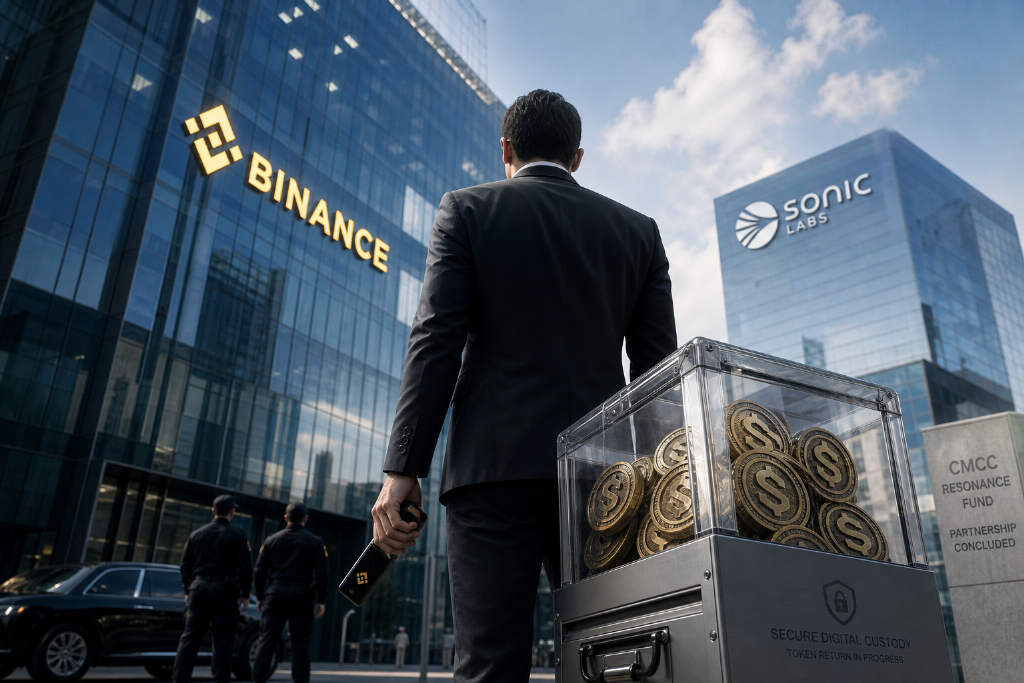
Sonic Labs Says 40.49 Million S Tokens Returned to Company-Controlled Binance Account

Sonic Labs said it has recovered 40,489,729.04 S tokens after its partnership with CMCC Resonance Fund ended, moving the tokens on Aug. 21 to a Binance account it controls. The company said no tokens were sold in the transfer, but acknowledged that the move was disclosed only after it had already been executed. Sonic Labs said future large transfers, exchange transfers and any sales will be announced in advance after internal communication procedures. Foresight News also noted that venture firm CMCC Global launched a $25 million Resonance Fund in September 2025 to accelerate development of the Sonic ecosystem.

320
Sonic Labs Says 40.49 Million S Tokens Returned to Company-Controlled Binance Account
Symbiotic Zhi
2026-08-24 00:30:14

Symbiotic Zhixing bets on an end-to-end brain for biped humanoid robots

Symbiotic Zhixing, a startup founded just two months ago, is building what it describes as an end-to-end integrated sensing-and-control "brain" for biped humanoid robots. The company drew attention with a video showing a humanoid robot driving a go-kart through turns at speed, a demo meant to highlight full-body coordination rather than the slower manipulation tasks often seen in robotics showcases. Founder Ding Pengxiang, born in 1996, said the company believes humanoid robots will ultimately need a unified model that learns the full chain from perception to action, instead of relying on layered architectures that split high-level decision-making from low-level motion control. He argues layered systems introduce information bottlenecks, cascade errors, and limited scaling potential. The team, made up of doctoral students including several post-2000 members, says it has won two Best Paper awards in embodied intelligence, had one work selected as a Best Paper Candidate, and built China’s first embodied foundation model project to surpass 2,000 GitHub stars. Ding said the industry still faces major constraints in data, control, and force modeling, but sees a window of opportunity as biped robot data infrastructure begins to take shape after NVIDIA Sonic was open-sourced in April 2026.

460
Symbiotic Zhixing bets on an end-to-end brain for biped humanoid robots
Prediction Ma
2026-08-11 08:00:46

Trepa and Fireplace shut down as prediction markets tilt toward a Kalshi-Polymarket duopoly

Two prediction-market projects with very different strategies announced shutdowns on Aug. 10, highlighting how hard it has become for smaller teams to survive as volume and attention cluster around Kalshi and Polymarket. Trepa, a Solana-based app built around numerical accuracy rather than binary outcomes, said its final playable market will end on Aug. 12, 2026. The app will stay online until Sept. 30 so users can withdraw funds, then go offline. Fireplace, a professional trading terminal built on top of Polymarket, said trading will stop on Aug. 15 and the site will close at 23:59 UTC on Sept. 30. Trepa’s founders said they had bet that users would pay for precision, not just for picking the right direction. Its post-mortem pointed to several problems: higher cognitive load than binary markets, a concurrency model that required many users to participate in the same narrow time window, and an addressable audience far smaller than expected. Fireplace gave fewer details, but market feedback repeatedly focused on its roughly 1% trading fee, which some users said was too expensive compared with trading directly on Polymarket. Their exits come as the sector becomes more concentrated. According to the source article, Kalshi and Polymarket were far ahead of all other rivals in trading volume as of June 21, with Kalshi’s growth rate already outpacing Polymarket’s. The article argues that once giants control liquidity and order flow, new mechanisms and third-party interfaces face a much narrower path to becoming sustainable businesses.

1100
Trepa and Fireplace shut down as prediction markets tilt toward a Kalshi-Polymarket duopoly
Sonic Labs
2026-08-07 03:03:43

Sonic Labs CEO says DeFi Summer will not return, puts token S behind revenue-first product plans

Sonic Labs CEO Matt Visser used his 50th day in the role to publish a long public letter that rejects the idea of a return to "DeFi Summer" and resets the company around revenue. He argued that crypto has failed to deliver on its original promise to transform financial services, while market narratives that once supported the sector have weakened sharply. As one example, he pointed to Aave’s proposal last week to shut down its Sonic deployment, saying deposits on Aave tied to Sonic had fallen to about $7.6 million and were generating less than $5,000 in quarterly revenue for the protocol, not enough to cover maintenance costs. Visser said Sonic is now pushing four focused product tracks: payments and foreign exchange, AI agent infrastructure, perpetuals and real-world assets, and prediction markets. He added that each initiative will have a named owner, milestones, and clear stop conditions disclosed in Q4. Across all four, revenue is the main operating metric. On token design, Visser said S comes at the end of the sequence, not the beginning. Buybacks, burns, fee sharing, and flywheel structures are easy to announce, he wrote, but without real revenue they amount to moving treasury funds around and dressing that up as value accrual. His message was blunt: build products first, generate revenue second, and only then decide how value should be routed to token holders.

420
Sonic Labs CEO says DeFi Summer will not return, puts token S behind revenue-first product plans
Aave
2026-08-06 03:15:23

What remains for smaller blockchains after Aave pulls their lending markets

Aave’s decision to shut down lending markets on six blockchains has reopened a basic question for smaller chains: what survives once lending disappears. In the source article, author Vaidik Mandloi argues that a lending protocol is not an isolated app but the base layer that keeps a chain’s broader financial stack working. Oracle feeds, DEX liquidity, stablecoin support and liquidations all depend on enough activity and revenue to justify their ongoing costs. On the six chains Aave is leaving, quarterly revenue per chain was below $5,000, while deposits had already fallen 95%, making that economic case hard to sustain. The article points to Harmony and Fantom as earlier examples. After major bridge failures, both networks saw stablecoins depeg, oracle systems break down and credit markets fail to recover. It also revisits Sonic, Fantom’s reboot attempt, where incentives, token airdrops and market-making support briefly boosted TVL but did not create lasting borrowing demand. By contrast, DeFi lending as a whole is still growing fast, according to the article, but that growth is concentrating on Ethereum and a small number of larger networks such as Base and Arbitrum. The conclusion is not that on-chain credit is shrinking, but that smaller chains are finding it increasingly difficult to support the fixed costs required to keep a lending market alive.

1010
What remains for smaller blockchains after Aave pulls their lending markets