TSV

Samsung Elect
2026-09-22 06:50:51

Samsung weighs 4 nm foundry expansion as HBM4 base chip demand rises

Samsung Electronics is reviewing an expansion of its 4 nm foundry capacity as demand for HBM4 base chips increases, according to a Sept. 21 report by Money Today cited by ChainCatcher. The company is pushing ahead with advanced-process capacity growth as the HBM market expands. Samsung’s HBM4 combines a 10 nm-class sixth-generation (1c) DRAM core die with a 4 nm logic base die that handles high-speed data exchange with GPUs and other AI accelerators. Unlike SK hynix, which uses TSMC’s 12 nm process for its HBM4 base chip, Samsung is using its own 4 nm node. The report said Samsung’s relevant production line is already running at full capacity and has taken orders tied to Nvidia Groq 3 LPUs. Samsung has also recently raised prices for new 4 nm orders and HBM4 base chips. The company expects third-quarter HBM4 revenue to rise by more than three times from the previous quarter, with HBM4 accounting for well above 60% of HBM revenue in the second half. It is also evaluating a new 2 nm line for HBM5.


70
Samsung weighs 4 nm foundry expansion as HBM4 base chip demand rises
Acer
2026-09-21 04:35:09

Acer chairman says consumer DRAM is not in short supply, sees PC prices peaking in H2 2027

Acer Chairman Jason Chen said the recent wave of bullish memory pricing guidance from Samsung, SK Hynix, and Micron should not be read as proof of a broad supply shortage. Speaking at the "Principled Management and AI International Forum" hosted by Global Views and Commonwealth Publishing Group, Chen argued that public comments from the three major memory makers function more like market signaling under antitrust constraints than a reflection of actual conditions across the sector. Chen said Chinese memory producers, including ChangXin Memory Technologies (CXMT), hold substantial consumer DRAM capacity and continue to ship at aggressive prices, leaving no real shortage in mainstream products. In his view, supply is ample in segments such as DDR4, while contract pricing has become highly fragmented. He also drew a clear distinction between consumer DRAM and high-bandwidth memory, or HBM, saying China is still unlikely to threaten the HBM market in the near term. On end products, Chen said Acer is building inventory in lower-cost components where possible, but still expects price pressure on finished devices to continue. He estimated fourth-quarter price increases across product lines at 5% to 20%, and said PC retail prices may not stop rising until the second half of 2027. Even then, he said, an outright decline in prices remains uncertain.

60
Acer chairman says consumer DRAM is not in short supply, sees PC prices peaking in H2 2027
SEC
2026-09-21 03:03:50

SEC tokenized securities relief draws scrutiny as Glider co-founder says scope is far narrower than markets assumed

The U.S. Securities and Exchange Commission’s Sept. 18 relief document on tokenized securities was quickly read by the market as a green light for onchain equities, helping lift sentiment across crypto and fueling bets that names tied to tokenization infrastructure could benefit. Brian Huang, co-founder of DeFi protocol Glider, argued in a Sept. 22 post on X that the market reaction ran ahead of what the 60-page document actually permits. After reading the filing in full, Huang said the exemption is tightly limited to permissioned participants, requires tokenized National Market System stocks to be registered with the SEC, and does not cover the permissionless stock-linked tokens already available from platforms including Robinhood, Coinbase, Binance, Ondo and xStocks. He also said the framework centers on automated market maker venues rather than central limit order book models such as Hyperliquid, even though the SEC itself acknowledges best-execution concerns under AMM-based trading. Huang described the proposal as lacking clear market demand and argued that no existing institution fully meets the requirements. He pointed to a long compliance checklist, issuer veto power over tokenized listings, equal shareholder-rights requirements, and a trading-volume cap of 0.25% of the prior month’s average daily volume in the underlying NMS stock. He said Glider expects to submit a formal comment letter to the SEC seeking broader exemptive relief.

50
SEC tokenized securities relief draws scrutiny as Glider co-founder says scope is far narrower than markets assumed
SEC
2026-09-20 03:30:58

Goldman Sachs says SEC opens path for tokenized stocks in the U.S., with Coinbase seen as the clearest near-term beneficiary

Goldman Sachs said the U.S. Securities and Exchange Commission has created a compliant path for tokenized stock trading in the United States by granting certain exchanges and liquidity providers a five-year conditional registration exemption. The bank said the Sept. 17 order is the first broad opening for U.S. tokenized equities, but it also argued that the near-term effect should remain limited because the framework comes with tight constraints. According to Goldman’s Sept. 18 report, only venues using automated market maker, or AMM, order books can qualify, while traditional exchanges and most centralized crypto exchanges rely on central limit order books and do not fit the exemption. The order also applies only to natively tokenized shares, excludes derivative-style tokenized stocks, and gives issuers the right to object before trading begins. Goldman added that tokenized securities venues must face limits on ticker count and trading volume, provide shareholder rights and dividends comparable to the underlying stock, use auditable smart contracts deployed on public blockchains, and disclose operating and trading information. Within Goldman’s coverage universe, Coinbase and Robinhood could build tokenized stock businesses in the U.S., but Goldman said Coinbase stands to benefit more directly because its brokerage product already matches many of the exemption’s requirements. The bank also said the direct competitive threat to Nasdaq and the New York Stock Exchange remains limited for now, while broader legislative reform, including the stalled CLARITY Act, remains the bigger long-term variable.

220
Goldman Sachs says SEC opens path for tokenized stocks in the U.S., with Coinbase seen as the clearest near-term beneficiary
Market Analys
2026-09-20 03:00:14

Dolphin Research breaks down why NAND keeps producing more supply and how SanDisk defends high margins

Dolphin Research published a detailed analysis of SanDisk and the NAND flash industry, arguing that the sector’s core problem is structural rather than cyclical in the traditional sense. Even when manufacturers slash wafer starts and cut capital spending, bit supply can still rise because node migration keeps improving output per wafer. Using SanDisk as the main case study, the report shows that the company’s flash bit shipments rose from 38 EB to 101 EB between 2019 and 2025, while ASP per GB fell from $0.206 to $0.073, leaving revenue slightly lower at $7.36 billion versus $7.82 billion six years earlier. The piece also revisits the demand slowdown in 2022 and 2023 across smartphones, PCs, and enterprise SSDs, and argues that NAND’s downturn was driven almost entirely by price rather than volume. It then contrasts NAND with DRAM at the physical and economic level: NAND can keep expanding supply through vertical stacking and lateral scaling, while DRAM relies far more on new fabs because its cell structure limits density gains. That difference, according to the report, explains why DRAM and HBM require much heavier capital investment, while NAND can look more like a cash-generating business if supply discipline holds.

210
Dolphin Research breaks down why NAND keeps producing more supply and how SanDisk defends high margins
Policy Regula
2026-09-20 02:23:08

Bankless co-founder flags altcoin season as Odaily lists eight tokens in focus

Bankless co-founder David Hoffman said on Sept. 18 that the market has already entered altcoin season and that the real move arrived earlier than expected. Odaily followed that call with a long watchlist covering eight tokens: HYPE, LIT, UNI, PUMP, MORPHO, ZEC, NEAR, and VVV. The report ties the renewed attention to several factors already visible in the market, including Bitcoin moving back above $81,000, Ether reclaiming $2,600, and a policy backdrop shaped by recent signals from the U.S. Securities and Exchange Commission. The article runs through each project by sector rather than treating the rally as a single trade. Hyperliquid’s HYPE is framed around record open interest and token buybacks. Lighter’s LIT is presented as a compliance-focused perpetuals platform token with a large community allocation. UNI is linked to tokenized equities, permissioned pools, and renewed fee-switch deflation expectations. PUMP is described as a buyback-driven Solana meme launchpad token, while MORPHO is highlighted for its lending model and ties to Robinhood Chain activity. Odaily also spends significant space on privacy and AI-linked names. ZEC is described as the strongest privacy-token mover of the cycle, NEAR is recast through a privacy feature for perpetual trading, and VVV is positioned around AI privacy infrastructure on Base. The report closes by citing glassnode’s view that altcoin leverage remains below a risk threshold for now.

180
Bankless co-founder flags altcoin season as Odaily lists eight tokens in focus
Policy and Re
2026-09-19 01:00:54

WuBlockchain weekly: Fed hikes 25 bps, CLARITY stalls, CoinEx shuts down

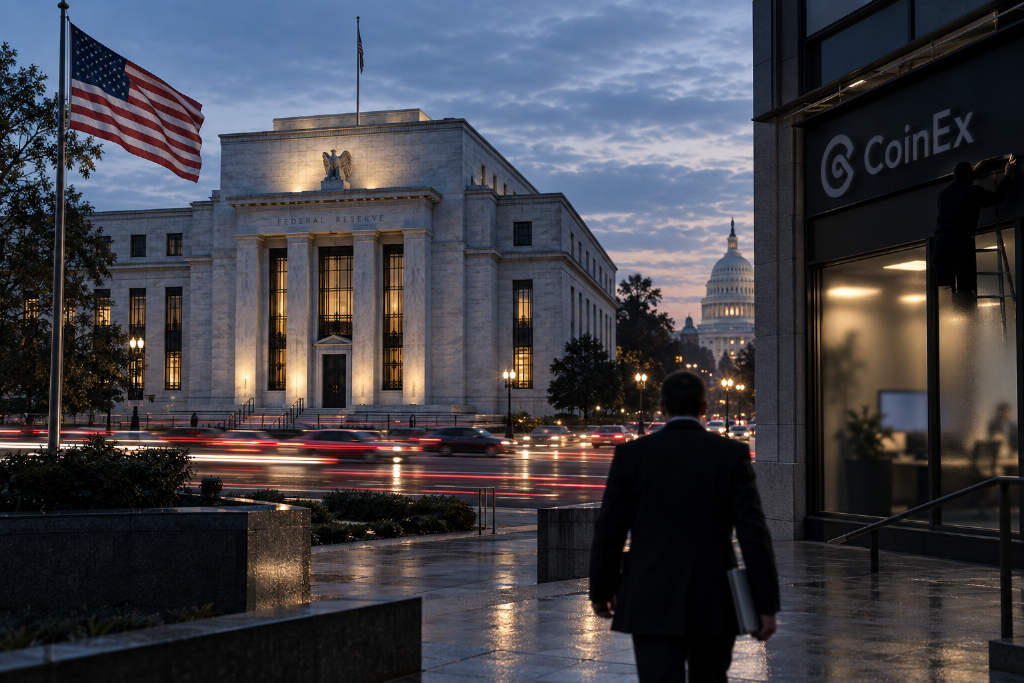
WuBlockchain’s weekly roundup focused on policy, regulation and institutional moves across crypto and traditional finance. The U.S. Federal Reserve raised its target range for the federal funds rate by 25 basis points to 3.75%–4.00% in a unanimous 12-0 vote, while saying inflation remains elevated. In Washington, the CLARITY Act failed to advance in the U.S. Senate after falling short of the 60 votes needed to invoke cloture, with support not even reaching 50. The U.S. Securities and Exchange Commission also approved a temporary conditional “Innovation Exemption” that would let qualified tokenized securities venues pilot trading in tokenized NMS stocks under a limited framework. Outside the U.S., The Wall Street Journal reported that European Central Bank President Christine Lagarde personally intervened in a process that would have given Binance a foothold in the EU through Greece. In the UK, the Financial Conduct Authority said banks will still be allowed to keep payment restrictions on crypto exchanges even after the new cryptoasset regime takes effect in 2027. The week also included major industry developments: CoinEx said it will wind down its exchange after nearly nine years and close withdrawals on Dec. 22; the New York Stock Exchange is said to be working toward 24/7 on-chain trading through an ATS platform; Column launched bank-native stablecoin infrastructure; Circle launched the Arc mainnet and minted 10 billion ARC tokens; and Deutsche Bank said it plans to roll out crypto custody later this year, pending final regulatory approval.

640
WuBlockchain weekly: Fed hikes 25 bps, CLARITY stalls, CoinEx shuts down
SEC
2026-09-19 00:59:18

Tokenized U.S. equity plays mostly rose after SEC unveiled innovation exemption

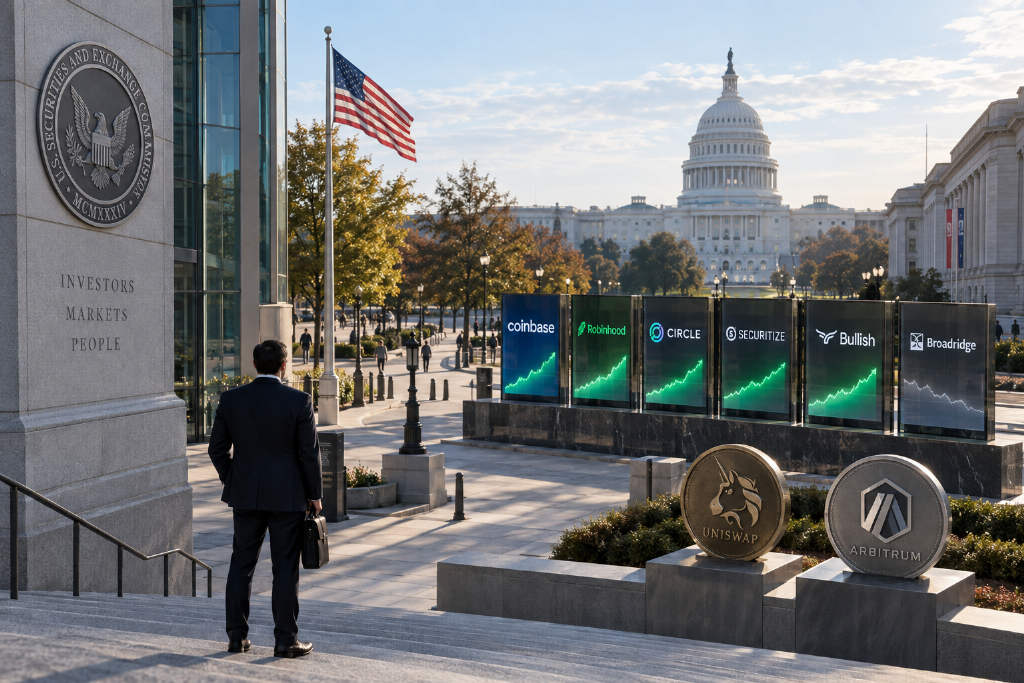
Tokenized U.S. equity-related names mostly moved higher after the U.S. Securities and Exchange Commission introduced its "innovation exemption," according to RootData TradFi market data cited by ChainCatcher. The move was not uniform across segments, with gains concentrated in several crypto assets and select TradFi-linked U.S. stocks while a few names lagged or slipped. On the crypto side, UNI led the group with a 33.8% gain over the past 24 hours. ARB rose 24.96%, while BP (Backpack) added 20.49%. RAY, AERO and JUP were also higher, up 15.72%, 13.63% and 12.74%, respectively. ONDO gained 9.61%. Among TradFi U.S. equities, SECZ (Securitize) rose 14.93% and BLSH (Bullish) climbed 8.82%. CRCL, COIN and HOOD posted gains of 5.77%, 5.75% and 5.16%, while GLXY edged up 0.04%. BR (Broadridge) was the outlier, falling 1.66%. Earlier, the SEC said it would grant temporary, conditional relief to qualifying tokenized securities venues, or TSVs, backing permissioned AMM trading for tokenized U.S. stocks that carry equivalent shareholder rights.

420
Tokenized U.S. equity plays mostly rose after SEC unveiled innovation exemption