Yuan

Blockchain
2026-09-02 09:49:55

IDC: China Blockchain BaaS Market Reaches 2.07 Billion Yuan in 2025, Ant Group Leads

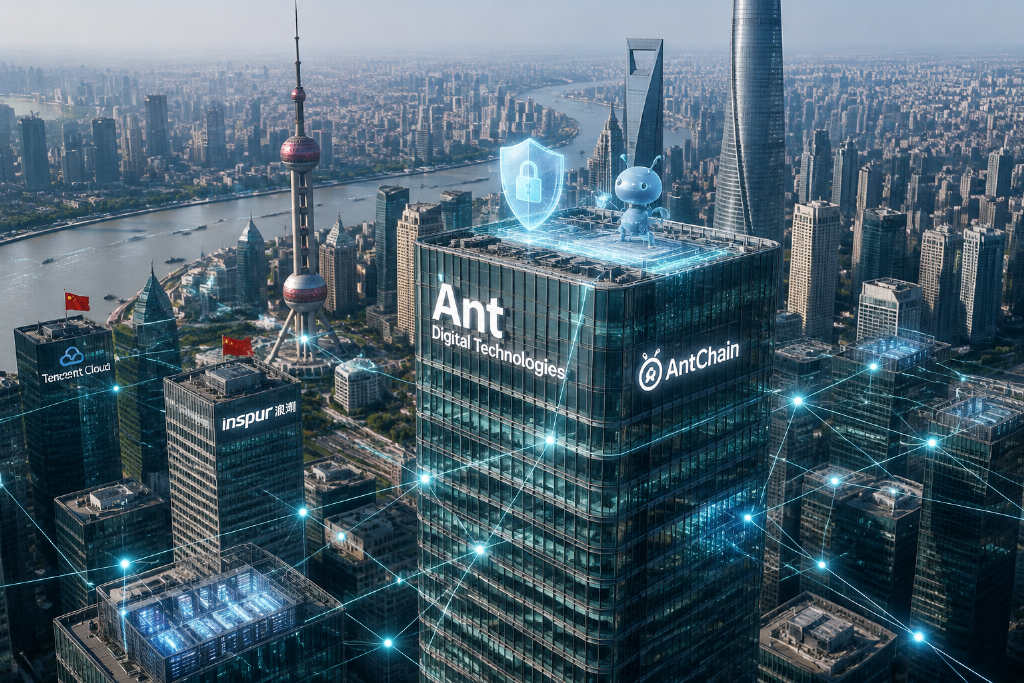
IDC's latest report reveals China's blockchain BaaS market reached 2.07 billion yuan in 2025, up 7.4% YoY. Ant Digital Technologies led with a 32.4% share and 20.6% growth, followed by Tencent Cloud and Inspur. Trusted data spaces and AI large models are new growth drivers. AntChain, Ant's blockchain arm, holds the most patents globally and supports 2 billion accounts with 100,000 TPS.

50
IDC: China Blockchain BaaS Market Reaches 2.07 Billion Yuan in 2025, Ant Group Leads
Bitget
2026-09-02 05:45:08

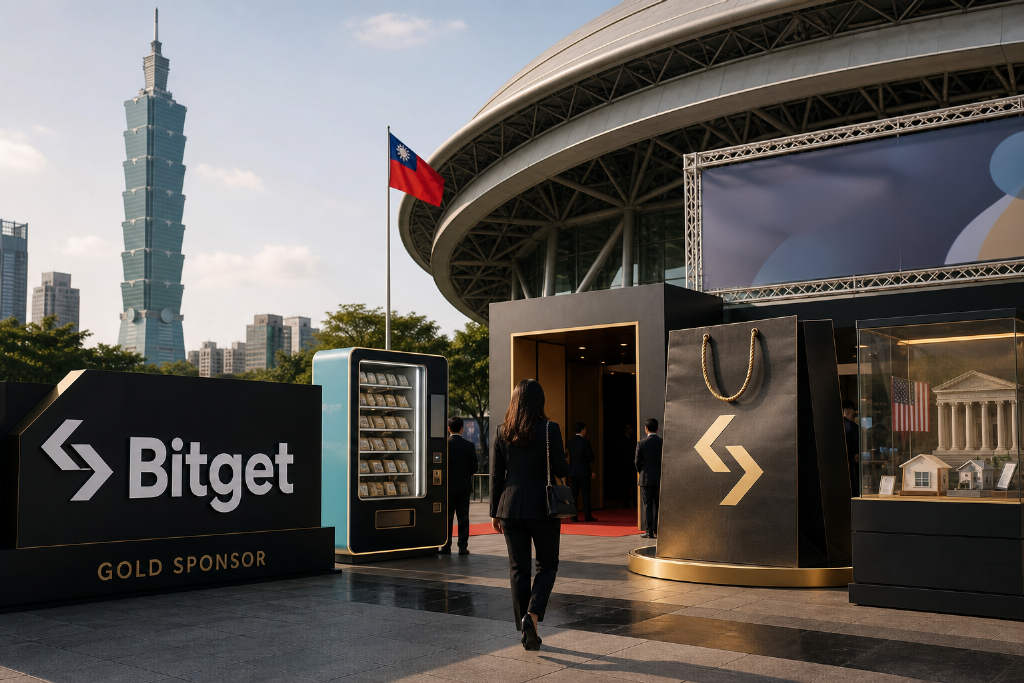
Bitget Joins Future Mode as Gold Sponsor, CEO Gracy Chen to Speak on VASP Rules and RWA

Bitget will attend Future Mode 2026 in Taipei as a Gold Sponsor from Sept. 4 to 6. CEO Gracy Chen will take part in a fireside chat on global regulation, VASP policy and real-world asset trends. The booth will showcase the UEX vision and tokenized US stocks via rToken, with a giant vending machine and limited giveaways. A "Liquidity Supply Station" near the venue will offer 300 servings of egg pancakes and 500 drinks over three days.

90
Bitget Joins Future Mode as Gold Sponsor, CEO Gracy Chen to Speak on VASP Rules and RWA
Zhongguancun
2026-09-02 00:13:33

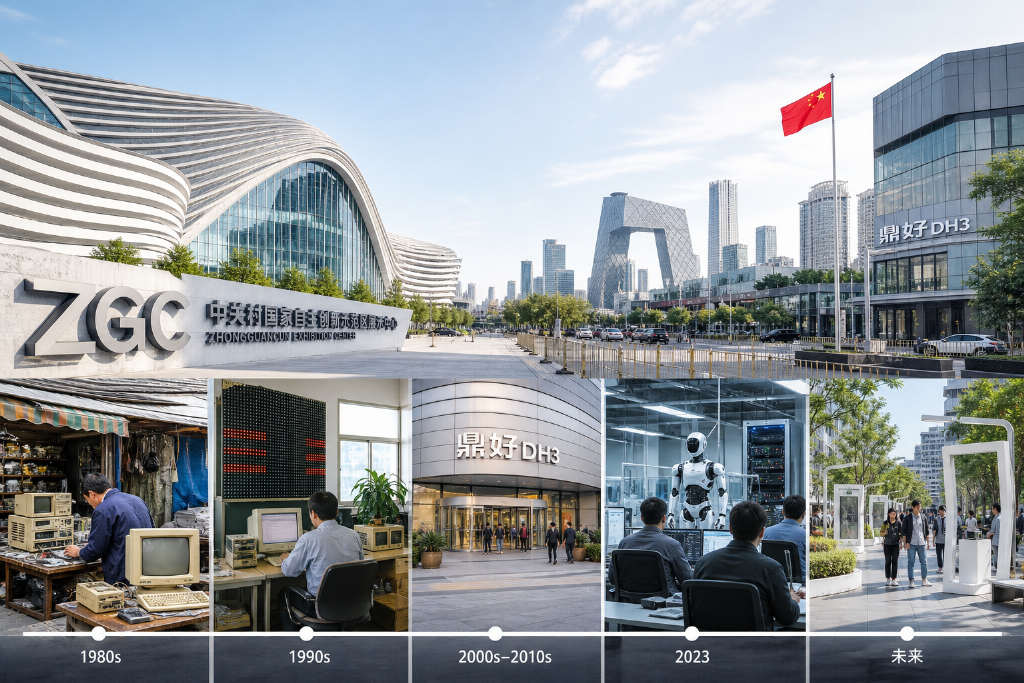
Five Stops in Zhongguancun Trace Haidian’s Nearly 40-Year Tech Industry Handoff

A MarsBit field visit to Haidian and Zhongguancun mapped Beijing’s tech evolution through five locations spanning nearly four decades: the Zhongguancun National Innovation Demonstration Zone Exhibition Center, Dinghao DH3, Leyard Group, Beijing Galaxy General Robot, and the AI Origin Community. Together, the sites connect a timeline that starts with Zhongguancun’s 1988 approval as China’s first state-level high-tech industrial development zone, runs through Leyard’s 1995 founding and Dinghao’s 2003 opening, and reaches newer AI and robotics ventures including Galaxy General, founded in May 2023, and the AI district selected in January as part of Beijing’s first batch of artificial intelligence innovation streets. The report highlights how Haidian’s strength lies in continuity rather than a single technology boom. At the exhibition center, more than 350 Beijing-based research institutions and companies displayed over 560 technologies and products across a 10,000-square-meter space, covering computing chips, quantum computing, commercial aerospace, medical robotics, energy storage and biomedicine. Dinghao’s shift from a once-famous electronics mall into offices for AI, computing power and robotics firms shows how physical space has been repurposed alongside industrial change. The contrast between Leyard, an established LED display company, and Galaxy General, a fast-rising embodied AI and robotics startup, illustrates how different generations of companies continue to grow from the same talent, capital and university ecosystem. At the AI Origin Community near Tsinghua University and Peking University, a housing and startup support program for young founders points to the next stage of Haidian’s effort: keeping talent in place long enough for the next wave of companies to take root.

310
Five Stops in Zhongguancun Trace Haidian’s Nearly 40-Year Tech Industry Handoff
Kling AI
2026-09-01 08:32:25

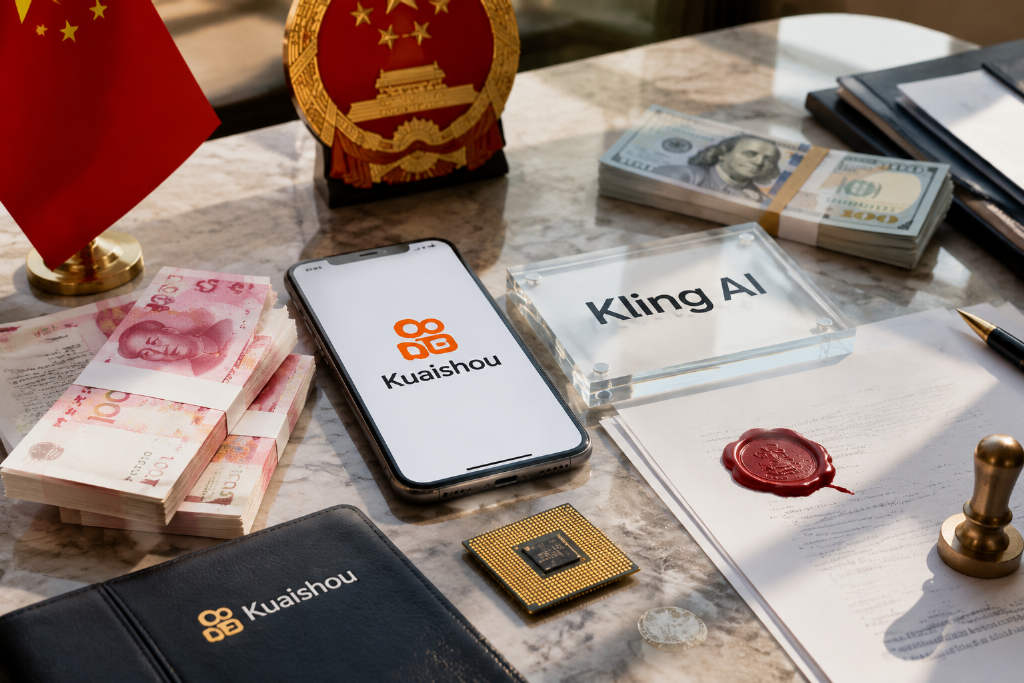
National AI Fund Injects 1.4B Yuan into Kuaishou's Kling AI

Kuaishou's Kling AI has secured an equity investment from a national-level industry fund. According to the official announcement, the National Artificial Intelligence Industry Investment Fund injected 1.4 billion yuan into Beijing Kling, and Zhengda Robot invested approximately $19.29 million, which is equivalent to about 131 million yuan. This transaction marks a follow-up closing of the nearly $3 billion financing plan that Kling disclosed back in July. The same announcement further states that the capital increase ceiling of approximately 20.447 billion yuan, or roughly $3 billion, has been fully used up. After the completion of this round, the National Artificial Intelligence Industry Investment Fund and Zhengda Robot each hold approximately 1.14% and 0.11% stakes, respectively. The fund participating in this round, namely the National Artificial Intelligence Industry Investment Fund, has a total asset scale of around 60.06 billion yuan, and it is controlled by Phase III of the National Integrated Circuit Industry Investment Fund.

60
National AI Fund Injects 1.4B Yuan into Kuaishou's Kling AI
PBOC
2026-09-01 01:38:06

PBOC Conducts 5 Billion Yuan 7-Day Reverse Repo at 1.40%

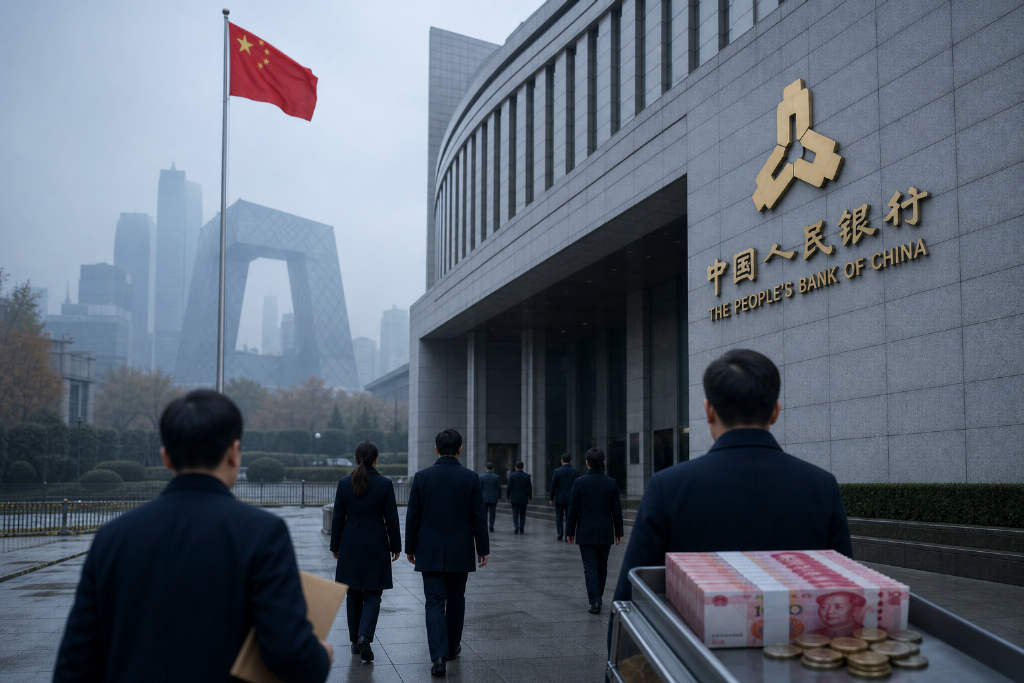
The People's Bank of China (PBOC) conducted a 50 billion yuan 7-day reverse repo operation on Sept. 1, with the operating rate set at 1.40%. The central bank used rate-based bidding for the operation, according to a Techub News report citing Crypto Briefing. Analysts said the steady policy rate reflects the central bank's confidence in current liquidity levels, and is aimed at balancing economic recovery with exchange-rate stability.

40
PBOC Conducts 5 Billion Yuan 7-Day Reverse Repo at 1.40%
Bitcoin
2026-08-31 14:26:09

Rupture’s ‘Remains’ ties paintings to Bitcoin Ordinals that decay one block at a time starting in 2028

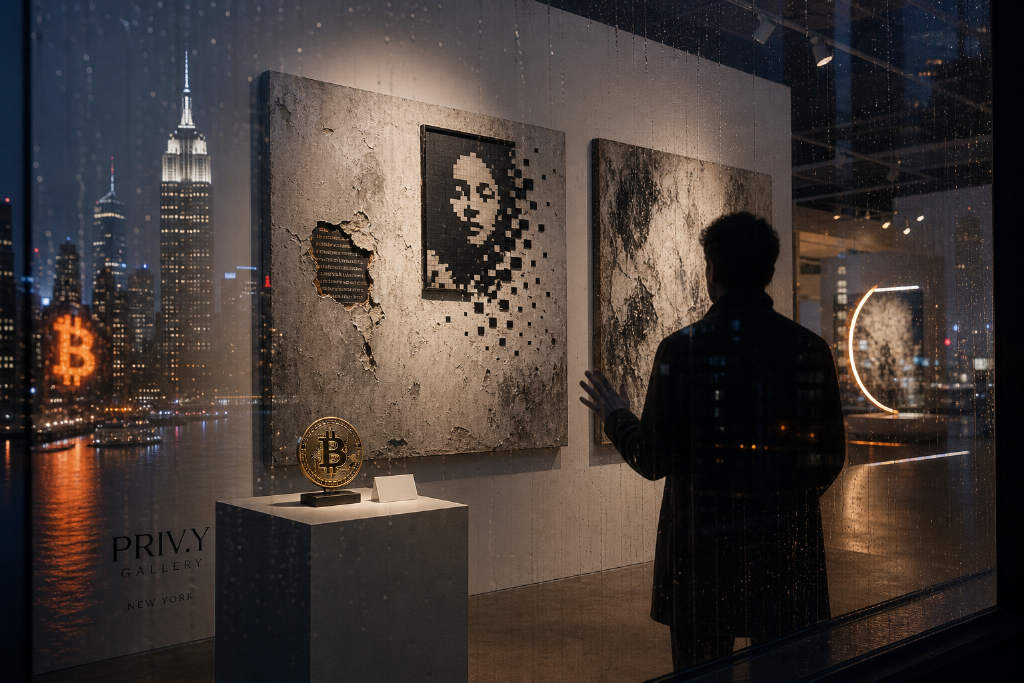
Bitcoin Magazine has profiled “Remains,” a four-work series by artist Rupture that binds physical paintings to related Bitcoin Ordinals in a way that forces a collector to choose what to preserve. Each inscription contains exactly 210,000 pixels, matching the number of blocks in a Bitcoin halving epoch. Beginning with the next halving in April 2028, one pixel will disappear for every block mined unless the collector intervenes. That intervention comes at a cost. According to the article, a unique alphanumeric code capable of stopping the decay is hidden beneath the surface of each painting. To retrieve it, the owner must destroy a meaningful portion of the physical work and then inscribe that damaged fragment as a child inscription tied to the Ordinal. If the painting is left intact, the on-chain image is gradually consumed until only a black square remains. Bitcoin Magazine said the series will debut at PRIV.Y Gallery at 46 Hester Street in New York from Sept. 2 to Sept. 8, 2026, with an opening reception on Sept. 2. The exhibition is presented by BMAG and runs in parallel with NFT.NYC. The original article was written by Dennis Koch.

110
Rupture’s ‘Remains’ ties paintings to Bitcoin Ordinals that decay one block at a time starting in 2028
AMEC
2026-08-31 12:11:14

AMEC’s rise in etching tools puts China chip equipment makers under a brighter global spotlight

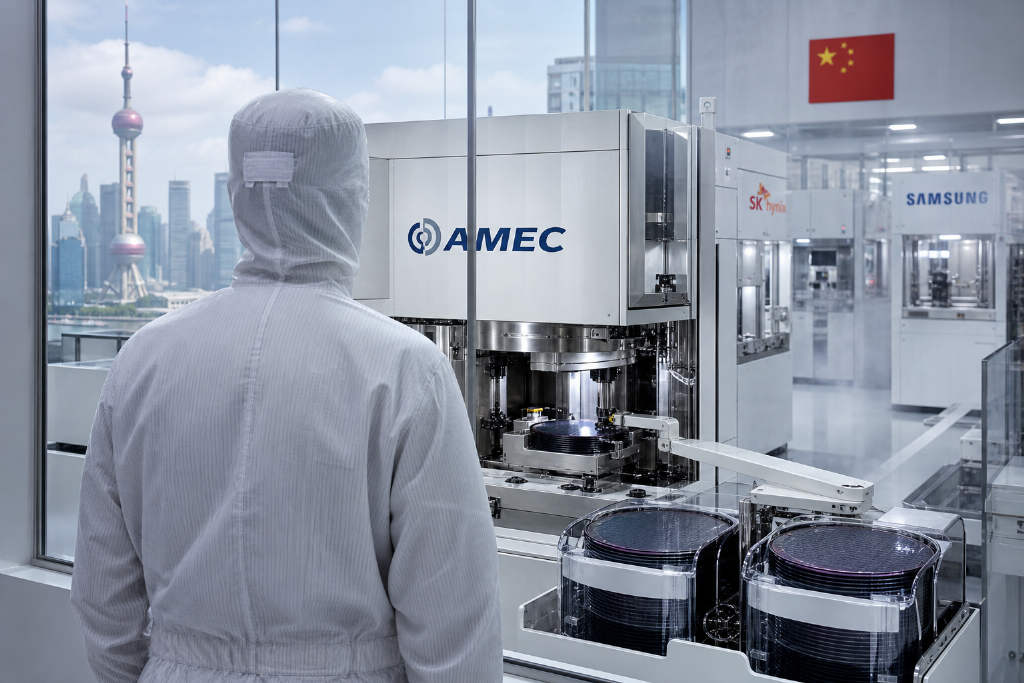
A long-form report carried by MarsBit and credited to WeChat account HSTL8888 traces how Advanced Micro-Fabrication Equipment Inc. China, or AMEC, moved from a startup backed by local government funding in Shanghai to a supplier validated by Taiwan Semiconductor Manufacturing Co. The piece opens with a Reuters report from early August saying Samsung Electronics and SK Hynix were evaluating AMEC chipmaking tools for use in their fabs in China, and that testing of the company’s etching tools may have started about two years ago. Samsung later denied it had ever considered the move, while SK Hynix declined to comment. The report then broadens into a history of China’s semiconductor equipment industry, covering AMEC, Piotech-related deposition efforts, Hwatsing for CMP, Skyverse for wafer inspection, ACM Research Shanghai for cleaning tools, and NAURA as a platform-style equipment company built through acquisitions. It argues that tightening U.S. export controls, support from domestic fabs such as Semiconductor Manufacturing International Corp. and funding through the National Integrated Circuit Industry Investment Fund together accelerated localization. Citing industry and official figures, the article says China’s overall localization rate in semiconductor equipment rose from under 5% to about 20% by 2025, while major foundries kept capacity utilization above 90% in the first seven months of this year.

110
AMEC’s rise in etching tools puts China chip equipment makers under a brighter global spotlight