Yuan

Tencent Hunyu
2026-08-28 06:33:12

Tencent Hunyuan Releases Open-Source Hy4 Preview With 770B Parameters

Tencent Hunyuan has released and open-sourced Hy4 preview, a next-generation LLM with 770B total parameters, 49B active parameters and more than 1M context. According to ChainCatcher, the model sits in the top tier of open-source models for real productivity work, including coding, office tasks and scientific research. Hy4 preview expands model size, context length and data scale, and was developed with high-quality data from Tencent experts in software engineering, gaming, finance and security, plus deep integration with WorkBuddy. It can build complex frontend projects, generate playable game prototypes, handle financial audits across multiple documents, and speed up molecular dynamics simulations. The model is available in Tencent products such as WorkBuddy, CodeBuddy, Yuanbao and ima, with API access through Tencent Cloud Tokenhub and OpenRouter. WorkBuddy and CodeBuddy are running a two-week free trial. Tencent Hunyuan has released a major version roughly every two months since rebuilding its infrastructure, using a preview-first cadence before formal releases.
200
Tencent Hunyuan Releases Open-Source Hy4 Preview With 770B Parameters
Tencent
2026-08-28 06:26:03

Tencent Open-Sources Hunyuan Hy4 with 770B Parameters and 1-Million-Token Context

Tencent has released the preview version of its Hunyuan Hy4 large language model, built on a mixture-of-experts (MoE) architecture with 770B total parameters, 49B activated at a time, and a 1-million-token context window. The new generation is more than twice the size of Hy3 — which had 295B total parameters, 21B active parameters and 256K context — and its long-context capacity has grown roughly four-fold. Rather than lean only on general benchmarks, Tencent is steering Hy4 toward concrete tasks in coding, office work, gaming and scientific research. The model can build a Three.js 3D website from scratch, craft a playable game demo in Unity, or work through 72 financial documents at once to catch duplicate reimbursements, over-limit expenses and budget anomalies. Hy4 was trained and iterated along with Tencent products including WorkBuddy and CodeBuddy, and it has begun contributing to its own development — helping optimize training methods, data strategy, evaluation systems and underlying operators before running experiments and adjusting its approach based on the results. The preview is already integrated into WorkBuddy, CodeBuddy, Yuanbao, ima, Tencent Cloud TokenHub and OpenRouter, with Tencent having flagged earlier in its earnings report that Hy4 would surpass Hy3 and that real product feedback would be a key source for training.

180
Tencent Open-Sources Hunyuan Hy4 with 770B Parameters and 1-Million-Token Context
Tang dynasty
2026-08-27 09:58:41

Tang dynasty denial spreads across Chinese internet, prompting calls to tear down heritage sites

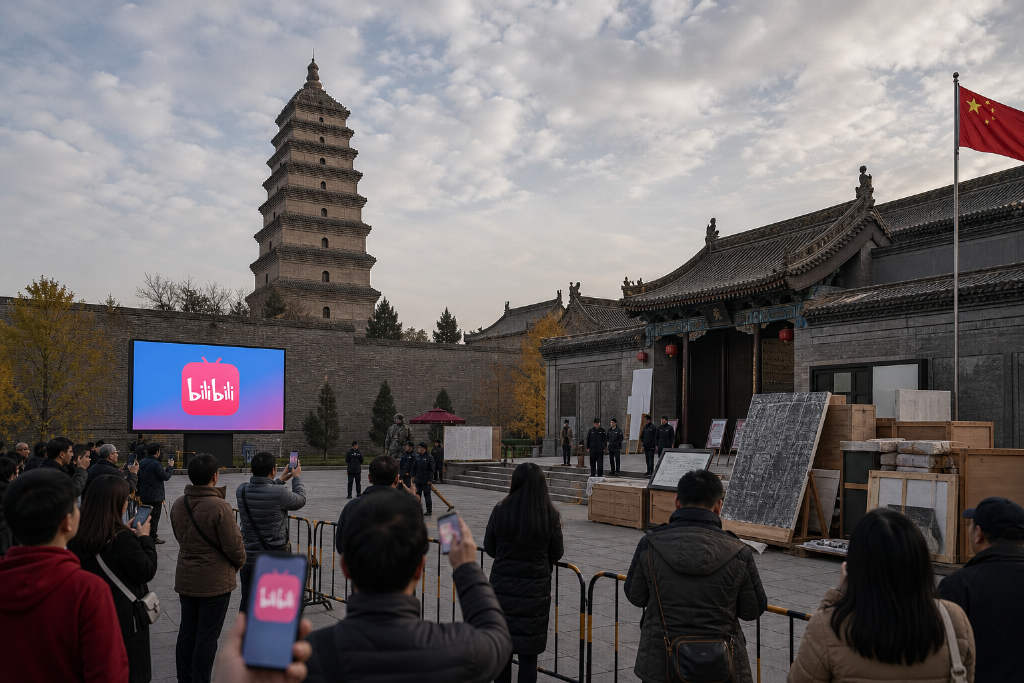
A pseudohistory narrative claiming that the Tang dynasty never existed has spread widely across Chinese social media, drawing official backlash, platform takedowns and concerns about its spillover into AI training data. The claim was traced to a series of videos uploaded to Bilibili by content creator qiao喬於yu between late April and early May 2026. In those videos, the creator argued that the Song dynasties ruled continuously for 800 years and that the Sui, Tang, Five Dynasties and Ten Kingdoms period, and even the Yuan dynasty were later fabrications. According to the source material, related discussions logged tens of millions of views on Weibo. By mid-August, the Bilibili account had been banned and the videos removed. Chinese state media said large numbers of people had called tourism and culture authorities in Shaanxi, demanding the demolition of Tang-era heritage sites on the grounds that the dynasty was fictitious. Academic scholars pushed back with documentary, cross-cultural and overseas textual evidence, while Hong Kong newspaper Sing Tao Daily warned that repeated circulation of such false claims could contaminate AI training datasets. The episode has since become a case study in how viral falsehoods can move from online traffic incentives into public institutions, education, and machine-generated outputs.

160
Tang dynasty denial spreads across Chinese internet, prompting calls to tear down heritage sites
Tencent
2026-08-26 02:07:21

Tencent executive says computing shortage has slowed Hunyuan AI development

Tencent Senior Executive Vice President and CEO of the Cloud and Smart Industries Group Tang Daosheng has publicly answered criticism that the company has moved too slowly in artificial intelligence. In a long post, he said Tencent has felt internal pressure and acknowledged that rivals have built stronger momentum over the past few years. He also made a direct admission: Tencent’s overall computing capacity has been "seriously insufficient," and that shortfall has already slowed training for the Hunyuan model family as well as product development, with what he described as a fairly large impact. Tang argued that the industry may still be only in the first kilometer of an AI marathon, saying endurance matters more than an early start. He said the next-generation Hunyuan Hy4 will bring more breakthroughs, but added that Tencent cannot rely only on foundation models. In his view, algorithms set the ceiling while engineering determines delivery speed, and Tencent’s strongest advantage lies in real-world scenarios tied to WeChat-based office tools, documents, meetings, and enterprise services. He also reviewed several missteps, including heavy promotion for Yuanbao before the model and product were ready, long-running losses at DevTools, and the uneven early path for CodeBuddy and WorkBuddy. Tang said WorkBuddy later benefited from the Agent wave and shipped more than 40 versions in three months.

210
Tencent executive says computing shortage has slowed Hunyuan AI development
Claude
2026-08-24 13:00:10

Harvard researcher and Claude present an S6 complex-structure construction in a 78-year math problem

A 108-page proof by Harvard mathematician Levent Alpöge and Claude claims to answer one of the longest-running questions in differential and complex geometry: whether the six-dimensional sphere, S⁶, admits a complex structure. The result, described in the source article as a direct construction rather than another attempt along older lines, builds a compact complex threefold X and then identifies it with S⁶ through calculations of the fundamental group, homology arguments, and a chain of classical theorems. The article says mathematician Qiaochu Yuan had GPT-5.6 Sol examine the manuscript. After an initial six-minute pass and another 15 minutes of review, the model reportedly found no flaw. Sol’s view, as cited in the piece, is that if the proof holds up, it may stand as the most important AI-assisted mathematical result so far. The report places this work alongside two earlier Claude-linked advances from July 20 and Aug. 10, and argues that the S⁶ case is different because the geometric object was constructed outright rather than found through search or recombination.

8610
Harvard researcher and Claude present an S6 complex-structure construction in a 78-year math problem
Huawei alumni
2026-08-24 11:36:18

Huawei-linked founders pull in about $1.2 billion as embodied AI funding clusters in early-stage deals

Huawei alumni have become one of the strongest fundraising groups in China’s embodied intelligence sector this year, according to incomplete data cited from ITjuzi. From Jan. 1 to Aug. 14, 2026, 12 embodied AI companies founded or co-founded by entrepreneurs with Huawei backgrounds completed 24 financing rounds, with total funding estimated at roughly 8.635 billion yuan. The pace was heavily concentrated in early stages, with 9 angel rounds, 5 seed rounds and 5 Pre-A rounds, meaning more than 80% of the deals landed before companies had spent much time in market. Capital was also concentrated at the top. X Square Intelligence, founded less than two years ago by former Huawei autonomous driving CTO and chief scientist Chen Yilun and former Baidu intelligent driving executive Li Zhenyu, closed a $455 million Pre-A round in April, described in the report as the largest single financing round in China’s embodied intelligence industry. Kunlunxing Robotics also raised funding worth tens of billions of yuan, and the two companies together accounted for about 70% of the Huawei-linked total. Other names highlighted in the report include Ola Wanxiang, Knowin Intelligence, Gunao Panshi, Beta Infinite, Moxi Intelligence, Moushen Intelligence, Yuansheng Intelligence, Xinzhi Jushen, Zhicheng AI and Qiwu Technology.

390
Huawei-linked founders pull in about $1.2 billion as embodied AI funding clusters in early-stage deals
PANews
2026-08-24 03:21:00

Weekly Funding Roundup: Stripe Nears $7 Billion-Plus OpenRouter Deal as Crypto Funding Tops $27.5 Million

PANews’ latest weekly funding roundup shows two tracks moving at speed at the same time: AI and robotics continued to attract large checks in the primary market, while crypto funding stayed active across DeFi, privacy infrastructure, on-chain finance, Web3 AI, and prediction markets. In crypto alone, PANews counted five disclosed blockchain financing events worldwide during Aug. 10-16, with aggregate funding of more than $27.5 million. Among the crypto deals, twyne raised a $2.5 million seed round for its DeFi credit delegation layer, Beldex secured $8 million for privacy infrastructure, Blueprint Finance announced a strategic round led by Polychain Capital, NeoSoul closed an $11 million Pre-A round tied to AI economic infrastructure, and Fortune Protocol said its cumulative fundraising has exceeded $4 million. Outside crypto, the biggest headline in the report was M&A: Stripe has finalized an agreement to acquire AI startup OpenRouter for more than $7 billion, though the final price may still change, according to people familiar with the matter cited in the source. The report also noted that OpenAI acquired the InstantDB team. In the broader AI market, Etched raised $700 million at a $21 billion valuation, while companies including DataVita, Groq, Starcloud, Muon Space, Higgsfield, Wispr, and Rillet also announced major financings.

490
Weekly Funding Roundup: Stripe Nears $7 Billion-Plus OpenRouter Deal as Crypto Funding Tops $27.5 Million
Embodied AI
2026-08-24 00:28:12

OriginFlow bets on sEMG data capture to turn human motion into machine-readable tokens

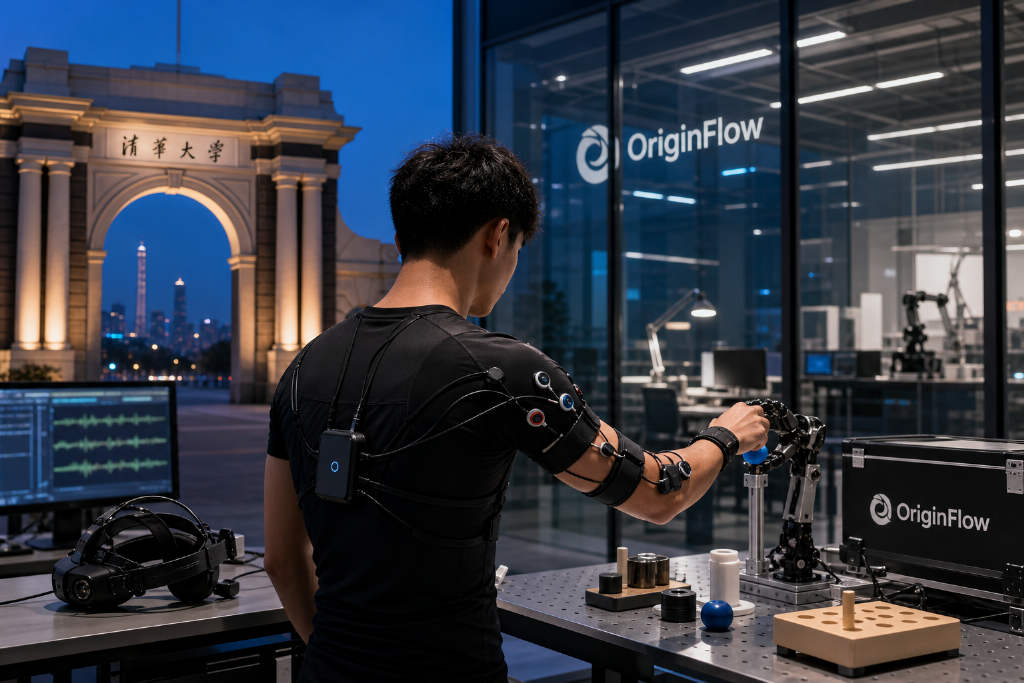
Embodied AI data collection is gaining a new track: surface electromyography, or sEMG. OriginFlow, a Beijing-based startup founded by Tsinghua PhD student Qin Shentao, is building around that idea with the goal of capturing not just visible hand movements but also the underlying muscle activation, contact feedback, and force changes that happen during real-world manipulation. The company says it was founded in Beijing in August last year and had disclosed by May this year that it had completed an angel round, a strategic round, and a Pre-A1 round, raising more than RMB 500 million in total from investors including Lanchi, Oasis, and Monolith. OriginFlow’s NeuroScale system combines non-invasive sEMG signals with egocentric vision and IMU data, then uses its PULSE foundation model to reconstruct posture, contact force, and drive force from human operations. The startup calls the resulting representation “Human Tokens.” At WAIC, the team showed a PULSE 0.2 demo using 16-channel sEMG input to continuously model hand movement and observe force changes during pinch gestures. Beyond capture hardware, OriginFlow has also built data infrastructure for alignment, labeling, filtering, and training, arguing that scalable embodied intelligence will require far more than raw signal collection alone.

490
OriginFlow bets on sEMG data capture to turn human motion into machine-readable tokens