Yuan

Zhiyuan
2026-08-23 13:53:12

Zhiyuan Leads the Medal Table at the Second World Humanoid Robot Games

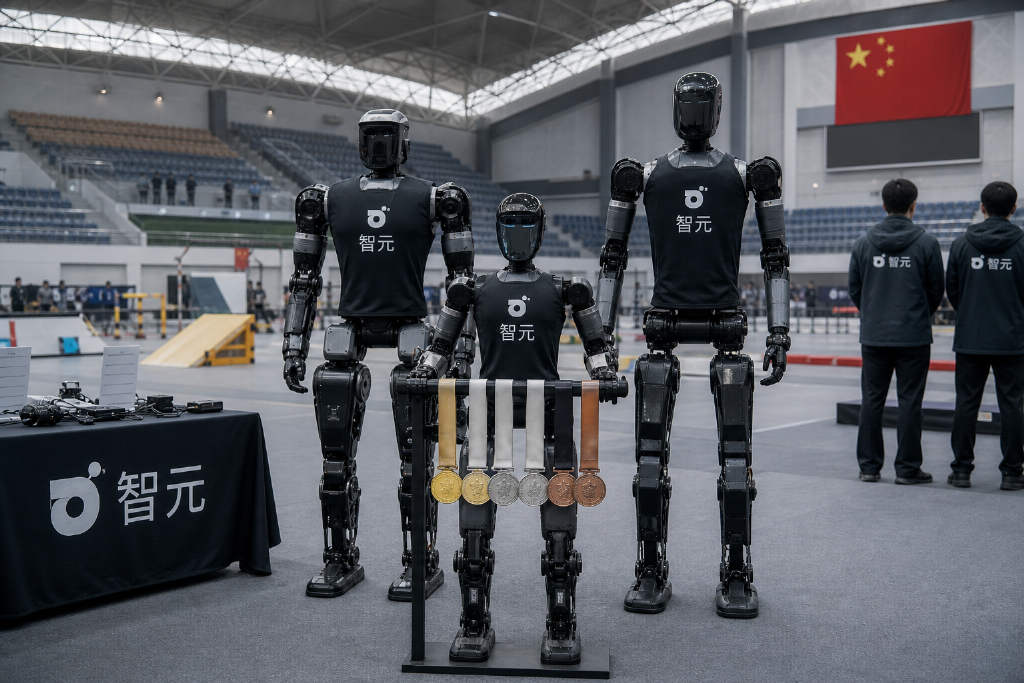
Zhiyuan’s core products — Genie G2, Lingxi X2 and Yuanzheng A3 — took part in the Second World Humanoid Robot Games. In the completed “scenario” events, Zhiyuan’s Genie G2 won two gold medals, three silver medals and two bronze medals. Zhiyuan is currently ranked first on the medal table. The information was reported by Securities Times.

470
Zhiyuan Leads the Medal Table at the Second World Humanoid Robot Games
Yin Fangming
2026-08-23 07:18:11

Yin Fangming, Unitree’s earliest backer, takes chairman role at Galaxy General

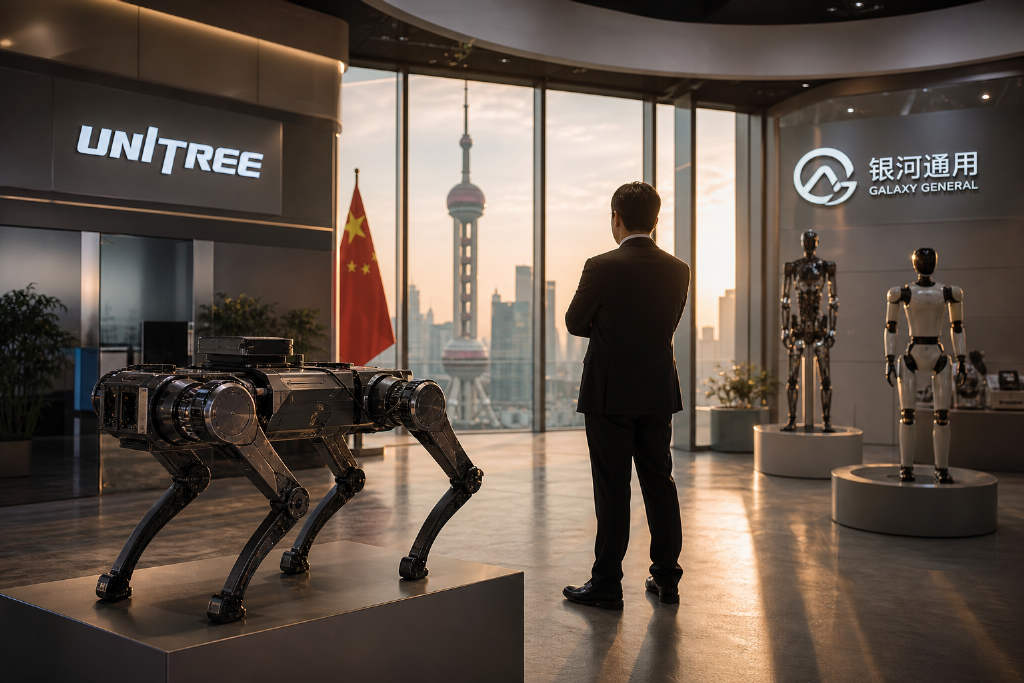
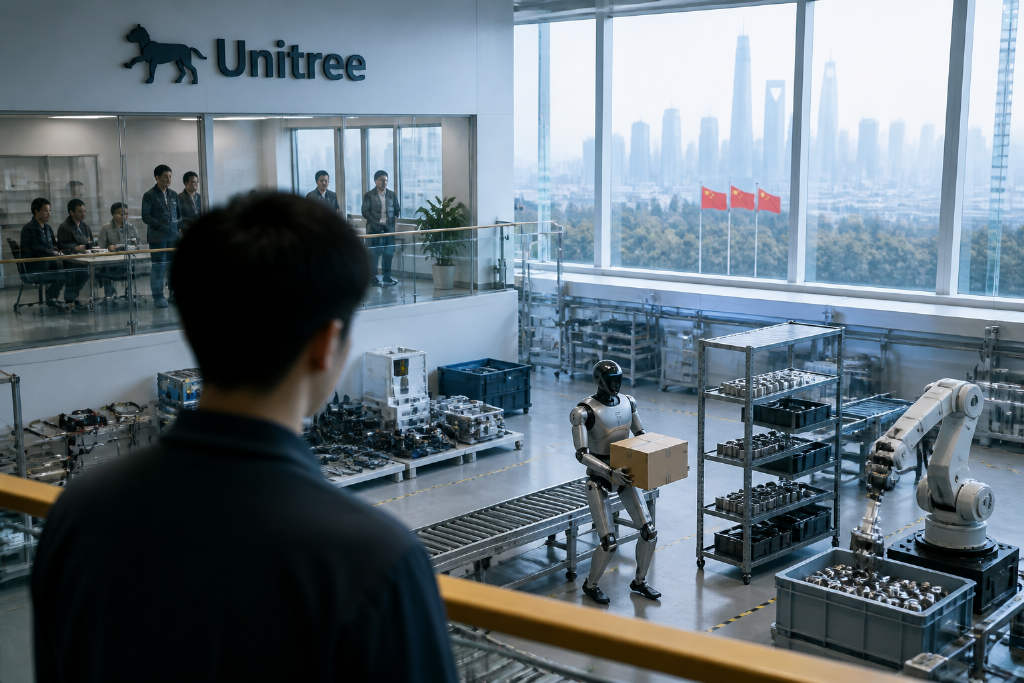
Unitree Technology’s Aug. 19 listing on China’s A-share market has brought fresh attention to one of its earliest and most consequential supporters: Yin Fangming. In 2016, when founder Wang Xingxing struggled to raise money for Unitree’s early quadruped robotics effort, Yin invested RMB 2 million for a 15% stake. Based on the IPO issue price and subsequent stake transfers, that investment is now estimated to have generated roughly RMB 280 million in total returns, more than 140 times the original capital. Yin is not only an investor tied to Unitree’s formative days. Public filing updates show he became chairman of embodied AI company Galaxy General on July 21, 2026, replacing former chairman Guo Xiaoliang. Galaxy General, founded in May 2023, has reportedly raised more than RMB 6.96 billion in three years and reached a valuation above RMB 20 billion, making it one of the highest-valued unlisted embodied AI companies in China. The move adds another chapter to a career that spans Android ROM development at MediaTek, mobile product leadership at Sogou, the launch of 360 Mobile Assistant and 360 Portable WiFi at Qihoo 360, the founding of robotics startup ROOBO, and investments across robotics, energy and commercial space. While ROOBO later ran into operational and legal troubles, Yin’s early bet on Unitree and his new role at Galaxy General have again put him at the center of China’s embodied robotics story.

400
Yin Fangming, Unitree’s earliest backer, takes chairman role at Galaxy General
Embodied AI
2026-08-23 05:19:00

Embodied AI’s valuation surge runs ahead of proven demand, technology, and pricing logic

A Late Post report cited by PANews paints a crowded and overheated embodied AI market in China, where capital has rushed into humanoid robots, dexterous hands, data collection, joint modules, and tactile sensors long before the sector has established durable industrial demand or a broadly accepted valuation framework. In the first half of 2026 alone, domestic embodied AI financing exceeded RMB 90 billion, and 22 companies were valued above RMB 10 billion, according to IT Juzi. Yet field observations described in the report show many robots still move too slowly for real factory deployment, while some revenue is tied to research, education, data collection loops, channel stocking, or related-party structures rather than large-scale end-user adoption. Unitree’s listing has become the market’s closest thing to a public benchmark. Morgan Stanley said more than 10,000 embodied robots were actually shipped in China last year, with Unitree accounting for 5,215 units. Its 2025 revenue reached RMB 1.699 billion, but the report notes that more than 70% of revenue as of last September came from research and education, and less than 10% came from industry applications. The broader question now is whether public markets will price Unitree as a high-growth embodied AI platform with future "brain" capabilities, or more like a strong engineering and hardware company. That answer may shape how long today’s private-market valuations can hold.

800
Embodied AI’s valuation surge runs ahead of proven demand, technology, and pricing logic
Yuanta Future
2026-08-23 03:03:28

Yuanta Futures opens public share subscription from Aug. 24 to Aug. 26 with potential NT$9,230 spread per lot

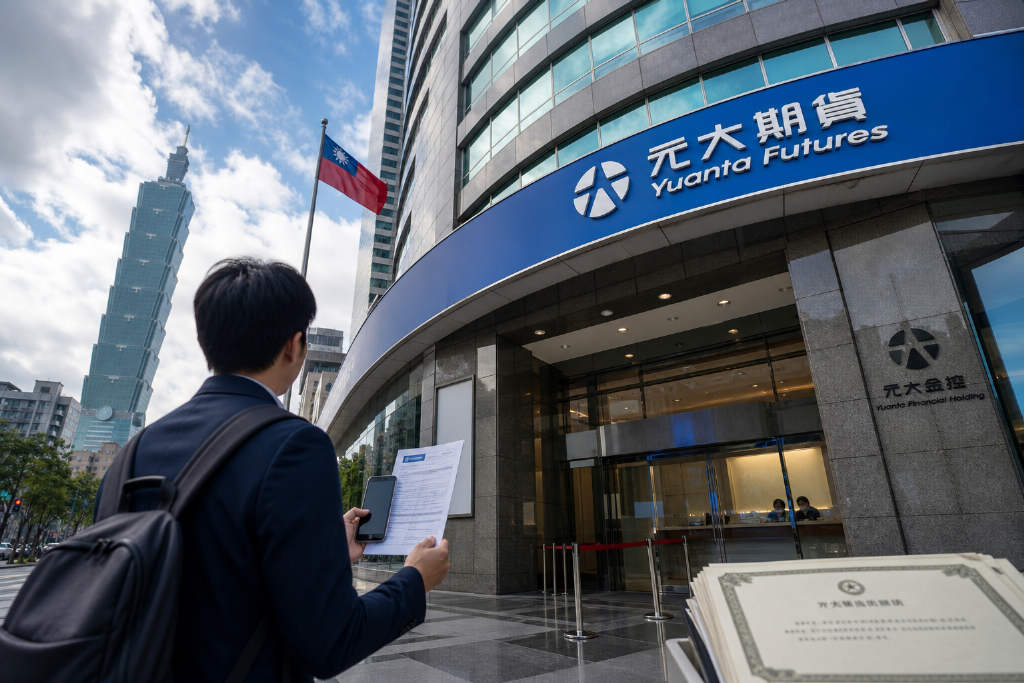
Yuanta Futures (6023), described in the source article as Taiwan’s first listed futures broker, will open a public share subscription from Aug. 24 to Aug. 26. Based on an underwriting price of NT$73.5 and a latest market price of NT$82.8 cited in the report, a successful allotment of one standard lot would imply a potential gain of about NT$9,230, or roughly 13%. The report says the company, part of Yuanta Financial Holdings, recently launched a large cash capital increase plan as financial market volatility rises and exchanges periodically raise margin requirements. The article says the new capital is intended to improve its financial structure, expand business capacity, support IT system upgrades, and back international expansion in Asia, including Hong Kong and Singapore. It also explains how Taiwan’s public subscription system works. Investors apply through a securities broker, keep sufficient funds in the settlement account on the debit date, and are entered into a computerized lottery if subscriptions exceed available shares. The article notes that participation comes with a funding lock-up period and fees, including a NT$20 handling fee and a NT$50 mailing charge, with the NT$20 remaining a sunk cost if an applicant is not selected. The draw result is scheduled for Aug. 28.

540
Yuanta Futures opens public share subscription from Aug. 24 to Aug. 26 with potential NT$9,230 spread per lot
Robotics
2026-08-21 13:23:13

Generalist AI’s GEN-1.5 puts one-shot robot learning in the spotlight as investors and researchers take notice

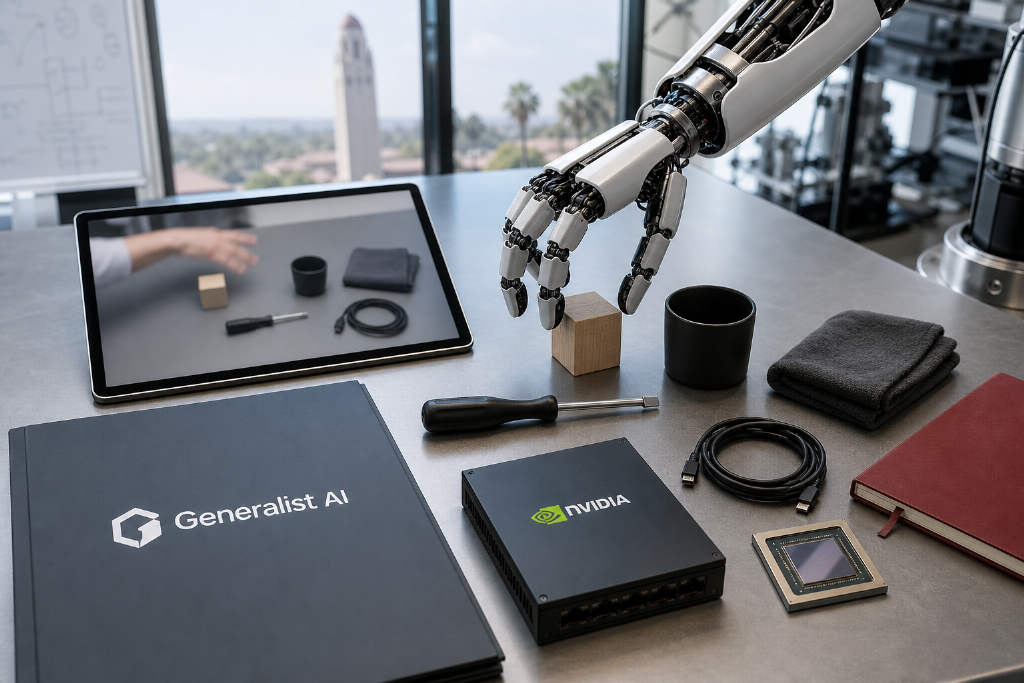
Generalist AI has introduced GEN-1.5, a robotics foundation model the company says can execute new manipulation tasks after watching a single 3- to 12-second demonstration, without additional training or fine-tuning. In tests across 10 short-horizon tasks, the company reported an average one-shot success rate of 59% with a standard deviation of ±10%, and an average few-shot success rate of 83% with a standard deviation of ±9% using roughly five minutes of data, about 50 demonstrations, and 10 gradient steps. The release has drawn comparisons from some researchers to the moment GPT-3 arrived in 2020, though the results remain self-reported and have not been independently verified. The timing also intersects with a broader robotics surge. Unitree went public on Aug. 19 with an opening price of 1,100 yuan per share and a market value of about 444.9 billion yuan, while the World Robot Conference opened in Beijing the same week. Generalist AI, whose backers include Fei-Fei Li as a personal investor and Nvidia as a shareholder, completed a $400 million round in June 2026 at a $2 billion post-money valuation and is reportedly discussing another financing at a $3 billion valuation.

360
Generalist AI’s GEN-1.5 puts one-shot robot learning in the spotlight as investors and researchers take notice
Yangtze Memor
2026-08-21 12:12:45

Yangtze Memory’s STAR Market IPO Is Accepted, with Planned Fundraising of 33 Billion Yuan

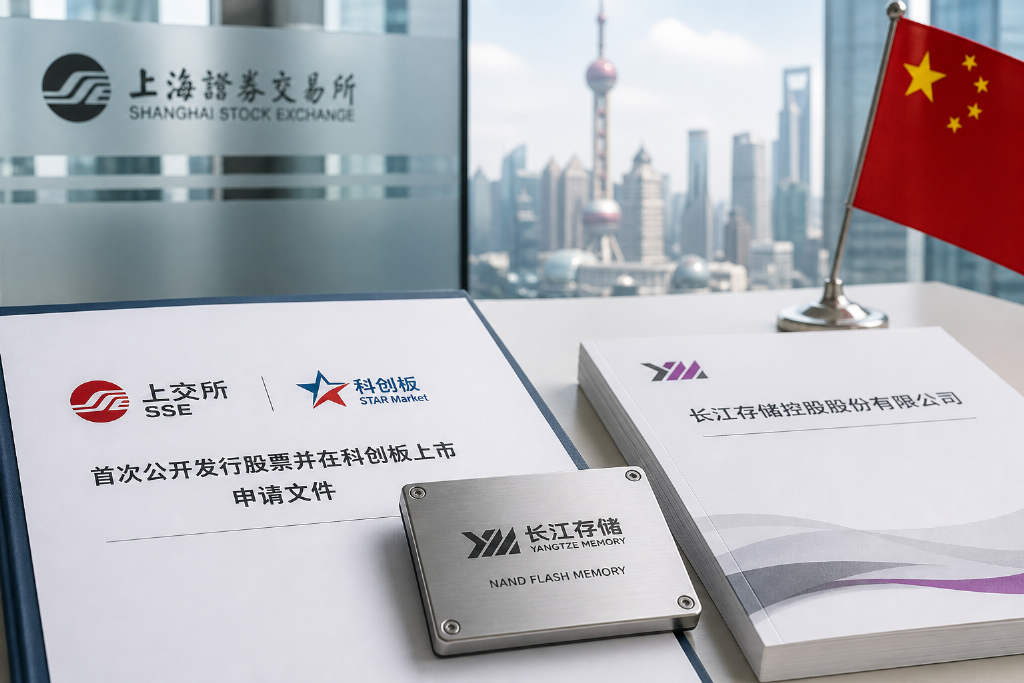
ChainCatcher reported that Yangtze Memory Technologies Co. Ltd. has seen the review status of its initial public offering on the STAR Market change to “accepted,” with planned fundraising of 33 billion yuan. The sponsors are Citic Securities and CICC. Its prospectus says the company returned to profit in 2024 and has since improved quickly, posting 47.042 billion yuan in revenue and 33.379 billion yuan in net profit attributable to shareholders in the first quarter of 2026. TrendForce data cited in the filing shows the company ranked third globally and first in China among NAND flash makers by both sales value and shipments in Q1 2026.

480
Yangtze Memory’s STAR Market IPO Is Accepted, with Planned Fundraising of 33 Billion Yuan
Taiwan
2026-08-21 04:40:42

Taiwan’s digital asset law is in force, but Chen Ching says stablecoin policy still needs top-level coordination

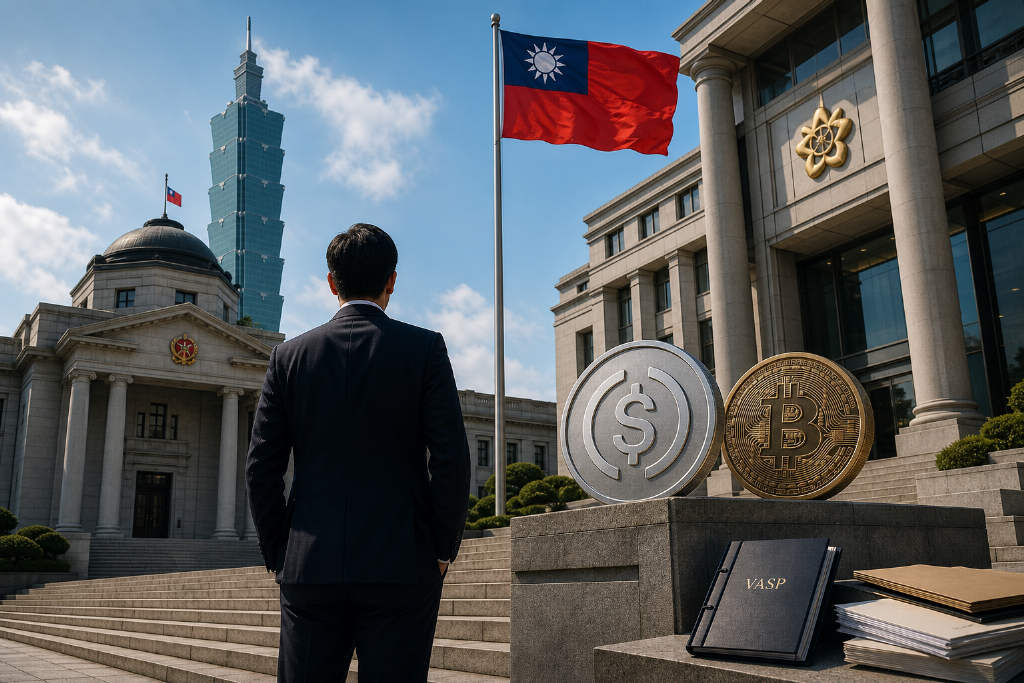
Taiwan’s Virtual Asset Service Act cleared its third reading on June 30, 2026 and was promulgated on July 22, formally putting virtual asset service providers under a dedicated legal regime. But former premier and former Financial Supervisory Commission chairperson Chen Ching said the law’s success should not be judged by how many licenses are issued. His main test is whether the government gives the sector sustained attention at the highest level. Speaking on episode 100 of XREX Group’s podcast Web3 Big Westward Expansion, Chen said the hardest questions begin after passage of the law: how Taiwan wants to develop virtual assets and stablecoins, who has final authority when agencies disagree, and whether firms will get a review process that is clear and predictable. He pointed to a structural issue in the law’s stablecoin provisions, where the Financial Supervisory Commission is the competent authority but approval for issuance also requires the central bank’s consent. Chen argued that stablecoins should be viewed not only as a financial product subject to compliance rules, but also through the lens of monetary sovereignty and national strategy. XREX co-founder and Group CEO Wayne Huang added that if trading can remain legally onshore, local currency has a chance to remain on-chain as well, especially as tokenized real-world assets become more important.

450
Taiwan’s digital asset law is in force, but Chen Ching says stablecoin policy still needs top-level coordination
Indium Phosph
2026-08-19 23:03:10

China’s grip on indium phosphide is tightening pressure on the CPO supply chain

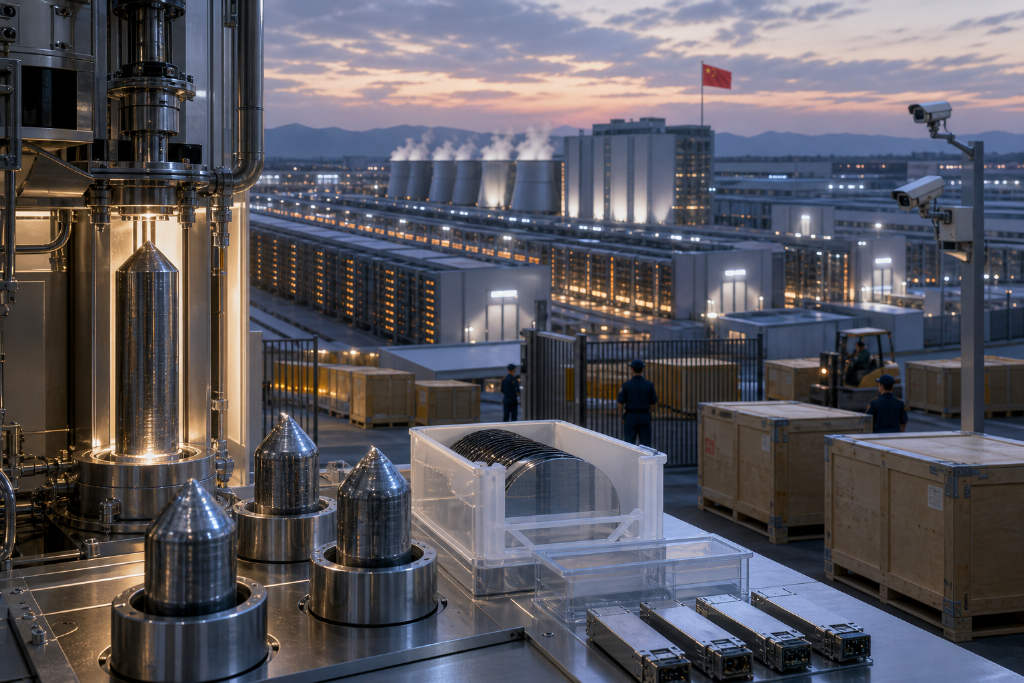
Indium phosphide has moved to the center of the optical supply chain as AI data center buildouts drive demand for high-speed optical modules and co-packaged optics, or CPO. The article argues that China now holds critical leverage across all three major steps of the indium phosphide chain: primary indium smelting, indium refining, and wafer manufacturing. That position has become more consequential after Beijing expanded export controls from indium phosphide products to upstream indium itself. The report details how pressure is building across the industry. Lumentum’s CEO said earlier this month that the shortage in indium phosphide is even more severe than in memory, while Nokia has moved to secure production by acquiring facilities tied to indium phosphide manufacturing. Coherent, a major supplier of indium phosphide laser products used in Nvidia’s CPO systems, is also highlighted as scrambling to secure supply as customers push for more capacity. At the same time, Chinese companies including Yunnan Germanium and Zhuzhou Keneng are seeing stronger orders and making progress on larger wafers and higher-purity indium products. Still, the article says two constraints remain unresolved: customer qualification cycles and capacity expansion. Even with Chinese suppliers gaining ground, the gap between projected global demand and effective supply remains large heading into 2026.

700
China’s grip on indium phosphide is tightening pressure on the CPO supply chain