Yuan

Embodied AI
2026-08-19 12:58:10

ITjuzi report says big-tech pedigrees are a major funding advantage in embodied AI

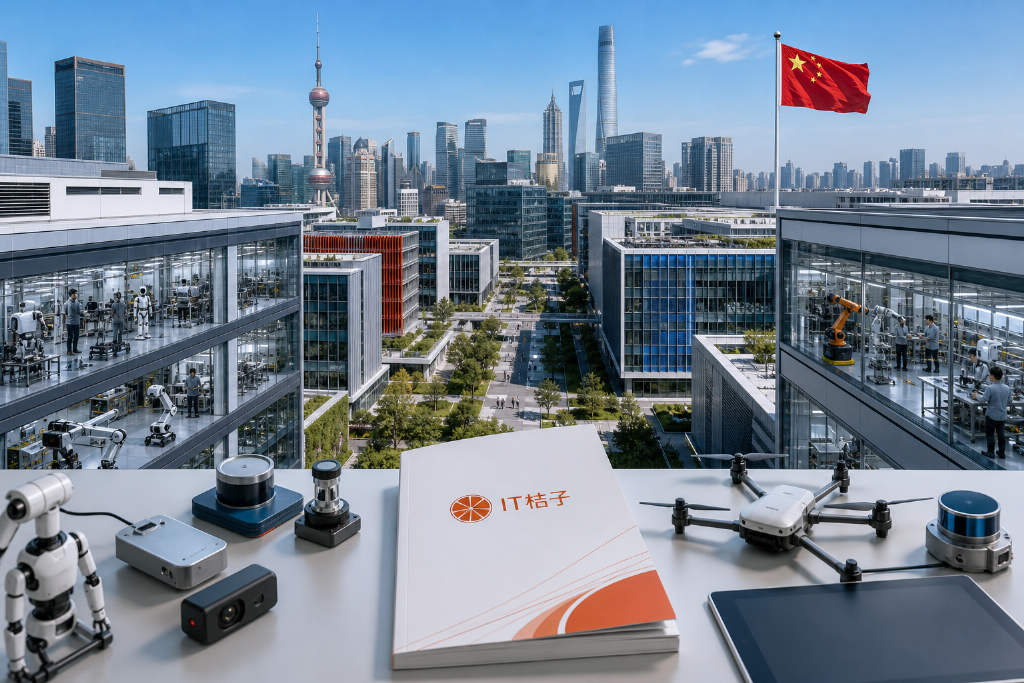
ITjuzi’s latest report on China’s embodied AI startup ecosystem found that founders with backgrounds at major technology companies are attracting a disproportionate share of capital in the sector. The study reviewed 1,155 entrepreneurs and said more than 300 of them had worked at Huawei, Microsoft, Baidu, Google, DJI, Alibaba, Tencent, ByteDance or Xiaomi. Those founders helped create 232 embodied AI companies, roughly 20% of the sector by count, yet they captured about half of all industry funding. The report compared nine major “big-tech camps” by company count, total funding and average funding per company. Huawei ranked first in both company count and total funding, with 26 companies raising a combined RMB 38.85 billion. Microsoft came second by total funding at RMB 33.92 billion, while its camp led in average funding per company at RMB 1.542 billion. Google-backed founders followed closely on that metric at RMB 1.509 billion per company. ITjuzi said the strongest funding outcomes were linked not simply to brand-name employers, but to teams combining hardware execution, supply-chain and mass-production experience with AI and model capabilities. The report also highlighted a growing divide between teams still in product validation and those that have already demonstrated delivery and manufacturing capacity.
250
ITjuzi report says big-tech pedigrees are a major funding advantage in embodied AI
Unitree Robot
2026-08-19 12:04:01

Unitree’s seven-year funding path: from a RMB 2 million check to a crowded cap table

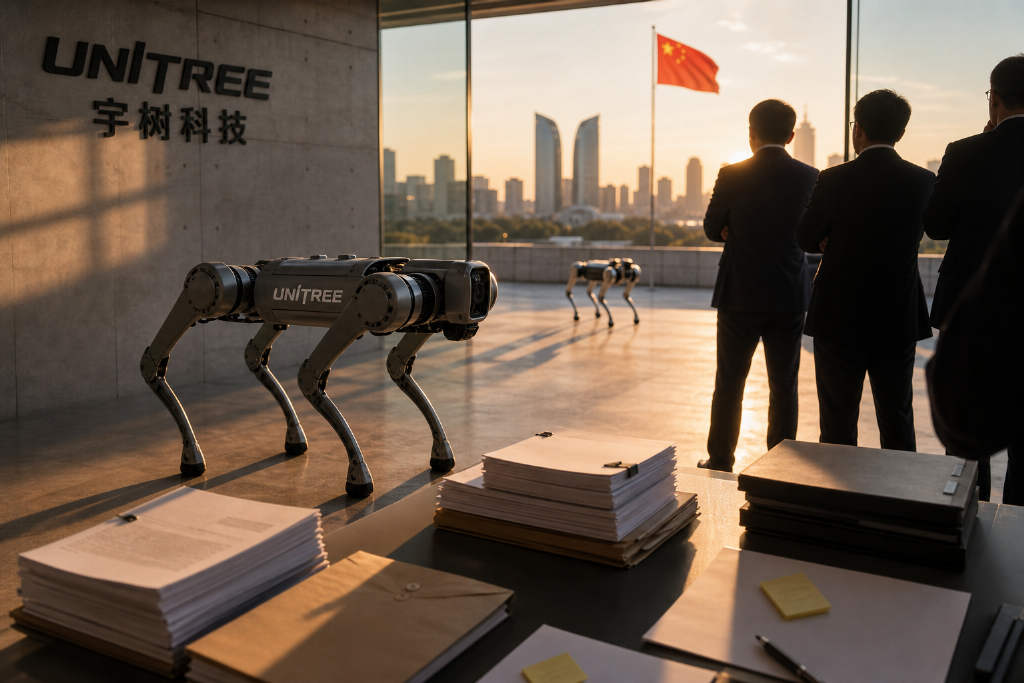
A PANews feature, citing reporting by Zhang Yihao and Chen Zhiyan for elsewhere, retraces Unitree Robotics’ fundraising history through old WeChat messages, investment memos, photos and due-diligence notes collected from some of the company’s backers. The report says founder Wang Xingxing received a RMB 2 million investment in 2018 from Variables Capital, affiliated with GeekPark, marking Unitree’s first institutional financing and its second known investment after Yin Fangming. The article describes how hard fundraising was in the early years. Wang did not fit the standard venture template, and quadruped robotics was still viewed as an unclear market. At one point, cash ran so tight that he had to use his own money to cover payroll. According to the report, financing remained difficult until Unitree’s robot dog appeared on the Year of the Ox Spring Festival Gala in 2021 and the company cut the price of Go1 to RMB 16,000. By the time of the company’s B2 round before the 2024 Lunar New Year, investors including Meituan, Jinshi Investment and Source Code Capital had entered. The piece also details how Sequoia China seed investor Li Yannan first found Wang through a QQ email address, how Wang carried an A1 robot dog to Beijing for a live investment committee demo, and how several firms later documented Unitree’s revenue, margins, customer list and product positioning.

430
Unitree’s seven-year funding path: from a RMB 2 million check to a crowded cap table
Unitree
2026-08-19 04:30:46

Unitree opens on STAR Market at 1,100 yuan, briefly pushing valuation to 445 billion yuan

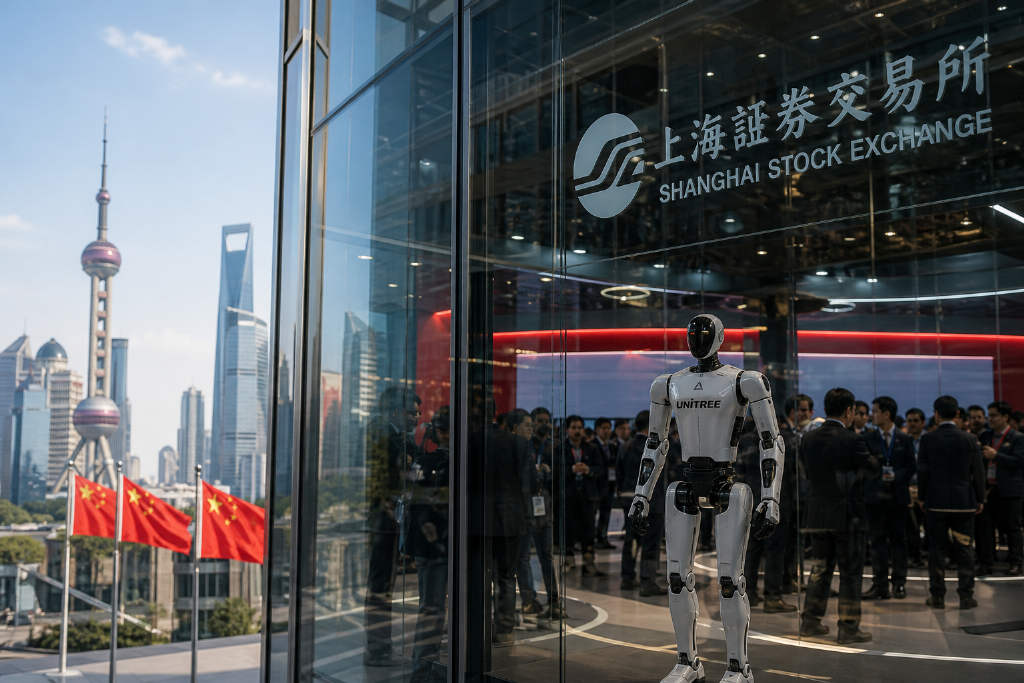
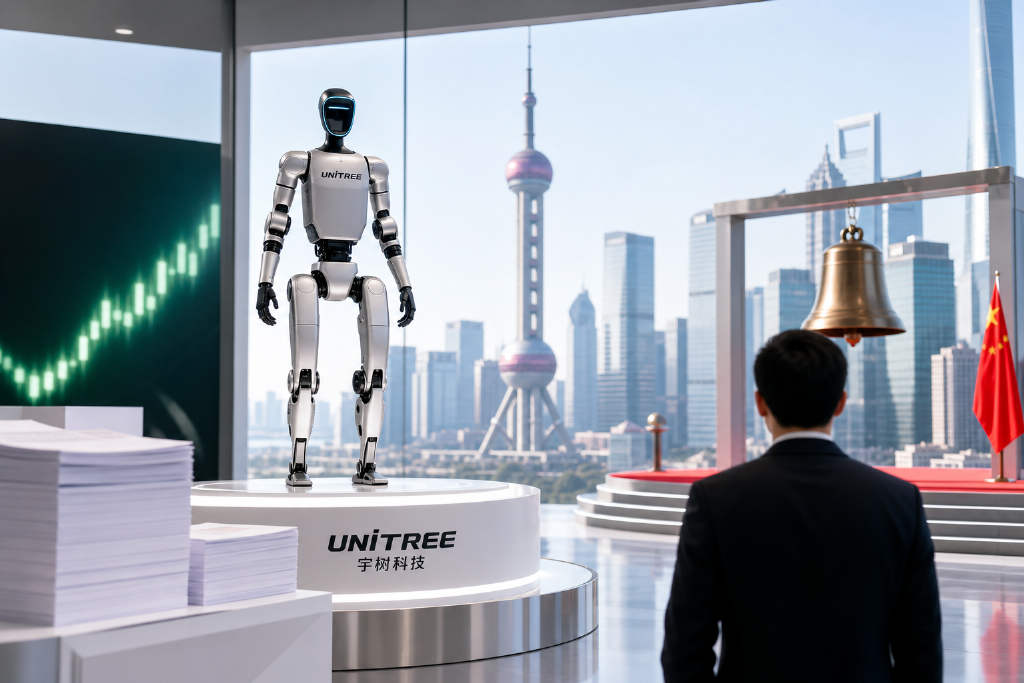
Unitree Technology made its debut on Shanghai’s STAR Market on Aug. 19, turning the long-discussed label of “A-share’s first humanoid robot stock” into a listed reality. The stock opened at 1,100 yuan, up 629.44% from its 150.80-yuan issue price, and its market capitalization briefly climbed to 445 billion yuan before pulling back. At the time of writing cited in the source article, the shares were trading around 892 yuan, valuing the company at roughly 361 billion yuan, with turnover reaching 55.25% and trading volume exceeding 15.3 billion yuan. The listing stood out not only for its first-day price action but also for its unusually tight float. Unitree’s post-listing unrestricted shares amounted to 30.0877 million, or 7.44% of total share capital. The online allotment rate was just 0.0181%, setting records on the STAR Market for both the lowest winning rate and the highest number of participating accounts. Strategic investors including the National Social Security Fund, DeepSeek, Tencent, PetroChina Kunlun Capital, China Southern Power Grid and China Telecom’s Tianyi Capital took part in the placement. The source article frames Unitree’s listing as both a wealth-creation event and a valuation test for China’s embodied AI and robotics sector. It also tracks founder Wang Xingxing’s holdings, compares Unitree with Figure AI, Boston Dynamics and Tesla’s Optimus, and lays out the company’s own responses on valuation, FCC restrictions, international competition and commercialization pace.

550
Unitree opens on STAR Market at 1,100 yuan, briefly pushing valuation to 445 billion yuan
Unitree Techn
2026-08-19 01:29:20

Analyst Ember Says Unitree Opening Price of 1,100 Yuan Implies 445 Billion Yuan Valuation

Odaily reported that on-chain analyst Ember said in a post on X that an opening price of 1,100 yuan for Unitree Technology would imply a market valuation of 445 billion yuan. Ember also said a single subscription lot would deliver a gain of 475,000 yuan. The brief source note did not provide more detail on the calculation, the offering structure, or the timing beyond the published timestamp. The figures cited in the report were limited to the opening price, the implied valuation, and the stated return per lot.

360
Analyst Ember Says Unitree Opening Price of 1,100 Yuan Implies 445 Billion Yuan Valuation
Taiwan drones
2026-08-16 08:07:35

Taiwan drone rules: registration starts at 250 grams, licenses at 2 kg, fines can reach NT$1.5 million

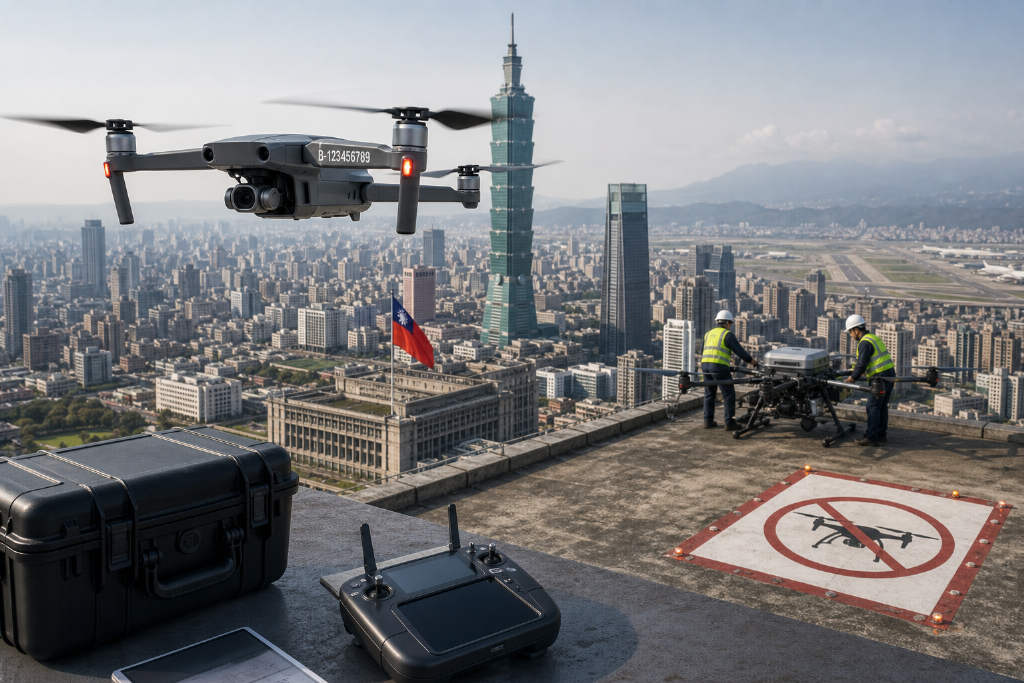
Taiwan’s drone regime covers registration, pilot licensing, inspections, airspace controls and flight conduct, with separate thresholds based on aircraft weight and ownership. Under current rules, natural persons must register drones with a maximum takeoff weight of 250 grams or more, while government agencies, schools and corporate entities must register all drones regardless of weight. For pilot qualifications, a 2 kg threshold is key for private owners if the drone is equipped with navigation equipment, while entity-owned drones always require a licensed operator. Drones weighing 25 kg or more must also undergo physical inspection. Airspace is split at 400 feet, with the Civil Aviation Administration and local governments sharing oversight. Violations can trigger fines from NT$30,000 to NT$1.5 million, and in serious cases authorities may confiscate the drone or revoke the operator certificate. New 2026 measures, including Remote ID and geofencing-related requirements, are also moving ahead, even as hobbyists push back against the expansion of restricted zones and ask for more transparent airspace management.

170
Taiwan drone rules: registration starts at 250 grams, licenses at 2 kg, fines can reach NT$1.5 million
RWA
2026-08-14 10:25:00

RWA Weekly: Hong Kong’s regulated HKD stablecoin moves into rollout as the EU prepares MiCA access changes

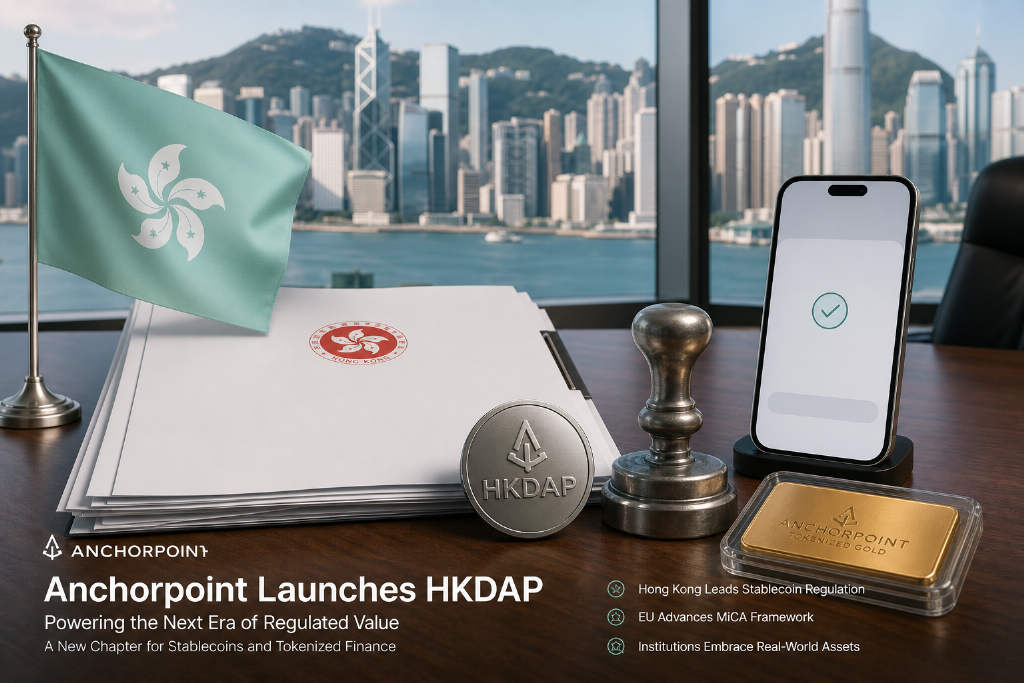
Real-world asset activity and stablecoin policy both moved this week. As of Aug. 14, 2026, on-chain RWA market capitalization reached $38.29 billion, while the number of holders climbed to 1.7935 million, according to RWA.xyz data cited by PANews. In stablecoins, total market value slipped slightly to $297.91 billion, but transfer volume and monthly active addresses both fell, pointing to a quieter on-chain period even as holder counts kept growing. On the policy side, the People’s Bank of China said in its 15th Five-Year reform and development plan that it will steadily develop the digital yuan. In Europe, officials decided to revise the Markets in Crypto-Assets framework, or MiCA, with a focus on the market access rules that have left non-EU stablecoin issuers such as Tether outside the bloc. The U.K. advanced the second phase of its digital pound lab and also began work on a regulatory framework for tokenized gold. At the project level, Anchorpoint, the Hong Kong licensed stablecoin issuer backed by Standard Chartered, HKT and Animoca Brands, launched the first phase of issuance and institutional use for HKDAP. HashKey Exchange and OSL joined as recognized distributors. Elsewhere, NYSE, Itaú Unibanco, Coinbase, LG CNS, Miden, Dow Protocol and Rain each disclosed new tokenization, stablecoin or funding developments during the week.

790
RWA Weekly: Hong Kong’s regulated HKD stablecoin moves into rollout as the EU prepares MiCA access changes
Optical Chips
2026-08-14 06:02:48

Nomura says Lumentum results point to persistent optical chip shortages, opening a window for Chinese suppliers

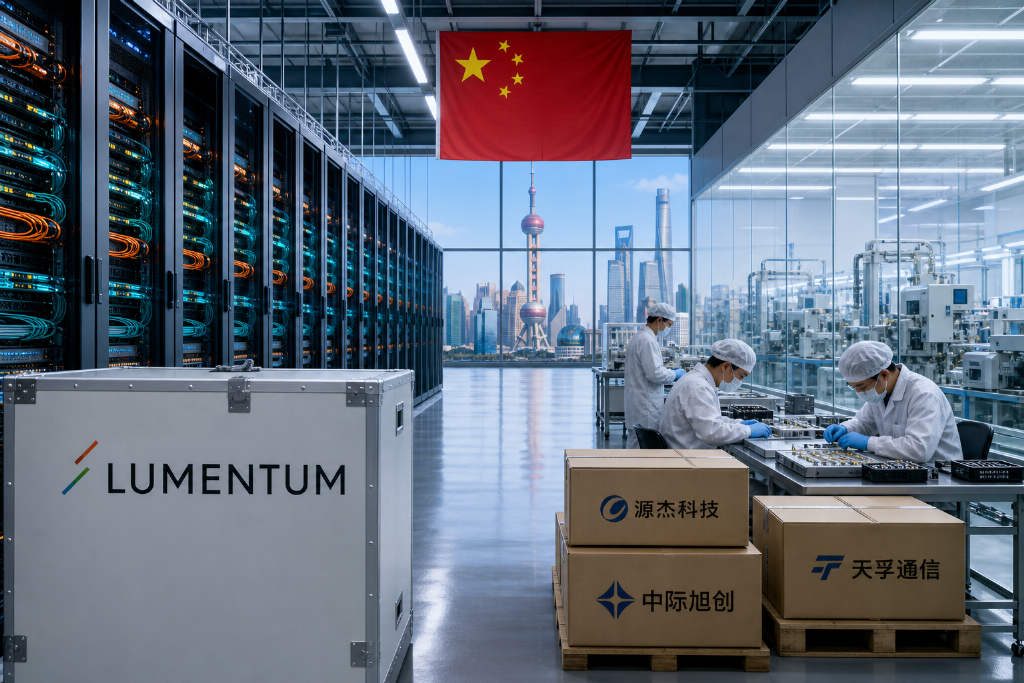
Lumentum’s latest quarter has become a key read-through for the optical communications supply chain, according to a Nomura global AI trend tracking report dated Aug. 12. The company posted June-quarter revenue of $1.01 billion, up 109% year over year, while component revenue in 4QFY26 rose 103% to $649 million. Nomura said those results, along with management guidance, show that shortages in electro-absorption modulated lasers (EML) and continuous-wave (CW) lasers are unlikely to ease through FY26 and FY27. The report highlighted several data points behind that view: narrow-linewidth laser component shipments climbed more than 130%, pump laser shipments rose 80%, and management expects pump laser volumes to grow another 4x over the next few quarters even as capacity remains largely sold out. EML also set another quarterly record, with 200G EML already accounting for more than 25% of total EML revenue and expected to exceed 50% by mid-2027. Nomura also pointed to OCS, or optical circuit switching, as a major growth driver. Lumentum said OCS shipments doubled from 3QFY26 to 4QFY26 and guided for triple-digit year-over-year OCS revenue growth in 1QFY27, while still targeting $400 million in OCS revenue in 2H26. In Nomura’s view, the tight upstream optical chip market is creating a structural share-gain opportunity for Chinese companies including Yuanjie Technology, Innolight, and Tianfu Communication.

750
Nomura says Lumentum results point to persistent optical chip shortages, opening a window for Chinese suppliers
DePIN
2026-08-13 08:31:26

DePIN Compute Networks Shift From Token Subsidies to Revenue Tests as AI Inference Demand Rises

A Foresight article argues that 2026 is shaping up as a transition year for DePIN projects focused on AI compute. The piece says the sector is moving away from token-subsidy narratives and toward proof of protocol revenue and engineering reliability. That shift is happening as AI workloads begin to move from training-heavy demand toward inference-heavy use cases, a change the article says better fits distributed compute networks. The market picture remains mixed. As of mid-July 2026, total DePIN sector market capitalization stood at about $3.46 billion, down roughly 83% from a March 2024 peak of $20.2 billion, with a 23% decline for the year. Yet protocol revenue did not contract at the same pace. In January 2026, monthly on-chain revenue for DePIN projects reached $150 million, driven by payments from enterprises for compute, storage and connectivity. Aethir led with $55 million, followed by Render Network at $38 million and Helium at $24 million. The article says lower listed H100 rental prices on DePIN platforms do not automatically translate into enterprise adoption, pointing to service-level guarantees, engineering friction and procurement barriers. It also highlights io.net’s June 2026 launch of its Incentive Dynamic Engine and Aethir’s disclosed annualized revenue above $100 million as signs that leading projects are trying to tie token economics more directly to real network usage.

820
DePIN Compute Networks Shift From Token Subsidies to Revenue Tests as AI Inference Demand Rises