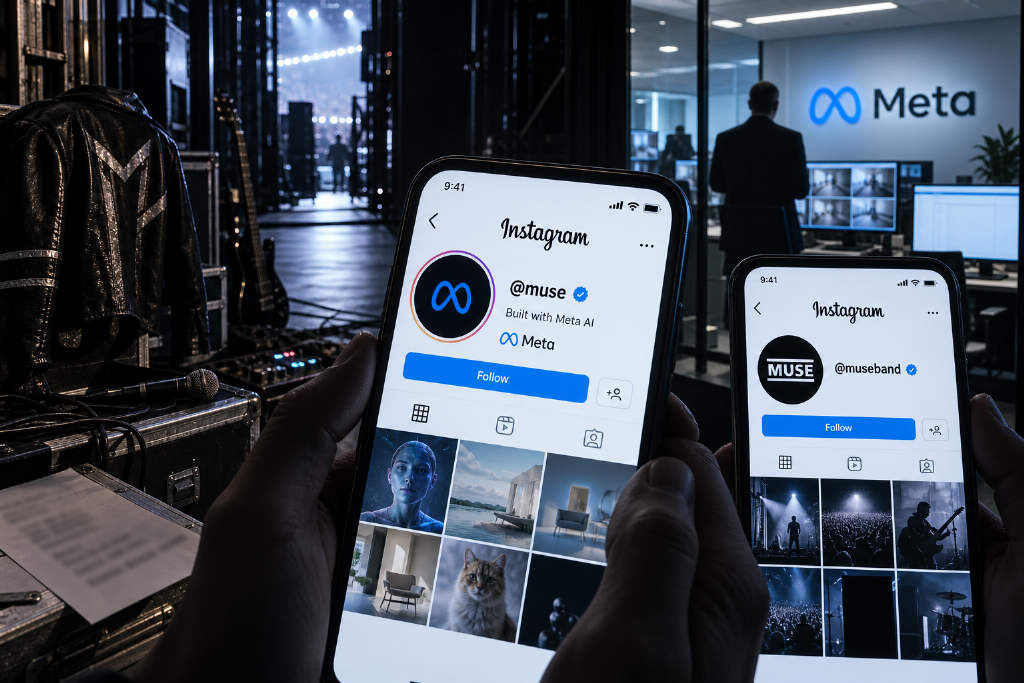
Meta2026-09-10 13:13:54Meta’s takeover of @muse account sparks backlash after band Muse shifts to @musebandMeta has taken control of the Instagram handle “@muse” for its new AI product, forcing the rock band Muse to move its official account to “@museband.” The change drew sharp criticism from users and the band’s fans, and Meta CEO Mark Zuckerberg has also come under public fire over the move. Meta had earlier introduced Muse as a personal AI agent app designed to handle digital tasks such as booking appointments, filling out spreadsheets, and monitoring home cameras. The company said users can decide whether interactions with Muse may be used to train AI models. If they opt in, Meta said it will remove key personally identifying information before using the data to improve the model. The company is also facing pressure tied to AI safety, privacy concerns, and returns on AI investment. Zuckerberg has previously said personal AI agents will be a future growth driver for Meta’s products and revenue, with shopping and transaction-related business models also under consideration.810
Techub2026-09-09 20:36:09Techub input lacks the underlying article body for the Apple Watch privacy claimThe supplied input points to a Techub page categorized under Hot Articles and includes a URL, publication timestamp, and site-level disclaimer text. It does not include the reported story body for the headline claiming that Apple said its new watch does not retain raw audio and that an AI transcription feature has raised privacy concerns. Because the article text itself is missing, the factual record available here is limited to the source, category, link, and timestamp. No product details, direct Apple statement, feature description, or privacy-related claim can be reported as established facts from the provided material. In line with the source-bound requirement, this rewrite does not add any unverified context beyond what appears in the input.200
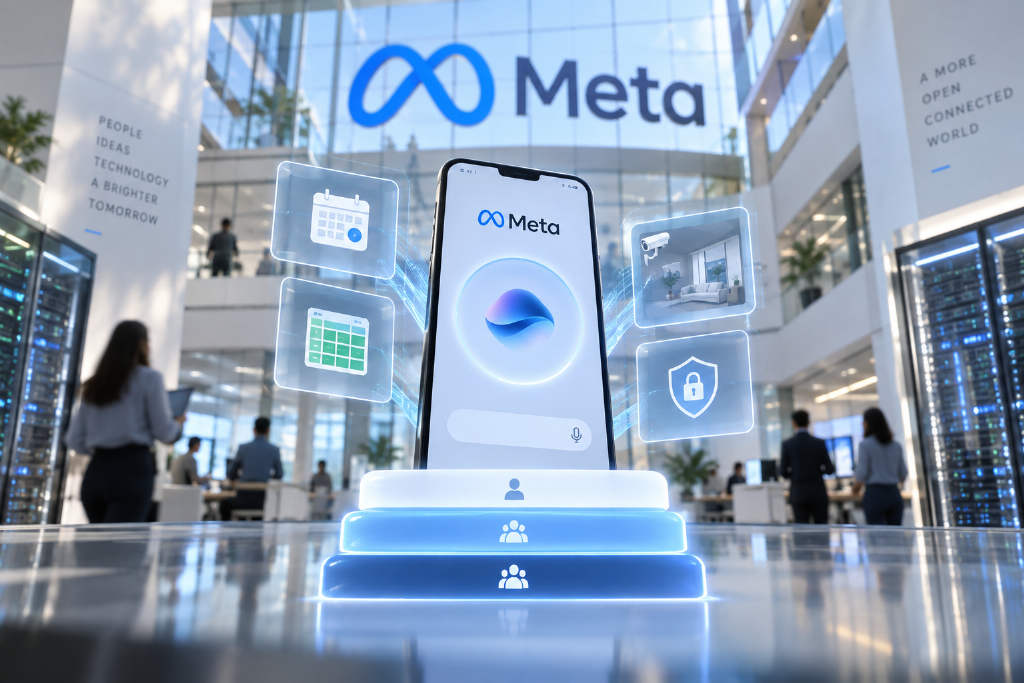
Meta2026-09-09 00:09:15Meta launches personal AI agent Muse with subscriptions priced up to $100 a monthMeta Platforms has introduced Muse, a personal AI agent app designed to handle digital tasks such as booking appointments, filling out spreadsheets and monitoring home cameras. According to Alexander Wang, Meta’s head of AI, the product runs on the company’s Muse Spark family of foundation models and comes in a free tier as well as two paid plans priced at $20 and $100 per month. Meta said Muse operates inside an isolated environment within its computing infrastructure and does not access users’ actual passwords or payment details. The app will also ask for confirmation before carrying out sensitive actions. Users can decide whether to let Meta use their interactions with Muse to train AI models. If they opt in, the company said it will remove key personally identifiable information before using that data to improve its models. The launch comes as Meta faces scrutiny over AI safety, privacy and the return on its AI spending. CEO Mark Zuckerberg has previously said personal AI agents will be a future driver of product development and revenue growth, while the company is also exploring business models tied to AI-assisted shopping transactions.780
Meta2026-09-08 15:28:43U.S. police agencies warn Meta smart glasses are being used to film inside jails and police facilitiesPolice departments and federal agencies across the United States are circulating internal warnings over Meta’s camera-equipped smart glasses, after a series of memos obtained through public records requests raised concerns about covert recording inside secure facilities. According to the Guardian, which reviewed more than a dozen previously unreported documents, the New York Police Department’s counterterrorism bureau sent an early warning in January, describing Ray-Ban Meta glasses as a “security and counterintelligence” threat and telling officers to inspect eyewear brought into inmate cells. The memo said hidden recordings could reveal cell layouts, camera positions, and officer patrol or site protection routines. Other notices came from the Department of Homeland Security’s joint counterterrorism assessment team and fusion centers in New York, Maine, Virginia, Tennessee, and San Diego. One Maine memo said some smart glasses can use AI software, including facial recognition, which could expose officers’ identities. Meta told the Guardian the glasses are built to be noticeable because a light blinks during recording, though the report said that indicator does not always appear to prevent covert filming. The company is also facing separate criticism tied to privacy, including covert filming of women, contractor review of intimate footage, and plans involving facial recognition.320
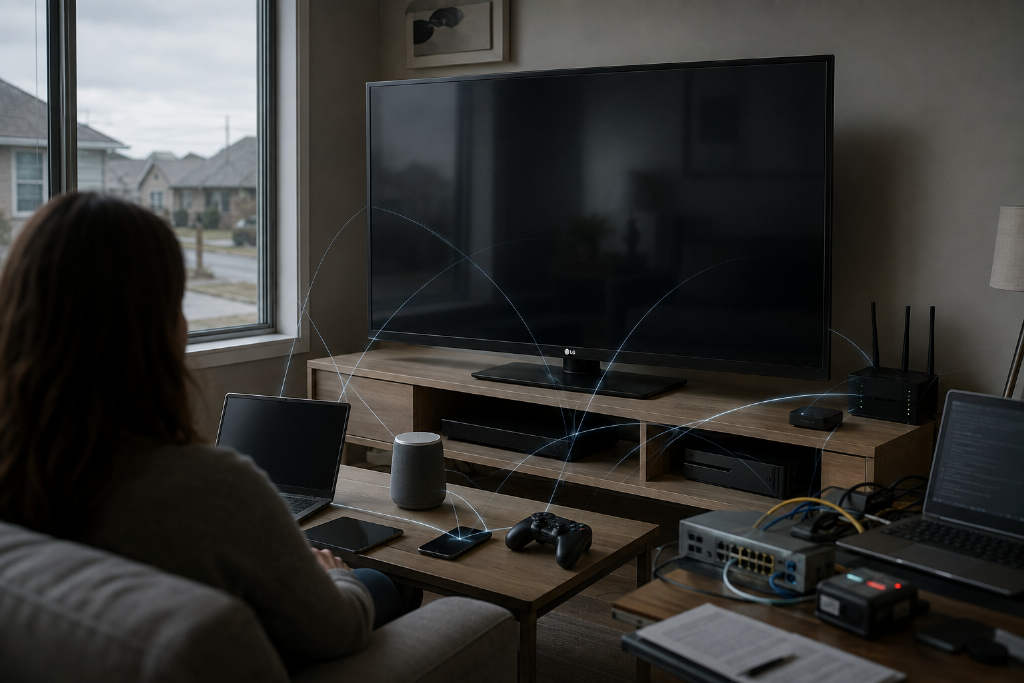
LG2026-09-07 21:46:04Investigation Says LG Smart TVs Can Keep Listening, Scanning Networks, and Tracking Viewing DataA new investigation by Gamers Nexus, conducted with hardware reviewer Level1Techs and three independent security researchers, alleges that LG smart TVs do far more data collection than many buyers would expect. The report says the TVs scan an entire home Wi-Fi network with UPnP, identify connected phones, laptops, and other smart devices, and continue running Automatic Content Recognition, or ACR, even when the set is used only as an external HDMI display. Researchers also said they recovered clear microphone audio from a TV with a dark screen, extracted usable recordings from a hidden microphone after muting the main one, and observed stored audio being uploaded once a previously disconnected TV reconnected to the internet. According to the report, voice commands are converted to plain text and stored in on-device logs, while the microphone can remain active for 10 to 15 seconds after a user stops speaking. The article also points to unresolved remote-code-execution bugs, residential-proxy code found in roughly 42% of apps in LG’s webOS store according to Krebs on Security, and fresh scrutiny over privacy terms after Texas regulators reached a settlement with LG in May. Gamers Nexus said it is now crowdfunding follow-up work on Samsung, Vizio, and other smart TV brands.270
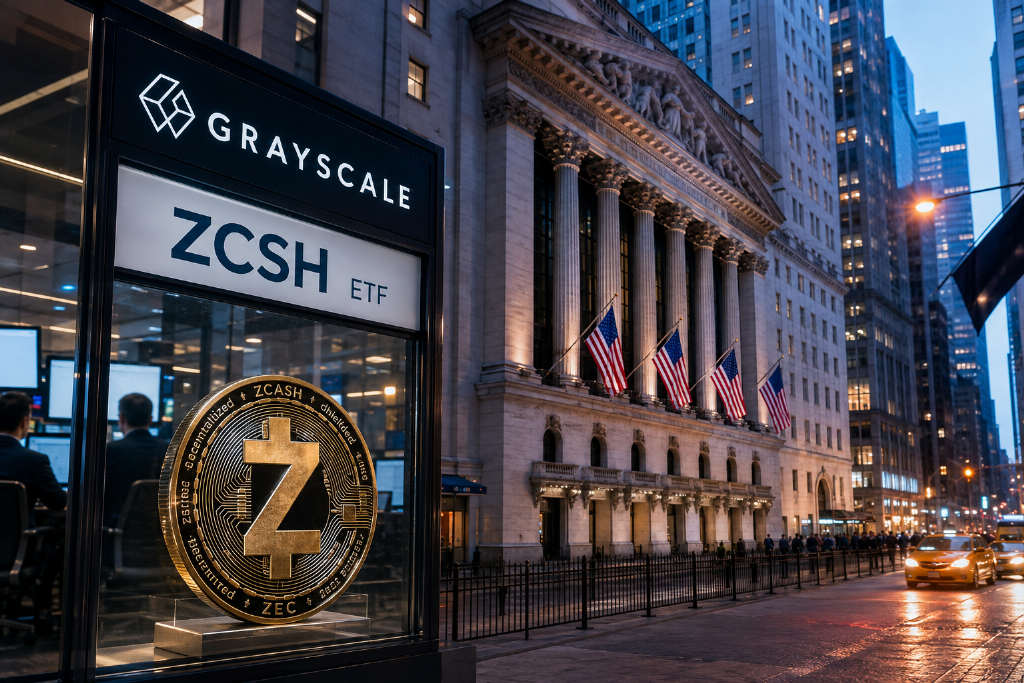
Zcash2026-09-07 12:42:38Zcash Price Hits Highest Since 2016, Market Cap Exceeds $20 Billion as Grayscale ETF Drives RallyZcash (ZEC) surged to its highest price since 2016, briefly reaching $1,249.28 before settling around $1,195, according to CoinGecko. The privacy coin's market capitalization surpassed $20 billion. The rally was fueled by Grayscale's conversion of its Zcash Trust into an exchange-traded fund (ETF), which began trading under the ticker ZCSH on the NYSE ARCA on August 25. The ETF closed at $83.77 on Friday, with assets under management of $463.2 million. Zcash's technology allows users to choose between transparent and shielded transactions, with the latter using zero-knowledge proofs to hide transaction details. Grayscale's head of research, Zach Pandl, said in an August 31 analysis that this feature could become a "must have" for privacy-conscious users, especially as artificial intelligence makes it easier to link on-chain activity to identities. Despite the surge, ZEC remains well below its all-time high of $3,191.93 set in October 2016. The development marks a significant milestone for the privacy coin sector and institutional adoption.870
privacy2026-09-07 12:52:31Privacy Sector Leads Crypto Market with 213% YTD Gain, $33.6B Market Cap: GlassnodeGlassnode reported that the privacy sector is the only sector trading above its October 2025 highs, with a 213% year-to-date gain and a 90% surge in the past 30 days. Its market cap has grown from $7.1 billion to $33.6 billion, approaching Tron's market cap. Zcash (ZEC) led the rally, skyrocketing 2,496% and representing 62% of the sector's value. Even excluding ZEC, the sector gained 85% YTD. In contrast, Bitcoin remains 36% below its all-time high, and the top 200 assets have a median drawdown of 58%. Only 25 of the top 200 assets posted gains this year, with a median decline of 55%. However, the past 30 days saw 91.5% of assets rise, the broadest monthly rally on record, highlighting a stark divergence between the privacy sector and the broader market.930
Sun Yuchen2026-09-06 23:40:25Lawyer Breaks Down the Legal Issues in Sun Yuchen and Jing Tian’s 30 Million Yuan DisputeWuBlockchain used a podcast episode to examine the legal questions surrounding the publicly disclosed 30 million yuan dispute between Tron founder Sun Yuchen and actress Jing Tian. Guest lawyer Jin Jianzhi said the central issue in any dowry claim is not the amount of money itself, but whether the payment was made for a clear purpose of marriage. Courts would usually look at the full chain of evidence, including transfer notes, chat records, meetings with parents, a proposal, and other marriage preparations, rather than relying on a single statement. The discussion also covered procedural issues in the case. According to the program, Sun’s lawyer Zhang Qihuai said on Aug. 27 that Sun had sued Jing Tian and her parents, seeking the return of what he described as dowry, and that the case had already been accepted. Sun’s side also applied for property preservation, while Jing’s side raised a jurisdiction objection. Jin said a court’s approval of property preservation does not mean the court has accepted Sun’s substantive claim. The podcast went on to address surrogacy, defamation, and privacy. Jin said a disclaimer such as 「this article is purely fictional」 does not automatically shield a writer from liability if the content clearly points to a real person. False content could raise defamation issues, while even true but widely disclosed private details could trigger privacy claims.810