ARK

Market Analys
2026-08-27 14:14:10

Weekly crypto leaderboard: STX jumps 121.2% while LAB posts the steepest drop

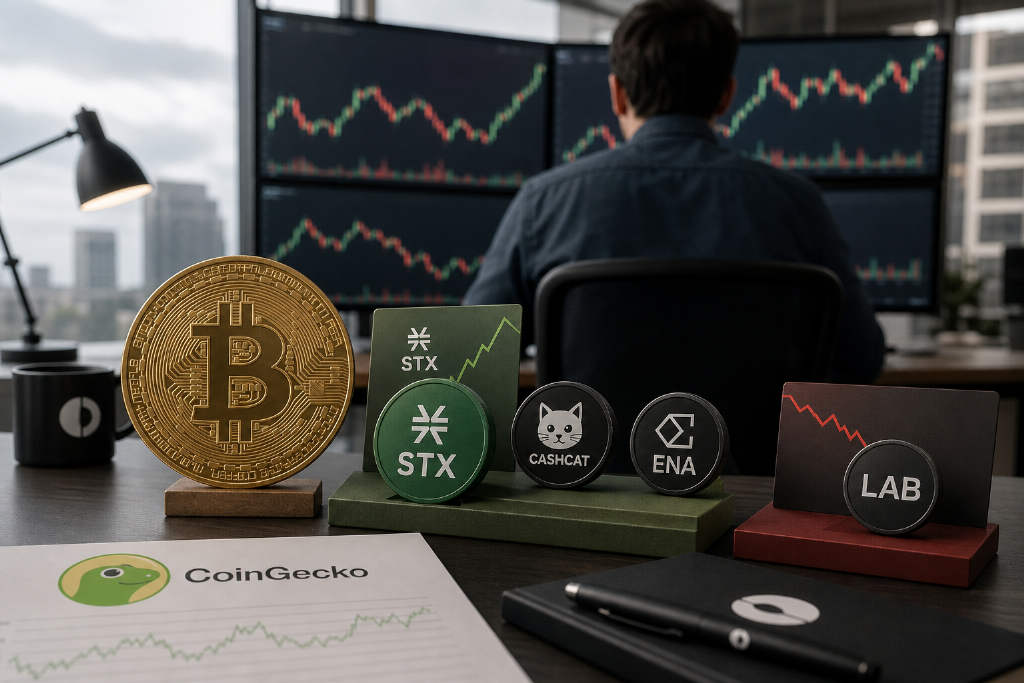
Crypto prices broadly advanced over the past week, but the gains were far from uniform. Drawing on weekly performance data for the top 100 tokens on CoinGecko, Odaily separated the market into three groups: sharp gainers, moderate risers, and the few names that fell even as the broader market moved higher. STX led the field with a 121.2% weekly gain, making it the biggest outlier among the top performers and the only non-Meme token at the very top of the list. CASHCAT, ENA, PENGU, TRUMP, ZEC, PUMP, MELANIA, and PEPE also ranked among the strongest movers, with weekly gains ranging from 49.3% to 102.2%. A second tier of tokens posted gains between 10% and 20%, including LDO, WLD, MORPHO, LINEA, NEAR, HBAR, ASTER, ETHFI, BNB, and ONDO. Odaily said this group was more closely tied to fundamentals and infrastructure themes than the first wave of narrative-led rallies. On the downside, only a handful of tokens fell during the same period. JELLYJELLY, WLFI, JTO, and LAB all posted weekly losses, with LAB down 13%, the weakest showing in the sample. All figures in the report were current as of Aug. 26.
360
Weekly crypto leaderboard: STX jumps 121.2% while LAB posts the steepest drop
Hyperliquid
2026-08-27 09:00:00

HYPE hits a fresh high as Hyperliquid adds USDC reserve income to buybacks

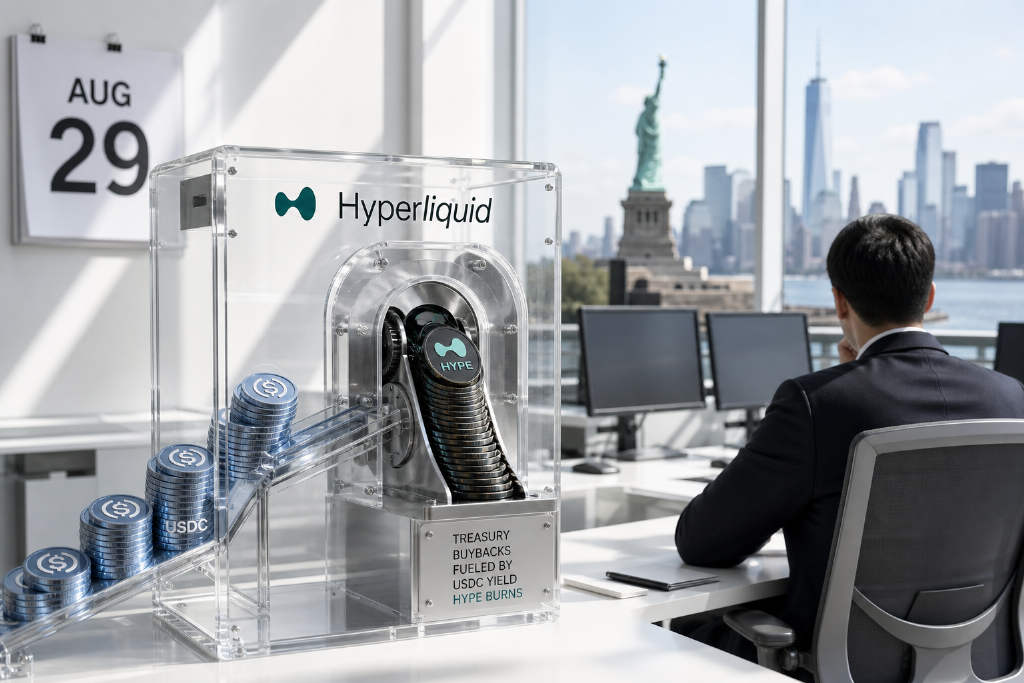
HYPE has climbed to a new record, touching about $83.5 in late August and trading near $82, with a 37.5% gain over the past seven days and a year-to-date increase of more than 220%. The rally is being driven by a mix of supply reduction, policy expectations, and strong operating performance at Hyperliquid. On the supply side, roughly 99% of platform fees continue to be used to buy back and burn HYPE. According to hl.eco, the protocol has generated about $1.27 billion in cumulative net revenue and burned about 48.17 million HYPE on-chain. Hyperliquid also launched AQAv2 on Aug. 26, adding a new source of repurchase funding from income generated by USDC reserves. The first roughly $20 million transfer is expected on Oct. 3, with estimated annual incremental buybacks of $135 million to $160 million. That support is set against a near-term unlock. About 14.18 million HYPE, valued at roughly $1.1 billion, is scheduled to unlock on Aug. 29. Demand-side catalysts include expectations around a compliant U.S. path, spot ETF inflows of about $301 million since launch, and continued accumulation by treasury company PURR. At the same time, Hyperliquid’s fundamentals remain central: about $5.27 trillion in cumulative volume, roughly 1.71 million registered users, around $13.4 billion in open interest, and an estimated 40% share of the perpetual DEX market.

440
HYPE hits a fresh high as Hyperliquid adds USDC reserve income to buybacks
Bitcoin
2026-08-27 01:26:54

SHRINCS BIP published for Bitcoin quantum security, but trade-offs remain

A Bitcoin Improvement Proposal for the post-quantum signature scheme SHRINCS has been published, putting a concrete Bitcoin-focused option into the debate over how the network could defend itself against future quantum attacks. The proposal comes from research led by Blockstream, whose team has already tested SHRINCS in production on the Liquid sidechain. Blockstream Research’s Jonas Nick described it as the first concrete post-quantum signature proposal designed specifically for Bitcoin, while also stressing that it is not meant to be Bitcoin’s final signature system and is not optimal in every respect. The core appeal is size. Existing post-quantum schemes endorsed by the National Institute of Standards and Technology are far larger than Bitcoin’s current ECDSA and Schnorr signatures, creating a major throughput problem if deployed directly on-chain. SHRINCS is still much bigger than Schnorr, but materially smaller than many alternatives, and Blockstream’s estimates suggest Bitcoin could still run at roughly 3 transactions per second under SHRINCS, versus 0.5 TPS for ML-DSA and 0.36 TPS for SPHINCS+. The catch is that SHRINCS is still early. Its BIP says the security proof remains unfinished, and the design introduces statefulness, signature growth over time, and a large fallback recovery path if a signing device is lost. Blockstream is also exploring lattice-based signatures and zero-knowledge proof aggregation, which it estimates could lift Bitcoin throughput to 6.7 TPS if combined with SHRINCS.

230
SHRINCS BIP published for Bitcoin quantum security, but trade-offs remain
Lighter
2026-08-27 02:02:27

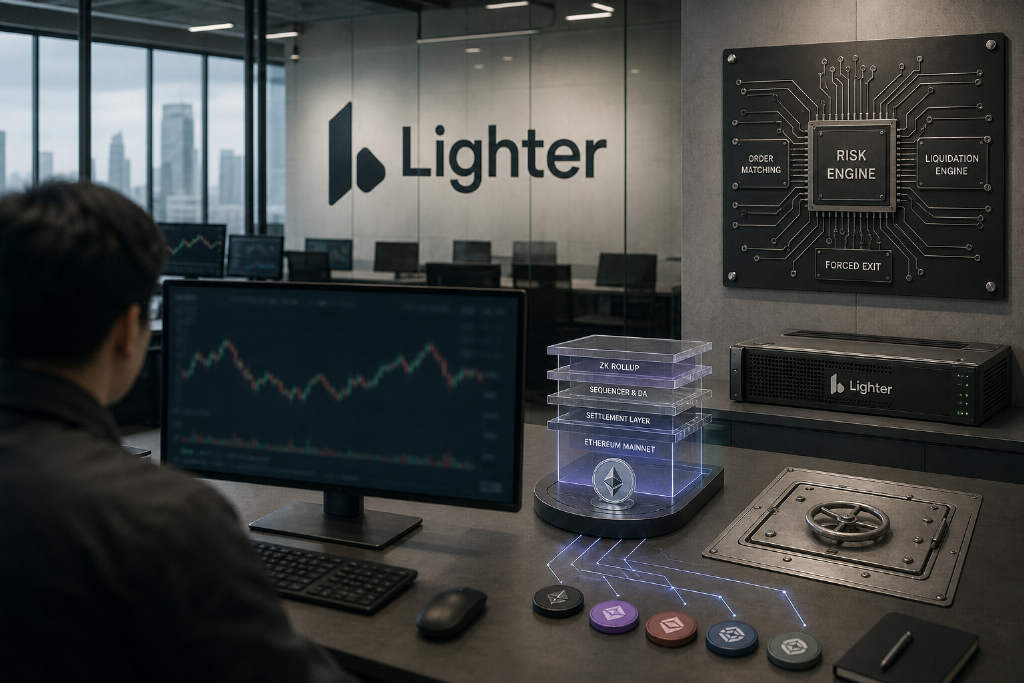
Why LIT Keeps Hitting Highs as Lighter Bets on a Different Perp DEX Architecture

Lighter’s token, LIT, has continued to set fresh highs since Aug. 20, reaching as much as $3.8 on Aug. 26 after bottoming near $0.78 on March 30, according to Foresight News. The report argues that the rally is not only tied to business-side factors such as token buybacks and a partnership with Robinhood, but also to Lighter’s underlying market structure and chain design. Only about 25% of LIT is currently in circulation, while team and investor allocations remain locked until Dec. 30, 2026. Current sell pressure mainly comes from staking rewards, and official dashboard data shows 17.3 million LIT has already been bought back, equal to 1.73% of total supply and 6.92% of circulating supply. Foresight News says Lighter has taken a path distinct from general-purpose Layer 2s and standalone Layer 1 trading chains. Instead of relying on a generic stack, Lighter built a purpose-built ZK Rollup for trading and encoded exchange rules directly into zk constraints. That design, combined with Ethereum-based custody, forced exit guarantees, and direct access to liquidity from Ethereum, Arbitrum, Base and Solana, is presented as the core reason the market has assigned a premium to the protocol and its token.

430
Why LIT Keeps Hitting Highs as Lighter Bets on a Different Perp DEX Architecture
Cathie Wood
2026-08-26 17:40:24

Cathie Wood’s ARKK Has Lagged Both Bitcoin and the S&P 500 Since Launch

Cathie Wood’s flagship ARK Innovation ETF has underperformed both bitcoin and the S&P 500 since its inception on October 31, 2014, according to Protos. Over that stretch through yesterday’s close, ARKK posted a cumulative return of 318%, compared with 367% for the S&P 500 on a total-return basis with dividends reinvested, and 23,214% for bitcoin. The report argues that even tactical investors trying to time entries and exits would have struggled to find sustained outperformance, as Ark Invest underperformed in most calendar years across the period. ARKK did beat bitcoin during especially weak years for BTC, including 2018 and 2022, but failed to do so over the long run. Protos also highlighted ARKK’s steep drawdown from its February 16, 2021 peak of $159.70 per share, noting that the fund has lost 46% since then while the S&P 500 has gained 65%. Morningstar previously ranked ARK Investments as the worst fund family for shareholder value destruction over the decade through 2023, estimating losses of roughly $14.3 billion.

150
Cathie Wood’s ARKK Has Lagged Both Bitcoin and the S&P 500 Since Launch
Hong Kong Web
2026-08-26 03:16:12

Hong Kong Web3 Carnival sets April 19-21, 2027 dates at HKCEC

The 2027 Hong Kong Web3 Carnival will take place from April 19 to April 21 at the Hong Kong Convention and Exhibition Centre, according to an announcement cited by MarsBit. The event brand was jointly launched by Wanxiang Blockchain Labs and HashKey Group, with W3ME serving as organizer. First introduced in 2023, the gathering is now entering its fifth year. Organizers said the previous four editions drew more than 500 exhibiting projects, over 1,600 industry leaders, more than 150,000 in-person attendees, and more than 600 side events. Past speakers listed in the announcement include Hong Kong Financial Secretary Paul Chan Mo-po, Ethereum co-founder Vitalik Buterin, and ARK Invest CEO and CIO Cathie Wood. The announcement also framed the 2027 edition around a set of industry questions, including where competition shifts as compliance becomes more established, how tokenization can move from proof of concept to scaled deployment across issuance, circulation and trading, how stablecoin payments and on-chain settlement may reshape financial infrastructure, and how AI and blockchain may intersect in the next phase of application and ecosystem development.

160
Hong Kong Web3 Carnival sets April 19-21, 2027 dates at HKCEC
ChainFeeds
2026-08-25 02:10:38

ChainFeeds research roundup covers Robinhood, a Zcash ETF filing, AI agent payments and Ethereum’s EIP-8363

ChainFeeds’ Aug. 25 research digest pulled together several market-focused reads spanning tokenized equities, privacy-coin ETFs, machine payments, U.S. debt risk and Ethereum issuance. One featured piece recapped comments from Robinhood CEO Vlad Tenev, who framed memecoins as a potential onchain gateway connecting stock tokens, community identity and broader financial infrastructure on Robinhood Chain. Another examined Grayscale’s latest amended filing tied to a Zcash trust-to-ETF conversion, outlining updated fee terms, custody roles, creation and redemption mechanics, and why Zcash’s optional privacy model may make it more compatible with traditional compliance systems than other privacy coins. The roundup also highlighted Tiger Research’s view that AI agent payments are shifting from a standards race to a real-world distribution battle, with crypto rails such as x402 and stablecoins competing alongside payment incumbents. Ray Dalio’s comments on U.S. debt were included as well, with attention on deficits, refinancing needs, interest costs and portfolio positioning that favors less exposure to debt assets, more gold and a small Bitcoin allocation. Finally, IOSG Ventures offered a quantitative review of Ethereum proposal EIP-8363, arguing the proposal is aimed at network security and stake-rate constraints rather than a simple attempt to drive ETH issuance to zero.

350
ChainFeeds research roundup covers Robinhood, a Zcash ETF filing, AI agent payments and Ethereum’s EIP-8363
Zcash
2026-08-25 10:29:08

Zcash hits an eight-year high as Winklevoss twins tie its case to the rise of AI

Privacy coin Zcash climbed into the $836 to $857 range, reaching an eight-year high and extending its gain for the year to more than fourfold, according to Techub News. The move came as Gemini founders Cameron and Tyler Winklevoss made a series of recent comments linking Zcash’s long-term value directly to the development of artificial intelligence. The twins argued that anyone bullish on AI should also be bullish on Zcash, saying private money will be critical in an era of superintelligence to guard against AI-driven financial surveillance. They also pointed to ZEC’s capped supply of 21 million coins, adding that the number of whole units currently in circulation is even smaller than the global population of millionaires. The report also said Grayscale has converted its Zcash trust into a spot ETF, which is expected to list on NYSE Arca on Aug. 25 under the ticker ZCSH. Grayscale plans to use 100% of sponsor fees during the 12 months after the ETF registration statement becomes effective to support marketing, development, and education for the Zcash network.

250
Zcash hits an eight-year high as Winklevoss twins tie its case to the rise of AI