Nuclei System2026-09-15 09:26:13Shanghai RISC-V CPU Firm Nuclei System Technology Starts A-Share IPO Process, Xiaomi Fund Holds 6.12%Shanghai-based RISC-V CPU company Nuclei System Technology has begun the A-share IPO process after filing for listing guidance registration with the Shanghai office of the China Securities Regulatory Commission on Sept. 11, according to a Sept. 14 report by Xindongxi. China Merchants Securities is serving as the tutoring institution for the listing process. Founded in September 2018, the company has registered capital of RMB 5.0937 million, no controlling shareholder, and is led by founder, chairman and general manager Hu Zhenbo. Nuclei System Technology has already been listed on the National Equities Exchange and Quotations, also known as the New Third Board. It was named a national-level specialized and sophisticated "Little Giant" enterprise in July 2023 and a national key "Little Giant" enterprise in December 2024. Its interim report shows 2026 first-half revenue of RMB 36.8745 million, up 41.09% year over year. RISC-V IP licensing revenue reached RMB 34.0062 million, accounting for 92.22% of total revenue and rising 41.52% from a year earlier. Net loss widened to RMB 57.3016 million, while R&D spending climbed to RMB 57.3041 million. Xiaomi Group-backed Xiaomi Yangtze River Fund is the company’s fifth-largest shareholder with a 6.12% stake.750
Intel2026-09-11 02:21:11Intel Raises CPU Prices and Weighs Small Core EOL as Profit Pressure BuildsIntel is pushing through another round of CPU price increases while weighing the retirement of parts of its low-margin Small Core lineup, according to the MarsBit report citing DigiTimes supply-chain sources. The article says Intel began a sustained PC CPU price hike cycle in late 2025 as supply-chain costs rose. Prices were up about 10% in the first quarter of 2026, and some consumer and server CPUs saw another increase in July, ranging from tens of dollars to more than $1,000 per chip. Supply-chain sources quoted by Taiwan-based DigiTimes said Intel’s PC CPUs are expected to rise another 10% on Oct. 5, 2026, while some low-margin small-core products may enter end-of-life procedures. The report frames the move as a deliberate trade-off. Intel is steering capacity and R&D toward higher-margin server CPUs and premium PC products, rather than preserving broad product coverage across every computing segment. That may help profit in the near term, but the article argues it could weaken Intel’s position in industrial computing, IoT, and embedded markets, where long-term supply commitments matter. It also points to rising competitive pressure. Mercury Research data cited in the report shows AMD’s share of x86 client CPU shipments reached 30.3% in Q2 2026, while Intel’s fell to 69.7%, the first time below 70% since 1995.1020
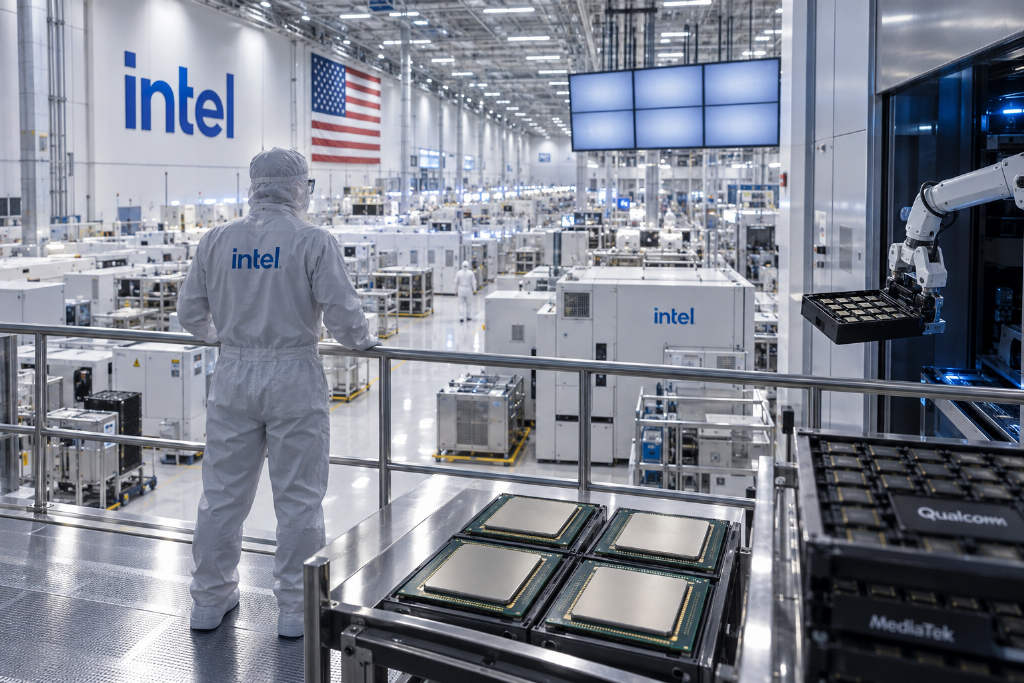
Intel2026-09-09 03:05:01Intel said to raise CPU prices again from Oct. 5, with low-margin chip lines at riskIntel is preparing another increase in official CPU prices starting Oct. 5, according to a DigiTimes report citing supply-chain sources. The report said the hike could exceed 10%, marking Intel’s third round of price increases since late 2025 and the biggest one yet. It added that the impact may extend beyond mainstream desktop processors, with entry-level "Small Core" chips used in industrial PCs, IoT devices and embedded systems reportedly facing possible discontinuation. The report said Intel had already raised CPU pricing several times, including a near-10% increase in the first quarter of 2026 and a second round on July 2 that ranged from tens of dollars to more than $1,000 depending on SKU, with server chips seeing the sharpest moves. It cited examples including Core Ultra 7 270K Plus, which moved from $299 to $349, and Core Ultra 5 250K Plus, from $199 to $229. Intel has not officially confirmed the latest timing or price increase. DigiTimes said supply-chain sources linked the move to capacity being prioritized for higher-margin server CPUs, while low-margin products may be cut back. The report also said Qualcomm and MediaTek could gain an opening in industrial and embedded markets if Intel retreats from those segments.420
Tencent2026-08-22 06:44:23Tencent chip lead Gao Jianlin leaves to start a RISC-V AI CPU ventureBlockBeats reported on August 22, citing MaxForAI, that Gao Jianlin, a core figure in Tencent’s chip R&D work, has left the company and started his own venture. The new startup is focused on high-performance CPUs built on the RISC-V architecture, with an emphasis on AI servers and Agentic AI. Gao previously helped build Tencent’s FPGA hardware team, moved into AI chips in 2018, and later founded the Penglai Lab in 2020. The report says he also worked on RISC-V-related projects at Tencent and was involved in chip architecture, verification, and backend work. The company name, fundraising status and product timeline have not been disclosed.1430
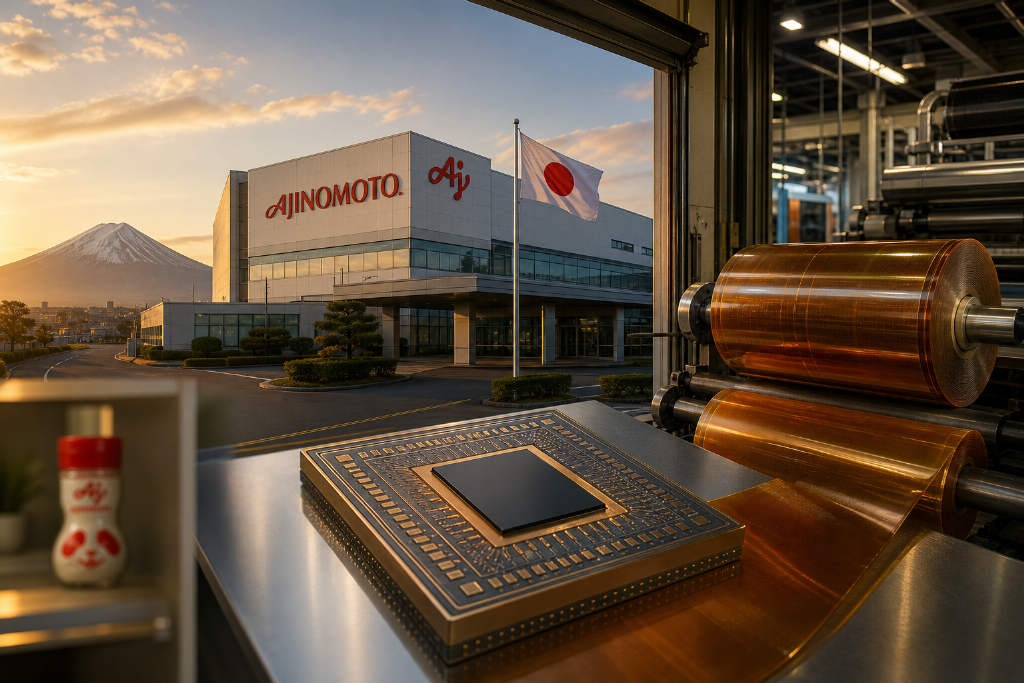
Ajinomoto2026-08-20 03:49:24Ajinomoto says ABF film powers high-margin chip materials business with over 95% global shareAjinomoto, best known as a Japanese food company, said its electronic materials business delivered outsized profit in the latest quarter, driven by ABF, or Ajinomoto Build-up Film, a key insulating layer used in IC substrates for advanced processors. The company said the segment generated JPY 33.1 billion in revenue and JPY 19.1 billion in business profit, implying a 57.7% margin. While the unit accounted for about 8% of group revenue, it contributed 32% of profit. According to the company, ABF holds more than 95% of the global market for insulating films used in high-performance semiconductors. The material is used in substrates for high-end CPUs and GPUs, and demand has benefited from larger AI accelerator packages, more substrate layers, tighter line widths, and stricter thermal expansion requirements. Ajinomoto said growth came from an improved product mix rather than price increases. The report also outlined competitive and technological pressure, including efforts by Sekisui Chemical, U.S. startup Thintronics, and longer-term interest in glass substrates. In response, Ajinomoto is expanding capacity in Japan, with investment already underway in Gunma and Kawasaki and more spending planned through 2030.1220
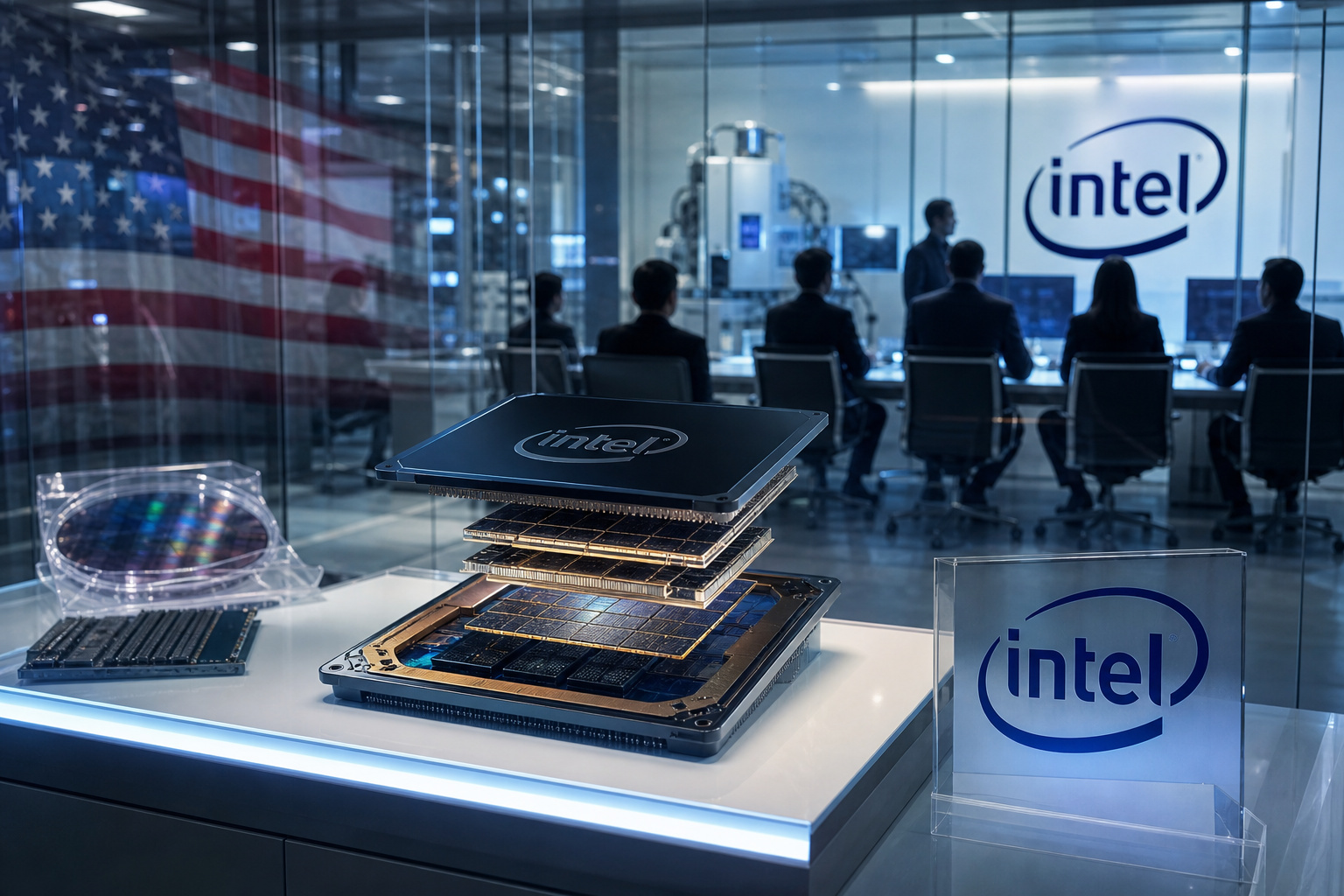
Intel2026-08-13 03:36:03Intel CEO Chen Liwu Explores New CPU-Memory Stacking ArchitectureIntel CEO Chen Liwu said during an appearance on the latest episode of the TechSurge podcast on Aug. 13 that demand for CPUs is enormous and that he fields daily calls from other chief executives who want more supply. To meet that demand, he said Intel is aggressively expanding CPU capacity and also developing new CPU architectures. Turning to memory, Chen said there are many ways to stack CPUs and memory, and that the industry has not innovated enough in memory, creating room for exploration. He acknowledged that he once avoided memory investments because he considered it a commodity business, but said that view has now changed. Chen also revealed that his friend Shock Lee, a former head of SK hynix, has joined, and he hinted that observers might guess what he is working on, while adding that nothing is ready to announce. He said he looks at short-, medium-, and long-term demand. On commitment, Chen said he typically stays at companies for 10 years — he cited Cadence — and that he is in it for 15 years at Intel. He told the board he focuses on a 10- to 15-year future and wants to build a platform that benefits the entire industry.1420
Nvidia2026-07-24 07:03:07BofA says Nvidia and AMD are really fighting to set the benchmark for AI agent CPUsBank of America frames the Nvidia-AMD CPU debate as something larger than a product comparison. In its view, the real contest is over who gets to define the performance benchmark for the AI agent era, a market it sizes at $170 billion. Nvidia is pushing a faster-core approach with its newly unveiled Vera CPU, which carries 88 custom ARM cores, 1.2TB/s of memory bandwidth and a single compute-die design. The company’s argument is that agentic AI depends on repeated CPU-GPU interaction, where each step waits on the previous one, making single-thread performance critical to overall response times. AMD is expected to answer at its Thursday AI 2026 Day event with a different framing. Rather than accepting single-core speed as the main metric, BofA expects AMD to emphasize concurrency and rack-level throughput in production environments. The bank notes that EPYC 9965 already delivers 2.4 times Vera’s rack-scale throughput in a 100kW deployment scenario, with next-generation EPYC 6 projected at 3.3 times. The dispute also extends to ecosystem alignment: Nvidia is backing ARM, while AMD and Intel argue that enterprise databases, middleware, security platforms and applications remain deeply optimized for x86. BofA maintains buy ratings on both stocks, with price targets of $350 for Nvidia and $620 for AMD.250
Intel2026-07-24 01:00:01Intel reports $16.1 billion in Q2 revenue as data center sales jump 59%Intel reported revenue of $16.1 billion for the second quarter of 2026, up 25% year over year and ahead of the $14.42 billion analyst consensus tracked by LSEG. On a non-GAAP basis, the company posted net income of $2.2 billion, or $0.42 per share, compared with a loss a year earlier and above the $0.21 per-share estimate. The standout segment was Data Center and AI, which generated $6.3 billion in revenue, up 59% from a year ago, as CEO Lip-Bu Tan said CPU demand in data centers is "taking off" and running ahead of supply. Intel also said it has signed 10 long-term agreements of that kind while operating under supply constraints. Foundry revenue rose 31% to $5.8 billion, though the unit remained in an operating loss due in part to internal manufacturing activity. Intel also disclosed Fortinet as the first publicly named customer for its foundry business. Looking ahead, the company raised its 2026 capital spending plan to $20 billion from $18 billion and issued third-quarter guidance above Wall Street expectations, including revenue of $15.8 billion to $16.8 billion, non-GAAP EPS of $0.38, and gross margin of about 42%.1970