BackEl Niño

El Niño

nuclear fusio
2026-08-30 10:08:43

Nuclear fusion may not arrive in time for the current climate fight, BlockTempo says

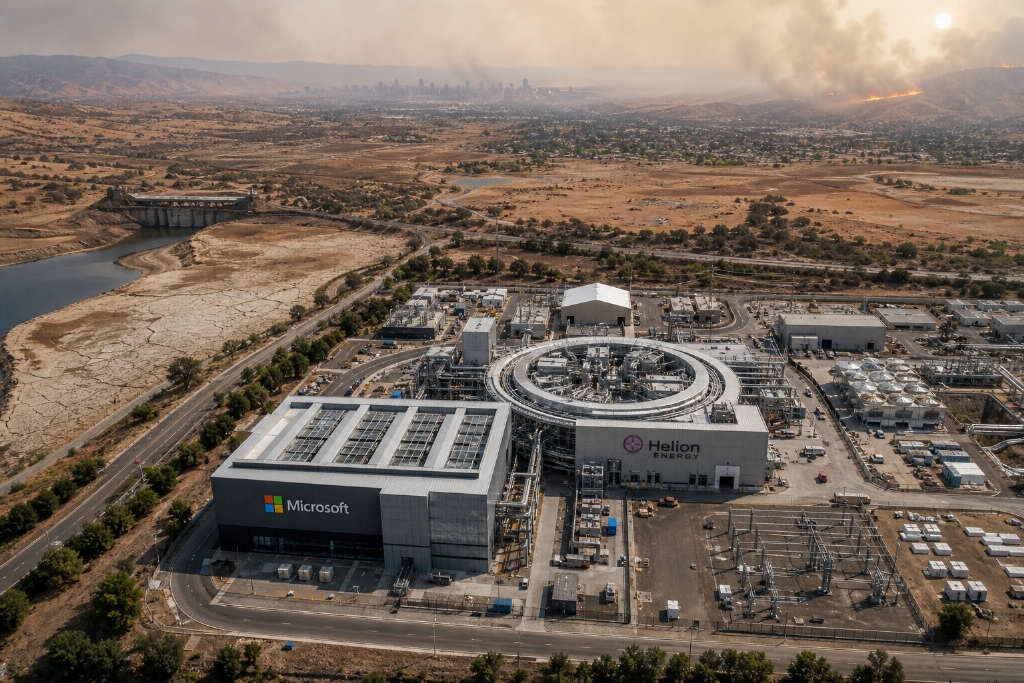
A BlockTempo article argues that nuclear fusion, despite a string of technical advances and growing investor backing, is unlikely to play a meaningful role in cutting global emissions during the most critical decades of climate action. The piece ties renewed interest in fusion to intensifying El Niño conditions, noting that NOAA assessed a more than 90% chance of the event developing into a “super El Niño” after the Niño 3.4 index reached +2.7°C in mid-August. Against that backdrop of heatwaves, drought and extreme rainfall, fusion is again being framed as a possible long-term clean energy answer. The article lays out why fusion attracts such optimism: no greenhouse gas emissions during the reaction, fuel sources centered on deuterium and tritium, no meltdown scenario comparable to Chernobyl or Fukushima, and a much lighter waste burden than fission. It also points to more than $7 billion invested in private fusion companies over the past decade, along with Microsoft’s 2023 power purchase agreement with Helion for electricity starting in 2028. Still, the report says climate deadlines come much sooner than fusion deployment. It places engineering net gain in the late 2020s or early 2030s, first demonstration plants in the mid-to-late 2030s, and large-scale commercial buildout much later. With ITER’s first plasma pushed beyond 2034 and major hurdles still unresolved, BlockTempo concludes fusion is more likely to matter after 2050 than before it.

60
Nuclear fusion may not arrive in time for the current climate fight, BlockTempo says
US inflation
2026-08-27 04:54:09

Hotter U.S. PCE revives rate-hike bets as Nvidia earnings steady the AI trade

U.S. markets turned cautious after July personal consumption expenditures data came in hotter than expected, pushing traders to lift bets on additional Federal Reserve tightening. The report showed headline PCE rising 3.7% year over year and 0.2% month over month, while core PCE stayed at 3.3% annually and 0.2% monthly. Treasury yields moved higher across the curve, with the 10-year near 4.66%, the 2-year around 4.22%, and the dollar index climbing to roughly 99.15. Gold fell under pressure from a firmer dollar and higher rate expectations, while oil traded weaker as rhetoric around Iran kept geopolitical risk in focus. Another inflation thread is building in food markets. Attacks on Black Sea ports cut Ukraine’s August grain shipments to about 20% of potential capacity, wheat futures on CBOT touched their highest level in nearly three years, and fertilizer supply disruptions tied to Hormuz added to cost pressure. HSBC warned that the 2026/27 global grain market could post its first supply-demand gap since 2020/21 and the largest shortage since 2006/07, while JPMorgan said global food inflation could rise from 2.8% in the first half of 2026 to 5% in the first half of 2027. After the bell, Nvidia delivered the day’s biggest market jolt. The chipmaker reported $96.2 billion in Q2 revenue and $89.0 billion from data center sales, both well ahead of expectations, and guided for about 70% revenue growth in fiscal 2028. The results helped revive AI spending sentiment and lifted software, storage, optical networking, and cybersecurity names in after-hours trading.

180
Hotter U.S. PCE revives rate-hike bets as Nvidia earnings steady the AI trade
Federal Reser
2026-08-26 02:41:08

Fed officials sharpen inflation warnings ahead of Jackson Hole

Federal Reserve officials and IMF Managing Director Kristalina Georgieva struck a cautious tone ahead of Jackson Hole, keeping inflation and policy tightening at the center of the market’s focus. Boston Fed President Susan Collins said holding the current federal funds target range requires ongoing evidence that inflation is actually moving lower, and added that tighter policy would be appropriate soon if that evidence fails to appear. Richmond Fed President Tom Barkin, speaking separately, warned that the United States’ more than $40 trillion public debt would eventually face a "reckoning," even if no one can say when. Fresh data added to the pressure. The Conference Board’s consumer confidence index fell to 89.4 in August, the lowest level in seven months and below expectations, even as assessments of current conditions improved. Expectations for the next six months weakened sharply, with consumers turning more pessimistic on business conditions and the labor market. At the same time, inflation expectations moved higher. The debate now turns to whether higher rates can address the drivers of inflation now cited by policymakers: tariffs, oil prices linked to the Iran war, and large-scale AI investment. Markets are watching two immediate events: the July PCE release and Friday’s Jackson Hole speech from Fed Chair Kevin Warsh, his first major address since taking office.

300
Fed officials sharpen inflation warnings ahead of Jackson Hole
Policy and Re
2026-08-25 05:06:10

Fertilizer Prices Move First as El Niño Risks Build, Even Without a Broad Grain Rally

Expectations for a strong to super El Niño in late 2026 are rising, and weather disruptions are already showing up across India, Southeast Asia, Europe, and southern China. Yet the article argues that this does not automatically point to a broad collapse in staple crop output. Instead, the more immediate story is in fertilizers, where prices and profit expectations have begun to move ahead of grain markets under a different set of drivers. According to the original analysis by Wanzhou, published by Wallstreetcn and carried by MarsBit, urea is being supported by export expectations and higher overseas prices, phosphate fertilizers are tightening under sulfur shortages, resource constraints, and shipping disruptions, and potash is leaning on a more classic supply-side resource cycle. The piece stresses that current fertilizer strength cannot be reduced to a simple chain of El Niño leading to surging food prices and then higher fertilizer prices. The report also separates the outlook by product. Urea faces a second-half test as new capacity comes online and exports determine whether domestic oversupply can be absorbed. Phosphates are entering what the article calls a rare “supply-led” phase, while potash appears weak in the domestic spot market in the short term but firmer over the medium term because of concentrated global supply and maintenance-related disruptions. The key question now is whether weather-related crop risks in 2027 will turn a supply-driven rally into a broader supply-demand upswing.

130
Fertilizer Prices Move First as El Niño Risks Build, Even Without a Broad Grain Rally
Policy Regula
2026-08-25 05:04:00

Fertilizer prices are moving ahead of grain as El Niño risks build, with phosphate, potash and urea following different paths

Expectations for a strong to super El Niño in 2026 are heating up, and unusual weather has already started to hit key agricultural regions including Southeast Asia, India, Europe and southern China. But the source article argues that the immediate effect is not a blanket collapse in global staple crop output. Instead, the earlier and clearer market move has appeared in fertilizers. Urea has been supported by export economics and overseas pricing, phosphate by sulfur shortages, resource constraints and shipping disruptions, and potash by tightening international supply. The piece frames the current rally as largely supply-driven rather than a direct reaction to a surge in grain prices. It also draws a sharp distinction across products. Urea faces rising domestic output and now depends heavily on whether exports can absorb new supply. Phosphate is described as entering a rare availability-led cycle, with Chinese export policy becoming a critical profit lever as overseas shortages deepen. Potash looks closer to a classic resource cycle: spot demand in China is soft in the near term, yet global supply disruptions could still support the medium-term price floor. The broader point is that food security, not El Niño alone, is reshaping the sector’s strategic role. If weather shocks push crop prices and planting returns higher in 2027, today’s supply-led fertilizer trade could shift into a second phase driven by both supply and demand.

170
Fertilizer prices are moving ahead of grain as El Niño risks build, with phosphate, potash and urea following different paths
Policy and Re
2026-08-18 10:15:08

Triodos says Europe’s summer heatwave could wipe out nearly all EU growth in 2026

A summer heatwave could erase about 1% of the European Union’s 2026 GDP, or roughly €180 billion, according to estimates cited from Dutch bank Triodos Bank. The report says the biggest hit comes from weaker labor productivity as extreme heat cuts working hours and halts activity in outdoor construction and logistics. France is seen as the hardest-hit economy, with GDP potentially reduced by 1.4% and full-year growth turning into a 0.6% contraction, while the Netherlands could see growth nearly stall. Triodos breaks the damage into four channels: labor losses, tighter food supply and lower dairy output, power disruptions and higher electricity prices, plus transport bottlenecks across land and inland waterways. The report also points to low water levels in rivers including the Seine, Rhine and Danube, pressure on nuclear generation, and weaker crop output for corn and sunflower. Analysts cited in the piece say these are supply-side shocks that conventional rate cuts or fiscal stimulus cannot easily offset. The article also highlights inflation risks for the European Central Bank, wildfire losses, heat-related excess deaths, and a possible shift in summer tourism from southern Europe to cooler northern destinations. Triodos chief economist Hans Stegeman warned that climate damage is no longer a distant economic risk and argued that cutting the cost requires slowing climate change itself.

500
Triodos says Europe’s summer heatwave could wipe out nearly all EU growth in 2026
global trade
2026-08-15 07:08:01

Oxford Economics flags concentrated trade risk across 27 maritime choke points

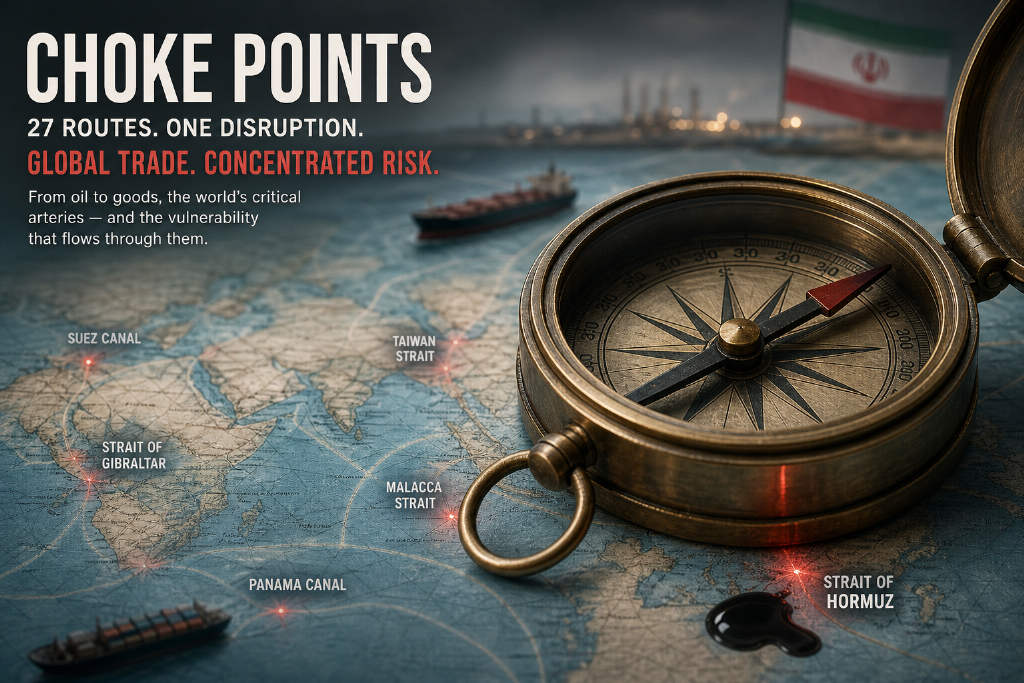
Oxford Economics said in a new report released on Aug. 15 that global trade is heavily dependent on 27 key maritime choke points, leaving energy flows, commodity shipments and the wider economy exposed if any one of those routes suffers a major disruption. The report said the nearly six-month U.S.-Iran conflict has already hindered shipping through the Strait of Hormuz, a core artery for global energy transport that handles about one-fifth of world oil supply. Rising attack risks for commercial vessels have slowed shipping, lifted international oil prices and pushed U.S. gasoline prices above $4 a gallon, adding to inflation pressure. Beyond Hormuz, the report identified the Strait of Malacca, the Taiwan Strait, the Suez Canal, the Strait of Gibraltar and the Panama Canal as other critical chokepoints. It said Asia has the world’s densest network of trade routes, with the Strait of Malacca linking the Indian and Pacific oceans, while the Taiwan Strait carries about one-quarter of global trade flows. Oxford Economics also warned that geopolitical conflict and climate change are increasing risks, citing lower water levels in the Panama Canal due to drought and El Niño, which have limited cargo loads and raised shipping costs.

620
Oxford Economics flags concentrated trade risk across 27 maritime choke points
Deutsche Bank
2026-08-12 05:00:00

Deutsche Bank says markets are pricing in an almost flawless mix of growth, mild Fed hikes and easing oil prices

Deutsche Bank argues that global markets are leaning on a combination that leaves little room for error: resilient growth, limited Federal Reserve tightening, manageable energy disruption and lower oil prices. In a recent report, macro strategist Henry Allen said record highs in U.S. equities and tight credit spreads suggest investors still believe the economy can keep expanding, even as rate markets are only pricing in modest additional tightening. That gap, the bank said, could become difficult to sustain if inflation does not cool as expected or if growth stays stronger for longer. The report also points to a disconnect in energy pricing. Brent crude has fallen back from recent highs, yet the Strait of Hormuz has not returned to normal operations, no agreement to restore transit has been reached, and infrastructure risks remain visible after the Houthis claimed an attack on Saudi Arabia’s Jazan refinery. Deutsche Bank said current forward pricing assumes supply conditions will improve, but that expectation still depends on developments that have not materialized. Its broader warning is that the market’s current setup works only if several favorable conditions arrive together. If strong growth keeps inflation pressure alive, or if energy disruptions persist, investors may need to reprice risk assets, interest rates and inflation expectations at the same time.

1040
Deutsche Bank says markets are pricing in an almost flawless mix of growth, mild Fed hikes and easing oil prices