ODM

ChainCatcher
2026-08-27 06:15:21

TrendForce says Samsung Electro-Mechanics raises Q4 2026 MLCC quotes for OEM and ODM clients

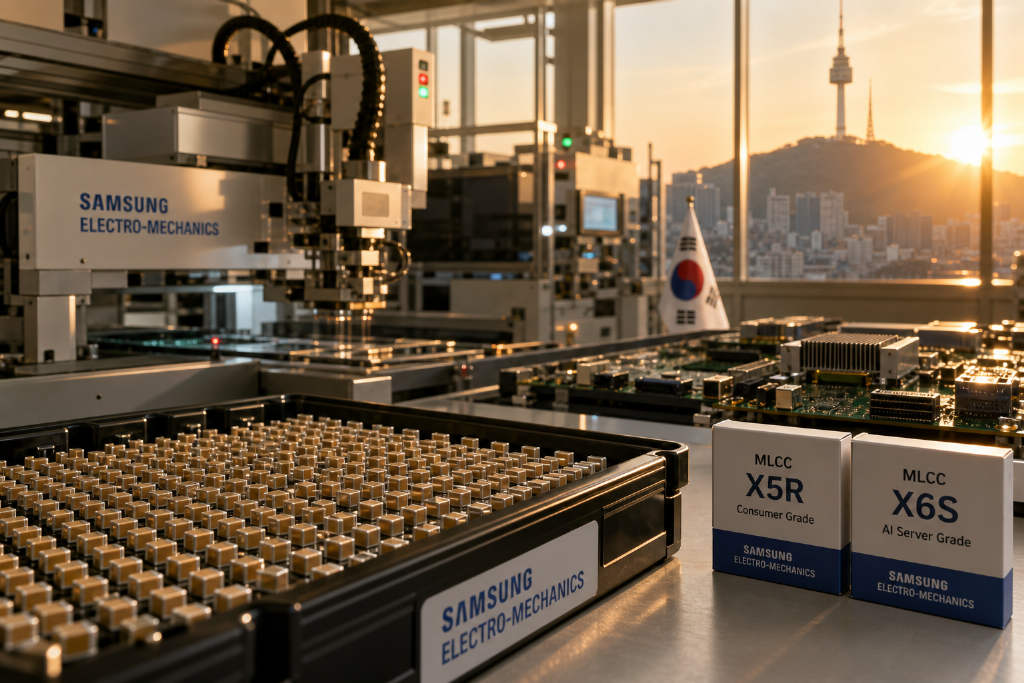
Samsung Electro-Mechanics has started raising fourth-quarter 2026 quotations for OEM and ODM customers, according to the latest MLCC industry research from TrendForce. The move, first reported in the research note cited by ChainCatcher, signals that the MLCC market has entered an upward phase. TrendForce estimates that Samsung Electro-Mechanics will raise prices for consumer-grade X5R products by an average of 25% to 30% for OEM and ODM clients. The research says the company is using the increase to curb ordering demand and free up capacity for expansion of higher-end production lines. For high-end X6S products used in AI servers, pricing will depend on negotiations with individual customers, with average increases expected to range from 10% to 20%. Japanese manufacturers Murata, Taiyo Yuden, and Kyocera are currently maintaining flat quotations and have not followed with price increases. Whether those suppliers decide to adjust pricing later will be a key indicator of whether the current uptrend broadens across the sector.
170
TrendForce says Samsung Electro-Mechanics raises Q4 2026 MLCC quotes for OEM and ODM clients
Kioxia
2026-08-27 00:03:54

Kioxia commits over ¥1 trillion to new NAND plant as AI storage demand lifts Phison’s supply-chain role

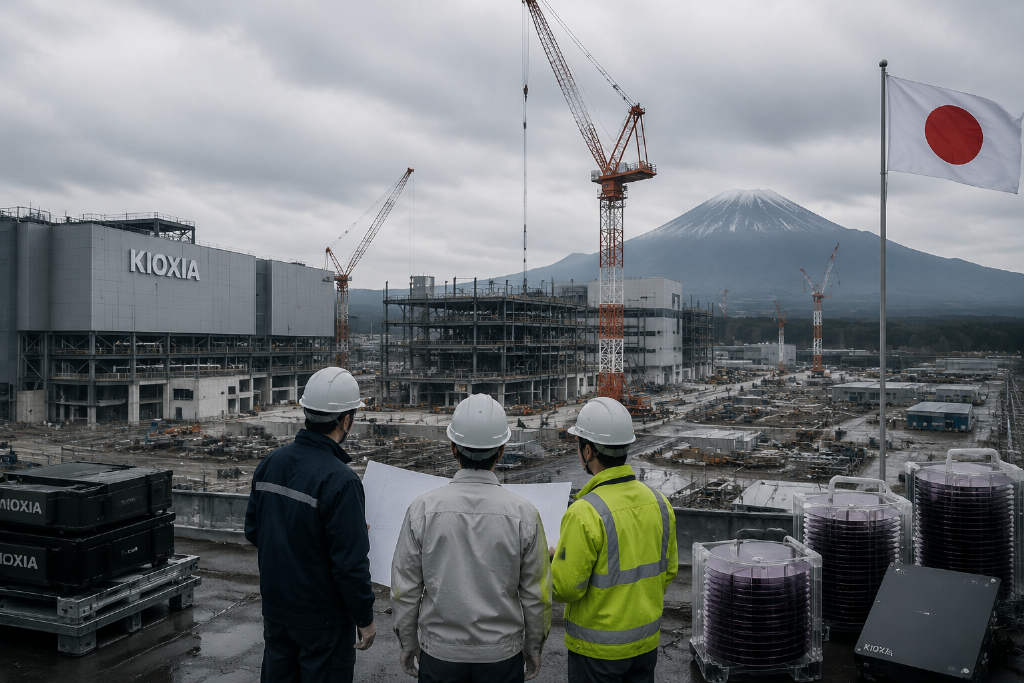
Kioxia plans to spend more than ¥1 trillion, or about $6.27 billion, on a third advanced NAND Flash wafer fab in Kitakami, Iwate Prefecture, according to a report cited by ABMedia. The expansion comes as generative AI drives stronger demand from data centers for high-capacity, high-performance enterprise SSDs. The report said the project also has support from Japan’s Ministry of Economy, Trade and Industry, fitting into Tokyo’s broader semiconductor push alongside support for Rapidus and efforts to draw TSMC to Kumamoto. ABMedia said the move has implications across the Taiwan-Japan memory supply chain, especially for Phison Electronics. The Taiwanese controller chip maker has long-standing ties with Kioxia dating back to 2001, when Toshiba, Kioxia’s predecessor, invested in the company. The two companies now work across NAND procurement, SSD module development, joint development manufacturing, and ODM work for Kioxia’s consumer and enterprise SSD brands. Phison CEO K.S. Pua has warned publicly that the NAND Flash shortage has no visible end. He said AI is reshaping demand patterns, and argued storage is harder to cut than DRAM because the amount of data a customer can process and keep directly affects revenue. He also said new memory capacity typically takes four years to bring online, and projected tighter shortages in the second half of 2026 and a wider gap in 2027.

170
Kioxia commits over ¥1 trillion to new NAND plant as AI storage demand lifts Phison’s supply-chain role
Nvidia
2026-08-26 00:54:24

Nvidia heads into earnings with Rubin, not revenue, at the center of the market debate

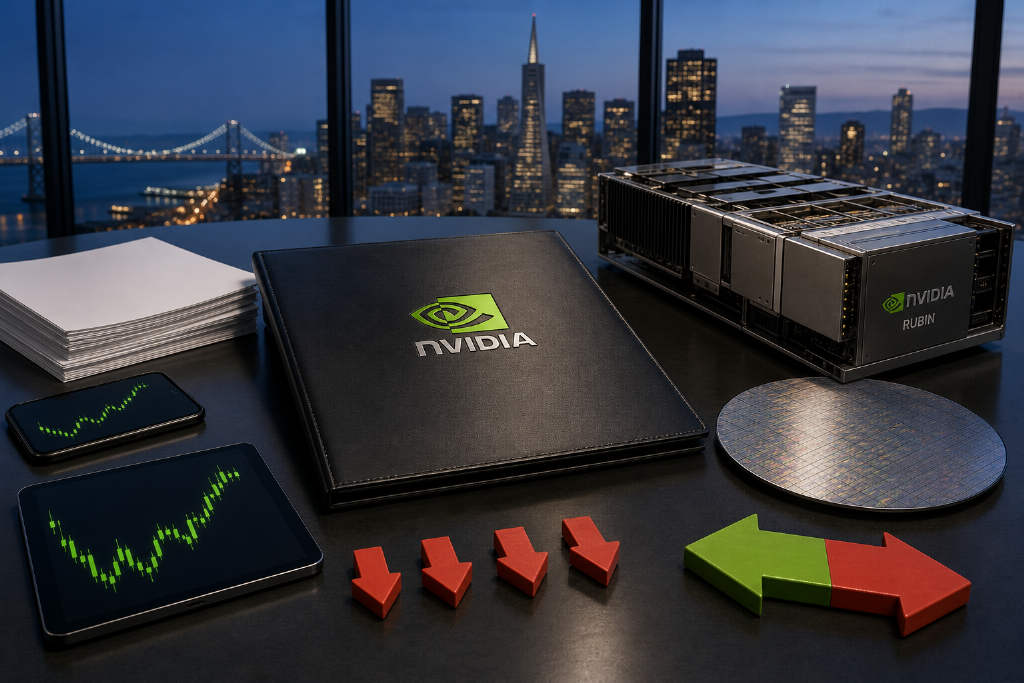
Nvidia is set to report fiscal 2027 second-quarter results after the U.S. market close on Aug. 26, and investors appear split in an unusual way: few doubt the company will post strong numbers, yet few are willing to say the stock will rise on the release. That hesitation follows a clear pattern. Nvidia shares have fallen the day after earnings for four straight quarters even when the company beat expectations and lifted guidance, shifting the market’s focus away from the headline quarter and toward what comes next. This time, the key variable is Rubin. The market is watching whether Nvidia will quantify Rubin revenue for the first time in its Q3 outlook, how quickly the platform can ramp after entering mass production in July 2026, and whether margins can hold as memory, wafer, advanced packaging and substrate costs rise. At the same time, investors are parsing signals from China, where H200 shipments have reportedly resumed, while also weighing demand from hyperscalers, Nvidia’s financing support for an OpenAI data center project in Ohio, and the growing challenge from custom inference chips backed by companies including OpenAI, Broadcom and Anthropic. The earnings reaction, according to the source article, may come down to three points: gross margin, Rubin guidance, and management’s comments on China.

280
Nvidia heads into earnings with Rubin, not revenue, at the center of the market debate
Embodied AI
2026-08-24 09:54:09

Unitree’s top outside backers also invested in Miaodong, a low-profile embodied robotics startup

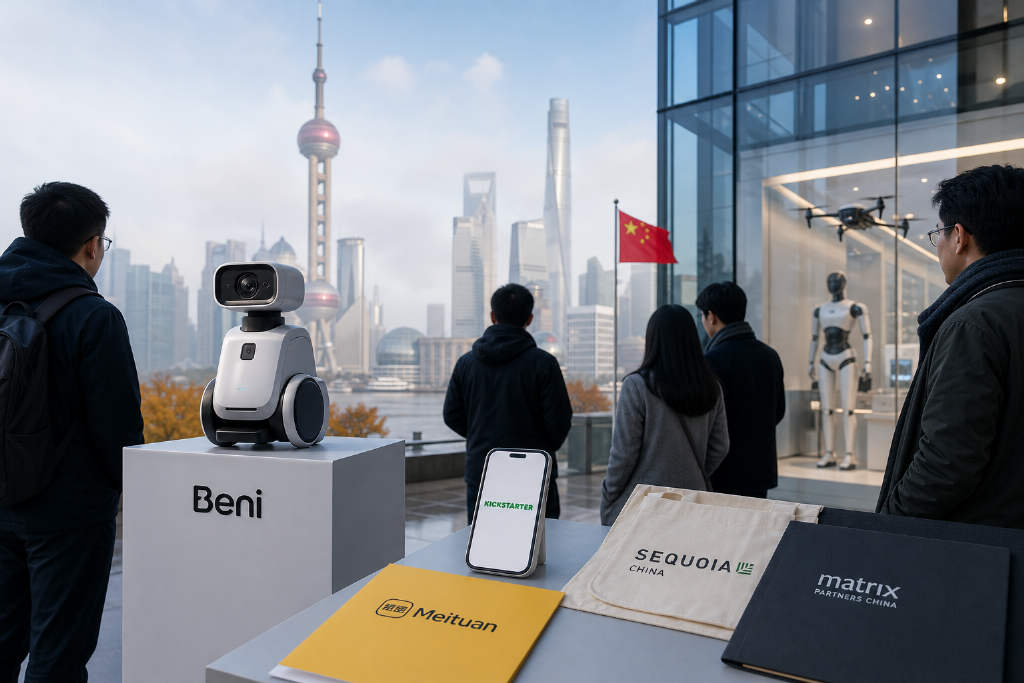
Unitree Robotics’ Aug. 19 listing on Shanghai’s STAR Market has drawn attention to another company tied to its investor base: Miaodong Technology, an embodied robotics startup backed by Meituan, Sequoia China and Matrix Partners China, the same three major outside shareholders named in Unitree’s filing. The article points to that overlap as a rare signal in China’s robotics investment scene. Miaodong was founded by Gao Jianrong and Yang Shuo, both former DJI employees. Yang is also described as the only founder in China’s embodied intelligence field to come from Tesla Optimus’ core team. According to the report, Gao spent nine years at DJI across RoboMaster, supply chain, global marketing and DJI Education, while Yang worked on flight-control algorithms, later pursued doctoral research on legged robot control at Carnegie Mellon University, and then joined Tesla’s Optimus team. Miaodong’s first product, Beni, launched on Kickstarter one month before Unitree’s listing. The company calls it a two-wheeled-legged robot and the world’s first camera robot. The report says more than 5,000 people have paid for the device, and that it has become the top robotics campaign by fundraising amount in Kickstarter history. Miaodong plans a global commercial release in October and has set an internal target of selling 1 million units in three years.

750
Unitree’s top outside backers also invested in Miaodong, a low-profile embodied robotics startup
Policy and Re
2026-08-24 02:01:43

DIGITIMES says laptop brands are scaling back Southeast Asia output and shifting production back to China

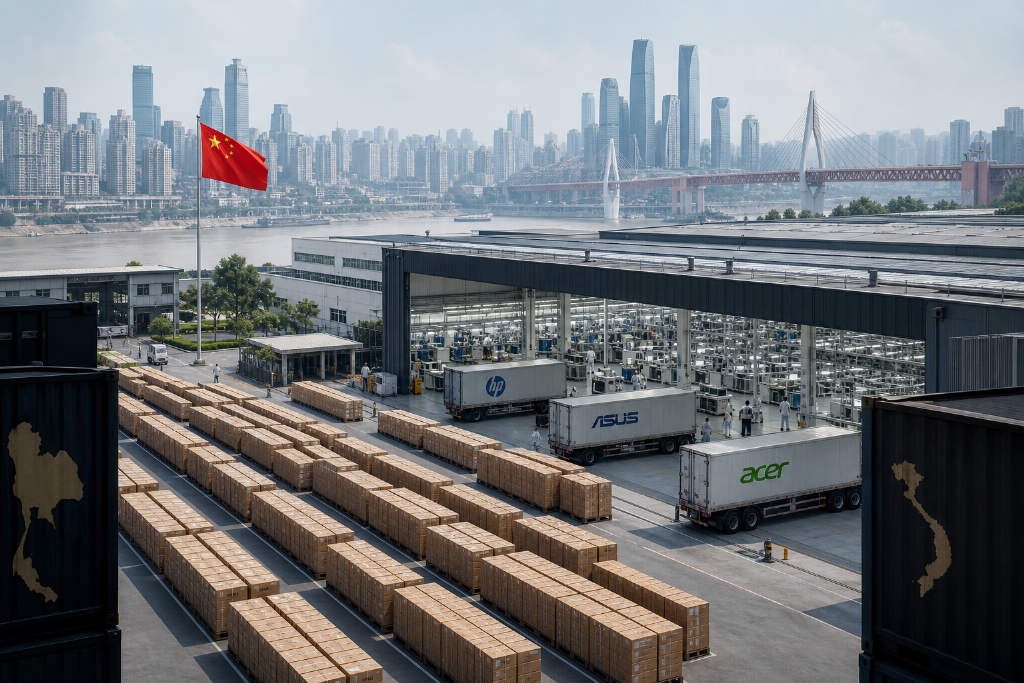
A new report cited by ChainCatcher says notebook computer brands are pulling back from earlier plans to move more production into Southeast Asia, with manufacturing focus returning to Chongqing and Kunshan in China. According to DIGITIMES, HP, ASUS and Acer have recently made visible cuts to the capacity they had planned to relocate, while also increasing orders and white-label production with Chinese ODM and EMS suppliers. The shift could affect production lines at Quanta and Inventec in Thailand, as well as Compal and Wistron in Vietnam. The report says Lenovo, Dell and Apple have so far shown less movement. Supply chain sources cited two main reasons for the change: a lower-than-expected hit from replacement tariffs after the U.S. reciprocal tariffs were ruled unconstitutional by the federal Supreme Court, and a cost gap that leaves notebook production in Southeast Asia averaging $9 more per unit than in China. With gross margins on a single notebook often sitting between 3% and 10%, and lower-priced models averaging about $300, that difference can wipe out most or all profit. The report also says local governments in China are pushing for higher output and may reclaim past subsidies if production does not rise.

360
DIGITIMES says laptop brands are scaling back Southeast Asia output and shifting production back to China
SpaceX
2026-08-12 04:48:20

Jefferies says SpaceX and CoreWeave may buy AI servers directly from Taiwan ODMs from 2027

Jefferies said in a new supply-chain survey that SpaceX and CoreWeave are discussing a shift in AI server procurement that would bypass Dell and move directly to Taiwanese original design manufacturers, with the change potentially starting in 2027. The report named Hon Hai, Quanta, Wiwynn, and Wistron as the companies in talks with the two buyers. Jefferies said the first products under the new model could be VR200 racks built on NVIDIA’s Vera Rubin architecture. The bank said the change would fit a procurement pattern already used by hyperscalers such as Google, Meta, and Microsoft, which often buy servers directly from Taiwan-based ODMs rather than through branded OEM vendors. For the four ODMs, Jefferies described the supply-chain shift as a broad positive even though they will still compete for allocation. It also estimated average selling prices for Vera Rubin-generation racks at $8 million to $9 million per rack, versus about $3 million for current GB200 NVL72 systems. For Dell, Jefferies framed the issue as market-share loss rather than weakening demand for AI servers. The report also said GB300 shipments are accelerating and projected that Hon Hai could ship 15,000 to 20,000 GB300 racks in the second half of 2026, with further growth in 2027.

1210
Jefferies says SpaceX and CoreWeave may buy AI servers directly from Taiwan ODMs from 2027
Ulanqab
2026-08-11 10:58:07

Ulanqab emerges as an AI compute battleground as DeepSeek and Alibaba Cloud expand data center bets

Ulanqab in Inner Mongolia is becoming one of China’s key hubs for AI infrastructure as cloud providers and model companies move from renting compute to controlling it more directly. In a field visit reported by Phoenix Tech, Alibaba Cloud showcased its modular 5.0 containerized data center design in the city, saying the facility now carries 80% of its intelligent computing workloads. The company’s data center chief Wang Chaoyang said no GPU cards are sitting idle and argued that delivery speed has become a direct measure of customer value. The report places DeepSeek at the center of the shift. The company has started large-scale hiring in Ulanqab and plans to build a super-large intelligent computing center there with total power of 1 gigawatt. Local government data cited in the article says Ulanqab had signed 84 data center projects by the end of 2025, including 81 intelligent computing centers, with total investment above 500 billion yuan. Cheap electricity, a 90% green power mix, 4 millisecond network latency, cool weather and proximity to Beijing are turning the city into a preferred site for large-scale training clusters. The report also argues that the next bottleneck is no longer only chips, but power delivery, water usage and the ability to industrialize data center construction through standardized modular systems.

1190
Ulanqab emerges as an AI compute battleground as DeepSeek and Alibaba Cloud expand data center bets