UNSW

Technology
2026-09-09 09:03:30

Australian researchers turn giant burrowing cockroaches into cyborg rescue injectors

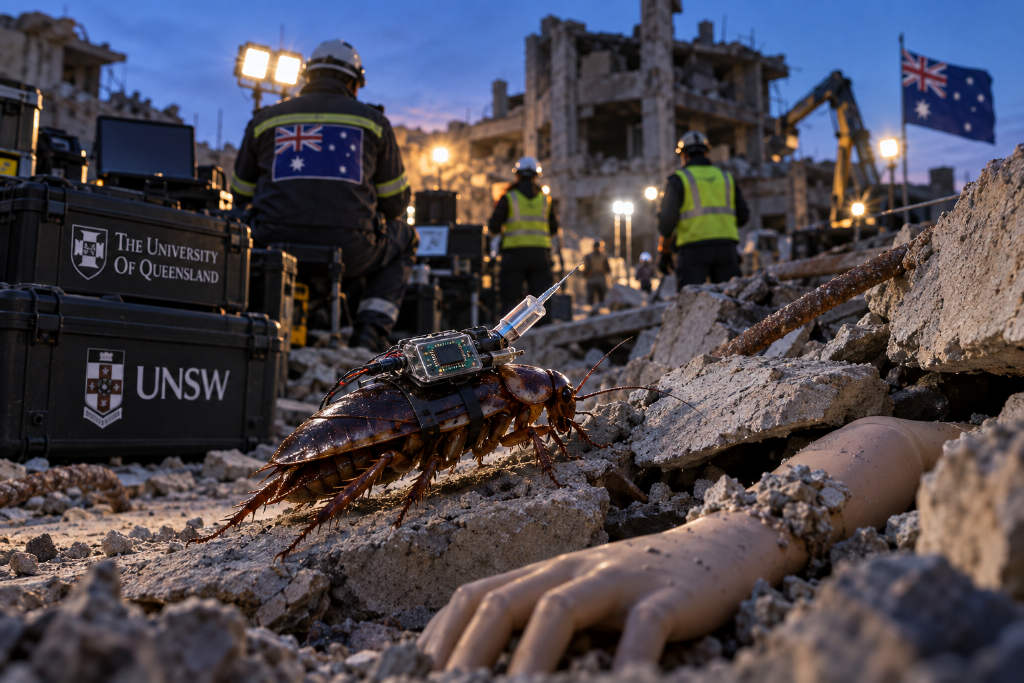
Researchers at the University of Queensland and the University of New South Wales have built a cyborg insect platform called Paraborg, combining the words Paramedic and Cyborg, by implanting electrodes and a microchip into giant burrowing cockroaches. The project is aimed at disaster rescue scenarios where conventional responders cannot easily reach trapped victims. In lab tests, the system achieved a 95% success rate for short-range injections at distances within 15 centimeters. When the full mission was counted, from departure through checkpoints to final injection, the success rate fell to 72%. The team also demonstrated a two-insect workflow, with one cockroach using a camera to locate a victim and another carrying an automatic injector to complete the task. Project lead and biorobotic engineer Thang Vo-Doan said the goal was to move beyond simply finding people in confined disaster spaces and enable insects to actually assist them. The work was published in Advanced Science. Even so, the researchers said the system remains far from field deployment, and Vo-Doan estimated that cyborg insect rescue teams would still need 5 to 10 years before they could be used in real disaster zones, assuming research funding and field testing continue.
50
Australian researchers turn giant burrowing cockroaches into cyborg rescue injectors
Google Resear
2026-08-27 04:15:10

Google Research unveils GlucoFM, a 720,000-parameter foundation model for glucose monitoring

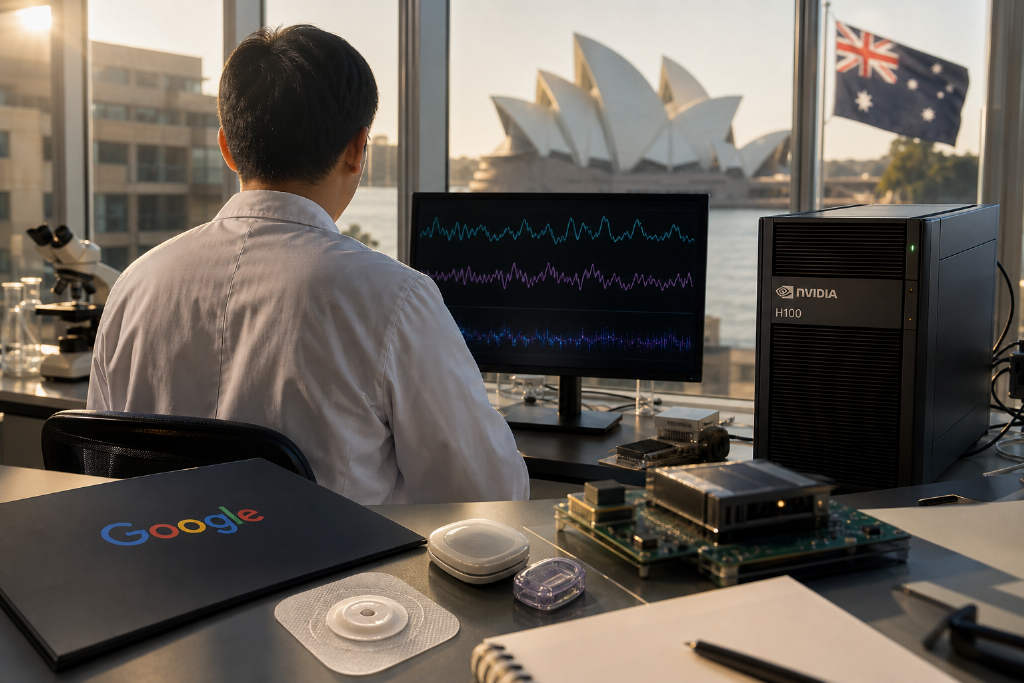
Google Research and the University of New South Wales in Sydney have introduced GlucoFM, a self-supervised foundation model built for continuous glucose monitoring. The model processes glucose signals through a dual-stream setup that separates slower physiological "state" signals from transient "event" signals. According to the release, GlucoFM has just 720,000 parameters and was pretrained on a single NVIDIA H100 GPU, pointing to a relatively lightweight training footprint compared with larger deep learning systems. In evaluations spanning 14 cohort-task settings, the model posted an average PR-AUC of 58.8 and outperformed baseline models. The research team said GlucoFM remains a research prototype and has not been cleared by any regulator. It is not intended for disease diagnosis or treatment. The team also said it plans to release the code and reproduction scripts, allowing groups with glucose monitoring datasets to run inference on CPUs or on-device systems using the same approach. Techub cited MarkTechPost as the source for the update.

210
Google Research unveils GlucoFM, a 720,000-parameter foundation model for glucose monitoring
Gamgee
2026-08-24 00:31:09

Gamgee raises $4 million to turn a one-off dog cancer mRNA vaccine into a repeatable process

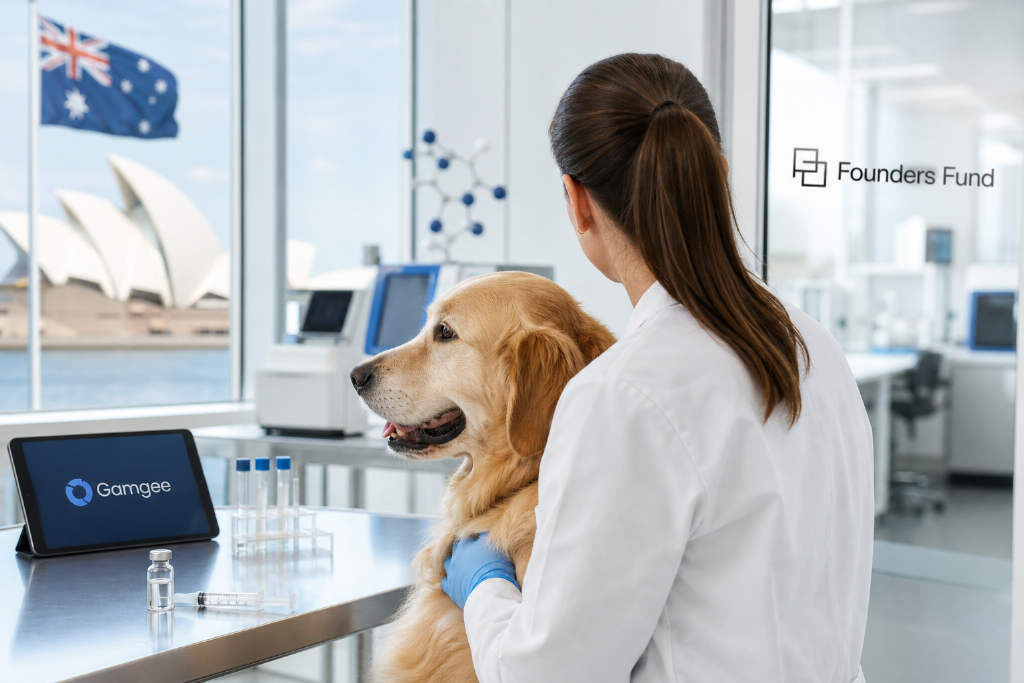
Gamgee, a startup founded by AI entrepreneur Paul S. Conyngham, said it has raised a $4 million seed round led by Founders Fund to build a repeatable pipeline for personalized mRNA cancer vaccines for dogs. The company grew out of Conyngham’s attempt to design a custom mRNA vaccine for his dog Rosie, who had mast cell cancer and later became the center of a widely shared story on English-language social media. Rosie received an initial shot in December 2025 and a booster the following month, and several tumors reportedly shrank while her quality of life improved. But the remission did not last. After a follow-up surgery, the cancer returned, spread rapidly within four weeks, and Conyngham said he made the decision to euthanize her. Gamgee said the new funding will be used to launch a clinical trial to test the personalized treatment approach first developed for Rosie. The company is working with UNSW, the University of Queensland and the Garvan Institute of Medical Research, with enrollment currently limited to eastern Australia. Conyngham has said the company is also recruiting veterinary oncologists and trial partners. The larger challenge, as described in the source material, is not only whether a personalized vaccine can be designed, but whether sequencing, regulatory review, manufacturing and delivery can be completed fast enough for patients who have limited time.

280
Gamgee raises $4 million to turn a one-off dog cancer mRNA vaccine into a repeatable process