ASP

Xiaomi
2026-08-18 23:54:11

Xiaomi reports RMB 108.9 billion in Q2 revenue as premium phones lift ASP, while EV and AI unit stays in the red

Xiaomi posted 2026 second-quarter revenue of about RMB 108.9 billion, down 6.1% from a year earlier, while adjusted net profit fell 42.6% to roughly RMB 6.2 billion. The company’s core "smartphone x AIoT" segment generated RMB 84 billion with a 20% gross margin, and smartphone average selling price rose 25.9% year over year to RMB 1,351 as Xiaomi pushed further upmarket. Management said the premium push helped offset weaker handset shipments. According to Omdia data cited in the report, Xiaomi shipped 31.2 million smartphones globally in the quarter, ranking No. 3 worldwide for the 24th straight quarter. In mainland China, phones priced at RMB 3,000 and above accounted for 32.1% of Xiaomi’s total smartphone sales, a record high. New businesses kept expanding but remained loss-making. Xiaomi’s smart EV and AI segment reported revenue of RMB 24.9 billion, including RMB 23.9 billion from electric vehicles and about RMB 1 billion from AI-related emerging businesses. The segment posted an operating loss of RMB 2.6 billion in the quarter. Xiaomi CFO Alain Lam said AI is still in a heavy investment phase, and monetization is not the company’s main goal for now. The company also outlined a broad slate of product and technology updates, including HyperOS 4 Beta, Super XiaoAI 2.0, Xiaomi MiMo AI releases, and progress in robotics and self-developed chips.


380
Xiaomi reports RMB 108.9 billion in Q2 revenue as premium phones lift ASP, while EV and AI unit stays in the red
Blockchain.co
2026-08-18 10:39:27

Blockchain.com Approved to Join Nigeria SEC’s Accelerated Regulatory Incubation Program

Blockchain.com has been cleared to join the Nigerian Securities and Exchange Commission’s Accelerated Regulatory Incubation Program, or ARIP, according to Chainwire. The approval means the global crypto platform has met the SEC’s initial participation threshold and can operate within a defined sandbox while continuing to comply with ongoing regulatory conditions, testing parameters, and compliance requirements. Through the program, Blockchain.com will work directly with the Nigerian SEC to assess digital asset business models, test safeguards, and contribute to the development of a longer-term regulatory framework. ARIP is designed for virtual asset service providers and fintech innovators, with a focus on reviewing emerging business models, operational risk, investor protection, and anti-money laundering standards. Owen Odia, Blockchain.com’s general manager for Africa, said Nigeria is one of Africa’s most important digital asset markets and described the company’s participation in ARIP as a key step in its long-term commitment to the country. He said the process would allow the firm to bring global experience into a controlled environment while supporting a framework that protects consumers and encourages responsible innovation. Over the past year, Blockchain.com has also secured UK FCA registration, authorization under the EU’s MiCA framework, and a VASP license from the Cayman Islands Monetary Authority.

480
Blockchain.com Approved to Join Nigeria SEC’s Accelerated Regulatory Incubation Program
Policy Regula
2026-08-16 12:36:00

Weekly crypto calendar: CFTC’s first innovation panel to take up crypto, AI and prediction markets

The week ahead includes a dense run of crypto policy, exchange and project events. DeepSeek’s revised API pricing takes effect on Aug. 17 with peak and off-peak rates, while Coinbase is scheduled to carry out system maintenance, launch US500 perpetual-style index futures for U.S. users through Coinbase Derivatives, and end support for USDC deposits and withdrawals on Noble. Hashdex is also set to close and liquidate its Bitcoin ETF, and Binance will delist six tokens on the same day. Attention then shifts to regulation. South Korea will implement tighter rules for single-stock leveraged ETF and ETN products on Aug. 19, including stricter deviation-rate controls and an added simulated-trading requirement for first-time retail investors. Politico, citing three people familiar with the matter, reported that the White House may meet crypto and prediction-market executives on Aug. 19. On Aug. 20, the U.S. Commodity Futures Trading Commission’s Innovation Advisory Committee will hold its first meeting, with crypto assets, artificial intelligence and prediction-market oversight on the agenda. The week also features several token unlocks, including LayerZero, KAITO, MBG and SOON, plus project updates from Solana, DGrid AI, SNS, Doodles, Step App and Manus. Binance will make additional network and compliance-related changes later in the week, including restrictions involving EXMO and other platforms.

1130
Weekly crypto calendar: CFTC’s first innovation panel to take up crypto, AI and prediction markets
Bits of Gold
2026-08-16 10:28:53

Bits of Gold data breach exposes personal information of about 200,000 customers

Bits of Gold, described in the report as Israel’s largest regulated crypto broker, has suffered a data breach that reportedly led to the theft of personal information belonging to about 200,000 customers, according to Crypto Briefing. The report said all users of the platform may be at risk. Crypto Briefing also noted that Bits of Gold received Israel’s first Virtual Asset Service Provider, or VASP, license in September 2022. In April 2026, the company was approved to issue BILS, a stablecoin pegged 1:1 to the Israeli shekel. The specific types of data taken in the breach have not been disclosed. Still, crypto brokers commonly collect sensitive materials under know-your-customer, or KYC, rules, including identification documents, proof of address, and financial information. The report added that while cold wallets can protect digital assets, they do not secure customer identity files stored on company servers. Past cases show that breaches of this kind are often used for phishing, SIM-swap attacks, and targeted social engineering.

450
Bits of Gold data breach exposes personal information of about 200,000 customers
Ireland
2026-08-14 12:40:35

Ireland issues first AML strategy with tighter checks on transfers involving self-hosted wallets

Ireland has released its first national anti-money laundering strategy, setting out tighter scrutiny for digital asset transfers involving self-hosted wallets and stricter due diligence when crypto firms work with overseas institutions. According to an announcement from the Department of Finance, the plan is designed to complete the remaining requirements under the European Union’s Transfer of Funds Regulation. It will require crypto-asset service providers, or CASPs, to carry out enhanced checks on transfers linked to private wallets, while also applying stronger customer due diligence standards in business relationships with foreign crypto companies. The measures are based on the Financial Action Task Force’s Travel Rule, which requires digital asset transactions to include information on both the sender and the recipient to improve transparency around fund flows. Ireland said the new requirements will move ahead alongside the EU’s Markets in Crypto-Assets regulation, known as MiCA, which created a unified regulatory framework for crypto service providers. Ireland had previously granted domestic crypto firms a 12-month transition period, shorter than the maximum 18 months allowed by the EU. That transition period ended at the end of December 2025, meaning the new requirements will apply directly to firms that have already received full authorization.

600
Ireland issues first AML strategy with tighter checks on transfers involving self-hosted wallets
Ireland
2026-08-14 12:40:53

Ireland rolls out first national AML strategy with tighter checks on self-hosted wallet transfers

Ireland has published its first national anti-money laundering strategy, setting out tighter scrutiny for digital asset transfers involving self-hosted wallets and stricter due diligence for crypto firms working with overseas entities. According to a notice from the Irish Department of Finance, the plan is meant to complete the remaining requirements under the European Union’s Transfer of Funds Regulation. Under the framework, crypto-asset service providers will be required to carry out enhanced checks on transfers linked to private wallets and apply tougher customer due diligence when doing business with foreign crypto companies. The measures are tied to the Financial Action Task Force’s Travel Rule, which requires sender and recipient information to accompany digital asset transactions to improve transparency around fund flows. Ireland said the new rules are being advanced alongside the EU’s Markets in Crypto-Assets regulation, or MiCA. The country had previously given domestic crypto firms a 12-month transition period, shorter than the EU maximum of 18 months, and that period ended in late December 2025. As a result, the new requirements will apply directly to firms that have already received full authorization.

610
Ireland rolls out first national AML strategy with tighter checks on self-hosted wallet transfers
Nvidia
2026-08-14 08:46:03

Aletheia says Nvidia's Rubin Ultra AI module could approach $170,000 for dual-GPU version

A bill-of-materials report from Aletheia Capital points to a sharp increase in pricing for Nvidia’s upcoming Rubin Ultra AI compute modules. The firm estimates the average selling price of the dual-GPU version at nearly $170,000, while the four-GPU configuration could reach $350,000. That would represent a 30% increase from the previous Rubin generation. The report also shows a major shift in the module’s cost structure: SoCAAM, an advanced packaged memory module, has overtaken the GPU die itself as the largest single cost component and now accounts for more than half of total BOM in the dual-GPU Rubin Ultra version. Analysts cited in the report said Rubin Ultra is expected to move directly to HBM4E instead of HBM4, while a higher-end four-die model remains on the roadmap. They also said the previously rumored-canceled Kyber platform is still moving ahead. If those plans hold, the report suggests memory suppliers, especially leading HBM vendors, could benefit as HBM4E demand scales and supply takes time to ramp.

1360
Aletheia says Nvidia's Rubin Ultra AI module could approach $170,000 for dual-GPU version
Fidelity
2026-08-14 01:59:25

Fidelity seeks staking for FETH as Anthropic investors float a possible $2 trillion-plus IPO valuation

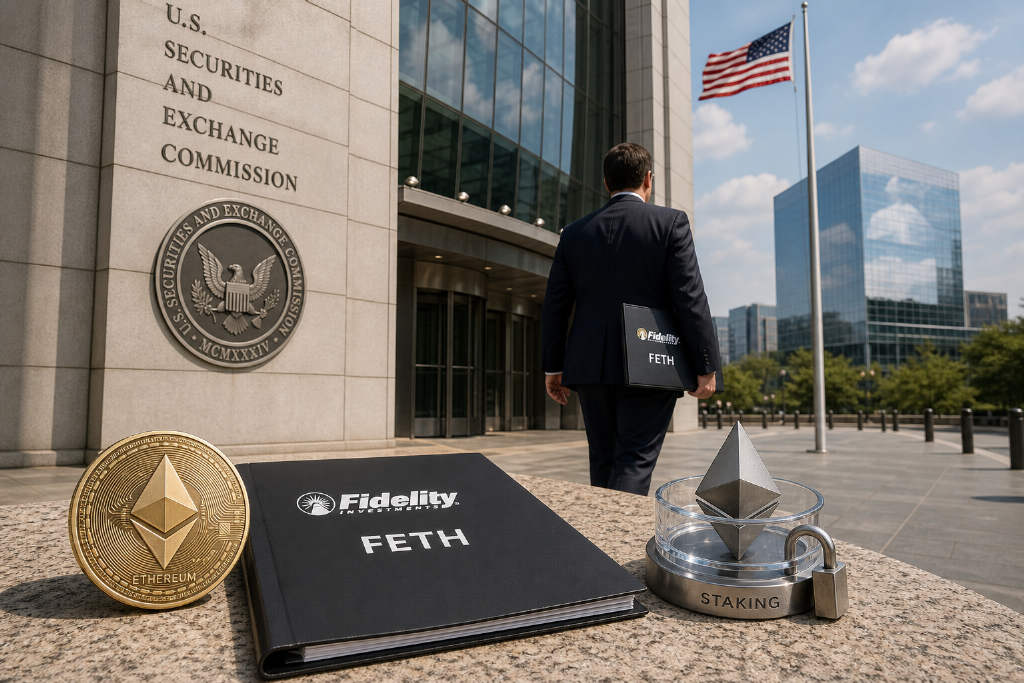
A dense 24-hour news cycle brought fresh filings, earnings, market calls and regulatory signals across crypto and adjacent tech markets. Fidelity filed an amended registration statement with the U.S. Securities and Exchange Commission on Aug. 11 to add ETH staking to its spot Ethereum ETF, the Fidelity Ethereum Fund (FETH). Under normal conditions, the fund said it could stake as much as 100% of the ETH it holds, with no minimum staking threshold, and its investment objective would change to include staking rewards if approved. Elsewhere, some existing Anthropic investors said the AI company could be valued at more than $2 trillion if it goes public as early as October, with one investor putting the upside case at $3 trillion based on a roughly 30x revenue multiple. The estimates remain investor forecasts, and several investors said Anthropic management has not set an IPO valuation target. The session also featured quarterly updates from Bullish, BitGo and Securitize, new SEC steps around tokenized fund operations and tokenized equities, ETF flow data for Bitcoin and Ethereum products, and a series of policy, infrastructure and security developments spanning Europe, the U.K., Brazil and the U.S.

950
Fidelity seeks staking for FETH as Anthropic investors float a possible $2 trillion-plus IPO valuation