DDR4

Google
2026-09-03 07:40:05

Google Develops Hardware and Software to Tackle AI Memory Bottleneck, Recycles DDR4

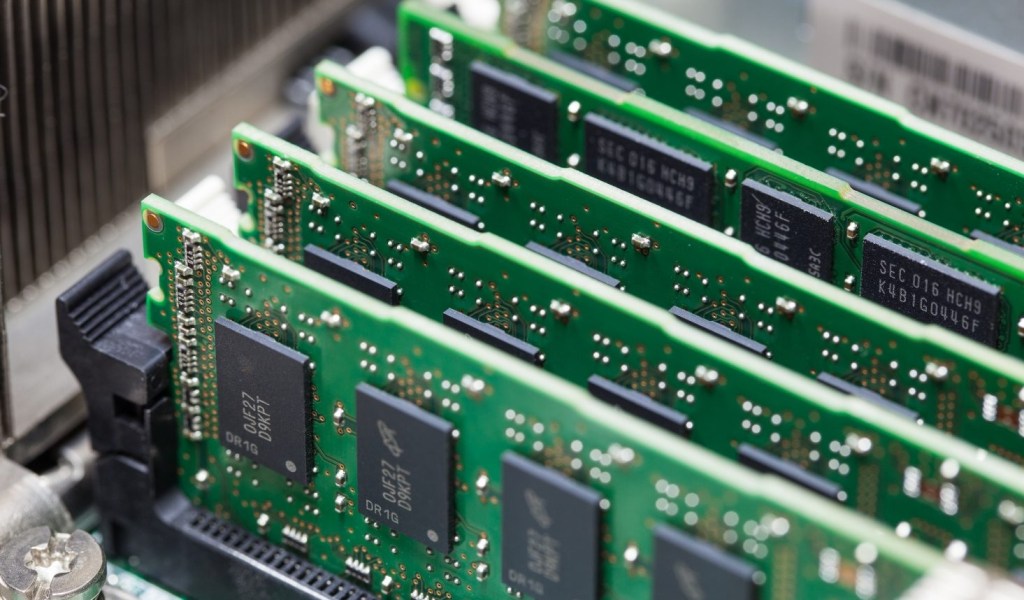
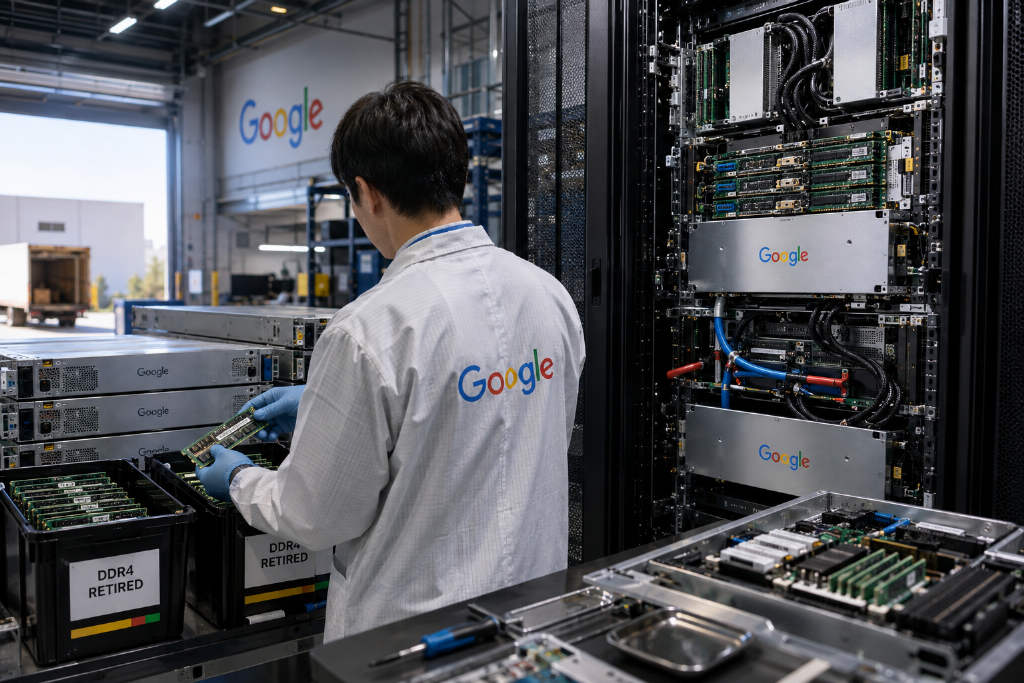
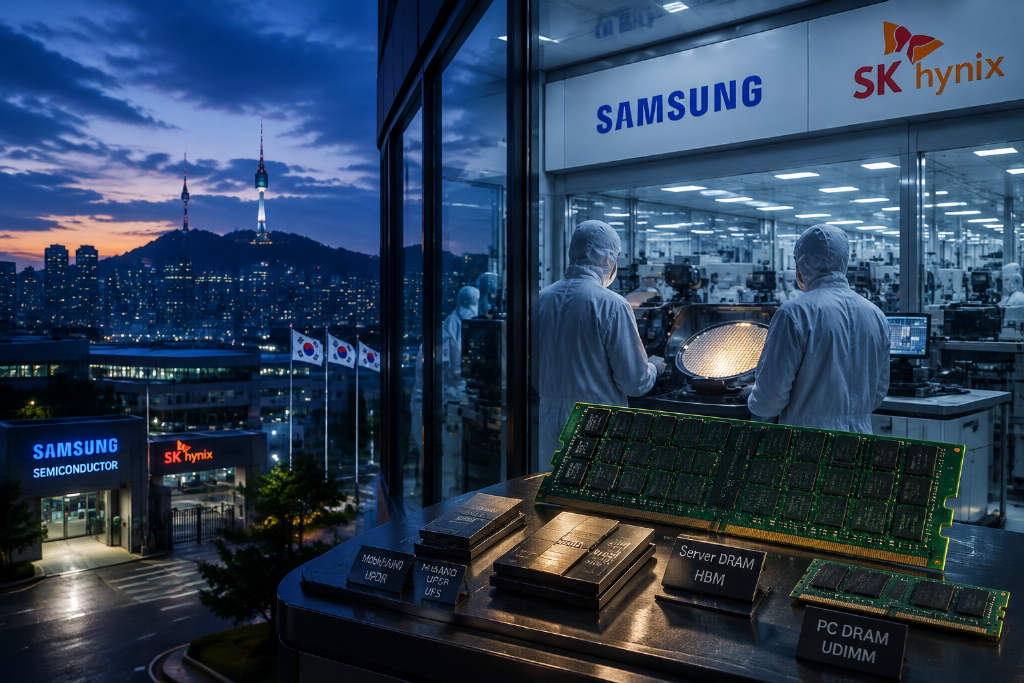
Google's senior director of supply chain infrastructure, Nikhil Cherian, revealed the company is developing both software and hardware solutions to address memory constraints in AI servers. The approach includes salvaging DDR4 modules from retired servers, designing custom adapters to connect older memory to next-generation servers, and importing retired servers for DDR4 removal. Cherian noted that AI has shifted from compute-constrained to memory-constrained, with high-performance memory consuming about 75% of an AI server's bill of materials. Goldman Sachs expects third-quarter PC DRAM prices to rise 18% to 23% and server DRAM 13% to 18%. Trendforce data shows spot prices for DDR4 8GB and DDR5 8GB reached $142 and $133 in August. Google's two new TPU ASICs this year feature memory-optimized designs, potentially reducing memory requirements by a factor of six, with the TPU8i chip packing 288GB of HBM3e memory.
130
Google Develops Hardware and Software to Tackle AI Memory Bottleneck, Recycles DDR4
Goldman Sachs
2026-09-02 03:42:50

Goldman Sachs sees firmer PC DRAM pricing in Q3 while mobile DRAM outlook softens

Goldman Sachs said in a memory price tracking report dated Aug. 31 that memory prices are still rising in the third quarter, though the pace now differs by product category. TrendForce lifted its 3Q26 forecast for PC DRAM price gains to 18%-23%, while keeping server DRAM at 13%-18%. Mobile DRAM was revised down to 8%-13%, making it the only category with a weaker near-term outlook, and NAND pricing around 20% was described as broadly in line with Goldman’s view. The bank said the common driver behind these moves is that suppliers continue shifting capacity toward server DRAM and HBM, tightening supply for other segments. Spot data for August showed DDR4 8GB and DDR5 8GB PC DRAM prices up 2% to $142 and $133, while server DDR5 64GB rose 1% to $1,500 and its premium to DDR4 widened to 16%. Goldman kept buy ratings on Samsung Electronics and SK Hynix, saying the current pricing backdrop still favors the two memory leaders despite short-term inventory pressure in mobile DRAM.

230
Goldman Sachs sees firmer PC DRAM pricing in Q3 while mobile DRAM outlook softens
Ingenic
2026-08-25 02:09:10

Ingenic Joins the A+H Ranks After Hong Kong Listing, Backed by Memory, Compute and Analog Chip Lines

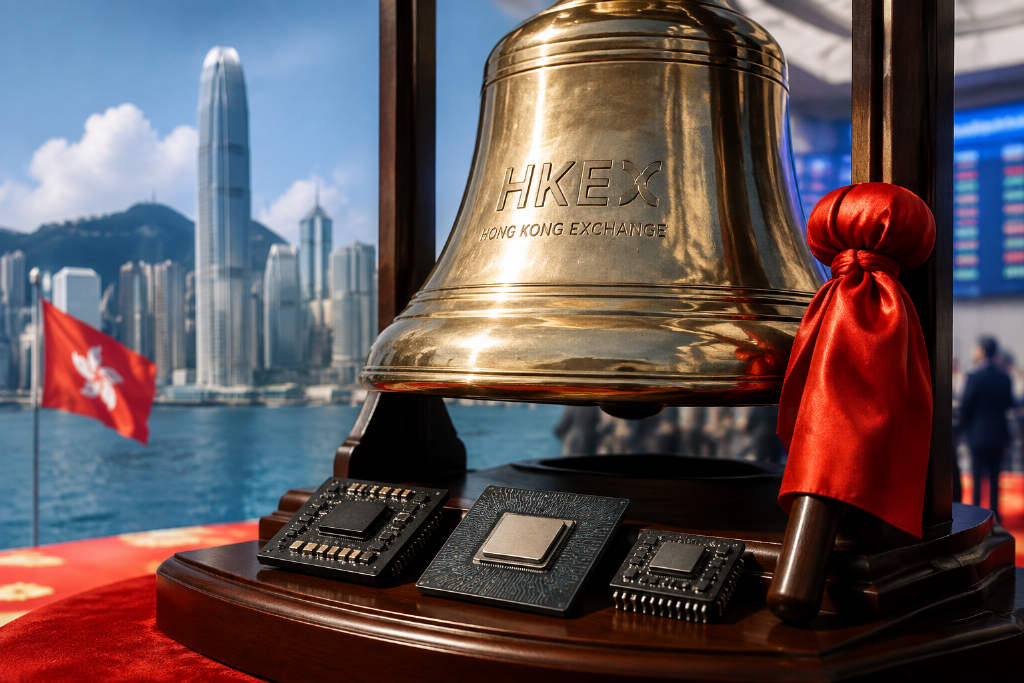
Ingenic rang the opening bell in Hong Kong on Aug. 25, debuting at HK$100 per H share and reaching an opening market capitalization of about HK$51.5 billion. The company had already been listed on Shenzhen’s ChiNext board since May 31, 2011, and the new listing places it among semiconductor companies with both A-share and H-share listings. The prospectus outlines a chip platform strategy built across three product lines: memory, compute and analog. That structure took shape after Ingenic completed its acquisition of Beijing Silicon and indirectly took control of Integrated Silicon Solution Inc. (ISSI) in 2020. Since then, the company has operated around three brands: ISSI for memory, Ingenic for compute and Lumissil for analog. Its recent numbers show a rebound. Revenue moved from RMB 45.31 billion in 2023 to RMB 42.13 billion in 2024, then back up to RMB 47.41 billion in 2025. First-quarter 2026 revenue reached RMB 15.60 billion, up 47.1% from a year earlier, while net profit rose to RMB 3.20 billion and gross margin climbed to 42.6%. Ingenic said it expects to raise HK$3.13 billion from the Hong Kong offering. Half of the proceeds are earmarked for R&D, while 25% is set aside for strategic investments and acquisitions.

380
Ingenic Joins the A+H Ranks After Hong Kong Listing, Backed by Memory, Compute and Analog Chip Lines
Market Analys
2026-08-06 13:44:00

Interconnect Moves to the Top of the Bottleneck Stack as HBM and Memory Hierarchies Face Repricing

A PANews analysis argues that August 4, 2026 marked a turning point for the memory industry. On the same day, SK hynix and SanDisk introduced the first standard for high-bandwidth flash, or HBF, at FMS 2026, while TrendForce reported that Nvidia was evaluating lower HBM configurations for Rubin Ultra. The article says those two developments point in the same direction: the core constraint in AI infrastructure is shifting away from on-package memory alone and toward interconnects across chips, packages, racks, and systems. The piece traces that shift through Nvidia’s Vera Rubin launch, NVLink 6 bandwidth gains, Spectrum-X CPO shipments, Intel’s EMIB-T packaging push, TSMC’s reported work on an EMIB-like approach, and the emergence of UCIe-linked memory tiers such as HBF. In that framework, optical and electrical interconnects sit at the top of the stack, advanced packaging becomes the physical foundation, HBM remains essential but less open-ended from an investment perspective, HBF represents a new category aimed at inference-era capacity pressure, and CXL memory pooling remains an option for later years. Rather than framing this as a broad “memory bull market,” the article’s main point is that value inside the storage empire is being redistributed as the bottleneck migrates.

1660
Interconnect Moves to the Top of the Bottleneck Stack as HBM and Memory Hierarchies Face Repricing
Goldman Sachs
2026-08-05 04:02:11

Goldman Sachs Sticks With Buy Calls on Samsung and SK Hynix, Betting on HBM Repricing and Long-Term Supply Deals

Goldman Sachs has reaffirmed its buy ratings on Samsung Electronics and SK Hynix even after the two stocks fell 23% and 35% over the past month. The bank’s case rests on three points: HBM pricing could reset higher in 2027, multi-year long-term agreements are locking in capacity and improving revenue visibility, and low inventory levels across suppliers are reducing the odds of a near-term downcycle. Goldman expects both companies’ blended HBM average selling prices to approach $2.9/Gb in 2027, with roughly 60% of the increase coming from repricing of comparable products and the rest from a richer mix of newer, higher-layer HBM. It also sees HBM taking a larger share of DRAM revenue for both companies through 2028. At the same time, the report says risks remain clear: AI server demand could disappoint, the final terms of long-term agreements may end up weaker than expected, capacity additions could still pressure legacy memory pricing, and China-based CXMT remains a supply-side variable over the longer run even if it is unlikely to change the tight global balance in the near to medium term.

1730
Goldman Sachs Sticks With Buy Calls on Samsung and SK Hynix, Betting on HBM Repricing and Long-Term Supply Deals
DRAM
2026-08-05 02:59:43

DRAM pricing surge lifts July revenue at Nanya and ESMT to record highs

Taiwan memory makers Nanya Technology and ESMT both posted record monthly revenue in July as the DRAM upcycle continued, with higher prices doing most of the work. Nanya reported consolidated revenue of NT$43.868 billion for the month, up 49.27% from June and 719.61% from a year earlier, marking its ninth straight monthly high. ESMT posted NT$6.785 billion, up 40.02% month over month and 491.06% year over year, also a record. The report said the latest rally is being driven by pricing rather than shipment growth. In Nanya’s case, second-quarter DRAM average selling prices rose more than 60% from the previous quarter while bit shipments were nearly flat, meaning the jump in revenue and profit came largely from stronger pricing. Supply remains tight as AI infrastructure demand keeps pulling wafer capacity and R&D resources toward HBM, LPDDR5 and DDR5 at Samsung, SK hynix and Micron, squeezing legacy DRAM lines such as DDR4, LPDDR4, DDR3 and DDR2. Spot prices have moved in the same direction. CFM Memory data showed DDR4 8Gb 3200 rose 12.82% in a single week, while DDR5 24Gb and DDR5 16Gb both climbed 14.29%.

1410
DRAM pricing surge lifts July revenue at Nanya and ESMT to record highs
ChangXin Tech
2026-08-04 12:24:08

Who backed ChangXin Technology to its blockbuster listing? Hefei state capital, follow-on investors and Zhu Yiming stand out

ChangXin Technology made its STAR Market debut on July 27 and immediately reached a market value of RMB 3 trillion, making it the most valuable listed company in China’s A-share market and the largest technology company ever listed there by market capitalization. The story behind that listing is not a single investor win. It is the result of a decade-long funding chain that started with Hefei state-owned capital, expanded through nine financing rounds from 2018 to June 2025, and eventually involved 60 pre-IPO shareholders plus 30 strategic investors at the IPO stage. According to the report republished by MarsBit from the WeChat account Dushuyizhi, Hefei state capital emerged as the biggest financial winner, holding about 22.138 billion shares, or roughly 33.1% of the company, through several entities after the offering. Based on the first-day closing price of RMB 49 per share, that stake was worth RMB 1.08476 trillion. The report said that figure is roughly 70% of Hefei’s 2025 GDP of about RMB 1.421 trillion. The report also highlighted the role of founder Zhu Yiming and the management team, whose holdings approached RMB 98.6 billion on the first trading day, with Zhu’s personal stake valued at RMB 77.9 billion. External investors also posted outsized gains. Alibaba-related entities held more than 3.013 billion shares in total, valued at RMB 147.6 billion at the first-day close. Behind the listing, the report described three core forces: Hefei state capital, relay financing from state, industrial and insurance investors, and a founder-led operating team under a no-controlling-shareholder governance structure.

1580
Who backed ChangXin Technology to its blockbuster listing? Hefei state capital, follow-on investors and Zhu Yiming stand out
Bank of Ameri
2026-08-02 10:04:05

BofA says Samsung’s long-term supply deals cap downside in memory pricing while leaving upside open through 2028

Bank of America said in a weekend memory industry survey that Samsung Electronics has already placed 60% to 70% of its memory sales under long-term supply agreements, with terms that favor suppliers. According to the report, quarterly price cuts are usually limited to no more than 5%, while price increases can range from 10% to 20% and are effectively uncapped. The bank said most LTAs signed with major U.S. technology companies use a five-year rolling structure that can be renewed around the end of the first contract year, creating long-term customer lock-in. BofA said the arrangement improves revenue visibility for Samsung’s memory business while preserving pricing flexibility during tight supply cycles. It also pointed to continued demand growth from AI servers and the time still required for memory makers to expand output. Separately, DRAMeXchange data showed sharp gains across spot and contract markets, including 16Gb DDR5 spot prices rising 733% year over year to $51, NAND 1Tb wafer spot prices climbing 415% to $26.4, and 64GB DDR5 module contract prices moving above $1,480. The bank said August pricing is being supported by stronger restocking demand, OEM inventory builds for new products, and falling channel inventories.

1450
BofA says Samsung’s long-term supply deals cap downside in memory pricing while leaving upside open through 2028