Yuan

ChangXin Tech
2026-08-04 12:24:08

Who backed ChangXin Technology to its blockbuster listing? Hefei state capital, follow-on investors and Zhu Yiming stand out

ChangXin Technology made its STAR Market debut on July 27 and immediately reached a market value of RMB 3 trillion, making it the most valuable listed company in China’s A-share market and the largest technology company ever listed there by market capitalization. The story behind that listing is not a single investor win. It is the result of a decade-long funding chain that started with Hefei state-owned capital, expanded through nine financing rounds from 2018 to June 2025, and eventually involved 60 pre-IPO shareholders plus 30 strategic investors at the IPO stage. According to the report republished by MarsBit from the WeChat account Dushuyizhi, Hefei state capital emerged as the biggest financial winner, holding about 22.138 billion shares, or roughly 33.1% of the company, through several entities after the offering. Based on the first-day closing price of RMB 49 per share, that stake was worth RMB 1.08476 trillion. The report said that figure is roughly 70% of Hefei’s 2025 GDP of about RMB 1.421 trillion. The report also highlighted the role of founder Zhu Yiming and the management team, whose holdings approached RMB 98.6 billion on the first trading day, with Zhu’s personal stake valued at RMB 77.9 billion. External investors also posted outsized gains. Alibaba-related entities held more than 3.013 billion shares in total, valued at RMB 147.6 billion at the first-day close. Behind the listing, the report described three core forces: Hefei state capital, relay financing from state, industrial and insurance investors, and a founder-led operating team under a no-controlling-shareholder governance structure.


1570
Who backed ChangXin Technology to its blockbuster listing? Hefei state capital, follow-on investors and Zhu Yiming stand out
OpenAI4S
2026-08-04 10:14:07

Peking University and YuanKong AI open-source OpenAI4S, a research agent built around code execution

Peking University and the YuanKong AI Agent Joint Lab have open-sourced OpenAI4S, a research agent project released on GitHub on July 6, 2026 under the MIT license. The team says the system is not just a surface-level imitation of Anthropic’s Claude Science, but an independent open implementation of a research-agent stack built around Code-as-Action, including the engine, a persistent kernel, a host-RPC protocol, and a security layer. OpenAI4S ships with a full web app, more than 30 built-in scientific skills, support for connecting a lab’s own compute resources, and versioned research artifacts. Instead of stopping at text answers, the project is designed to move a task from question to completion by letting the agent generate and run Python or R code inside a persistent environment, preserve intermediate results, and hand off notebooks for human review or editing. The project also adopts a strict no-fabrication policy. According to the release notes, it does not substitute fake data or simulated outputs when services or compute are unavailable. The team says users can route GPU-heavy workloads such as protein structure prediction and mutation scoring to their own servers, while keeping data, models, and compute inside their own environments. The repository is published at github.com/PKU-YuanGroup/OpenAI4S.

1260
Peking University and YuanKong AI open-source OpenAI4S, a research agent built around code execution
Nvidia
2026-08-04 13:43:08

Nvidia’s CPO production signal lifts A-share optical names as CXO stocks rally on earnings guidance

A sharp sell-off in South Korea and pressure across the semiconductor chain spilled into China’s A-share market on Aug. 3, hitting chip and storage names even as most stocks still advanced. The mood shifted later that day after U.S. equities rebounded, with semiconductor shares reversing intraday losses. The key catalyst, according to the source article, was Nvidia’s latest platform release and a public statement from senior vice president Shainer that co-packaged optics, or CPO, has moved into mass production, with jointly developed switches already being delivered to customers and set for broader deployment in AI factories in the second half of the year. That change in expectations quickly fed into China’s market on Aug. 4. Optical communication, CPO and PCB-related stocks surged, while heavyweight financial and consumer names lagged. The rebound was reinforced by signs of ongoing AI infrastructure demand, including Citi’s note that capital spending at four major U.S. cloud providers rose 79% year over year in the second quarter. At the same time, the healthcare outsourcing chain also strengthened after WuXi AppTec raised its full-year revenue guidance. The report also tracks policy signals, ETF inflows, oil’s drop on Middle East headlines, and several near-term events investors are watching, including AMD and SpaceX earnings, developments around the Strait of Hormuz, CATL’s interim dividend record date, and Nvidia’s Aug. 26 earnings release.

1430
Nvidia’s CPO production signal lifts A-share optical names as CXO stocks rally on earnings guidance
Taiwan regula
2026-08-04 12:33:32

Taiwan plans phased crypto Travel Rule rollout with NT$30,000 threshold for added identity data

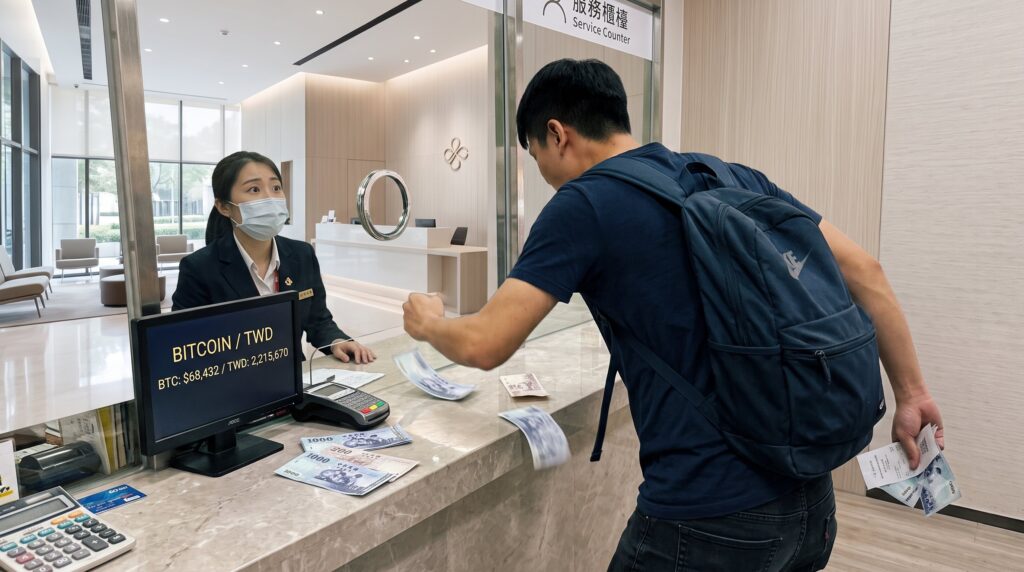
Taiwan’s Financial Supervisory Commission is preparing a phased rollout of the crypto Travel Rule that would require added identity details for transfers above NT$30,000 through domestic virtual asset service providers. According to Huang Chung-hao, deputy director-general of the FSC’s Securities and Futures Bureau, individual users would need to provide their date of birth and residential address, while legal entities would need to submit an official identification code and registered address. Receiving VASPs would also be required to verify the beneficiary information against their own customer records. The plan would be introduced in two stages. The first stage is scheduled for October 2026 and would apply only to transfers between domestic VASPs. A second stage, expected by the end of 2027, would extend the framework to transfers between domestic and overseas VASPs. The FSC said Taiwan’s NT$30,000 threshold was set with reference to the Financial Action Task Force’s de minimis standard of no more than $1,000 or €1,000. Transfers below that level would still require a reduced set of information, including names and wallet addresses or transaction identifiers. The draft amendment still needs to go through a 30-day public notice process before formal rulemaking proceeds.

1310
Taiwan plans phased crypto Travel Rule rollout with NT$30,000 threshold for added identity data
FUTUREMODE
2026-08-04 12:16:42

Taipei Blockchain Week Rebrands as FUTUREMODE, Sets Sept. 4-6 Event at Taipei Expo Park

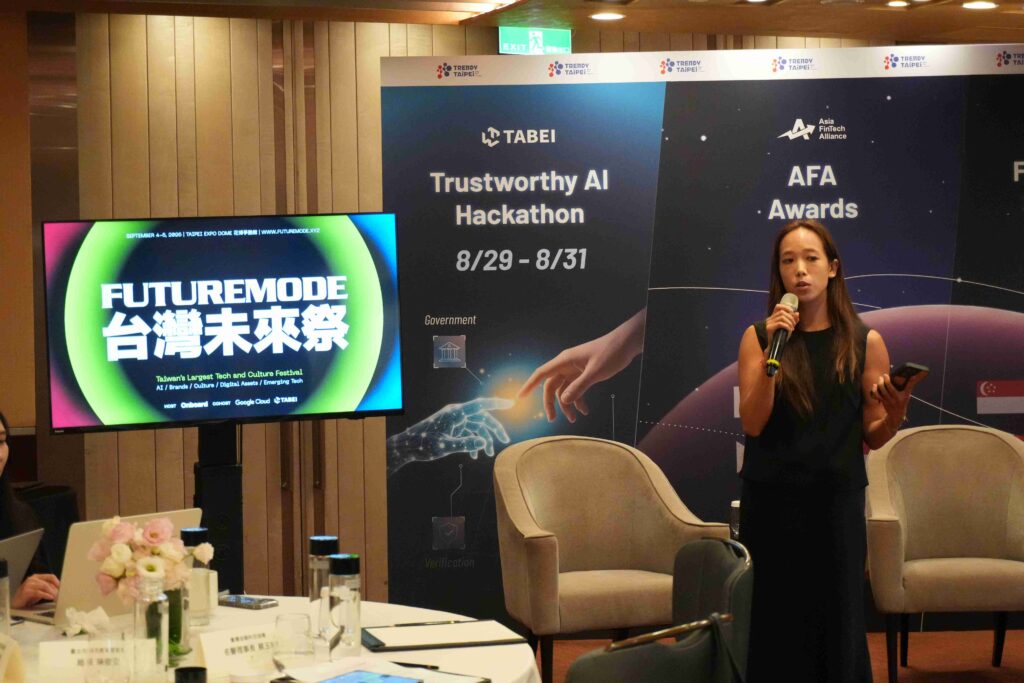
Taipei Blockchain Week is being renamed as FUTUREMODE, with the revamped event scheduled for Sept. 4-6 at the Taipei Expo Park’s Expo Dome in Yuanshan. Speaking at a media briefing for the “Taipei Trendy 2026” technology festival, event director Tiffany Lai said the team did not begin as an event company five years ago, but as a DAO with a simple mission: connect Taiwan to the world through technology. That vision later became Taipei Blockchain Week. Lai said the scope of discussion has widened well beyond crypto and blockchain. In her account, AI is reshaping every industry and digital assets have matured into financial infrastructure, making a single-technology label too narrow for what the event now aims to cover. FUTUREMODE will be organized around four tracks: Learn, Build, Experience, and Recharge. The Learn program includes more than 100 global speakers, over 40 talks, demos and panels, plus more than 30 workshops. Build introduces the event’s first Build Mode hackathon, designed for more than 500 developers across six tracks, with prizes exceeding $6,000 and additional compute credits. Organizers also expect more than 10,000 visits overall, with support from Taiwan’s National Development Council and Startup Island Taiwan. Speakers from Google, NVIDIA and AMD are also set to attend.

1170
Taipei Blockchain Week Rebrands as FUTUREMODE, Sets Sept. 4-6 Event at Taipei Expo Park
Taiwan FSC
2026-08-04 10:56:48

Taiwan FSC to phase in crypto Travel Rule, with extra data required for transfers above NT$30,000

Taiwan’s Financial Supervisory Commission said it will roll out the crypto Travel Rule in stages, setting a new compliance timetable for virtual asset service providers operating in and with the local market. Under the plan announced on Aug. 4, the first phase will start in October 2026 and apply to transfers between domestic VASPs. A second phase, scheduled for the end of 2027, will extend the regime to cross-border transfers between domestic and overseas VASPs. For transfers above NT$30,000, individual users will need to provide their date of birth and residential address. Corporate entities will face extra disclosure requirements, including an official identification number and registered address. The receiving platform will also be required to verify the recipient information against customer records when the amount exceeds the threshold. The FSC said the move is meant to align Taiwan with anti-money laundering standards set by the Financial Action Task Force. Although Taiwan had already written related Travel Rule provisions into its 2021 AML and counter-terrorist financing rules for virtual asset service providers, the framework had not been formally enforced because of regulatory differences across jurisdictions, inconsistent data transmission standards, and technical difficulties in cross-border system connections. The draft amendments will be published for public comment for 30 days.

260
Taiwan FSC to phase in crypto Travel Rule, with extra data required for transfers above NT$30,000
AI resurrecti
2026-08-01 10:32:40

China’s AI ‘digital resurrection’ market starts at 10 yuan as Taiwan weighs rules on posthumous avatars

AI tools that recreate the dead are no longer limited to expensive one-off media projects. According to BlockTempo, China now has a tiered commercial market for so-called “digital immortality” services, with basic offerings on Taobao starting at 10 yuan, mid-range voice-based interactive products priced in the thousands of yuan, and fully customized digital humans starting at roughly 50,000 yuan. Some platforms have also introduced subscription models, charging 1,980 yuan for the first year and 2,980 yuan for renewal in the second year. The report says the business has expanded beyond tech firms into funeral services. Fu Shou Yuan, a Chinese funeral operator, has launched text-and-image, synthesized voice, and customized digital human products. Academic researchers are raising separate concerns. A paper from the University of Cambridge’s Leverhulme Centre for the Future of Intelligence warns that the emerging “digital afterlife industry” could rely on subscriptions to keep avatars active, insert ads into conversations, or even turn simulations of the deceased into sponsored sales channels. Taiwan has also moved into the regulatory discussion. Legislator Weng Hsiao-ling proposed legal revisions on July 7 to penalize the use of “digital resurrection” to insult the dead. A report by the legislature’s legal bureau suggested adding provisions to the Criminal Code for fabricated images produced with computer synthesis and used to abuse the deceased, with penalties that could be increased to up to two years in prison.

1160
China’s AI ‘digital resurrection’ market starts at 10 yuan as Taiwan weighs rules on posthumous avatars
2D semiconduc
2026-07-29 11:33:16

China’s 2D semiconductor supply chain is taking shape, stretching from materials and equipment to processors and memory

Two-dimensional semiconductors, also known as atomically thin semiconductors, are moving beyond basic research and into pilot production, process development, and early industrial deployment. The article says global chipmakers and research groups including TSMC, Intel, Samsung, imec, and IRDS have already put 2D semiconductors on their roadmaps for the post-1 nm era, where they could serve as core building blocks in heterogeneous integration. On the Chinese side, progress now spans the full stack. At the materials and equipment layer, teams led by Nanjing University and Jimo Core Technology reported advances in wafer-scale single-crystal growth, including 6-inch production and later 8-inch mass production of 2D semiconductor single crystals. Other groups addressed long-standing gaps in p-type materials and wafer-scale ferroelectric systems. On the manufacturing side, Yuanji Micro’s 8-inch engineering demonstration line in Pudong has gone online, accompanied by a 500 nm PDK designed to work with mainstream EDA flows. In applications, the field is no longer limited to isolated devices: China has reported 32-bit RISC-V processors based on MoS2, a multi-bit parallel microprocessor called MAGIC-1000, ultra-low-leakage transistor work tied to DRAM, and single-electron non-volatile storage results. The picture presented is one of an industrial chain that now covers materials, tools, process integration, design, and end applications.

900
China’s 2D semiconductor supply chain is taking shape, stretching from materials and equipment to processors and memory