INR

Tokenized Sto
2026-09-05 15:13:15

AMC Token Dispute Expands Into a Broader Fight Over Which Tokenized Stock Structure Should Prevail

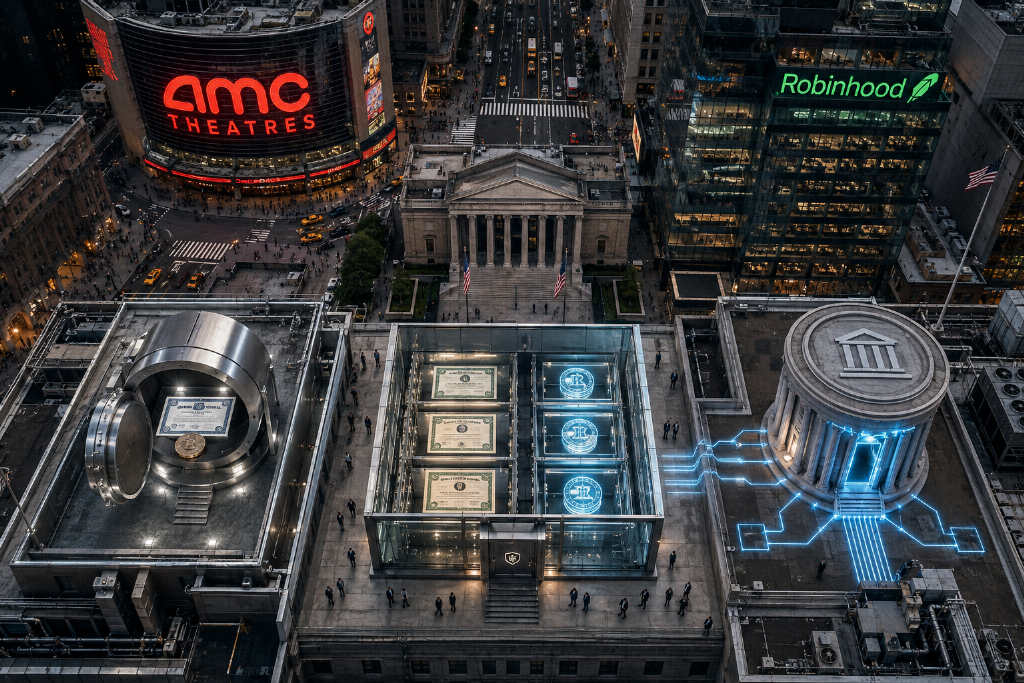
A public clash between AMC Entertainment CEO Adam Aron and Robinhood over tokenized AMC shares has widened into a much larger industry debate over how tokenized stocks should be built. At the center of the dispute are three competing structures: Robinhood’s offshore debt-style stock tokens that give users economic exposure but no claim on the referenced issuer; custodial 1:1 models used by firms such as Ondo, xStocks and Dinari, where regulated intermediaries hold the underlying shares; and issuer-native designs from Securitize and Superstate, where a company’s own registered shares are recorded onchain. The SEC’s Division of Corporation Finance outlined these categories in a Jan. 28 statement, and the choice of structure affects both the securities rules that apply and what investors may be able to claim if an intermediary fails. The argument intensified Friday as Dinari co-founder Gabriel Otte criticized synthetic products, Uniswap founder Hayden Adams defended programmability and 24/7 access, and Securitize CEO Carlos Domingo backed issuer-controlled tokenization. The fight is unfolding as tokenized stocks reach $2.91 billion across 2.67 million holders, according to rwa.xyz, with Ondo leading the sector and Robinhood gaining trading traction through activity on Robinhood Chain. Lawyers, transfer agents and market structure participants have also entered the discussion, turning what began as an AMC controversy into a live test of investor rights, execution quality, supply mechanics and regulatory design for onchain equities.
50
AMC Token Dispute Expands Into a Broader Fight Over Which Tokenized Stock Structure Should Prevail
Bitcoin
2026-09-04 02:12:00

Foresight panel splits on crypto “bull return” as rally meets macro and policy tests

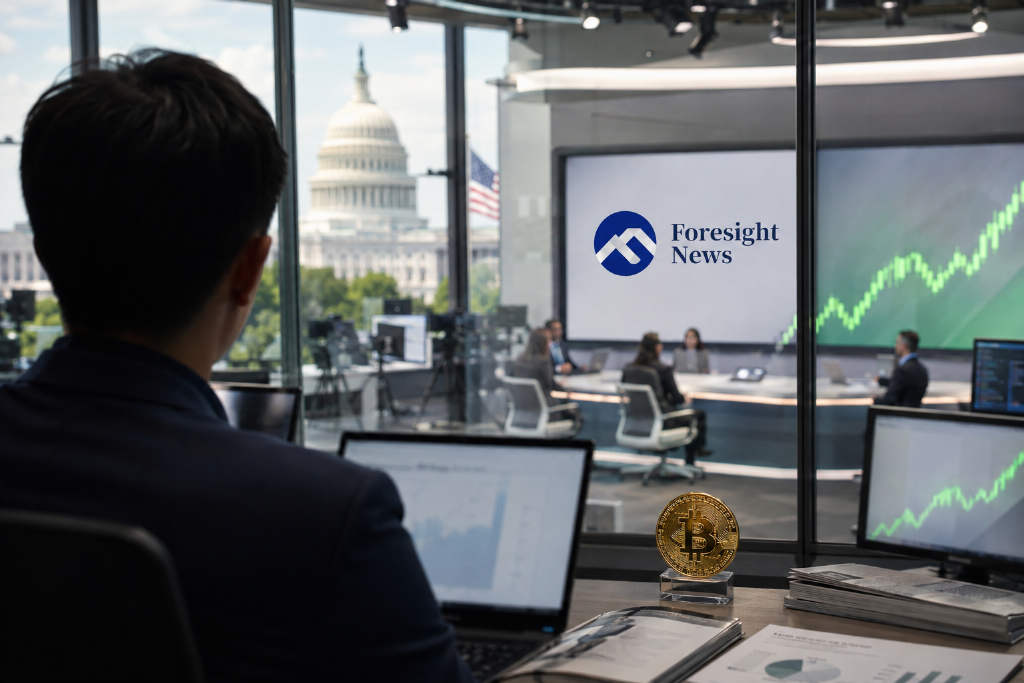
Foresight News gathered a group of market participants for a long-form discussion on one question now dominating crypto: is the market seeing the start of a fresh bull cycle, or only a sharp recovery driven by short covering and better sentiment? The contributors, including IOSG Ventures’ Mario, XH Research Institute, BlockSec, Zeuspace’s Yaokun, JamesX, Stablehunter and Foresight deputy editor Joe Zhou, broadly agreed that the rebound since August is real. Bitcoin has climbed about 25% from its mid-year low, briefly moved above $81,000, and benefited from ETF inflows, short liquidations and improving expectations around US liquidity and crypto regulation. But that is where consensus ends. Some participants described the current phase as a late-bear to early-bull transition, while others argued the market still lacks the breadth, durable spot demand and dominant narrative usually seen in a confirmed bull market. The discussion also focused on how US interest rates, Treasury operations, SEC rulemaking and the stalled CLARITY Act could shape the next leg. On positioning, views ranged from heavy BTC and ETH core holdings to AI-driven systematic allocation, with repeated warnings against leverage, narrative chasing and assuming this cycle will unfold like the last one. Across the debate, one theme stood out: price alone is not enough. Contributors said a true bull market would need staying power, new capital channels, and real usage that remains after the rally cools.

230
Foresight panel splits on crypto “bull return” as rally meets macro and policy tests
Meta
2026-09-04 01:41:03

Zuckerberg told Trump an AI watchdog should stay loose, not slow the U.S.

Meta co-founder Mark Zuckerberg used a phone call with President Donald Trump last month to argue against creating a national AI regulator with heavy oversight, saying any new body should reflect a looser approach so it does not slow the United States in the race for artificial intelligence. According to Business Insider, citing people familiar with the matter, the conversation took place during the week of Aug. 17 after Trump called the Meta chief. One topic was a White House proposal for a FINRA-style AI oversight body. The idea, first put forward by Google DeepMind CEO Demis Hassabis, would create an independent organization modeled on the Financial Industry Regulatory Authority to review advanced AI models and run risk tests. The White House has said the administration wants to balance AI innovation with safety and is also weighing an industry-led self-regulatory option. Zuckerberg’s position, as described in the report, is that a regulator should not turn into a bureaucratic gatekeeper. He warned that overly strict rules could slow model releases and weaken U.S. competitiveness. The report also noted Meta’s recent internal move to drop AI token usage targets, with executives saying 93% of code changes had already been completed with AI agents.

60
Zuckerberg told Trump an AI watchdog should stay loose, not slow the U.S.
SEC
2026-09-02 10:05:36

SEC Proposes First Major Transfer Agent Rewrite Since the 1980s, Bringing Blockchain Into Share Ownership Records

The U.S. Securities and Exchange Commission on Tuesday proposed a broad rewrite of the rules for registered transfer agents, the firms that keep the official record of who owns a company’s shares. The agency said it would be the first major overhaul since the rules were adopted in the late 1970s and early 1980s. The proposal would update definitions so they cover electronic records, blockchain-based records, and uncertificated securities, while also requiring written risk management policies, separate bank accounts for issuer and security holder funds, business continuity planning, and turnaround standards that match the current settlement cycle. Public comments will be due 60 days after publication in the Federal Register. The move matters for tokenized equities because a token tied to a real registered share still needs an authoritative ownership record. The SEC also tied the effort to Chair Paul Atkins’ wider market modernization push, and separately released the agenda for a Sept. 17 roundtable on 24-hour trading with participants from NYSE, Nasdaq, DTCC, Citadel Securities, State Street, BlackRock, Robinhood, and FINRA.

160
SEC Proposes First Major Transfer Agent Rewrite Since the 1980s, Bringing Blockchain Into Share Ownership Records
SEC
2026-09-02 01:42:09

SEC sets agenda for Sept. 17 roundtable on 24-hour U.S. stock trading

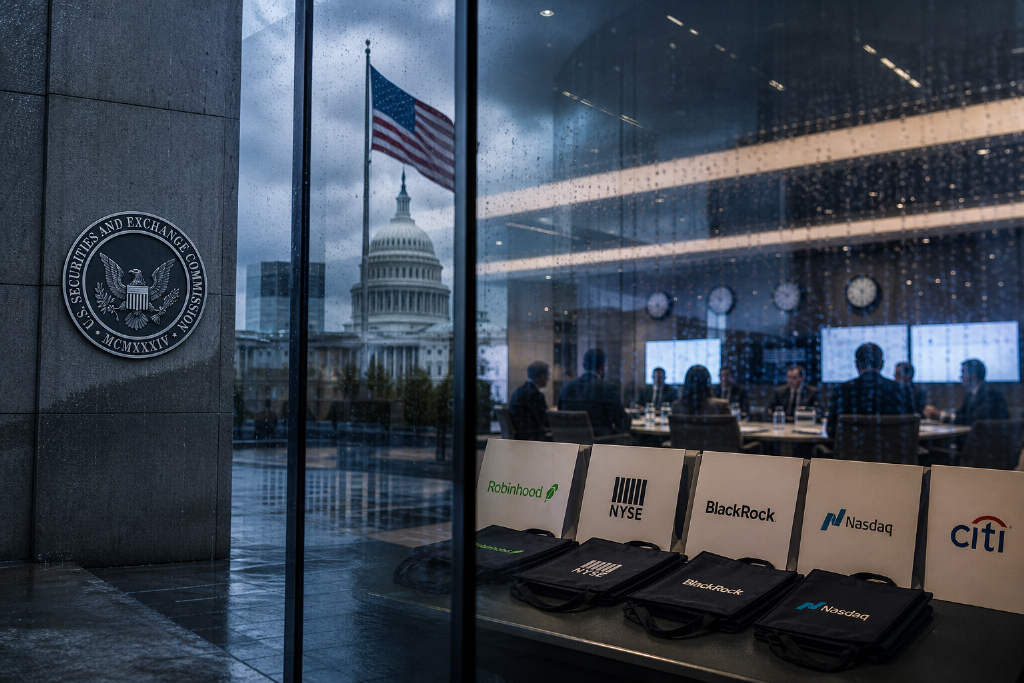
The U.S. Securities and Exchange Commission has released the full agenda and speaker list for its Sept. 17 roundtable on “24-hour trading,” a public event that will run from 10 a.m. to 4 p.m. at SEC headquarters and be livestreamed on the agency’s website. The program is split into three panels. The first will examine market readiness for extended trading hours, including platform and broker preparedness, overnight surveillance, closing-price processes, clearing and settlement changes, and investor protection. Speakers on that panel come from Robinhood, the New York Stock Exchange, BlackRock, Virtu Financial, Cboe, BNY Pershing, UBS, FINRA, and Bruce Markets. A second panel will focus on operational resilience, covering system readiness, Reg SCI compliance, failover and capacity planning, market data continuity, cybersecurity, and overnight staffing, with participants from Jane Street, State Street, Samsung, Charles Schwab, Nasdaq, Interactive Brokers, DTCC, Exegy, and MEMX. The third will address the expected effects of expanded trading on liquidity and capital formation, as well as infrastructure needs for a future 7×24 market, with speakers from OTC Markets, BNP Paribas, 24X, Invesco, Citadel Securities, DriveWealth, Blue Ocean, Citi, and ModernIR. SEC Chair and commissioners are scheduled to deliver opening remarks, and Trading and Markets Director Jamie Selway will also attend.

170
SEC sets agenda for Sept. 17 roundtable on 24-hour U.S. stock trading
Robinhood Cha
2026-08-31 17:34:35

BONER Locks Up More Than Half of Robinhood Chain’s Tokenized HIMS Float

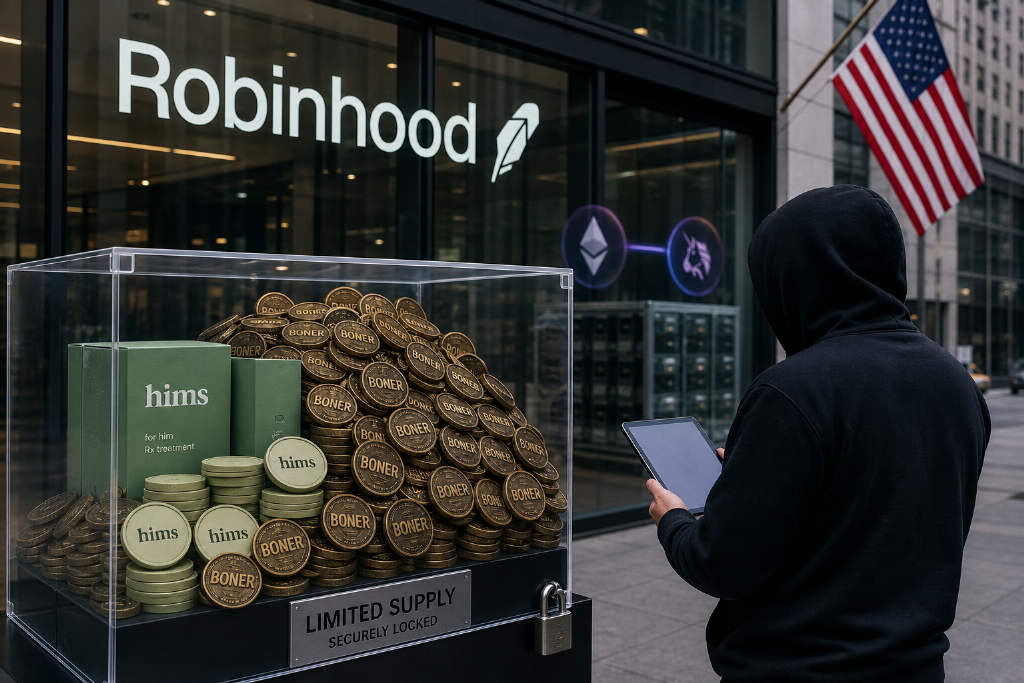
A memecoin tied to the short-interest narrative around Hims & Hers Health has pulled more than half of Robinhood Chain’s tokenized HIMS supply into its own liquidity pool, creating a weekend price dislocation that briefly sent the wrapper to $132.64 while the underlying stock was far lower. Data cited by The Defiant shows BONER’s main BONER/HIMS pool alone held 31,198 HIMS tokens as of Monday, equal to 53% of all issued tokenized shares on the chain, while 83% of total supply sat inside Uniswap v4’s pool manager contract. Because only BBVI, the sole authorized participant named in Robinhood’s documentation, can mint or burn these stock tokens, ordinary traders had no way to expand supply during the squeeze in onchain liquidity. The article argues that a thin float, memecoin launchpads that use stock tokens as quote assets, and weekend market closure combined to let relatively small orders move the wrapper far away from the real equity. Once the NYSE reopened and new HIMS tokens were minted into the premium on Monday, the gap narrowed back toward spot equity pricing. The episode also highlights how Robinhood Chain’s real-world asset pitch is colliding with memecoin speculation, with stock-linked meme pairs now accounting for some of the chain’s most active pools.

960
BONER Locks Up More Than Half of Robinhood Chain’s Tokenized HIMS Float
SEC
2026-08-28 10:41:03

SEC sues 38 entities over fake adviser filings and bogus SEC certificates tied to crypto schemes

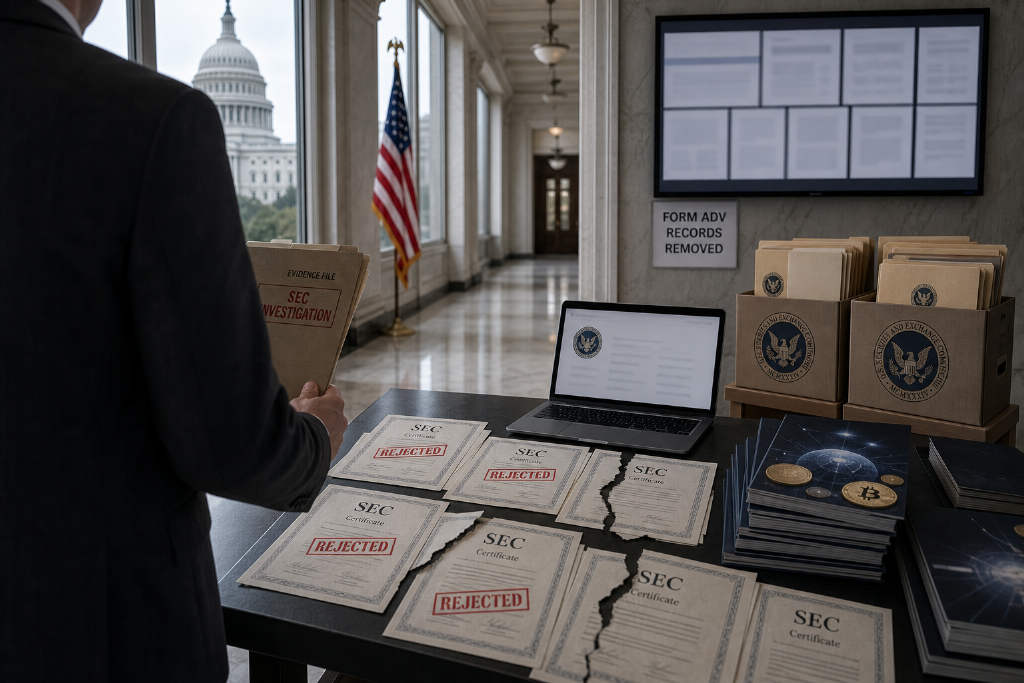
The U.S. Securities and Exchange Commission has brought 38 civil complaints against entities it says posed as legitimate U.S. investment advisers, including several tied to crypto offerings and promotional campaigns. In court filings and a public statement dated August 27, 2026, the SEC said the defendants used false filings, fake registration claims, and in some cases fabricated SEC certificates to attract retail investors. The regulator named crypto-related operators including CryptoOrbit, Ftaexchange, Pinnacle, Quantum, and RBH. It is asking a federal court for injunctions, civil penalties, and orders stripping the defendants of future reporting-exemption privileges for adviser filings. FINRA has already removed non-compliant forms for these advisers from adviserinfo.sec.gov at the SEC’s direction. According to the allegations, some firms made materially false statements in Form ADV and failed to file required disclosures, in conduct the SEC says violated Sections 204(a) and 207 of the Investment Advisers Act. The initial complaints do not quantify investor losses. The report also describes disconnected phone numbers, undeliverable mailing addresses, Colorado locations with no actual presence, and filing-system access linked to Hong Kong or the People’s Republic of China.

160
SEC sues 38 entities over fake adviser filings and bogus SEC certificates tied to crypto schemes
Policy Regula
2026-08-28 04:44:59

CryptoMichNL says retail investors are tuning out crypto regulation

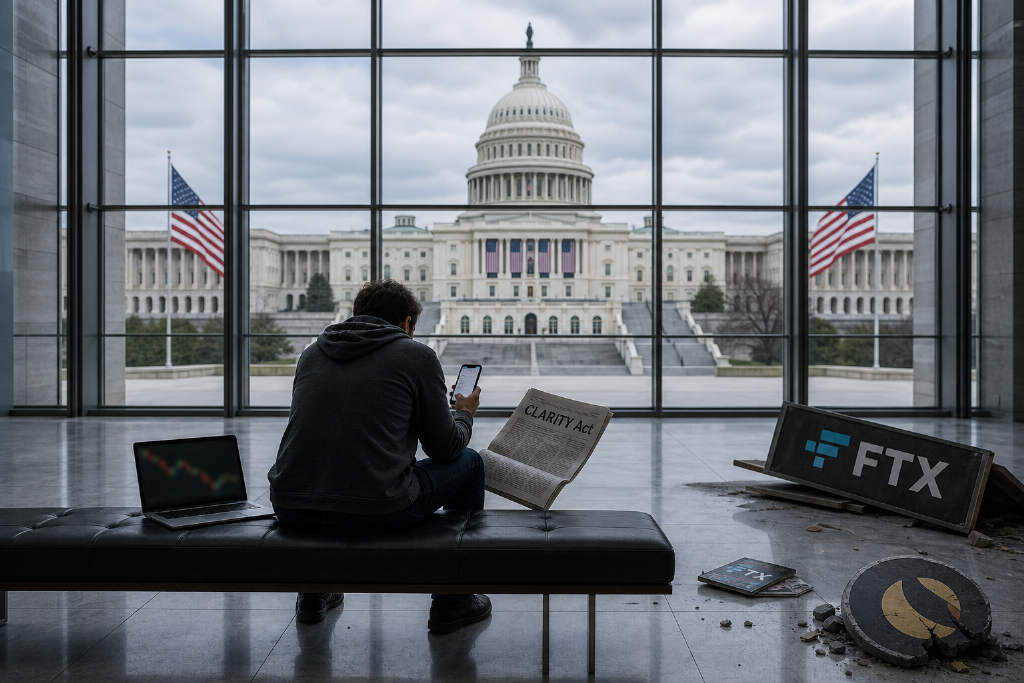
Analyst CryptoMichNL said retail investors are no longer paying close attention to crypto regulation bills such as the CLARITY Act. Speaking on Cointelegraph’s CHAINREACTION program, he said many individual investors have grown tired of the industry after the FTX and Luna episodes. The comment points to a change in retail sentiment toward the US crypto legislative process, with earlier expectations giving way to indifference after repeated industry crises. The remarks were cited by Techub News and attributed to Cointelegraph.

190
CryptoMichNL says retail investors are tuning out crypto regulation