MOS

Taiwan
2026-09-22 09:49:54

Taiwan’s T.MicroSat-3 and T.MicroSat-4 set for SpaceX Bandwagon-5 launch

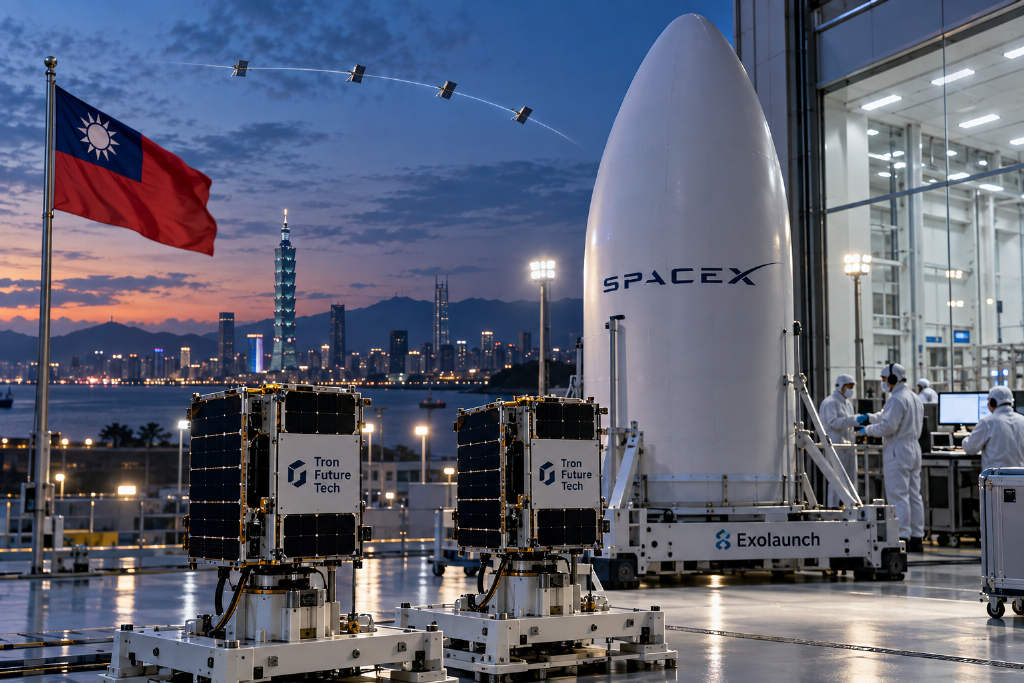
Taiwan startup Tron Future Tech is preparing to launch T.MicroSat-3 and T.MicroSat-4, the third and fourth satellites in its “Zhongque” low Earth orbit communications constellation, on SpaceX’s upcoming Bandwagon-5 rideshare mission. German launch integrator Exolaunch, which also supported the first two satellites, will again handle mission integration. Once the two spacecraft reach orbit, the four-satellite constellation will be complete. The project is part of the Taiwan Space Agency’s second-phase startup satellite program, launched in 2023, which assigned three domestic companies to build separate four-CubeSat constellations spanning satellite development, launch, ground control, and application services. Tron Future Tech’s system focuses on broadband communications using four 8U CubeSats. The company said earlier this year that T.MicroSat-1 and T.MicroSat-2 had completed Ka-band downlink verification and entered end-to-end communications testing. With T.MicroSat-3 and T.MicroSat-4, the program will move into its next phase, adding inter-satellite link testing at a designed data rate of 1 Mbps and expanding validation from individual spacecraft to the full constellation. Tron Future Tech has said one target is to build a B5G/6G technology test platform for low Earth orbit constellations.
30
Taiwan’s T.MicroSat-3 and T.MicroSat-4 set for SpaceX Bandwagon-5 launch
onsemi
2026-09-22 08:14:29

onsemi to raise prices on some power semiconductors from Oct. 10 as Taiwan suppliers may follow in Q4

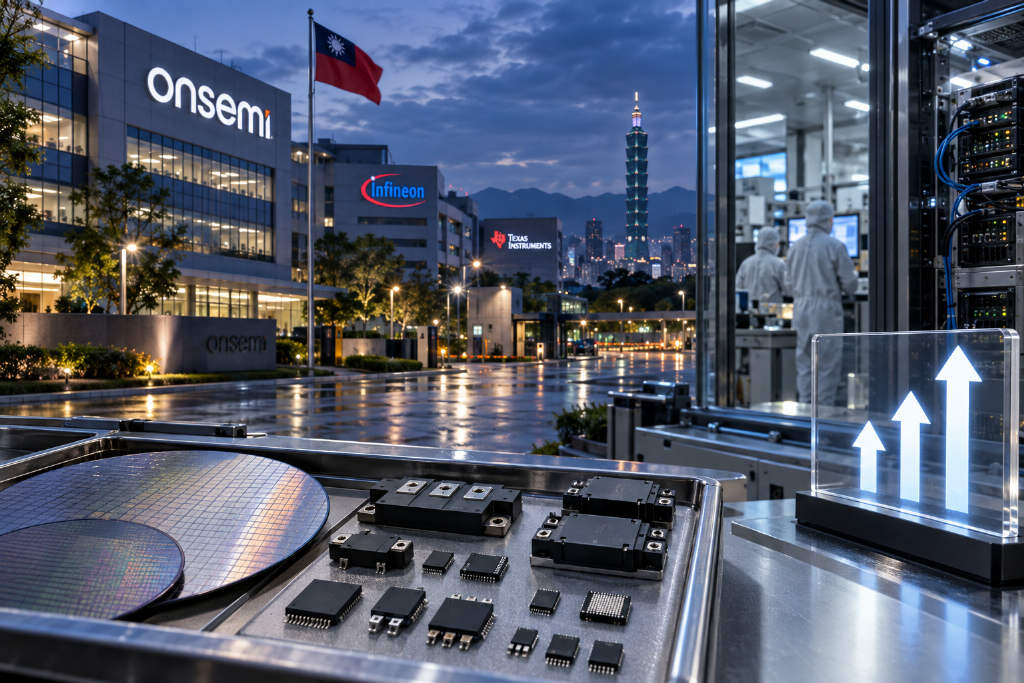
onsemi said it will raise prices on some power semiconductor products starting Oct. 10, adding to a string of increases already announced by Infineon and Texas Instruments. Citing Commercial Times, the report said onsemi notified customers on Sept. 21. Renesas is expected to take up the next round of price increases in early 2027, extending what the article described as a relay of hikes among major international suppliers. The report said Taiwan power component makers Panjit, Taiwan Semiconductor and Eris Technology could move as early as the fourth quarter to lift prices on non-contract products by about 10% to 15%, with the actual range depending on product lines, customer mix and contract structure. It also linked the latest pricing cycle to changes in AI infrastructure power demand, including a shift from traditional 48V systems toward 800V high-voltage direct current architectures. That transition is driving demand across SiC, GaN, MOSFET, IGBT and PMIC products. The article highlighted Panjit’s rising AI revenue mix and shipment growth in Power MOSFET, small-signal devices and TVS, while Eris Technology was described as focusing on opportunities tied to 800 VDC upgrades, with plans to convert part of its 4-inch capacity to 6-inch lines by the third quarter of 2027. The report said a key question for the sector is whether spot price increases can be passed through into contract pricing.

30
onsemi to raise prices on some power semiconductors from Oct. 10 as Taiwan suppliers may follow in Q4
Feixiaohao
2026-09-22 08:19:10

Feixiaohao teams up with MOS/SSD for GWDC 2026 innovation forum in Seoul

Feixiaohao said it is working with MOS/SSD on the Feixiaohao × GWDC 2026 Innovation Forum, with MOS/SSD joining the event as a co-organizer. The forum is scheduled for Sept. 29, 2026, at AT CENTER in Seoul, South Korea, and will focus on stock tokenization, Web3 and AI. MOS/SSD, also referred to as Sea Star, said MOS, or Sea Star Community, is a Web3-focused decentralized autonomous organization founded on Feb. 19, 2022. The community describes its vision as building a trusted metaverse DAO and says it is advancing blockchain gaming and metaverse development together with SPF META. According to the event details cited in the newsflash, the GWDC Korea stop is expected to draw 5,000 attendees on site. Justin Sun, Animoca Brands, Bithumb and Microsoft were listed among the guests and organizations expected to appear at the same venue. ChainCatcher added that Sea Star’s participation would place DAO, blockchain gaming and metaverse community ecosystems in a more public setting for exchange.

40
Feixiaohao teams up with MOS/SSD for GWDC 2026 innovation forum in Seoul
Calterah
2026-09-21 10:28:11

Calterah’s STAR Market IPO filing advances as radar chip share tops 30% in China while losses reach about 910 million yuan

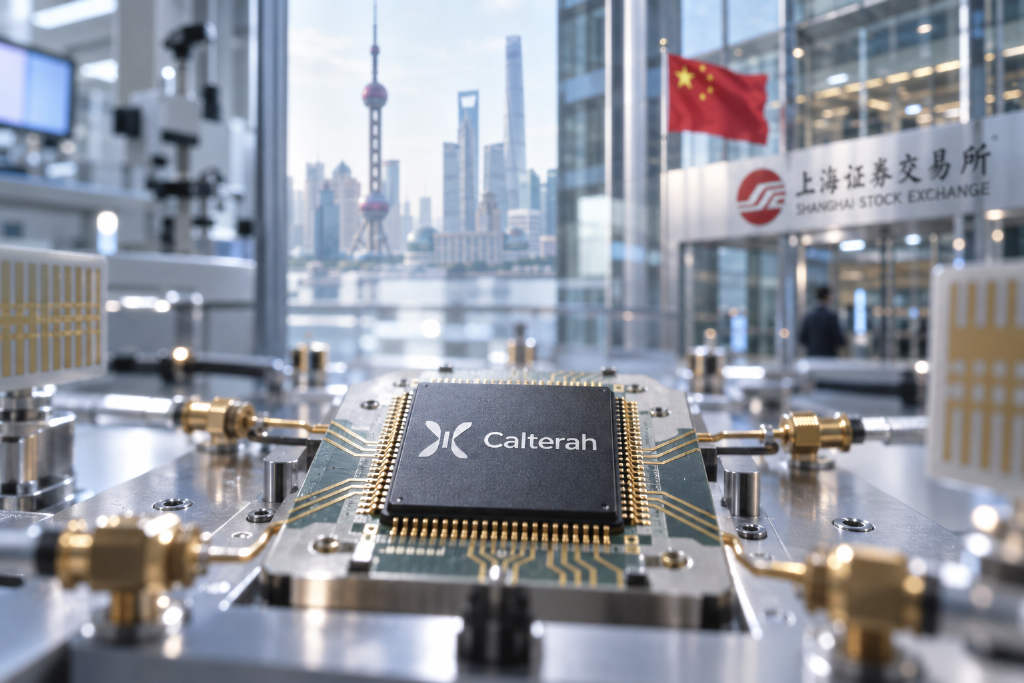
Calterah Microelectronics, a Shanghai-based automotive wireless sensing and connectivity chip designer, has had its STAR Market IPO application accepted by the Shanghai Stock Exchange and is now in the inquiry stage. The company entered the process with strong headline metrics: a 31.1% share of China’s automotive millimeter-wave radar chip market in 2025, second only to Texas Instruments in the domestic ranking, more than 30 million cumulative radar chip shipments, and revenue that climbed from 206 million yuan in 2023 to 632 million yuan in 2025. Its core business gross margin also stayed above 47% in most reporting periods and reached 48.97% in the first quarter of 2026. The filing also lays out the pressure points. Calterah has not yet turned profitable, posting net losses of 323 million yuan, 334 million yuan, 193 million yuan, and 60.2866 million yuan from 2023 through the first quarter of 2026, for cumulative losses of about 910 million yuan. Revenue growth slowed sharply to 8.1% year over year in the first quarter of 2026, down from more than 100% in 2025. Customer concentration remains high, with the top five customers contributing 99.97% of revenue in the latest quarter and the largest end customer accounting for more than half of 2025 sales. Calterah plans to raise 3.489 billion yuan, including 2.093 billion yuan for high-performance millimeter-wave radar chips and 695 million yuan for UWB chip development and industrialization.

20
Calterah’s STAR Market IPO filing advances as radar chip share tops 30% in China while losses reach about 910 million yuan
Market Analys
2026-09-20 03:00:14

Dolphin Research breaks down why NAND keeps producing more supply and how SanDisk defends high margins

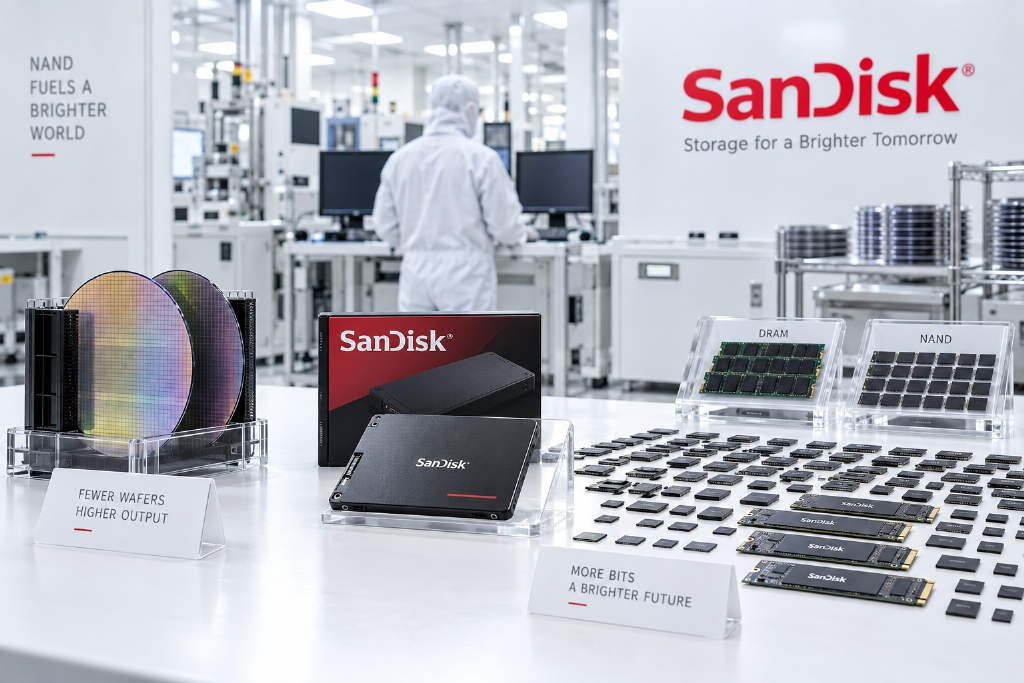
Dolphin Research published a detailed analysis of SanDisk and the NAND flash industry, arguing that the sector’s core problem is structural rather than cyclical in the traditional sense. Even when manufacturers slash wafer starts and cut capital spending, bit supply can still rise because node migration keeps improving output per wafer. Using SanDisk as the main case study, the report shows that the company’s flash bit shipments rose from 38 EB to 101 EB between 2019 and 2025, while ASP per GB fell from $0.206 to $0.073, leaving revenue slightly lower at $7.36 billion versus $7.82 billion six years earlier. The piece also revisits the demand slowdown in 2022 and 2023 across smartphones, PCs, and enterprise SSDs, and argues that NAND’s downturn was driven almost entirely by price rather than volume. It then contrasts NAND with DRAM at the physical and economic level: NAND can keep expanding supply through vertical stacking and lateral scaling, while DRAM relies far more on new fabs because its cell structure limits density gains. That difference, according to the report, explains why DRAM and HBM require much heavier capital investment, while NAND can look more like a cash-generating business if supply discipline holds.

140
Dolphin Research breaks down why NAND keeps producing more supply and how SanDisk defends high margins
3D DRAM
2026-09-14 11:09:11

3D DRAM race heats up as AMD, NAURA and memory giants push new architectures and process tools

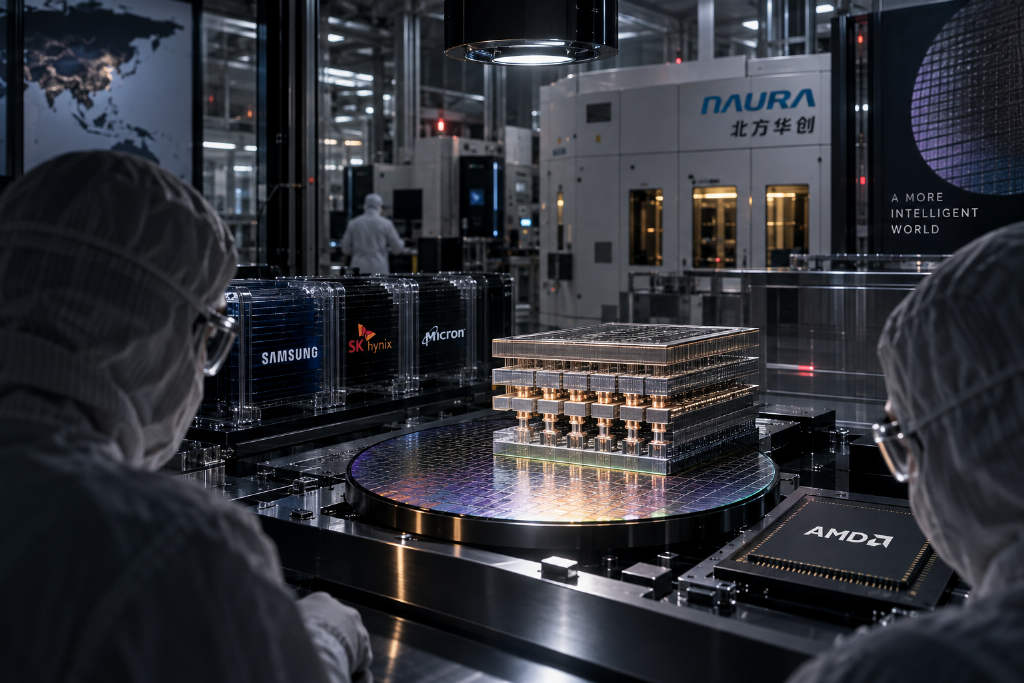
Two developments in the first week of September 2026 put 3D DRAM back at the center of the memory industry. AMD disclosed internal test results for a Hybrid Bonding-based 3D DRAM architecture, saying energy efficiency could improve by as much as 17x versus conventional HBM stacks. Around the same time, Chinese semiconductor equipment maker NAURA published an IEEE paper describing a manufacturing advance for next-generation 3D DRAM, including a two-step cyclic etch process for 64-layer alternating silicon and silicon-germanium structures, structural uniformity above 95%, an etch selectivity above 500:1, and silicon loss below 10 angstroms in a 200 nm interlayer structure. The report argues that these announcements matter because conventional DRAM scaling is nearing physical and economic limits. It also reviews the two main technical paths now being pursued, 4F2 VCT and VS-CAT, and outlines how Samsung Electronics, SK hynix, and Micron are positioning themselves. Beyond chipmakers, the shift is also reshaping the equipment chain, from high-aspect-ratio etch to atomic layer deposition, wafer bonding, CMP, cleaning, inspection, coating and developing, testing, and high-purity process systems.

1050
3D DRAM race heats up as AMD, NAURA and memory giants push new architectures and process tools
Home Applianc
2026-09-04 02:15:13

Home Appliance MCU Market Heats Up: Over a Dozen Vendors Launch New Chips as 32-Bit Prices Drop Below $0.10

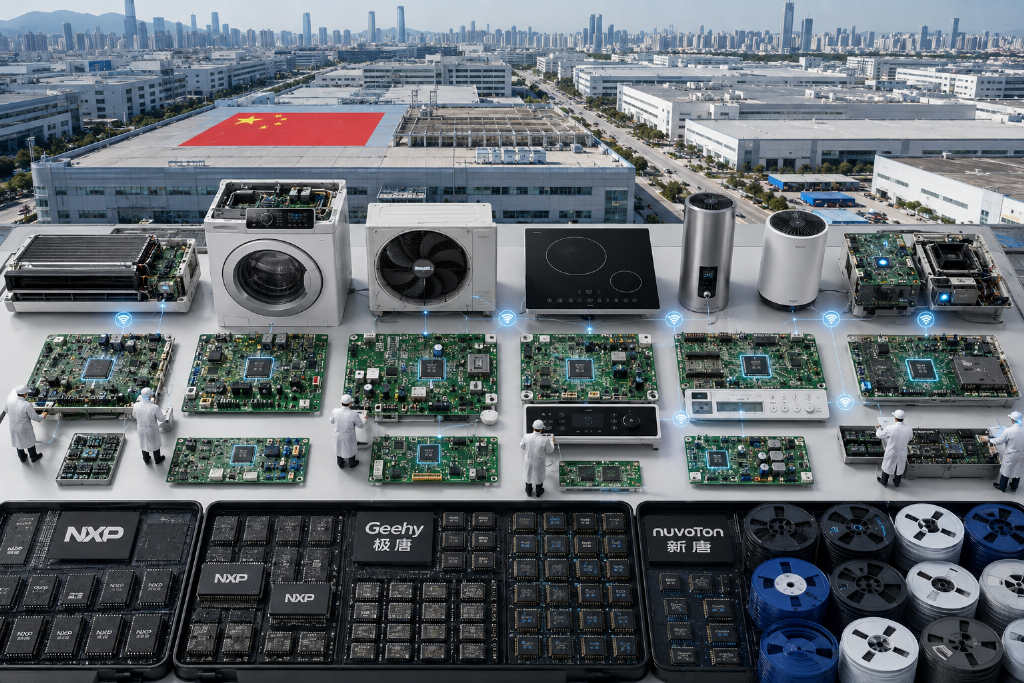
More than a dozen semiconductor companies—including Megawin, Geehy, LKS, Nuvoton, NXP, MindMotion, and GigaDevice—released new MCU products targeting home appliance applications in recent months. The wave of launches spans motor control SoCs, touch-enabled 8051 MCUs, ultra-low-power USB MCUs, and Matter-ready Wi-Fi modules. Industry Online projects China's home appliance MCU market will reach 13 billion yuan in 2025, with 32-bit MCUs becoming the mainstream choice over legacy 8-bit and 16-bit parts. Price competition has intensified dramatically: some Cortex-M0 MCUs now sell for as little as 0.41 yuan (roughly $0.06) on e-commerce platforms. Vendors are trimming peripherals and resource configurations to hit rock-bottom price points, while engineers debate whether Matter connectivity upgrades could open the next growth chapter for the segment.

870
Home Appliance MCU Market Heats Up: Over a Dozen Vendors Launch New Chips as 32-Bit Prices Drop Below $0.10
Will Semicond
2026-09-02 12:04:09

Will Semiconductor’s profit drops nearly 40% in H1 as new businesses remain too small to offset core weakness

Will Semiconductor reported a sharp slowdown in earnings for the first half of 2026, even as revenue stayed almost flat. The company posted revenue of 14.02 billion yuan, up 0.49% year over year, while net profit attributable to shareholders fell 39.85% to 1.22 billion yuan. Net cash from operating activities dropped 78.40% to 408 million yuan, and inventory rose to 9.187 billion yuan, highlighting pressure on both cash generation and working capital. The company’s core image sensor business came under strain in two of its largest end markets at the same time. Revenue from image sensor solutions fell 10.55% to 9.254 billion yuan, with automotive revenue down 16.64% and consumer electronics revenue down 30.98%. At the same time, a higher contribution from lower-margin semiconductor distribution, along with increased R&D and finance costs, weighed on profitability. Will Semiconductor is now putting more emphasis on medical imaging, AI glasses, machine vision, sports cameras and automotive analog chips as a second growth engine. Those businesses are growing, but their revenue contribution remains limited. According to the report, their combined scale is still below 2.5 billion yuan and accounts for less than 18% of total revenue, leaving the company heavily reliant on its traditional image sensor operations.

840
Will Semiconductor’s profit drops nearly 40% in H1 as new businesses remain too small to offset core weakness