HBM3

Nvidia
2026-08-14 08:46:03

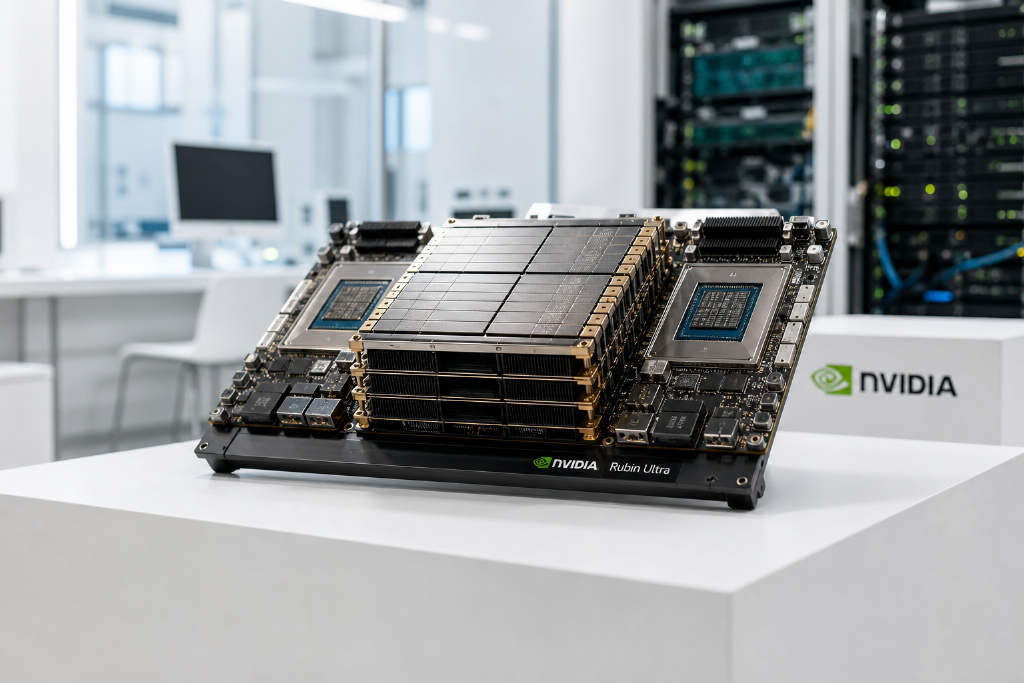
Aletheia says Nvidia's Rubin Ultra AI module could approach $170,000 for dual-GPU version

A bill-of-materials report from Aletheia Capital points to a sharp increase in pricing for Nvidia’s upcoming Rubin Ultra AI compute modules. The firm estimates the average selling price of the dual-GPU version at nearly $170,000, while the four-GPU configuration could reach $350,000. That would represent a 30% increase from the previous Rubin generation. The report also shows a major shift in the module’s cost structure: SoCAAM, an advanced packaged memory module, has overtaken the GPU die itself as the largest single cost component and now accounts for more than half of total BOM in the dual-GPU Rubin Ultra version. Analysts cited in the report said Rubin Ultra is expected to move directly to HBM4E instead of HBM4, while a higher-end four-die model remains on the roadmap. They also said the previously rumored-canceled Kyber platform is still moving ahead. If those plans hold, the report suggests memory suppliers, especially leading HBM vendors, could benefit as HBM4E demand scales and supply takes time to ramp.

1200
Aletheia says Nvidia's Rubin Ultra AI module could approach $170,000 for dual-GPU version
memory chips
2026-08-10 05:49:15

Memory makers are rewriting the cycle with long-term contracts, but the real test comes after 2028

Samsung Electronics, SK hynix and Micron Technology have all posted record quarterly results, yet their shares have pulled back over the past month as investors question whether the memory sector is heading toward the familiar boom-bust pattern of rising prices, aggressive capacity additions, oversupply and collapse. Public disclosures and comments from executives suggest this cycle is different in one important way: spending is rising, but the new capacity is being directed mainly toward AI products such as HBM and server DRAM rather than broad-based expansion across end markets. At the same time, the three suppliers are shifting away from quarterly pricing and into three- to five-year supply agreements that include floor prices, take-or-pay commitments, prepayments, deposits and, in some cases, minimum revenue guarantees. Micron has disclosed 16 five-year strategic customer agreements, while Samsung said it plans to place 60% to 70% of capacity under multi-year contracts. Industry researchers and company executives cited in the report expect supply tightness to extend through 2027 and potentially into 2028, with EUV delivery times and wafer reallocation to HBM limiting near-term relief. The article also points to a second layer of change after 2028: how quickly new capacity arrives, whether long-term contracts can keep earnings stable even if spot prices soften, and how much influence CXMT and domestic Chinese suppliers gain in consumer DRAM, LPDDR and eventually HBM-related manufacturing chains. Those factors, rather than the current price spike alone, may determine whether the sector truly breaks from its historical “death spiral.”

1820
Memory makers are rewriting the cycle with long-term contracts, but the real test comes after 2028
SK Hynix
2026-08-08 07:09:13

Rumor in South Korea links SK Hynix HBM4 pricing and yield issues to Nvidia supply talks

A market rumor circulating in South Korea has put SK Hynix, Nvidia, HBM4 pricing, and the SK Group’s data center ambitions in the same conversation, but none of the claims have been confirmed by the companies involved. The post appeared by the evening of Aug. 6 on DCInside’s “Short Position” board and was explicitly labeled as a “Yeouido jirashi,” a term used for unverified talk that spreads in Korea’s securities circles. According to the post, SK Hynix is supplying HBM3E to Nvidia under annual fixed pricing at relatively low levels, while rival suppliers may raise HBM4 quotes to Nvidia by more than 80% next year. SK Hynix, the rumor says, may only secure an increase of about 50%. The most sensitive claim goes further, alleging that defects in SK Hynix’s HBM4 have delayed Nvidia’s Vera Rubin launch. The same post also says the SK Group may have accepted weaker pricing leverage at the memory unit level in exchange for priority access to Nvidia GPUs for its data center business. It adds a detailed and highly dramatic account of how the information supposedly spread, including references to an SK Hynix salesperson, a former company analyst, and fund managers. As of now, SK Hynix and Nvidia have not verified any part of the story.

1210
Rumor in South Korea links SK Hynix HBM4 pricing and yield issues to Nvidia supply talks
Goldman Sachs
2026-08-07 02:00:17

Goldman Sachs Korea says memory cycle could outlast past upswings, pushes back on three bearish calls

Goldman Sachs said recent swings in South Korean equities have driven expectations for memory-chip fundamentals to overly pessimistic levels, with market pricing implying a downturn that goes beyond what the bank sees in the underlying business. In a report dated Aug. 7, Justin Park, a trader at Goldman Sachs’ Seoul office in Asia, kept the firm’s overweight call on South Korea and maintained a 12-month KOSPI target of 12,000. The report said the KOSPI had fallen as much as 39% from its June 22 high before rebounding 17.9% on July 31, its largest single-day gain on record. Goldman argued the selloff was not driven by a material deterioration in fundamentals, but by fears over the durability of the memory cycle, amplified by passive selling from leveraged ETFs and momentum-driven flows. Goldman also addressed three core bearish concerns one by one: a reported reduction in HBM configuration for Nvidia’s Rubin Ultra, the opportunity cost tied to SK hynix’s LTA strategy and older HBM3E lines, and profit-taking linked to a NAND narrative that beat expectations but still fell short of what the market had hoped for. The bank added that pricing discipline from CXMT and a planned “significant” price increase by DeepSeek point to firmer demand conditions.

1090
Goldman Sachs Korea says memory cycle could outlast past upswings, pushes back on three bearish calls
Market Analys
2026-08-06 13:44:00

Interconnect Moves to the Top of the Bottleneck Stack as HBM and Memory Hierarchies Face Repricing

A PANews analysis argues that August 4, 2026 marked a turning point for the memory industry. On the same day, SK hynix and SanDisk introduced the first standard for high-bandwidth flash, or HBF, at FMS 2026, while TrendForce reported that Nvidia was evaluating lower HBM configurations for Rubin Ultra. The article says those two developments point in the same direction: the core constraint in AI infrastructure is shifting away from on-package memory alone and toward interconnects across chips, packages, racks, and systems. The piece traces that shift through Nvidia’s Vera Rubin launch, NVLink 6 bandwidth gains, Spectrum-X CPO shipments, Intel’s EMIB-T packaging push, TSMC’s reported work on an EMIB-like approach, and the emergence of UCIe-linked memory tiers such as HBF. In that framework, optical and electrical interconnects sit at the top of the stack, advanced packaging becomes the physical foundation, HBM remains essential but less open-ended from an investment perspective, HBF represents a new category aimed at inference-era capacity pressure, and CXL memory pooling remains an option for later years. Rather than framing this as a broad “memory bull market,” the article’s main point is that value inside the storage empire is being redistributed as the bottleneck migrates.

1690
Interconnect Moves to the Top of the Bottleneck Stack as HBM and Memory Hierarchies Face Repricing
Nvidia
2026-08-03 04:57:59

SemiAnalysis says Nvidia scaled back Rubin Ultra specs as soaring HBM costs reshape AI system design

SemiAnalysis said Nvidia has shown key customers a preview of Rubin Ultra, but the product’s specifications have slipped further from earlier expectations. The research firm said Rubin Ultra still targets 35 PFLOPs of peak theoretical compute, matching Rubin, while memory capacity has been cut to 192GB using 8-Hi stacks, below Rubin’s 288GB with 12-Hi stacks. Memory bandwidth rises by just 1 TB/s, and power ranges from 1,800 W to 2,600 W, with the upper end higher than Rubin. The report argues Nvidia is reworking Rubin Ultra around system-level scaling instead of pushing more expensive HBM into each chip. It said the biggest change is scale-up connectivity: Rubin Ultra’s supported GPU cluster size rises from 72 GPUs to 576 GPUs through NVLink under the NVL576 architecture. SemiAnalysis also said HBM3 pricing climbed from $180-$220 per stack at a low in Q2 2025 to $600-$700 in contract pricing in Q1 this year and $700-$850 in spot pricing in Q2. On its estimates, Rubin Ultra rack-level BOM cost had risen from about $6.6 million to $8 million, but could fall back to about $6.4 million after the design adjustment. Following the report, South Korean memory stocks fell, with SK Hynix and Samsung down about 8% and the KOSPI down about 5% as of 11:45 Beijing time.

2740
SemiAnalysis says Nvidia scaled back Rubin Ultra specs as soaring HBM costs reshape AI system design
SK hynix
2026-07-29 05:39:57

SK hynix posts record Q2 results, but Wall Street fixates on the expectation gap

SK hynix delivered what it described as its strongest quarterly results on record, yet the market reaction was muted as investors focused on where the numbers landed relative to elevated expectations. The company reported KRW 79.3 trillion in second-quarter revenue, up 51% from the prior quarter and 257% from a year earlier, while operating profit reached KRW 60.5 trillion and operating margin climbed to a record 76%. Still, both revenue and operating profit came in below market expectations, and the stock fell in after-hours trading. Management used the earnings call to defend the durability of AI-driven memory demand, arguing that the rise of Agentic AI will support structural growth not only in HBM, but also in server DRAM and high-performance enterprise SSDs. SK hynix said it has already completed long-term agreement, or LTA, negotiations with about 10 customers, including core clients, and described those contracts as strategic tools for supply stability, pricing visibility and next-generation product planning. The company also said HBM4 entered mass production in the second quarter, HBM4E samples were sent to a major customer in the first half, and 2026 capital spending is expected to land in the high end of the KRW 40 trillion range as it accelerates capacity expansion.

1500
SK hynix posts record Q2 results, but Wall Street fixates on the expectation gap
CXMT
2026-07-28 04:39:56

Goldman Sachs warns of new pressure on memory makers as CXMT’s DRAM capacity could double by 2030

Chinese memory chipmaker ChangXin Memory Technologies, or CXMT, drew intense market attention after its first trading day on Shanghai’s STAR Market, where its stock surged 472% from the IPO price and its implied market value briefly topped $500 billion, exceeding Intel at one point. Against that backdrop, Goldman Sachs warned that the global memory business is facing what was described as a “new problem,” tied to China’s fast-moving DRAM expansion. According to a July 24 closed-door expert meeting cited in the report, Goldman expects China’s leading DRAM producers to double annual capacity by 2030. A central shift in that buildout is the rising use of domestic semiconductor equipment, with imported lithography tools still required in some fabs while other process steps are increasingly shifting to Chinese-made systems. The report also said CXMT is targeting mass production of HBM3 and HBM3E in 2026, a move aimed at the high-end memory segment used in AI servers. In parallel, Chinese firms are said to be pushing DUV-based process routes under EUV export restrictions, while 3D DRAM is expected to see a new round of R&D breakthroughs in 2027. Goldman added that DRAM price gains may narrow in the second half as smartphone brands resist price increases, though AI infrastructure spending is still expected to support demand through 2027.

1190
Goldman Sachs warns of new pressure on memory makers as CXMT’s DRAM capacity could double by 2030